
The last Inca fortress: Ollantaytambo and the resistance against the Spanish conquistadors
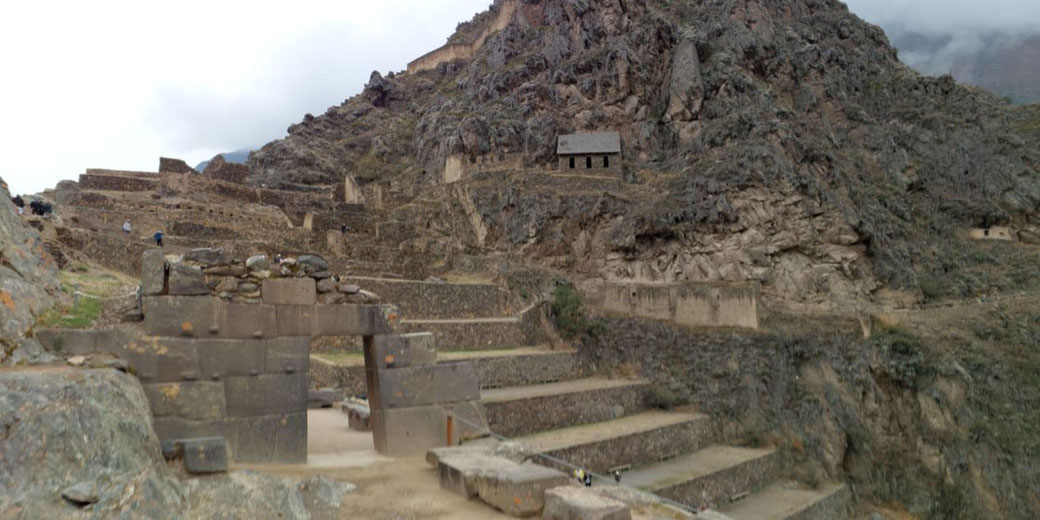
In January 1537, as Spanish forces advanced deeper into the Sacred Valley of Peru, the fortified town of Ollantaytambo stood between them and total imperial control.
Built from enormous stones that were likely hauled across riverbeds and up narrow ridges, it had become the stronghold of Manco Inca Yupanqui, who rallied his forces after the fall of Cusco.
For a brief moment, this fortress-town resisted the weaponry and cavalry of European invaders by turning the local terrain to advantage.
Stone walls channelled attackers into narrow approaches, deliberate flooding turned the valley floor to bog and slowed horses, and the Inca skill in engineering underpinned those measures and forced a professional colonial army to withdraw.
What is Ollantaytambo?
Situated approximately 60 kilometres northwest of Cusco, Ollantaytambo forms both an active town and a preserved archaeological site, placed at the intersection of strategic Andean routes within the Urubamba Valley.
The elevation, which reaches nearly 2,800 metres, gave the site a clear defensive advantage while also supporting farming due to its fertile soils and well-managed water supply.
Pedro Cieza de León, a Spanish chronicler who travelled the region in the mid-16th century, recorded that Ollantaytambo contained well-ordered streets and buildings.
He wrote of its narrow streets, abundant water channels, and careful planning that matched the land's contours to people's needs.
To this day, those original Inca structures are visible across the town’s tightly paved walkways that run beside stone-lined water channels and through trapezoidal doorways that align precisely with the sun’s movement across the sky.
Pre-Inca history
Prior to the Inca transformation of the site, groups such as the Killke, who had occupied Ollantaytambo, had developed its earliest terraces and canals.
They lived in the region between 900 and 1200 AD and used local materials to build stone houses and irrigation systems that allowed them to cultivate maize and potatoes on the steep valley sides.
In fact, archaeologists found pottery fragments, burial goods and tools, which suggested that the Killke had traded with coastal and jungle peoples over long distances, which meant that Ollantaytambo was already a cultural and agricultural hub long before Pachacuti incorporated it into the expanding Inca state.
Ollantaytambo under the Inca
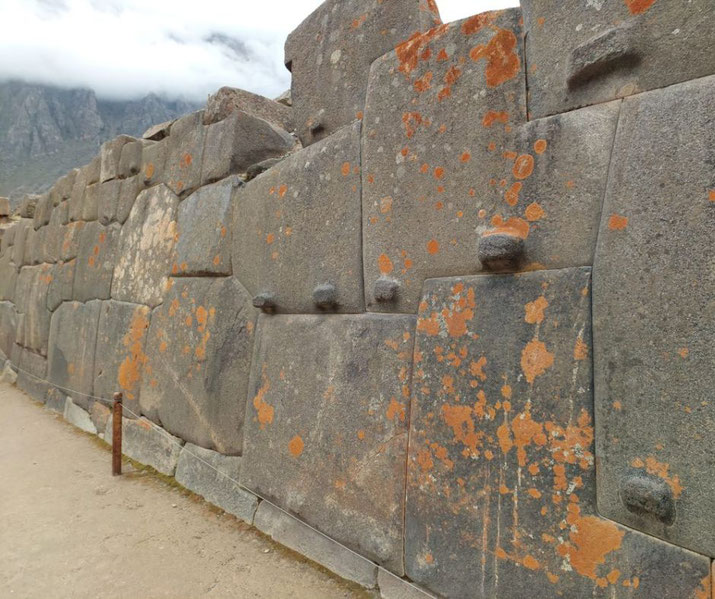
During Pachacuti’s reign in the 15th century, Ollantaytambo was developed it into a royal estate that included a religious centre and military buildings.
He used state resources to expand terraces, bring in skilled workers, and build administrative centres that showed imperial power.
For practical reasons, the town also operated as a tambo on the Qhapaq Ñan, the Inca road network that connected outposts across the Andes.
State messengers and tax collectors travelled through Ollantaytambo on the Qhapaq Ñan, and military units used the town as a supply hub, which stored food in hillside granaries and used the valley’s layout to aid communication with Cusco.
Since Inca officials controlled both population movements and harvest outputs, Ollantaytambo supported state redistribution and ritual offerings at the same time.
Additionally, the terraces that framed the settlement performed defensive and agricultural roles.
Their careful design ensured that heavy rains would not erode the slopes, while allowing crops such as maize to flourish across several growing seasons.
Incredible constructions at Ollantaytambo
To construct the Temple of the Sun and other high-status structures, Inca masons transported blocks of pink rhyolite from the Cachicata quarry across the Urubamba River.
They even had dragged the stones with ropes and pulleys across steep inclines and narrow ledges, since the quarry lay over four kilometres away and several large blocks had been abandoned mid-route, which suggested the major supply effort required.
On Temple Hill, six of these monoliths were placed side-by-side to form the Wall of the Six Monoliths, a partly completed ceremonial wall that showed the accuracy of Inca stonemasonry.
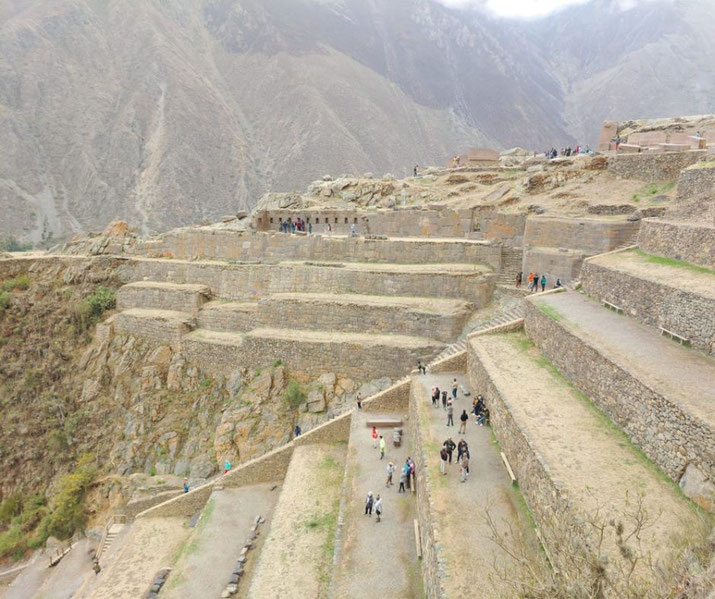
The Temple of the Sun was likely used for important ceremonies, possibly aligned with solstice observations and dedicated to Inti, the sun god central to Inca religion.
The unfinished state of the wall has prompted debate among scholars, with some suggesting construction was halted by the arrival of the Spanish.
Terraces were arranged in uniform bands that followed the mountain’s slope, each of which was reinforced by finely cut stone retaining walls and which was linked by steep staircases.
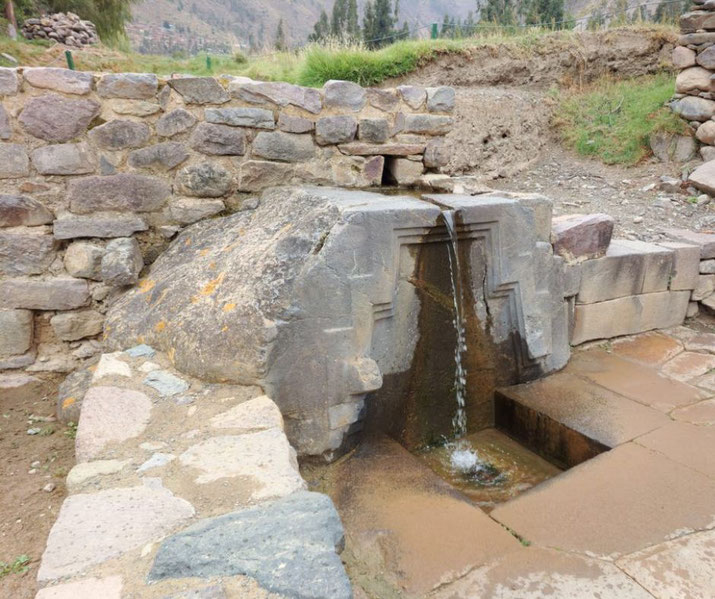
Below the terraces, water channels, which were carved directly into the bedrock, directed clean water into houses and fountains and also irrigated adjacent agricultural plots.
Storehouses on the high ridges used natural air currents to keep maize and tubers dry for longer.

Within the residential district, streets met at clean right angles and opened onto courtyards that provided communal gathering places.
House foundations, which used inward-leaning walls and trapezoidal openings that stabilised each structure, were built to withstand seismic activity.
Taken together, these features show how Inca engineers adapted their environment using both architectural skill and knowledge of local conditions.
Dramatic role of Ollantaytambo in the Inca resistance
By 1536, Manco Inca Yupanqui had given up hope of peaceful cooperation with the Spanish.
After his mistreatment in Cusco, he gathered thousands of warriors and retreated to Ollantaytambo, where he prepared to resist the invaders.
Manco’s forces used the site's elevation, narrow access points and water channels to turn the town into a fortified stronghold.
On 6 January 1537, Hernando Pizarro led a Spanish force into the Sacred Valley and attempted to dislodge the rebels.
His contingent likely included approximately forty cavalry and thirty foot soldiers, supported by several hundred Indigenous allies who were drawn from rival Andean groups.
As they approached the town, the Inca opened floodgates that channelled river water into the valley floor, which turned the battlefield into thick mud.
From the terraces above, Inca archers and slingers hurled stones with deadly force, which struck both men and horses.
The slings, made from llama wool and woven fibres, could launch projectiles with high speed and accuracy.
The Spanish withdrew after suffering losses, and Manco’s forces celebrated one of the few successful defensive battles fought by Inca troops against a Spanish force.
Estimates suggest that Manco commanded several thousand defenders, including both seasoned warriors and drafted peasants.
Yet Manco understood that the Spanish would return, so he led his court westward into the Vilcabamba region, where he continued a resistance that lasted about thirty-five years.
Even so, the victory at Ollantaytambo showed that Inca military strategy could adapt to European warfare and that the empire still held pockets of strength.

Post-conquest changes
After Manco’s retreat, Spanish settlers entered Ollantaytambo and imposed the encomienda system, dividing the land among themselves and using Indigenous labour to cultivate it.
Early encomenderos in the area oversaw the conversion of Inca infrastructure for colonial agriculture.
Many Inca buildings, which had Catholic symbols added or which were partially dismantled to make way for new construction, remained in use.
Even after those changes, the layout of the town survived, and the Inca foundations supported later buildings built by colonial authorities.
Over time, Quechua-speaking communities continued traditional farming techniques, repaired terraces and kept some rituals, and they adapted to new political and religious systems.
In some areas, traditional ceremonies continued and they used Catholic feast days as cover, allowing Indigenous cultural memory to persist.
Due to the continuous settlement, Ollantaytambo avoided the abandonment and destruction seen at other former imperial sites, which allowed historians and archaeologists to study it with more clarity than at many other sites.
Today, Ollantaytambo exists as both a living town and an open-air museum, where Inca and colonial structures sit side by side and visitors still use the ancient staircases, walk beside original water canals, and view the same monoliths that once witnessed an empire’s final organised defence.