
The difficult realities women faced in the Middle Ages
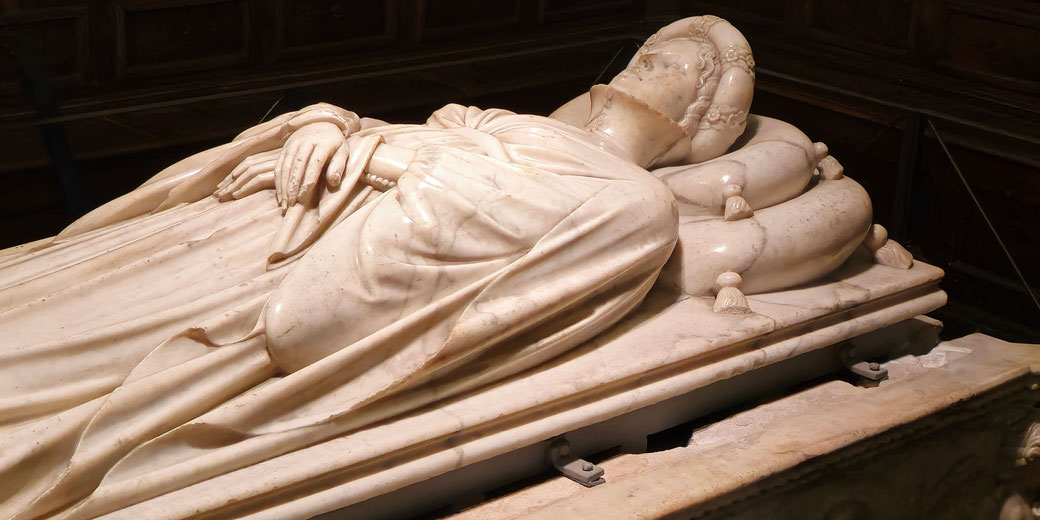
In a noble household, a woman could oversee estates and manage servants, and she could also protect family wealth during her husband’s absence, but she often had no control over her own legal identity.
In comparison, in crowded towns and farming villages, women brewed ale and wove cloth, while they also worked the land in jobs that kept households alive.
These very different experiences show that women often carried heavy responsibility at the same time that law and custom placed firm limits on them.
How life was different for rich and poor women
During this period, many women belonged to the peasantry, where life was difficult and labour-intensive.
These women worked beside men in the fields, where they tended crops and livestock that kept local farming going.
In addition to fieldwork, they baked and brewed for the household, and they also made cloth.
For some women, money came through trade and craft guilds. In cities such as Paris and London, female artisans and merchants supported local economies, and silk weavers formed one clear example.
They added to family income, and some also ran businesses of their own.
Women who were born into wealthy noble families had certain privileges, and they could hold real influence within the household and sometimes within wider society.
They often managed large estates and oversaw household staff, and they also supervised finances.
They had often been central to the stability of their lands, especially when their husbands had been called away for war or political duties.
Even so, they still faced clear restrictions in comparison with men.
Medieval marriage
Arranged marriage was very common in the Middle Ages, particularly among the upper classes.
In these arrangements, two families formed alliances that strengthened family ties and protected wealth, and the marriage confirmed the agreement.
These arrangements often included a dowry, which transferred parental property and wealth, or other gifts, to the groom’s family.
For noble families, a large dowry could raise social standing and secure political alliances.
Peasant marriages were much simpler and usually rested on practical needs rather than money or alliance.
The bride and groom usually brought fewer goods into the marriage, and they had to work together to support the household.
Did medieval women have legal rights?
In the Middle Ages, a woman’s legal rights and her dealings with the law depended heavily on social status and marital status.
The idea of coverture determined the legal position of many married women.
Under coverture, a woman’s legal rights and obligations passed to her husband at marriage, which limited her ability to own property or enter contracts and prevented her from speaking for herself in legal matters.
This system made a wife legally invisible and dependent on her husband.
Widows experienced a different legal position. They could own property and manage estates, and they could at times take part in legal disputes.
For example, the widow of a nobleman might become head of her household, and she could oversee land and tenants until her children came of age.
Unmarried women were known as femmes sole and could conduct business and own property, and they could also enter contracts independently.
These women usually had more freedom and independence than married women.
Women of the lower classes had fewer legal protections and faced heavier penalties under the law.
Peasant women, for example, came under the authority of manorial courts, which handled local disputes and offences.
These courts often enforced traditional gender roles, which left women with little recourse in legal matters.

Could women read and write in the Middle Ages?
Education and literacy were mostly reserved for the elite, and clear gender gaps existed.
By the twelfth century, literacy among women was extremely low, especially outside the nobility and convents.
Only about 1 per cent of medieval women could read. Noblewomen and nuns, on the other hand, had better chances to learn.
Hildegard of Bingen, for example, was a twelfth-century Benedictine abbess who became known for theological and scientific writing, and she also composed music.
Her works show that some women in convents had received a substantial education.
About 20 per cent of noblewomen could read and write, and many learnt Latin so that they could read religious texts and help manage estates.
Peasant women rarely had access to schooling and instead focused on household work and farm labour.
This lack of formal education kept literacy very low among this group.
Some merchant and artisan women did learn basic literacy and numeracy so that they could help in family businesses.
These skills were limited, but they still allowed women to keep accounts and write to customers.
Formal colleges and institutions such as the University of Paris and Oxford did not admit women.
Any woman who wished to follow intellectual interests often needed support from male relatives or patrons.
Wealthy figures such as Christine de Pizan could still become very well educated. She produced influential works in the fourteenth and fifteenth centuries, including The Book of the City of Ladies, which argued for women’s education and intellectual worth.
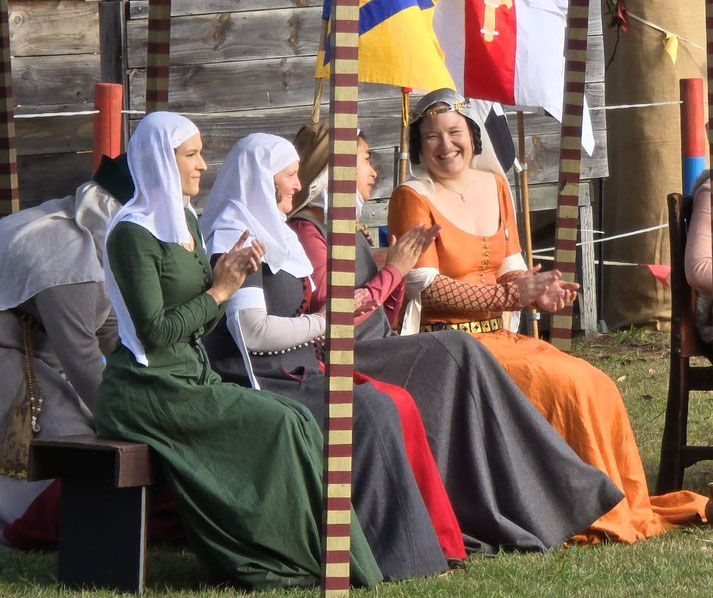
Women and the church
The Catholic Church dominated medieval society and directed much of daily life and moral expectation.
Many modern readers are surprised to find that women had a clear place in religious life at the time.
Convents offered women an alternative to marriage, and they also gave some women room for spiritual life and intellectual work.
Clare, for example, followed Francis of Assisi and founded the Order of Poor Ladies, which is now called the Poor Clares and which stressed poverty and prayer.
There was also the role of the anchorite or anchoress, which referred to a woman who chose seclusion for religious reasons.
These women withdrew from secular life so that they could devote themselves to prayer and contemplation. Julian of Norwich provides one well-known example.
Julian was an anchoress in Norwich who wrote Revelations of Divine Love, which is the earliest known book in English written by a woman.
Ordinary women outside religious communities could also take part in spiritual devotion.
Pilgrimage was a popular form of devotion that allowed women to travel to holy sites such as Canterbury or Santiago de Compostela.
Margery Kempe, for instance, undertook many pilgrimages because she wished to pursue spiritual growth and record her religious devotion in writing.
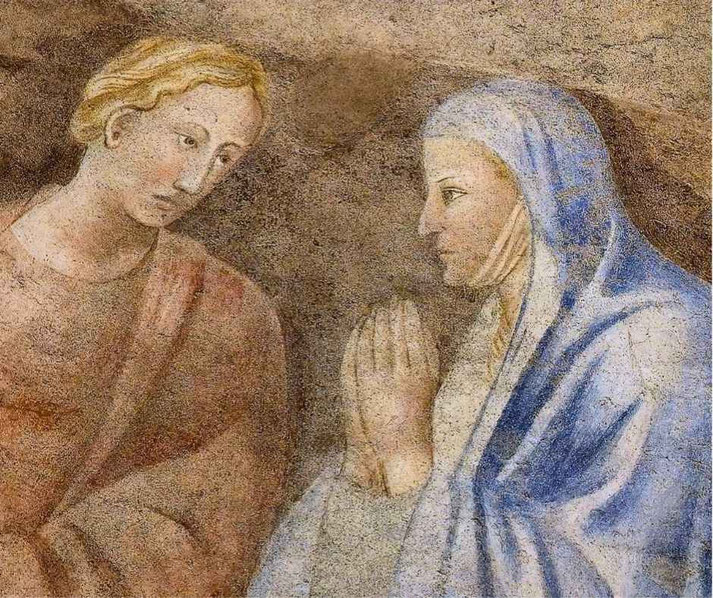
Powerful women in the Middle Ages
Patriarchal structures were a constant feature of medieval society. Even so, a number of women were able to exercise considerable power in Europe.
Queens and other noblewomen could be especially influential in politics, and female regents could be as well. Eleanor of Aquitaine offers perhaps the clearest example.
As Duchess of Aquitaine and Queen consort of both France and England, she exercised influence over two of the strongest kingdoms of the age.
Eleanor had taken part in political decisions, and she had supported her sons’ rebellions against their father, King Henry II. She had also helped administer her territories.
Isabella of France, who was known as the She-Wolf of France, was another powerful political figure.
As Queen consort of England, she led an invasion against her husband, King Edward II, and this ended with his deposition.
In the Iberian Peninsula, Isabella I of Castile showed exceptional political skill.
She worked with her husband, Ferdinand II of Aragon, and together they united Spain and sponsored Christopher Columbus’s voyage to the New World, which carried major consequences for world history.
In the Byzantine Empire, Empress Theodora was the wife of Emperor Justinian I, and she exercised significant influence over state affairs.
Her political judgement and her support for women’s rights included laws against trafficking, and this showed her effect on both political and social reform.