
Medieval table manners and dining etiquette
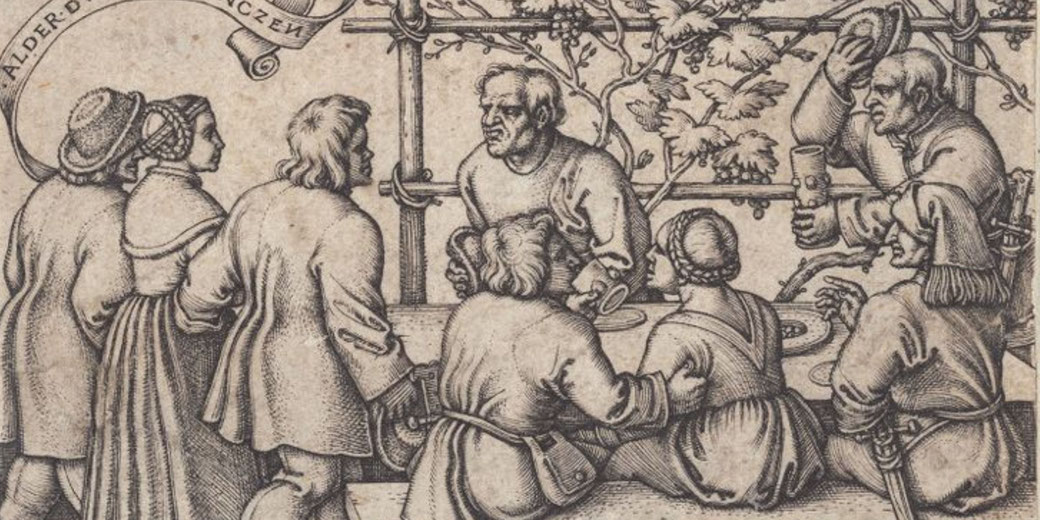
In medieval Europe, meals were thought to expose a person’s character and social rank, because the people believed that they could reveal the truth of an individual’s moral discipline by means of ritual gestures.
From the enforced silence of monasteries to the lavish displays in noble halls, the act of dining was a social performance where etiquette carried as much weight as the food itself.
Monastic rules and court manners
Across the early medieval period, specific rules for table behaviour developed most clearly within religious communities.
Monks in Benedictine houses observed strict customs that silenced conversation and replaced it with the voice of a reader who read scripture as the brothers ate.
This had been set out in Chapter 38 of the Rule of Saint Benedict, written around 530, had required a designated monk to read aloud during meals to prevent idle talk and encourage thought.
Each monk sat according to seniority, with expectations around physical posture and hand gestures which showed a discipline of that monastic rule.
For example, at Monte Cassino and similar houses, where eating was an act of restraint and obedience rather than an indulgence.
Elsewhere, feasting among the nobility displayed a looser structure, though certain behaviours still separated the refined from the uncivil.
Within manor houses, custom required that guests begin a meal with handwashing, which servants facilitated when they poured water over each person’s hands into a shared basin.
By the twelfth century, the rise of courtly manners brought with it a growing interest in personal conduct, especially during meals where guests of different social levels ate together.
Courtesy books such as Liber Urbani and Facetus, written in the twelfth century and widely circulated among wealthy households, outlined how individuals should behave in the presence of others while eating.
They warned against leaning on the table, talking with food in the mouth, or tearing meat too eagerly.
Young nobles read these instructions as part of their more extensive training in good manners, since poor behaviour at the table could cast doubt on one’s 'breeding'.
Teaching poems often gave advice as well, such as avoiding loud chewing, never reaching across a guest, and waiting until one’s superior began eating before lifting bread to one’s mouth.
Rules like these reinforced rank and shared duties through posture, tone, and the careful division of food and seating.
What were trenchers?
During most of the Middle Ages, the trencher remained the standard item used in place of a plate.
It was typically made from hardened bread or wood that soaked up grease and held meat or vegetables, which the guest either consumed directly or offered to others as a sign of generosity.
Two people often shared one trencher, which meant that etiquette included how one portioned bites, wiped hands, and interacted with the partner beside them.
Over time, households shifted from bread trenchers to wooden ones, which could be reused or gifted to the poor after banquets.
Knives were common, but always personal, since each guest brought their own knife that they used for cutting food and which they occasionally used to carry small pieces to the mouth.
Spoons appeared for broths and soft foods, although people used fingers for most dishes.
Forks had been known by the eleventh century in some Byzantine circles. A frequently cited example involves Maria Argyropoulina, a Byzantine princess who reportedly used a fork at her Venetian wedding.
Even though forks had already appeared in the Byzantine world by the tenth century, they remained absent from most of Western Europe until much later.
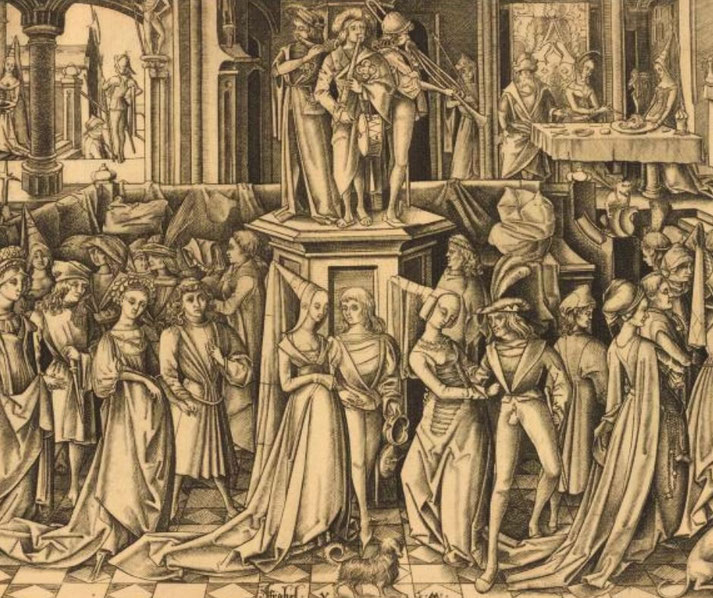
At larger feasts, formality often became performance because events marking weddings, coronations, or religious festivals featured multi-course meals provided by an organised team of staff.
Pantlers typically managed the bread, butlers typically oversaw the wine, and carvers displayed skill by slicing meats.
In royal households such as those of France and England, high-ranking officials like the dapifer and seneschal traditionally arranged service and seating, though by the later Middle Ages their functions had often become more symbolic.
The order in which dishes appeared showed the order of rank among those who received dishes.
For example, important guests usually received the finest portions, while lower-ranked attendees waited for their turn.
Between courses, musicians and storytellers frequently performed for the guests to add to the event rather than to distract.
Everything generally unfolded according to an established routine that showed power and polished manners and that included the position of chairs and the removal of dishes.
The wedding feast of Richard II and Anne of Bohemia in 1382 was accompanied, for example, by several days of celebration and included unusual dishes, ceremonies and displays, and a tightly regulated order of service.
What about the commoners?
Among the common folk, dining customs largely retained many of these principles in a more basic form because people in rural communities or crowded towns lacked access to instructional books and learned from observation and oral tradition.
Parents often corrected their children who reached greedily, interrupted elders, or wiped their hands on clothing.
At village feasts, harvest celebrations, and church gatherings, people often watched how others passed bread, portioned meat, or waited for their neighbours to begin eating.
Just like with the upper classes, in these shared settings, a person’s manners could affect their reputation or their inclusion in future events.
Copying of noble customs slowly spread into common behaviour, especially among wealthier merchants and craftsmen who wished to seem respectable.
By the fifteenth century, dining etiquette among the upper classes had grown increasingly complicated because courts in Burgundy and northern Italy had introduced new customs which included the use of cloth napkins, individual goblets and polished serving dishes.
Written guides by Renaissance thinkers such as Erasmus often argued that manners revealed a person’s inner qualities and should not be neglected.
His 1530 treatise De Civilitate Morum Puerilium became a widely read manual which taught children how to behave at the table.
Napkins no longer hung on belts or shoulders but lay folded near the trencher, ready for discreet use, and servers carried ewers, which they used to rinse hands between courses, as the courses were served.
At banquets where dozens of dishes might appear across several hours, coordination and conduct often mattered as much as flavour.
As a result, by learning how to behave at the table, people generally learned their place in the world and showed whether they deserved the company they kept.