
The extraordinary journey of Marco Polo and his 'revelations from the East'
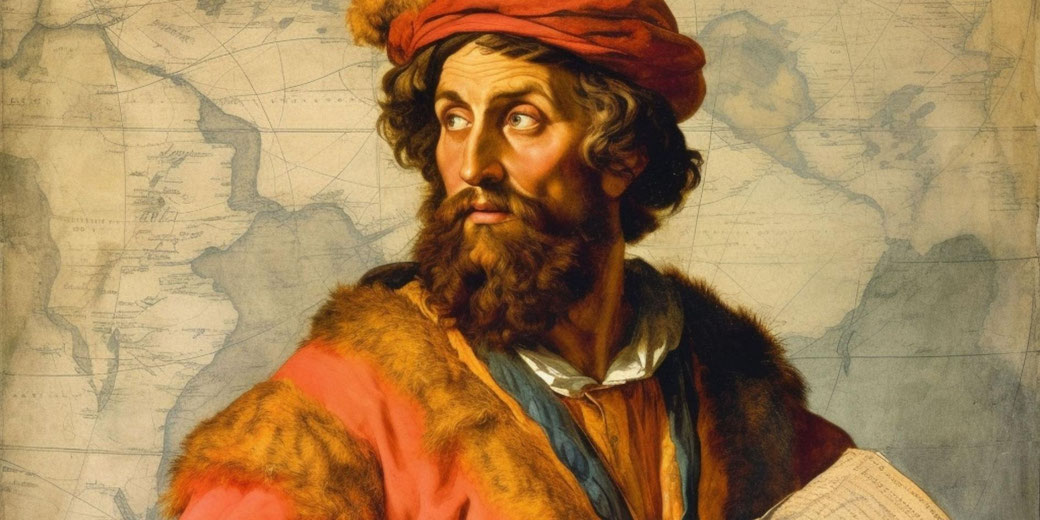
In the history of exploration, very few people are as famous as Marco Polo. He was born into a wealthy Venetian merchant family in 1254, and would go on to venture well outside the boundaries of his native Europe.
His extraordinary journey, from the Byzantine splendour of Constantinople to the distant court of the Mongol emperor Kublai Khan, would arguably transform the European understanding of the world.
His vivid accounts of the far-reaching Silk Road and life under the Mongol Empire provided a window into a world that was otherwise inaccessible to his contemporaries.
Early life of Marco Polo
Marco Polo was born in 1254 into a prosperous merchant family in the bustling city-state of Venice, which was a maritime republic that was known for its trade prowess and its network of canals, as well as its diplomatic expertise.
It was this backdrop of commercial drive and maritime adventure that provided the foundation for Polo’s later expeditions.
His father Niccolò Polo and his uncle Maffeo Polo were pioneering merchants themselves.
Their initial journey to the East had already become part of family lore by the time of Marco’s birth, and during this journey, they had reached the court of Kublai Khan in China.
Niccolò had left his wife pregnant with Marco when he embarked on this journey, and would not return until his son was a teenager.
Due to these circumstances, Marco Polo’s upbringing was defined by the absence of his father.
He was raised by his mother until her death and then by his extended family, and he received a typical education of a Venetian gentleman, where he learned about classical literature and philosophy, as well as the basics of bookkeeping and the commercial trade.
He also learned to read and write in Italian, and may have picked up some knowledge of sailing.
In 1269, when Marco was around fifteen years old, his father and uncle returned from the East with wondrous tales of distant lands and a mission from Kublai Khan himself.
He was intrigued by their stories, and young Marco found himself at the threshold of a wide unknown world, one that he would soon come to know in great detail.
Marco Polo's journey to the East
In 1271, the Polo family, which included Marco and his father Niccolò, as well as his uncle Maffeo, embarked on a remarkable journey that would span over 15,000 miles and nearly two decades.
The Polos’ voyage was commissioned by Kublai Khan, who was the fifth Khagan of the Mongol Empire and who had requested that they return with scholars and priests to teach Christianity and Western customs to his court.
They set sail from Venice and journeyed through the Mediterranean Sea before they reached the rugged lands of the Middle East, and they followed the established routes of the Silk Road.
They travelled through Armenia and Persia (modern-day Iran), as well as Afghanistan, and they crossed the Pamir Mountains and the daunting Taklamakan Desert, which was sometimes called ‘The Desert of Death’.
Throughout this journey, young Marco Polo was introduced to a wide range of cultures and customs that were vastly different from his own.
He encountered various religious customs and a variety of languages, as well as a wide range of goods, which enriched his understanding of the world with every step.
His exposure to the Silk Road was a significant aspect of his education as a traveller, as the Silk Road was an essential route for trade and communication, as well as cultural exchange between the East and West.
From the steppes of Central Asia, the Polos moved into the Mongol Empire, which was arguably the largest connected land empire in history.
There, they crossed paths with tribes and communities that lived under Mongol rule, and they witnessed first-hand the extent and influence of the empire.
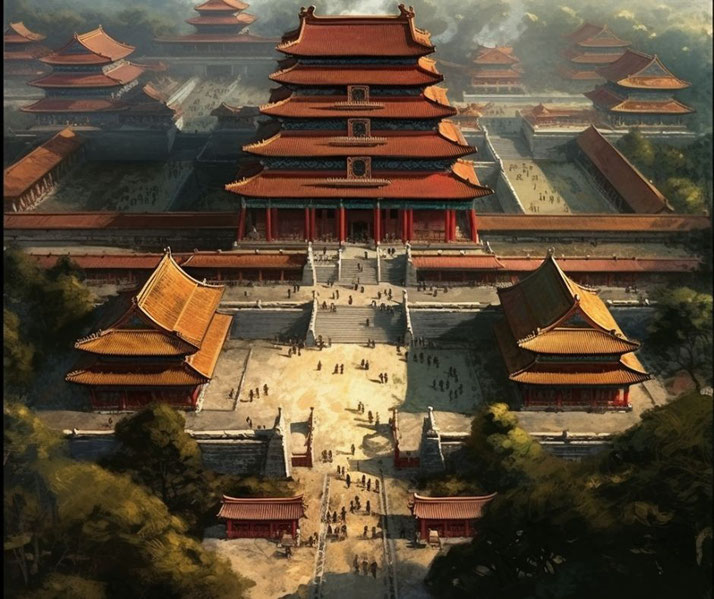
After an exhausting journey that had lasted over three years, the Polos finally arrived at Kublai Khan’s luxurious court at Shangdu, which was also known as Xanadu, in 1275.
Marco Polo's exploration of Yuan China
Upon reaching the Mongol Empire, the Polo family was warmly welcomed by Kublai Khan.
His court in Shangdu was a place of extraordinary splendour, which was filled with the richness of many cultures.
Kublai Khan was impressed by young Marco’s intelligence and keen awareness, and he appointed him to work in his court.
During his service, Marco undertook various administrative and diplomatic roles, and he even acted as a special envoy for the Khan.
These positions allowed him to travel across the wide stretches of the Mongol Empire, from Southeast Asia to India and possibly even Burma.
This period in the Mongol Empire was one of peace and prosperity, as well as cultural exchange, and it was known as the Pax Mongolica.
Marco’s keen observations during this period provided invaluable information about the social and political structures of the Eastern world, as well as its cultural makeup.
He noted the Mongols’ efficient postal system and their use of paper money, as well as the empire’s system of public welfare, which included provisions for the care of the elderly and the poor.
Marco also wrote extensively about the splendour of the cities that he visited, such as Hangzhou, which he described as arguably one of the most beautiful and luxurious cities in the world.
He noted the abundance of silk and spices, as well as precious stones, the likes of which were unknown in the West.
He described with awe the towering mountains of Tibet and the tropical richness of Burma, as well as the varied cultures of India.
His return to Venice
After nearly 17 years in the court of Kublai Khan and travelling across the Mongol Empire, Marco Polo and his family began to long for their homeland, Venice.
The ageing Khan had grown fond of the Polos and was initially reluctant to let them leave, but an opportunity soon presented itself that would allow for their departure.
In 1292, the Polos agreed to escort a Mongol princess, Kokachin, to Persia where she was to marry a Persian prince, a task that would allow them to finally return home.
They took a different route from their initial journey and embarked on a dangerous two-year sea voyage that took them through the South China Sea and across the Indian Ocean, as well as through the Arabian Sea to the Persian Gulf.
The journey was filled with risks and dangers, including storms and diseases, as well as pirates.
Upon reaching Persia, they discovered that the Persian prince had died during their journey.
The princess was then married off to a local noble, and the Polos continued their journey overland, through Constantinople, and finally reached Venice in 1295.
When they returned home after 24 years, they found Venice at war with Genoa. Their long absence and their Eastern clothing had led to them being initially unrecognised by their own family.
However, their tales of the Mongol Empire and their return with precious treasures soon restored their status.
Tragically, soon after their return, the war with Genoa intensified, which led to Marco being captured and imprisoned during a naval battle in 1298 that was known as the Battle of Curzola.
The remarkable reason we have his life story
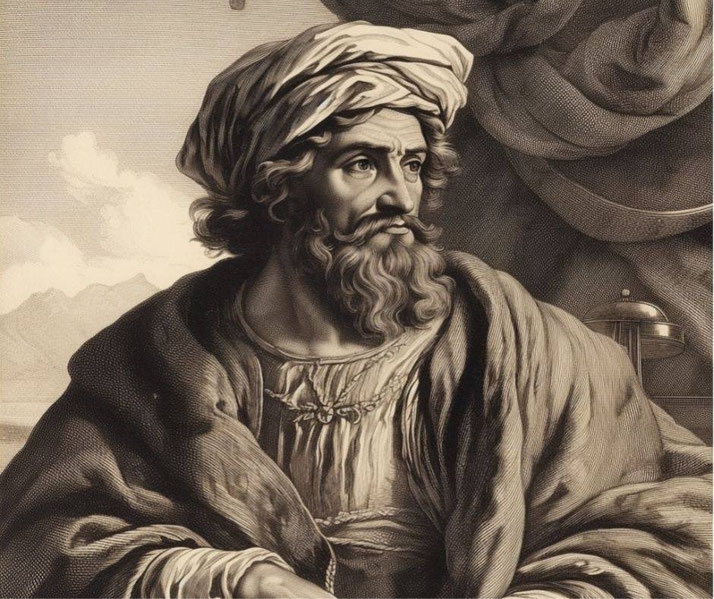
During Marco Polo’s imprisonment, he came into contact with a fellow prisoner: Rustichello da Pisa.
Rustichello was a writer of romance novels, and he quickly became captivated by Marco’s extensive tales of travel and adventure.
He recognised the value and appeal of these stories and decided to help Marco record his experiences.
This collaboration resulted in The Travels of Marco Polo, which was often known as Il Milione, and it was a collection of Marco Polo’s travels and observations across the Mongol Empire and other Asian territories.
The account was filled with vivid descriptions of far-off lands, and it was unlike anything that had been seen in Europe at the time.
Marco’s tales painted a picture of a world that was previously unimaginable to his contemporaries.
He detailed the wealth of the East, its majestic cities, the customs and cultures of its people, and the breadth of Kublai Khan’s dominion.
Furthermore, his detailed observations on the political and administrative workings of the Mongol Empire, his descriptions of commodities and currencies, as well as trade customs, and the depiction of the fauna and flora of the East, as well as its geography, provided unprecedented information about a world that was unknown to the West.
The Travels of Marco Polo became immensely popular, and manuscripts rapidly spread throughout European territories.
Marco Polo's later life and death
Upon his release from Genoese captivity in 1299, Marco Polo returned to Venice, a city that he had left as a teenager and had only returned to briefly before his capture.
There, he took up the life of a Venetian merchant and lived relatively quietly after the extraordinary adventures of his youth and early adulthood.
He married Donata Badoer, who was a woman from an old and respectable Venetian family that was not particularly wealthy or influential.
Together, they had three daughters: Fantina and Bellela, as well as Moreta.
He spent much of his later years managing his household and participating in local events, and he likely shared tales of his travels with an ever-eager audience.
Marco Polo also continued his business ventures, and he established himself as a well-respected figure in the local merchant community.
It is known that he owned several trading vessels and was a prominent figure in the local commodities market.
His business dealings and his family’s historical involvement in the Asiatic trade likely made him a wealthy man, which provided a comfortable life for his family.
On 8 January 1324, Marco Polo passed away after he had fallen ill. On his deathbed, he was asked to take back his stories and to admit that they were falsehoods that had been made up from hearsay and imagination.
His response was firm: ‘I did not tell half of what I saw, for I knew I would not be believed.’
Marco Polo's impact on exploration
Marco Polo’s detailed descriptions of the lands and cultures of Asia, as well as its resources, had a significant influence on European cartography and exploration.
Before his accounts, maps of Asia were based largely on guesswork and mythology, and Europe’s understanding of the world had been centred primarily on its own continent.
Polo’s book provided cartographers with a wealth of new and detailed geographic information.
He described landscapes and cities, as well as routes, with such detail that his accounts became a crucial reference for mapmakers.
These descriptions, which were coupled with tales of the immense wealth and resources of the East, created a more accurate and appealing picture of Asia, which likely sparked a surge of interest and exploration.
Among the most notable of these were the Catalan Atlas of 1375 and the Fra Mauro map of 1459.
The Catalan Atlas was created by the Jewish cartographer Abraham Cresques, and it was one of the most advanced world maps of its time.
It incorporated much of Polo’s information, especially his descriptions of China and Southeast Asia.
Similarly, the Fra Mauro map was a comprehensive mappa mundi that used Polo’s accounts as a significant source, and it accurately depicted Asian geography and captured the rich culture and prosperity of the East.
Outside of cartography, Marco Polo’s influence also reached the field of exploration itself. His accounts stirred the curiosity and aspirations of explorers and prompted them to see these foreign lands for themselves.
Christopher Columbus was inspired by Polo’s descriptions of the wealth of the East, and he embarked on his voyage in search of a quicker route for trade, which eventually led to the discovery of the New World.
Columbus even had a copy of Polo’s book among his possessions, and he used it as a guide and a source of inspiration.
Ongoing criticisms of Marco Polo's account
Marco Polo’s travels have captivated the imagination of the world for centuries. His accounts have also been the subject of considerable controversy and debate.
Many of these disputes arise from the unlikely nature of certain elements of his account and the lack of specific mentions of significant cultural aspects in his writings.
One of the most frequently cited points of disagreement concerns Polo’s silence on certain distinctly Chinese cultural aspects.
For instance, Polo does not mention the Great Wall of China or tea, as well as chopsticks, all of which are central elements of Chinese culture.
This silence had led many scholars to question whether he had ever visited China at all.
However, other historians argue that the Great Wall as we know it today did not exist in Polo’s time. Tea was consumed widely in China, but it might not have been a noteworthy aspect for Polo.
The descriptions of fantastical beasts and mythical figures, like the gigantic bird that was known as the roc and the Christian monarch Prester John, have also led some to dismiss Polo’s account as imaginative fiction.
Others, however, argue that these could be misinterpretations or exaggerations of real phenomena or figures, which were not uncommon in medieval travel literature.
Marco Polo’s detailed descriptions of the luxury of the Mongol Empire and the immense wealth of the East have also been met with scepticism.
However, these descriptions align with other historical accounts of the era and could be due to Polo’s desire to communicate the exotic nature and splendour of the East to his audience.
Moreover, the absence of Marco Polo’s name in Mongolian and Chinese records has been cited as evidence against his claims.
However, supporters argue that such an omission is not conclusive proof against his presence, considering the considerable size of the Mongol Empire and the scope of its administration.
These controversies persist. There is, however, no denying the profound influence of Marco Polo’s accounts on the European perception of the East and the subsequent push towards exploration.
Whether entirely accurate or sprinkled with exaggeration, Marco Polo’s accounts are still a valuable chronicle of 13th-century Asia through the eyes of a Westerner, and they are permanently recorded in the history of exploration and discovery.