
The Inca Civil War: Why two brothers fought each other to control an empire
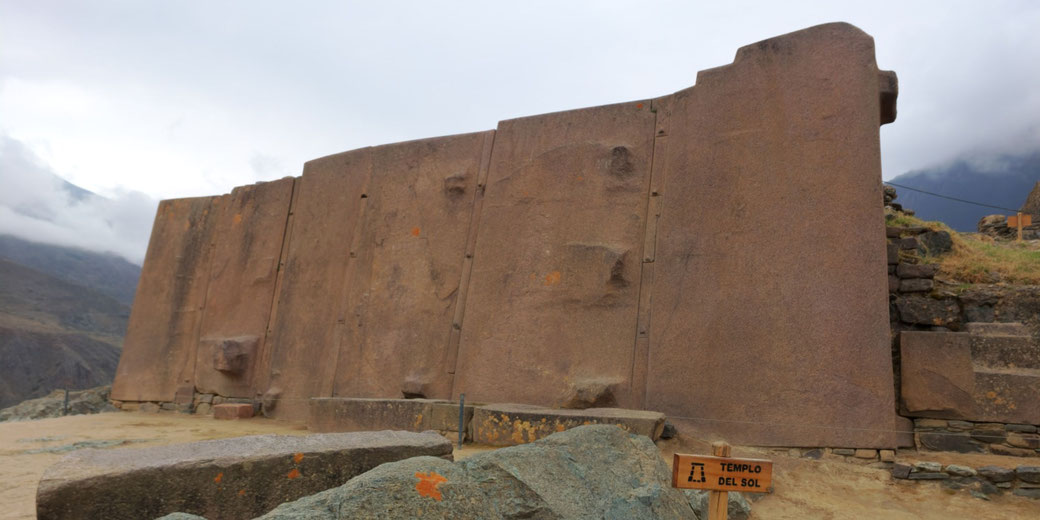
The powerful Inca Empire was at its height in the Andes mountains when a sudden empty throne started a heated conflict in the royal family.
Refusing to submit to the capital city of Cusco, Atahualpa rallied northern forces against his brother Huáscar, and turned political tension into long-running war.
By the time victory was secured, the empire had been weakened enough for the Spanish to snatch the advantage and bring down the empire.
How the Inca Empire had become a superpower
The Inca Empire was at its peak and was a marvel of organisation and power, which stretched along the western coast of South America and encompassed parts of modern-day Peru, Ecuador, Bolivia, Chile, as well as Argentina.
The empire was founded in the early 13th century by the first Sapa Inca, Manco Cápac, and it flourished under a succession of rulers, each of whom expanded its territories and influence.
By the early 16th century, the Inca Empire was arguably the largest empire in pre-Columbian America, and it had a sophisticated network of roads and agriculture, as well as administration.
Huayna Capac was the 11th Sapa Inca, and his death around 1525 set off a chain of events that would lead to the empire’s downfall.
Huayna Capac had died from a mysterious illness, which was believed by many historians to be smallpox that had been brought by Europeans. The disease had begun to spread throughout the empire even before the arrival of the Spanish conquistadors.
His death left a power vacuum, as he had failed to name a clear successor.
How the Inca Civil War began
The most immediate cause of the Inca Civil War was the succession dispute between the brothers Atahualpa and Huáscar, which followed the death of their father, Huayna Capac.
In the absence of a clear heir, the empire was divided, as Atahualpa ruled the northern part from Quito and Huáscar ruled the southern part from Cusco.
Long-standing tensions within Inca society added to the succession issue.
The empire had expanded rapidly under previous rulers and had absorbed a wide range of cultures and peoples.
This expansion was a source of strength, but it also brought challenges. The territories that had been newly conquered, particularly those in the north, were not fully integrated into the Inca political system.
Atahualpa had spent much of his life in these northern regions and was viewed with suspicion by the nobility in Cusco, who considered themselves the true guardians of Inca tradition. His rise to power in Quito was seen as a threat to the established order.
Meanwhile, Huáscar had the support of the Cusco elite and was perceived as a defender of the old ways.
His rule, however, was defined by attempts to centralise power and to assert greater control over the provinces, which alienated many local leaders.
This centralising tendency was combined with Huáscar’s increasingly autocratic behaviour, and together they created cracks within the empire that Atahualpa could exploit.
The final spark for the civil war came when Huáscar felt insecure about his position and demanded that Atahualpa come to Cusco to swear allegiance.
Atahualpa interpreted this as a trap and refused, and he instead prepared for war.
The conflict that followed was both a battle for the throne and a struggle between two visions for the future of the Inca Empire.
The most important events of the conflict
The Inca Civil War was a violent and prolonged conflict that devastated the empire from 1529 to 1532.
It began when Huáscar felt threatened by his brother Atahualpa’s power in the north and sent an army to subdue him.
The initial skirmishes were inconclusive. Atahualpa had his base in Quito and had the advantage of support from the territories in the north that had been recently conquered, and whose leaders saw in him a chance for greater independence from Cusco’s control.
He also had the loyalty of several important generals, including the feared Chalkuchimac, who would prove critical in the conflict.
In contrast, Huáscar’s support was centred around the traditional Inca heartland and its seasoned but somewhat overconfident military.
The turning point came in 1531 with the Battle of Chimborazo, which was a critical encounter where Atahualpa’s forces, who were led by Chalkuchimac, inflicted a crushing defeat on Huáscar’s army.
This victory significantly weakened Huáscar’s position and led to defections among his forces.
In the aftermath of Chimborazo, Atahualpa’s forces swept southward, and they captured important cities and won support along the way.
Huáscar was increasingly isolated and was finally captured in 1532 near Cusco.
With his brother now a prisoner, Atahualpa declared himself the sole ruler of the Inca Empire.
The sudden arrival of the Spanish
Unfortunately, the conflict had weakened the once-mighty Inca state and had left it vulnerable to external threats as well as internal divisions.
The war’s most immediate consequence was the strengthening of Atahualpa’s power as the undisputed ruler of the empire. His victory, however, was short-lived.
In 1532, just as Atahualpa was preparing to assert his authority over the entire empire, Francisco Pizarro and his band of Spanish conquistadors arrived in Peru.
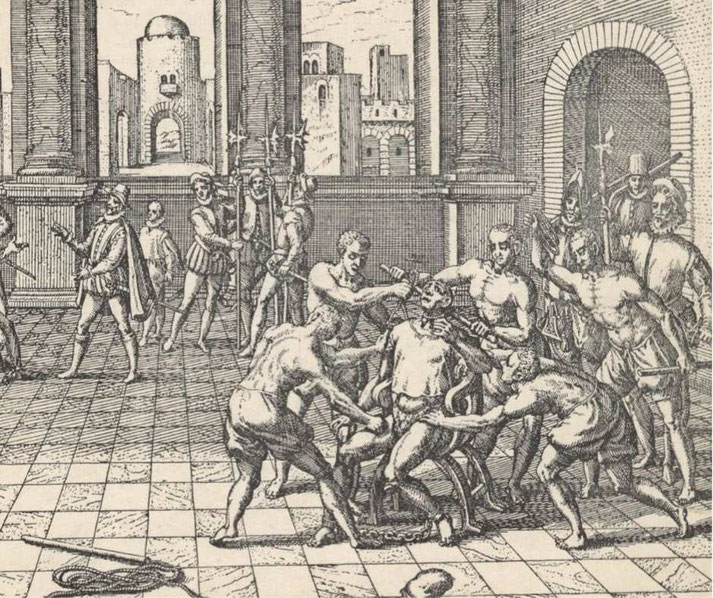
The Spanish, who had superior weaponry and tactics, quickly took advantage of the unrest that had been caused by the civil war.
Pizarro captured Atahualpa in the Battle of Cajamarca in November 1532 and effectively took control of the empire.
The ransom and eventual execution of Atahualpa was arguably the beginning of the end for the Inca Empire.
The fall of the Inca Empire had far-reaching consequences for the region’s indigenous peoples.
The Spanish imposed their own political and social systems, as well as economic ones, and this completely changed the Andean way of life.
The introduction of new diseases, such as smallpox, further devastated the indigenous population and led to a dramatic decline in their numbers.
The once-powerful Inca Empire had dominated the Andean region but was now replaced by Spanish colonial rule.