
The 4 greatest Inca rulers who built an empire
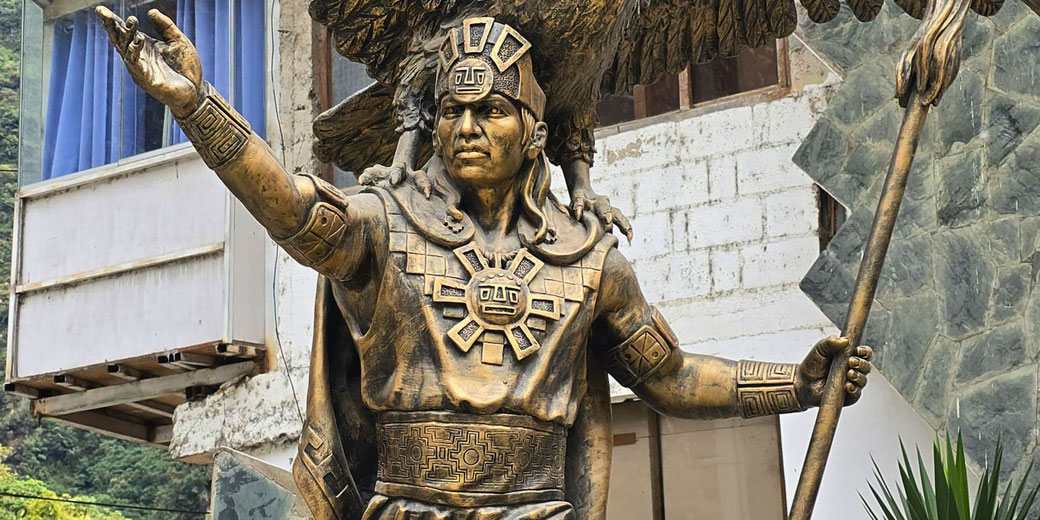
During the 1400s and early 1500s, four Inca rulers turned a small highland kingdom into what was widely considered the largest empire in the Americas.
From the mountain city of Cusco, they organised military campaigns that brought many rival states under control, introduced formal tribute arrangements and built an administration that ranked among the most effective of its age.
As their armies crossed deserts, scaled mountains, and advanced into forested lowlands, their political vision reached across an area of about 2 million square kilometres, including an estimated 10 to 12 million people, and over 40,000 kilometres of roads that spanned what they called Tawantinsuyu.
1. Pachacuti: The Empire Builder
By the middle of the 15th century, Cusco remained a regional centre ringed by powerful rivals.
At the moment of greatest danger, when the Chanca invaded around 1438, and the reigning Sapa Inca was Viracocha, and he had retreated with his chosen heir Urco.
In their absence, it was Cusi Yupanqui who assumed control, but he was a younger son.
Regardless, he gathered remaining warriors, coordinated their defence of the city, and defeated the invaders in a battle that was remembered for its brutality and tactical skill.
According to chroniclers such as Juan de Betanzos, soon after, he declared a new name for himself: Pachacuti, a term which referred to a cosmic upheaval or world reversal.
It clearly conveyed his intention to redefine the future of his people.
Soon afterwards, he rebuilt Cusco. He redesigned the capital into a symbolic and administrative centre, with separate quarters that housed temples, elite residences and ordinary dwellings.
He commissioned Coricancha, a temple dedicated to Inti, the sun god. He also ordered the construction of Sacsayhuamán, a large ceremonial and defensive site that guarded the city.
He centralised state ritual and made religion a tool of empire when he connected the Sapa Inca’s authority to sacred order.
At the same time, he formalised new political structures. He divided the empire into four quarters, or suyu, Chinchaysuyu, Antisuyu, Collasuyu and Cuntisuyu, which were each governed by officials appointed from the royal family.
He reinforced rules of succession, gave quipucamayocs greater responsibility to manage tribute, and standardised quipu practice to improve the empire's record-keeping.
Eventually, he began a series of expansion campaigns that brought many neighbouring highland and coastal societies under his rule.
His forces used both intimidation and persuasion and often invited local leaders to accept Inca authority in exchange for limited autonomy.
If they resisted, his generals would besiege their strongholds, seize territory, and move populations to break the power of local loyalties.
Roads, rest stops, and storage houses, which followed the army, allowed rapid movement across long distances.
By the time of his death, Pachacuti had transformed Cusco into the centre of an empire that stretched across hundreds of kilometres in every direction, incorporating regions such as Lake Titicaca and Arequipa into Tawantinsuyu.
2. Topa Inca Yupanqui: The Great Expander
After Pachacuti’s death around 1471, power passed to his son, Topa Inca Yupanqui.
Already widely recognised as a skilled general, Topa Inca quickly launched new campaigns northward, where the Andes rose into the highlands of present-day Ecuador.
There, he fought against the Cañari and other tribes, who resisted the Inca with fortified cities and guerrilla tactics.
In response, he often used mobile field armies and siege engineering to overcome their defences and install provincial governors who reported directly to Cusco.
At the same time, he strengthened imperial control over coastal polities such as the Chincha, who controlled key trade routes and important resources.
In order to stabilise these regions, he reinforced alliances with local elites through marriage and gift exchange, while also ensuring loyalty through the use of state surveillance and mitmaq resettlements, which moved groups to reduce regional loyalties.
Under his rule, the empire expanded from central Peru to southern Colombia, and he created new regional centres such as Huánuco Pampa and Tambo Colorado to coordinate tribute and military logistics.
According to chroniclers such as Pedro Sarmiento de Gamboa, he reportedly also sent a long-range sea expedition into the Pacific.
While modern scholars question the full extent and historicity of the journey, the account suggests that Topa Inca attempted to extend Inca awareness, and possibly control, far into the ocean.
The ships, which were constructed from balsa wood and lashed together with rope, carried hundreds of men and supplies.
Their goal may have been either discovery or diplomacy, and the fact that such an operation was reported at all suggests the ambitious scope of Inca plans during his reign.
The islands that they claimed to have reached were unconfirmed and possibly mythical, and they were referred to as Nina Chumpi and Hahua Chumpi.
To maintain control over the empire, Topa Inca reorganised its infrastructure. He directed the construction of additional roads and tambos and ordered the fortification of key mountain passes.
At the same time, he continued to enforce religious conformity to ensure that subject peoples paid respect to the cult of Inti.
Toward the end of his reign, he prepared for succession when he gradually transferred ceremonial and administrative responsibilities to his son, Huayna Capac.
3. Huayna Capac: The Last Powerful Sapa Inca
After inheriting the throne around 1493, Huayna Capac turned his attention to strengthening control over the distant northern provinces.
He spent much of his reign in present-day Ecuador, where the mountain terrain and varied cultures of the region made it difficult to enforce central authority.
Nonetheless, he used road construction, military patrols, and marriage among elites to bring the region under tighter control.
Eventually, he developed Tumibamba, in modern Cuenca, into what became a major regional centre that allowed him to command northern campaigns more effectively and manage tribute more efficiently.
Meanwhile, his engineers continued to expand the empire’s network of roads, storehouses, and fortresses, especially the northern stretches of Qhapaq Ñan.
As the population grew, state festivals generally took on even greater importance.
Priests aligned temples with solar cycles, and ritual specialists travelled throughout the empire to oversee rituals in newly conquered territories.
Huayna Capac coordinated these activities to honour the gods and to strengthen the unity of the empire.
Across distant regions, local leaders paid homage to the Sapa Inca, whose sacred ancestry was emphasised at every major ritual.
Eventually, illness struck during his time in the north, as reports from early Spanish accounts generally suggest that he died of smallpox, which likely had arrived overland ahead of the conquistadors.
His sudden death created a dispute over succession. Although Huáscar, based in Cusco, claimed the throne, Atahualpa (who had remained with the northern army) refused to yield.
Their dispute escalated into civil war, which would soon become the greatest threat to Inca stability since its founding.
4. Atahualpa: The Last Sapa Inca
As tensions rose between Huáscar and Atahualpa, both men raised troops and strengthened key strongholds.
While Huáscar controlled Cusco and the support of the traditional nobility, Atahualpa relied on experienced soldiers and the loyalty of generals such as Chalcuchímac and Quizquiz.
Over several years, their armies clashed across the Andes and the fighting destroyed harvests, forced families from their homes and broke the lines of communication that the empire relied upon.
In 1532, Atahualpa’s forces won a clear victory at the Battle of Quipaipán. They captured Huáscar, marched him in chains, and prepared to claim the throne in Cusco.
Soon after, Spanish forces led by Francisco Pizarro arrived along the northern coast. Atahualpa, who was camped at Cajamarca, agreed to meet the strangers.
On 16 November 1532, he was accompanied by an honour guard of thousands, and he entered the town’s main square, where the Spanish waited in ambush.
They attacked with horses, steel weapons, and firearms, and they killed his attendants and took the Sapa Inca captive.
Since this ambush stunned his remaining commanders, they retreated as they tried to coordinate a ransom.
Eventually, Atahualpa offered to fill a large room with gold and two others with silver, and he hoped that the Spanish would release him.
Though the treasure had arrived in full and was estimated to exceed 13,000 pounds of precious metals, the Spanish executed him anyway, claiming he remained a threat.
Apparently, they executed him only after a forced baptism, but, either way, his death destroyed the structure of Inca leadership.
Without a Sapa Inca to command loyalty, the provinces rapidly fractured into competing factions, some of which aligned with the Spanish in the hope that they would secure an advantage in the post-imperial order.
Atahualpa’s short reign showed the danger of dynastic conflict in a system where power flowed from a single source.
His generals remained loyal and his soldiers remained effective. Yet without the unifying religious authority of a formally crowned Sapa Inca, the empire crumbled in the face of fewer than two hundred European invaders.
The Spanish would later install Manco Inca as a figurehead ruler, though he later led a significant rebellion against them, but the unity of Tawantinsuyu had already broken apart.