
Cuzco's grandeur: The incredible history of the capital city of the Inca Empire
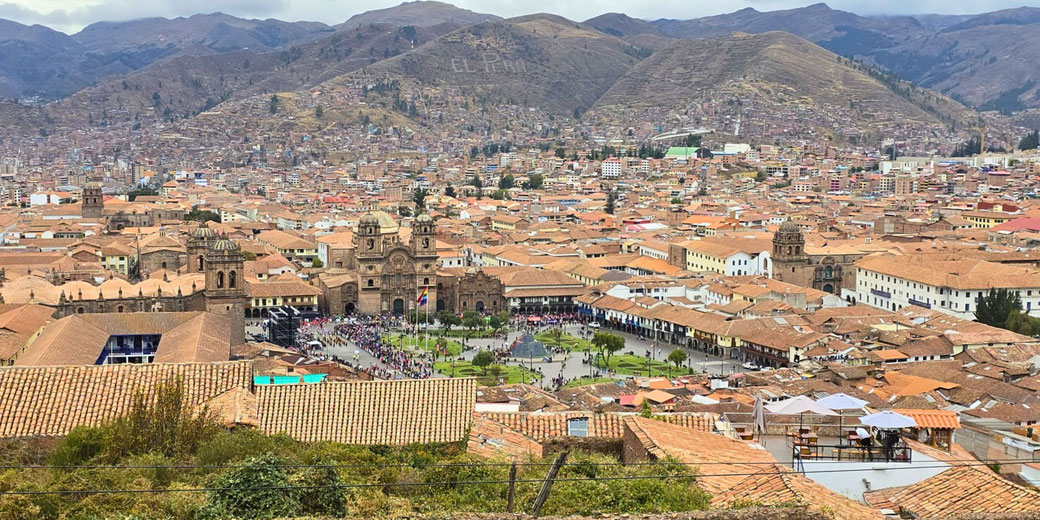
The city of Cuzco is situated in the highlands of southern Peru and was the administrative centre of the Inca Empire. For the Incas, it also functioned as the religious centre of the Inca world, where important rites justified imperial authority, while radial roads spread across the land to unite the various provinces under their control.
Ultimately, the city anchored an empire that unified different Andean people under one ruler and one vision.
The geographical brilliance of the city's founding
At over 3,300 metres (10,827 feet) above sea level, the Cuzco Valley formed a natural basin surrounded by mountains that served both defensive and symbolic purposes.
The elevation, in Inca belief, placed the city closer to the gods in the sky, while the enclosing slopes allowed watchpoints to detect approaching threats.
The Inca rulers likely selected this location deliberately, since the valley could sustain food crops, the site held long ritual importance and it offered practical advantages for managing the region.
To structure their capital, Inca planners redirected two rivers, the Saphi and the Tullumayo, so they flowed in carefully managed channels, as the watercourses then helped separate the city into two halves: Hanan Cuzco (Upper Cuzco) and Hurin Cuzco (Lower Cuzco).
This dual structure aligned with their belief in cosmic balance and reinforced the harmony between upper and lower worlds, sun and moon, male and female, ruler and people.
Importantly, Cuzco also operated as the hub of the Qhapaq Ñan, the Inca road network, which spanned over 40,000 kilometres.
From its plazas, four imperial highways extended toward the suyus, Chinchaysuyu, Antisuyu, Qullasuyu, and Kuntisuyu, each of which generally represented a quarter of the empire.
Every regional official, army unit, or sacred messenger moved along roads that originated in Cuzco.
The history of Cuzco before the Inca arrived
By 1000 BC, the Cuzco Valley had already supported farming communities that cultivated maize and raised camelids such as llamas and alpacas.
Over generations, these groups expanded their settlements and developed regional identities that included distinct pottery styles, burial practices, and ritual traditions.
As a result, long before the rise of the Inca, the valley had become a patchwork of villages connected by trade and seasonal migration.
By around 900 AD, the Killke people had established themselves in the region and contributed to early urban development.
They constructed modest defensive walls and ceremonial spaces, especially on the hill later known as Sacsayhuaman, though most of the large stonework visible today dates to the Inca period.
Archaeological evidence, such as kiln-fired ceramics, irrigation channels, and early terraces, confirms that they had already begun to alter the land for both spiritual and practical purposes.
Sites attributed to the Killke have yielded important artefacts now held in institutions like the Museo Inka.
Eventually, the Killke settlements had formed the architectural foundation for Inca construction, but the Incas built over or beside these earlier structures, to expand sacred spaces and change the meaning of existing shrines.
They placed their authority within older sacred places, which gave the new empire a clearer continuity with the past.
The dramatic arrival of the first Inca
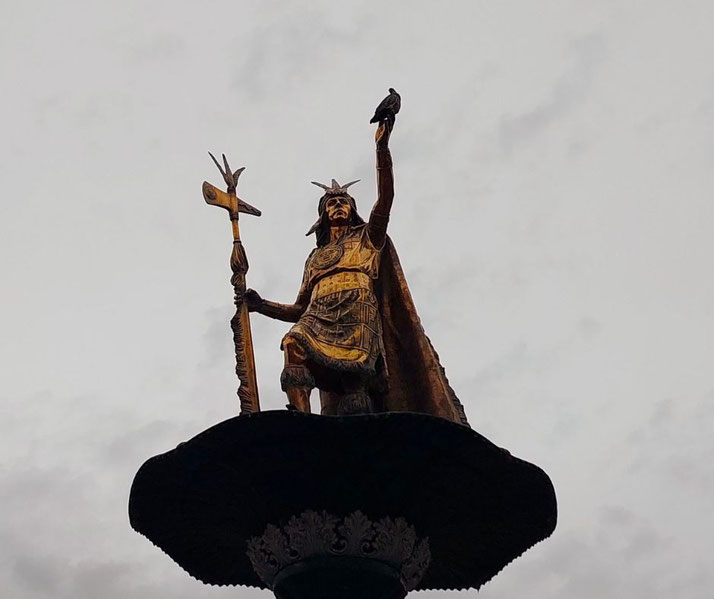
According to oral tradition, the dynasty began with Manco Cápac, who carried a golden staff gifted by the sun god Inti.
After he had emerged from Lake Titicaca or, in some versions of the myth, from the cave of Pacaritambo, he travelled toward the Cuzco Valley and planted the staff, which vanished into the soil as a divine sign.
We only know these details because chroniclers such as Garcilaso de la Vega and Pedro Cieza de León preserved their traditional stories.
Historically, the first Inca ruler likely emerged around the start of the 13th century.
At first, he had controlled only a small area around the valley. However, he formed alliances, launched raids on rival groups and positioned himself as the earthly representative of Inti, and laid the groundwork for future expansion.
Over time, successive rulers transformed Cuzco from a tribal stronghold into a royal seat that governed a growing Tawantinsuyu, or "Land of the Four Quarters."
Critically, the turning point came during the reign of Pachacuti Inca Yupanqui around the mid-1400s.
After he had defeated the Chanca people, he rebuilt the city into a planned capital that expressed his ideas about royal power: he introduced reforms to religious hierarchy, established state rituals, and commanded the construction of temples, canals, and highways.
With every new project, he turned Cuzco into a city that declared the power of the Sapa Inca in both stone and ceremony.
Spectacular architecture and urban planning of Cuzco
Coricancha, which was the Temple of the Sun, and it stood at the centre of Cuzco, where the most sacred rituals occurred.
Covered in gold panels and filled with golden effigies of animals, plants, and deities, the temple was both an observatory and a ceremonial core.
According to reports from early Spanish chroniclers, the temple may have contained as many as 700 gold sheets, each supposedly weighing approximately two kilograms, though no original sheets survive to verify these claims.
Here, priests tracked solstices using shadow lines and conducted rites to maintain harmony between the empire and the heavens.
Each Sapa Inca constructed a palace compound that functioned as both a residence and a site for worship after death.
Structures like Colcampata, Qasana, and Amaru Kancha showed the personal styles of different rulers, yet they followed a shared pattern of rectangular courtyards, trapezoidal doors, and finely fitted walls.
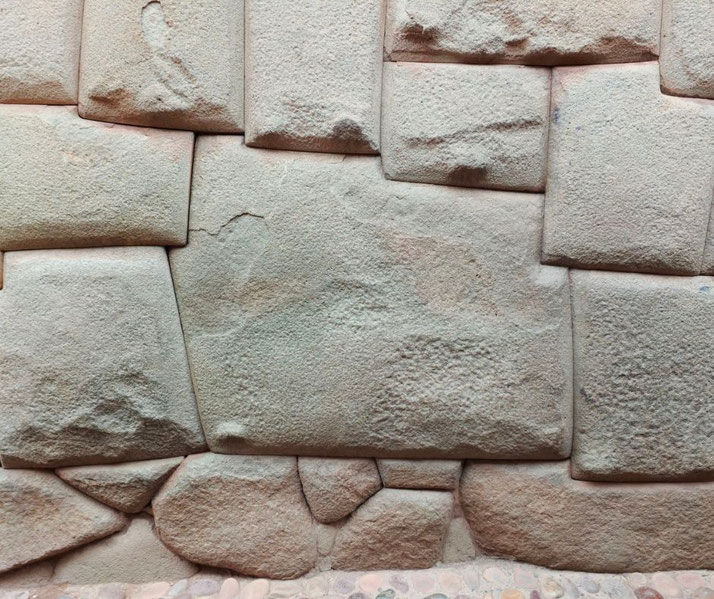
Significantly, Inca masons cut stone without mortar, using bronze tools, hammerstones of diorite, and abrasive sand to create blocks that interlocked so precisely that they resisted earthquakes.
On streets such as Hatunrumiyoc, walls display stones with more than ten angles, such as the famous twelve-angled stone, which reveals the builders' skill and patience.
Central plazas such as Haukaypata allowed thousands to gather for public rituals, military musters, and royal appearances.
At key moments in the calendar, including the Inti Raymi festival, the entire city participated in ceremonies that reaffirmed loyalty to the Sapa Inca.
From the edge of the city, administrators managed qollqas, or storehouses, that held maize, textiles, and dried meat for distribution during festivals, droughts, or warfare.
The fall of Cuzco to the Spanish
On 15 November 1533, Francisco Pizarro and his men entered Cuzco after months of conflict and political manipulation.
They had already executed Atahualpa and taken advantage of the civil war between him and Huáscar.
With the imperial court in disarray and regional loyalties fractured, the city could not organise effective resistance.
Soon after, Pizarro installed Manco Inca Yupanqui as a puppet ruler so that the Spanish could stabilise the region under their supervision.
Initially cooperative, Manco escaped the city in 1536 and returned with an army of tens of thousands, which Spanish accounts estimated at between 40,000 and 100,000 warriors.
This army surrounded Cuzco and attempted to reclaim it. For months, the city teetered on the edge of collapse, yet Spanish cavalry, steel weapons and native allies largely prevented the siege's success.
During the siege, key figures such as Hernando Pizarro and Juan Pizarro played vital roles, although Juan later died from his injuries.
After Manco’s retreat to Vilcabamba, the Spanish seized full control of Cuzco, where they looted temples, melted down sacred artefacts, and tore down ceremonial structures.
They constructed the Church of Santo Domingo over the ruins of the Coricancha, which began to rise in the decades following the conquest.
Other churches, monasteries, and colonial houses appeared across the city, often built directly atop Inca foundations.
What happened to Cuzco after the conquest?
Over time, Cuzco became a colonial stronghold, was Viceroy Francisco de Toledo, who led Spanish officials in the 1570s, introduced administrative changes and imposed Christianity.
While baroque churches rose across the skyline, the street plan continued to follow Inca foundations.
In many places, the lower walls of colonial buildings still consisted of Inca stonework, making the past visibly present.
Eventually, the city evolved into a mix of Andean and Spanish traditions. Quechua continued to be widely spoken by the majority, and many pre-conquest rituals persisted in altered form.
Even as Spanish colonists imposed new hierarchies, local artisans adapted Catholic iconography to include Andean symbols, creating a distinctive regional style later known as the Escuela Cuzqueña.
By the 20th century, Cuzco had attracted scholars and travellers drawn to its unique mixture of living heritage and archaeological remains, and after UNESCO granted World Heritage status in 1983, further restoration projects uncovered long-buried foundations and reassessed colonial additions.
After the earthquake of 1950, which had exposed extensive Inca masonry under collapsed Spanish structures, conservation work increased.
Today, visitors walk ancient streets that still follow the Inca radial plan, and beneath their feet lie layers of history that speak to conquest, survival, and continuity.