
Child kings in European history: What happened when a monarch was too young to rule?
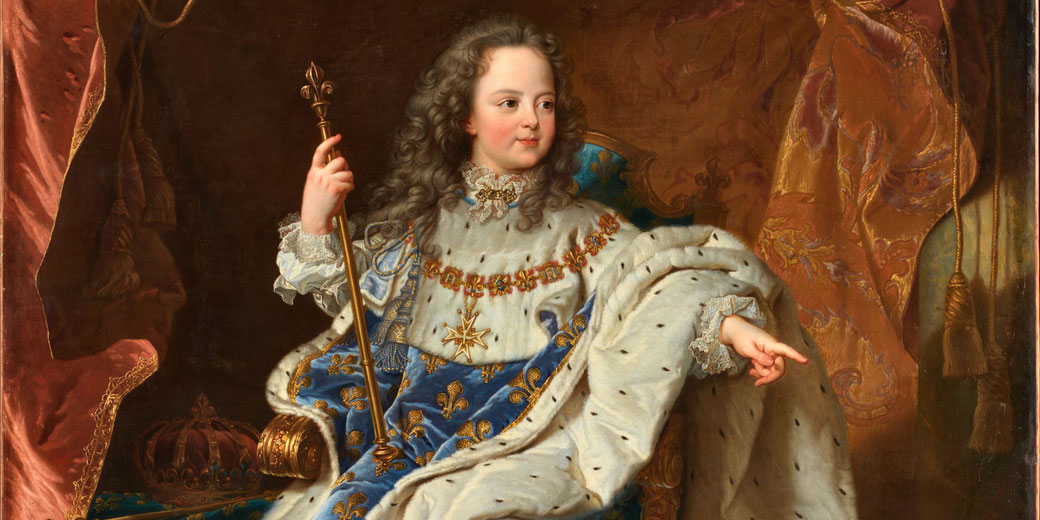
When Edward VI of England received the crown at age nine, and Louis XIV inherited the throne of France at four, their royal birthright forced entire kingdoms to be ruled in their name before they could read fluently or speak properly.
In fact, across Europe, from Scotland to Castile, dynasties followed inheritance laws that paid absolutely no attention to age, which meant that kingdoms often faced political danger the moment a minor succeeded to the throne.
As such, royal councils, regents, and royal mothers often stepped in during such fragile periods, each of whom tried to preserve order while, at the same time, secure influence for themselves.
The dangers of a regency period
To keep government running when a child inherited the throne, monarchies transferred royal authority to a regent, who ruled in the child’s name until the official age of majority.
In France, this often occurred at moments of national strain. For example, after the death of Charles V in 1380, his eleven-year-old son Charles VI became king.
Power passed to his uncles, and Philip, Duke of Burgundy, led them as he controlled the royal court while opposing nobles plotted to control policy and patronage.
Over time, the situation worsened since Charles VI became known as "Charles the Mad" due to repeated mental breakdowns left him unable to govern effectively.
As a result, the conflict between the Burgundians and Armagnacs grew into a civil war, and this seriously weakened France during its fight against England in the Hundred Years’ War.
The presence of a mentally unstable monarch, who kept the royal title but had lost the actual power to rule, caused deep fractures across the kingdom and almost certainly contributed to France's defeat at the Battle of Agincourt in 1415.
In England, the situation was equally unstable during the long minority of Henry VI who inherited the throne in 1422 before his first birthday.
It was his uncles, Humphrey, Duke of Gloucester, and John, Duke of Bedford, that actually governed in his place.
After 1437, when Henry had been declared of age, he often acted slowly and focused heavily on religion, which left him exposed to pressure from rival groups at court.
Henry, who also experienced bouts of mental illness, became increasingly dependent on his councillors and, eventually, this weakness helped trigger the Wars of the Roses in 1455, where competing noble families used the figure of the king as a tool to legitimise their own claims.
Richard was Duke of York and briefly claimed protectorate powers during Henry's periods of incapacity.
Noble factions and the manipulation of power
Under a regency, ambitious nobles regularly fought for power, since the absence of a ruling adult created space for intrigue.
In Castile, Henry III came to the throne in 1390 at age eleven, and a brief regency followed under his mother, Catherine of Lancaster, and his uncle, Ferdinand of Antequera.
At first, conflicts started between members of the royal family and other nobles who hoped to dominate the young king’s court.
Despite this, Henry matured into a capable monarch who managed to curb noble power and reassert royal authority.
In Scotland, noble rivalries often proved more violent, especially when, after James V inherited the crown in 1513 as an infant, several regents, including his mother Margaret Tudor and the Duke of Albany, took control of government.
The years that followed were largely filled with disorder, as his father, James IV, had died at the Battle of Flodden and this left Scotland weak in politics.
By sixteen, James, who had escaped the influence of his regents, began governing independently, though his reign continued to suffer from the trouble that had started during his childhood.
His marriage to Mary of Guise in 1538 aimed to bolster Catholic alliances at a time of growing religious tension.
After 1567, an even more dramatic case unfolded. Mary was Queen of Scots and abdicated in favour of her thirteen-month-old son, James VI.
During the next fourteen years, Scotland was ruled by a succession of regents, including the Earls of Moray, Lennox, and Mar.
The assassination of the Earl of Moray in 1570 further destabilised the kingdom.
As James grew older, he learned to handle court politics with care and relied heavily on books and tutors to guide his views.
By his late teens, he had begun to assert control, and he used both intelligence and careful planning to re-establish his authority in a kingdom scarred by religious and dynastic strife.
In 1603, he also inherited the English throne, becoming James I of England and uniting the crowns.
The important role of royal mothers
It was very common during a royal minority that the mothers of young kings often played an important role, regardless fo whether the regency passed to them formally or informally.
After the death of Henry II of France in 1559, Catherine de’ Medici acted as Queen Regent for her son Charles IX.
Her role during the French Wars of Religion was especially critical, during which she managed a unstable court by shifting alliances by arranging diplomatic marriages, and relying on both Catholic and Huguenot factions to keep the monarchy intact.
Her efforts, however, also contributed to one of the most worst events of the conflict, the St. Bartholomew's Day Massacre in 1572.
By contrast, Jane Seymour’s death just days after Edward VI's birth in 1537 deprived him of maternal support throughout his life.
Following his accession in 1547 at age nine, his uncle Edward Seymour became Lord Protector and began introducing sweeping Protestant reforms, including the 1549 Book of Common Prayer.
However, a combination of political resistance to his rule and his military failures, as well as the outbreak of Kett's Rebellion, led to his replacement by John Dudley, Duke of Northumberland.
Under Dudley, the court continued its reformist agenda, with Protestant reforms deepening and Dudley arranging for Lady Jane Grey to succeed Edward in an attempt to block Mary Tudor’s accession.
Edward remained largely under the influence of these men until his death in 1553 at the age of fifteen, having never governed independently.
In fact, Seymour was executed for treason in 1552, further highlighting the instability that surrounded minority rule.
Were there any safeguards for child rulers?
To limit the dangers of regency, monarchies often created councils and legal provisions that aimed to control noble interference and preserve the royal line’s authority.
In Spain, when Charles I inherited the throne in 1516 at age fifteen, the regency was administered by Cardinal Francisco Jiménez de Cisneros.
Until Charles arrived in Spain in 1517, Cisneros had used his religious and political authority to maintain centralised control, crush rebellion, and uphold Habsburg interests.
Cisneros died shortly before Charles took formal possession of the throne, and Charles, who had been born in Ghent and spoke no Spanish upon arrival, also became Holy Roman Emperor Charles V.
In the Holy Roman Empire, legal frameworks made the question of royal minorities less frequent at the imperial level, since electors chose emperors.
However, several German principalities passed power to minors. In such cases, relatives, prince-bishops, or local diets acted as interim rulers.
For example, in Brandenburg and Bavaria, regency councils often included a mix of ecclesiastical and noble figures who oversaw administration until the young prince came of age.
Although systems varied, many shared the aim of reducing disorder and preventing rivals from seizing long-term control.
How did the children finally assert their authority?
The conclusion of a regency period depended on more than legal age. While in France kings often declared majority at thirteen or fourteen, the decision to take full control depended heavily on the political situation around him.
Louis XIII reached the legal age of majority in 1614, yet Richelieu became chief minister in 1624 and directed policy until his death in 1642.
Louis XIII's son, Louis XIV, became king in 1643 at age four, and his mother, Anne of Austria, acted as regent, though real power rested with Cardinal Mazarin, who continued Richelieu's centralising policies.
Only after Mazarin’s death in 1661 did Louis assume direct control. Though he never officially declared it, he became widely associated with the phrase "L'État, c'est moi" to express the absolute nature of his rule.
In Sweden, Gustavus Adolphus succeeded to the throne in 1611, at sixteen, and immediately faced military challenges.
After he had received formal recognition from the Riksdag, he began to consolidate power and to direct campaigns during the early phases of the Thirty Years’ War.
His early exposure to military and administrative duties enabled him to transform Sweden into one of the strongest powers in northern Europe before his death in battle at Lützen in 1632.
With the support of Chancellor Axel Oxenstierna, Sweden maintained stability during the king's early years.
Ultimately, whenever a child took the throne, monarchies usually needed to find ways to preserve royal authority without the benefit of an active ruler.
Regency councils often provided short-term answers, but their success depended on the character of those who held power and the political unity of the kingdom.
Once a young king reached majority, the ability to govern effectively rested on their personal development and the strength of the institutions that guided them.