
What did people wear in the Aztec Empire?
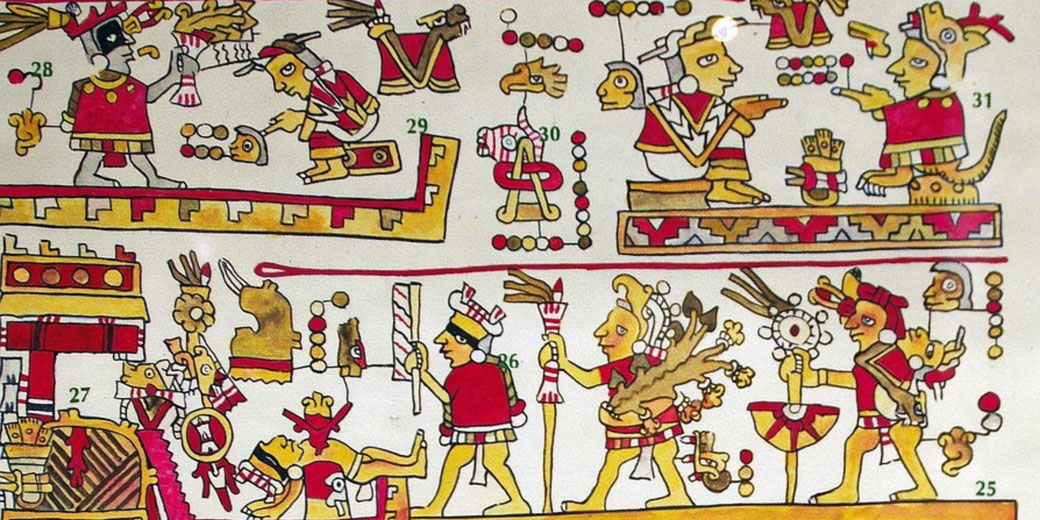
During the height of the Aztec Empire in the 15th and early 16th centuries, clothing helped maintain social order and supported religious and military expectations.
Specific garments, colours, and materials indicated status and occupation, while sumptuary laws ensured that certain outfits remained exclusive to the nobility or priesthood.
Moctezuma I's sumptuary laws, recorded in sources like the Codex Mendoza, imposed strict penalties on commoners who wore noble attire.
As such, every Aztec citizen, from the humblest farmer in Texcoco to the eagle warriors of Tenochtitlan, generally wore garments that made their place in society immediately visible.
Daily clothing of the Aztec people
For most Aztecs, daily garments focused on comfort and everyday use in a climate that demanded light and airy clothing.
Men usually wore a maxtlatl, a simple loincloth made of woven fibres that wrapped around the hips and tied with a knot.
Over their shoulders, they placed a tilma, a square or rectangular cloak, which they fastened with a brooch or knot, depending on its quality.
Often, men remained barefoot, though soldiers and long-distance traders occasionally wore sandals to protect their feet during travel.
Most women wore a cueitl, which wrapped around the lower body and tied at the waist, along with a sleeveless blouse called a huipil.
From a young age, girls learned to spin and weave, producing the textiles used within their homes.
As they matured, they adopted the attire expected of women within their family’s rank.
For example, girls born into landowning households wove their own cotton garments, while those from farming families relied on maguey fibre.
During early childhood, most children wore no clothing, especially within rural settings where this remained practical and socially acceptable.
As they grew older, they began wearing smaller versions of adult garments suited to their gender and family role.
Within farming communities, families wove their clothing from agave fibres, which produced a coarse but durable fabric suitable for manual labour.
Cotton remained rare and expensive for most people, since it had to be acquired through tribute or trade with warmer provinces such as Totonacapan and Cuetlaxtlan.
Distinctions between city and rural clothing also appeared, as people in cities like Tenochtitlan and Texcoco often wore more finely woven garments, and country towns such as Tlaxcala kept plainer and more practical styles.
This pattern aligns with evidence found in tribute records and codices that show a wide variation in textile quality across different regions.
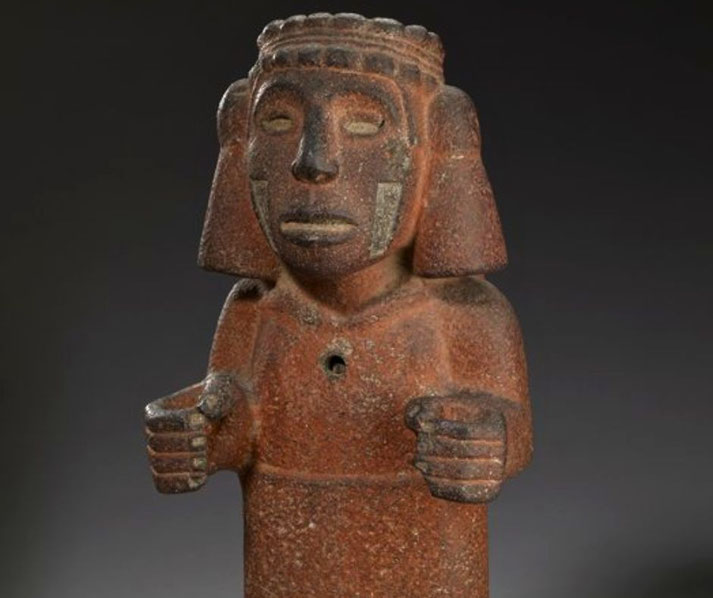
Fashion and social status in Aztec society
Social class largely dictated what people wore and also determined how their garments were woven, dyed, and decorated.
Under Moctezuma I, legal codes wrote clothing rules into law to stop commoners from copying the nobility.
For example, nobles wore ankle-length cloaks and patterned tunics dyed with imported pigments, while commoners were restricted to plain maguey garments that ended at the knee.
Anyone who broke these rules risked fines or even physical punishment.
Importantly, the elite demonstrated their status through personal decoration.
Men of high rank wore gold, jade, and turquoise jewellery, and their garments often featured featherwork, shell inlays, or embroidery.
Wealthy women tied their hair in careful braids or coils and sometimes inserted beads or coloured cords as decoration.
Hairstyles indicated both age and status, with warriors styling their hair in ways that reflected their military honours.
Slaves could not legally wear decorated or dyed clothing. They usually wore only a loincloth and went barefoot, with their plain appearance reinforcing their lack of freedom.
However, pochteca merchants often held special rights. As long-distance traders, they built up great wealth and wore high-quality cotton cloaks and sandals, though they remained below the nobility.
While they operated outside the traditional hierarchy, their clothing still conformed to limits set by law and custom.
Their status and attire were described in both pictorial codices and Spanish accounts that confirm their important yet carefully regulated position in Aztec society.
What materials were used in Aztec clothing?
Skilled weavers, who were usually women, worked with fibres that came from two primary sources: cotton and maguey.
Cotton provided soft and breathable cloth that also flexed easily, so it remained desirable for those who could afford it.
Since cotton required hot, humid growing conditions, the Valley of Mexico relied on tributary provinces for supply.
Nobles, priests, and military leaders received cotton garments as tribute, which they often wore or gifted based on rank or ceremony.
According to the Codex Mendoza, thousands of cotton garments were sent to the capital each year by provinces such as Cuetlaxtlan and Xoconochco.
By contrast, maguey fibres, often extracted from agave leaves, offered a coarse texture but allowed for widespread use among lower classes.
Maguey garments, though less comfortable, could last through heavy labour and frequent washing, making them ideal for everyday wear.
Artisans created looms suitable for both materials, and they often worked within their homes to produce textiles used for clothing, tribute, and trade.
Most women used backstrap looms, which allowed them to weave while seated, creating textiles with geometric designs and traditional patterns.
Dyeing added both colour and meaning to Aztec clothing. Artisans extracted cochineal, known in Nahuatl as nocheztli, from insects living on nopal cacti to create a brilliant red dye.
Indigo created deep blues, while plant extracts and minerals added green, yellow, and black tones.
Cloth dyed with cochineal or indigo often remained restricted to high-status individuals, and the colour combinations on a garment could indicate a person’s rank or allegiance.
These associations appear frequently in both mural art and written descriptions of court life.
Feathers added extra colour and detail. Featherworkers, who were known as amanteca, stitched shiny, colourful feathers from quetzals, parrots, and hummingbirds into cloaks, headdresses, and decorative panels.
Only trained artisans could work with feathers, and their creations appeared on royal garments, ceremonial shields, and religious costumes.
Each feather pattern made from small pieces required intense labour and careful placement, since this effort made such items some of the most valuable objects in Aztec society.
Feathers often came from distant regions, and these sources included tribute sent by Huastec and Mixtec communities.
The Florentine Codex had confirmed the scale and specialisation involved in this craft, especially among artisans based in Amantla.
Clothing and armour of Aztec warriors
Military dress showed achievement and often caused fear. As warriors captured enemies in battle, they earned the right to wear increasingly detailed and decorated clothing.
After he had made a single successful capture, a man might wear a decorated tilma or a brightly coloured tunic.
After he had achieved more victories, he won access to high-status military orders such as the eagle and jaguar warriors, each identified by a specific costume.
Other elite groups included the otomitl and the cuachicqueh, who shaved their heads and painted their faces to set themselves apart.
Eagle warriors wore feather-covered suits that included headpieces shaped like open-beaked birds, while jaguar warriors wore spotted tunics and jaguar-skin helmets,.
These outfits provided limited protection but had an important mental effect, demonstrating courage and accomplishment.
More importantly, the state awarded these garments, and only those who met the exact requirements could wear them.
Warriors also often used practical armour. They wore padded cotton jackets called ichcahuipilli, which soaked up blows from arrows, clubs, and obsidian blades.
Despite their simple materials, these jackets often protected better than metal armour used by their European enemies, since the padding stopped weapons from cutting in too far.
This success often surprised Spanish soldiers, who described the garments as hard-wearing and tough.
Warriors carried round shields called chimalli, which they decorated with coloured feathers or geometric patterns.
Each shield’s design usually indicated the warrior’s unit, rank, or military god.
Only high-ranking warriors wore sandals into battle, as the majority remained barefoot to promote quick movement and avoid slipping.
Over time, a successful warrior usually earned better clothing, land and noble titles, as well as the right to marry into noble families.
The link between military success and appearance remained tightly controlled, and the visual symbols of Aztec warfare stretched from the battlefield to the ceremonial centre of Tenochtitlan.
Ceremonial and religious dress
During public ceremonies, people usually wore specific garments designed to show meaning linked to myths or religion.
Priests often wore black cotton cloaks and painted their skin with ash or pigment to signal their role as people who maintained the order of the universe.
Many also grew their hair into thick, matted locks, which they allowed to remain uncut for years as a sign of devotion, as their appearance, though strange to outsiders, carried enormous religious authority.
During major festivals, god impersonators, who were called ixiptla, wore costumes that replicated the gods in both form and symbolism.
At Tlacaxipehualiztli, the ixiptla of Xipe Totec wore the flayed skin of a sacrificial victim over his body, dyed yellow to represent new growth of crops.
Other impersonators dressed in costumes decorated with jaguar pelts, quetzal feathers, or gold disks, and the decorations depended on the deity they honoured.
At Panquetzaliztli, impersonators of Huitzilopochtli wore hummingbird feathers and carried shields with turquoise mosaic inlays.
Ritual dancers, musicians, and female attendants also generally dressed according to sacred guidelines.
Many women wore white cotton tunics with red embroidery and carried offerings or musical instruments during festivals, and their participation helped keep the connection between the physical and spiritual worlds, and their garments reinforced their special role.
Detailed descriptions by Sahagún had recorded these customs and actions in great detail, and these accounts often noted the gendered nature of ceremonial roles.
Dress in Aztec religious life did not simply signal faith, as it enacted it. The gods demanded correct offerings, which included garments, feathers, or dyes.
To wear the wrong colour or style in the wrong ritual carried religious danger. As a result, ceremonial dress generally followed highly specific traditions that reinforced the Aztecs’ understanding of sacred power and of the political powers that set clear duties for every person.
Spanish observers such as Bernal Díaz del Castillo had recorded their surprise at the very impressive appearance of such dress, and they often wrote about how carefully made and rich Aztec ceremonial costumes were.