
What were the Stone, Bronze, and Iron Ages?

The Stone Age, Bronze Age, and Iron Age are three key eras in human history. Each age is named after the main material people used to make tools and weapons during that time.
Here, we will look at each of these ages in more detail and we will include the key events and changes that happened during each one.
The Stone Age
The Stone Age is the earliest period, and it lasted from around 2.6 million years ago until 3,000 BC.
Stone often provided the main material for early tools and weapons, which included hand axes and spear points.
Since this period is very long, it is usually divided into three smaller stages: the Palaeolithic and Mesolithic, followed by the Neolithic, which we will cover separately below.
Palaeolithic
The Palaeolithic is the first stage of the Stone Age, and it began around 2.5 million years ago.
It took place during the Ice Age, when large areas of Earth were often covered in snow and ice.
At this time, humans were hunter-gatherers, who moved around often to find food, rather than living in one place.
They hunted animals for meat and gathered fruits and vegetables, and they also often used stone to make the first tools and weapons.
However, the Palaeolithic period ended after the Ice Age had ended, around 12,000 BC.
Mesolithic
The Mesolithic period began after the Palaeolithic period had ended, and it lasted from around 12,000 BC to 8,000 BC.
The Mesolithic is the middle part of the Stone Age, when the climate became warmer and some groups of people began to give up their hunter-gatherer lifestyles and chose to live in partly permanent settlements.
In some areas, humans began to try farming and to domesticate animals, such as dogs.
This change led to a new type of stone tool known as microliths, which were much smaller and more delicate than those of the Palaeolithic.

Neolithic
The Neolithic period was the last part of the Stone Age, and it lasted from 8,000 BC to 3,000 BC.
The Neolithic is sometimes called the New Stone Age, which was when a major change known as the Neolithic Revolution took place.
During this revolution, people in many parts of the world began to live in permanent settlements and to take up larger-scale farming.
They also domesticated a wider range of animals such as sheep, goats, pigs, and cattle.
More planned farming methods and animal domestication often allowed the first cities to grow, which then led to the first large river valley civilisations.
First civilisations
Some of the first river valley civilisations developed in Mesopotamia and Egypt, as well as in the Indus Valley.
The Mesopotamian civilisation was often among the first to develop irrigation, which allowed more effective farming.
Meanwhile, the Egyptian civilisation was able in some periods to use lots of people to build large projects like the pyramids of the Old Kingdom period.
Finally, the Indus Valley civilisation in India is known for its cities, such as Mohenjo-daro and Harappa.
The Bronze Age
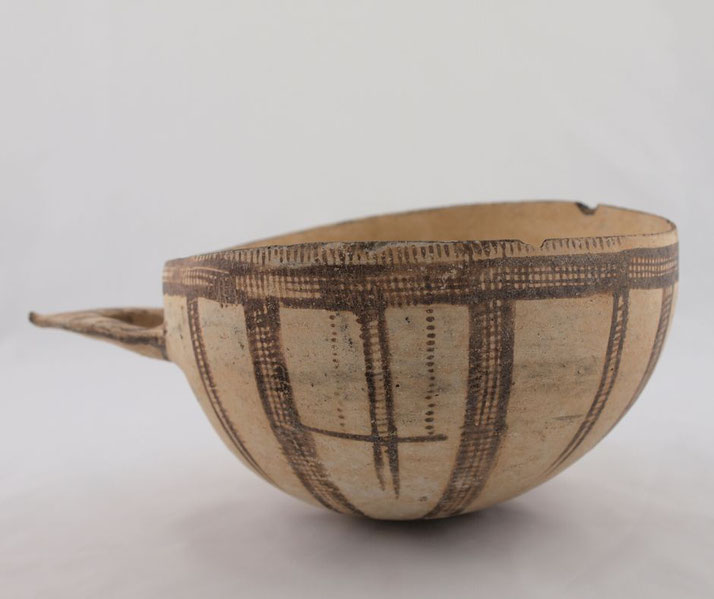
Once the Stone Age had ended, the next age was known as the Bronze Age, which lasted from around 3,000 BC to 1,200 BC.
In many regions, the metal known as bronze replaced earlier stone materials, and it was soon used for blades and tools, which included swords and axes.
Bronze is an alloy, which is a mix of copper and tin, and it is generally harder than either of these metals when used on their own.
The Bronze Age was a time of great change, as people in many places began to live in larger and more crowded cities that held more people, and they also used horses for transport.
One important change was that some of the first writing systems also developed during the Bronze Age, when the Sumerian civilisation developed a form of writing known as cuneiform.
Cuneiform was followed by the Egyptian hieroglyphs, and then by the Phoenician alphabet.
The Iron Age
The Iron Age began after the Bronze Age had ended, and during this time we saw the rise of major empires in parts of the Near East and Mediterranean such as the Assyrians, Babylonians, Persians, and Greeks.
From about 1,200 BC to 550 BC, iron became the main material for tools and weapons in many societies, which included swords and ploughshares.
Iron became an important technology for many societies, especially in warfare, since iron weapons were stronger and sharper than bronze, which allowed armies to be far more effective and meant that they could easily defeat people who still relied on bronze weapons.
Other Iron Age changes included new forms of transport in some places, such as the chariot.
