
Julius Caesar was deeply embarrassed by his balding head, and everyone noticed...
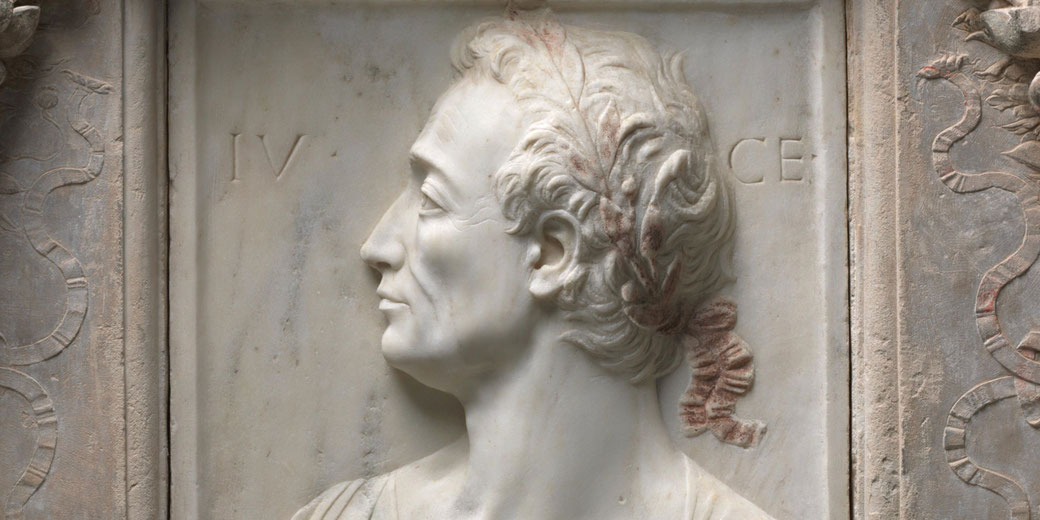
Among the ironies of Caesar’s life, his deep worry about a hairline that was receding perhaps offers one of the more unexpected insights into his character, which was a point of personal embarrassment that was so intense he welcomed the right to wear a laurel wreath more for personal pride than for honour.
As the man who crossed the Rubicon in 49 BC and brought the Roman Republic to its knees, he held powers that no one had wielded before.
Yet, according to the teasing of his rivals and the writings of Suetonius, he could not prevent his hair from falling out, and he repeatedly tried to cover the evidence.
Did Caesar have a comb-over?
Throughout his adult life, Caesar paid close attention to his grooming, since Roman society generally attached great value to appearance as a sign of personal control and dignity.
In fact, personal appearance played a central role in a politician’s ability to project authority.
Hair had clear social meaning, in particular, and hair that was thinning was often viewed as a sign of ageing or weakness.
As such, Caesar's public image mattered as much as his military success, and he responded to his own hair loss with ongoing discomfort.
We are told that early signs of balding had appeared while he was still young.
According to Suetonius in The Twelve Caesars, Caesar reportedly combed what hair he had forward from the crown of his head to the front, in a deliberate attempt to disguise the bald patch that spread across his scalp.
Some Roman observers had recognised the strategy immediately, and those who were inclined to mock him often did so without hesitation.
For men who competed in the competitive world of Roman politics, physical flaws often invited jokes that were meant to undermine authority or confidence.
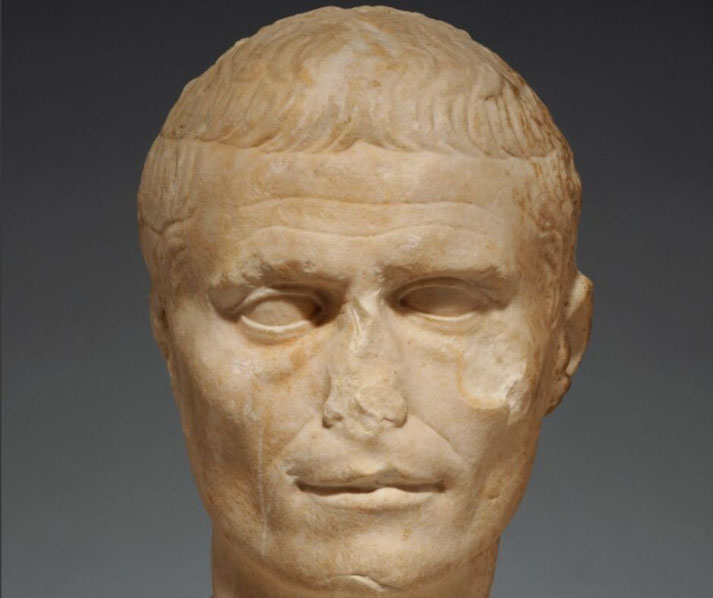
Why Caesar wore a laurel wreath
Eventually, Caesar had received the corona civica, a crown of oak leaves that was traditionally awarded to those who had saved Roman lives in battle and which granted the recipient lifetime honours, including a seat in the Senate.
But, for Caesar, it may have provided some relief from the discomfort of others seeing him bald.
Later, the Senate awarded him the right to wear a laurel wreath at most official events.
This was a privilege once reserved for triumphal processions and symbolic of sacred approval, since the laurel was sacred to Apollo.
Neverthelss, Caesar almost never appeared without it from that point.
Importantly, the wreath often did more than hide his scalp, as it reinforced the image of Caesar as a victorious general and the chosen leader of Rome.
Therefore, he was able to turn a point of embarrassment into an tool of power.
Sculptors and coin makers helped maintain the illusion. On his official busts, artists likely enhanced the suggestion of forward-combed hair.
However, on coins minted during his dictatorship, such as the 44 BC denarius inscribed DICT PERPETVO, his profile often showed an an ideal, youthful version of himself.
The laurel wreath draped cleanly across his head, which shielded the truth from the eyes of the Roman public who saw his face stamped onto silver denarii.
Roman baldness treatments
Occasionally, Caesar’s discomfort may have driven him to experiment with remedies.
Roman writers recorded several different treatments for baldness, which were drawn from a mix of folk traditions and early medical practice.
Mixtures of crushed mice, bear fat, and horse teeth boiled in vinegar were applied directly to the scalp.
Other ingredients included herbs like nasturtium or myrtle. Although no direct source confirms that Caesar used such mixtures, which Pliny the Elder in Natural History and Celsus in De Medicina recorded, the large number of cures suggests that hair loss probably affected enough men to make the effort worthwhile, especially for someone who cared deeply about his appearance.
How Caesar managed his public image
By the height of his rule, Caesar had used every other method to influence public opinion: he issued coins with his portrait, had statues made for the Forum, and regularly stood before crowds with the wreath positioned firmly in place.
Even so, as society judged leaders by every detail of their bearing, Caesar consistently guarded his image with the same intensity that he had brought to his campaigns, and his need to conceal his baldness never disappeared.
At his death on 15 March 44 BC, he had left behind an empire in all but name and a legend built on military skill and political invention.
Yet among the countless achievements, his struggle with baldness largely remained unresolved.
That single, personal annoyance, which was relatively mild compared to civil war or assassination, still occupied his thoughts long after he had conquered Gaul, dismissed the Senate’s authority, and declared himself dictator for life.
His hair never returned, and no crown could entirely make him forget it.