
What was the USSR?
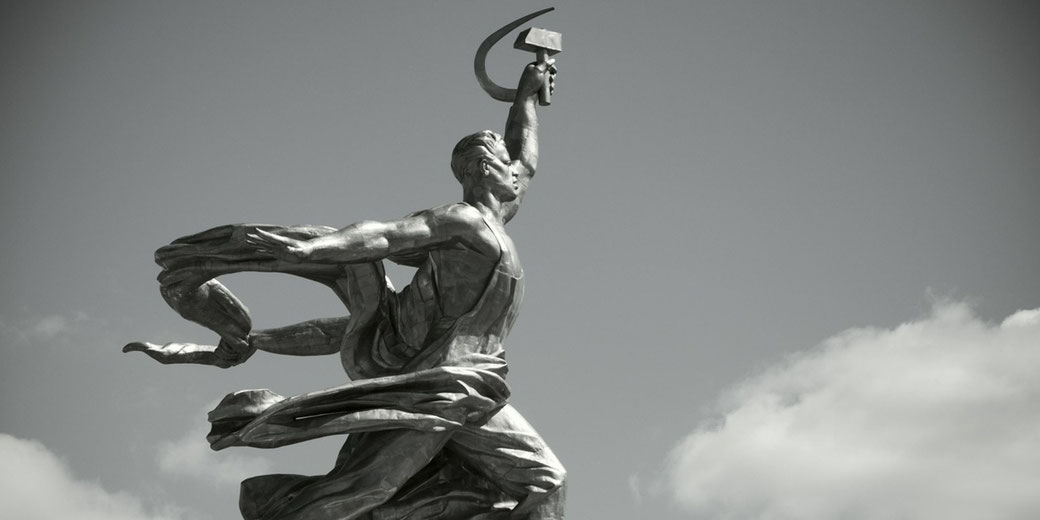
The Union of Soviet Socialist Republics had been formally established on 30 December 1922 and held a highly influential position in global affairs throughout the twentieth century, partly through the export of Marxist-Leninist ideology and the enforcement of authoritarian control over its population.
Founded after the collapse of the Russian Empire and the Bolshevik victory in the Russian Civil War, the USSR combined revolutionary ideals with centralised rule under the Communist Party.
Over nearly seven decades, it significantly transformed economic structures, repeatedly redrew national borders, significantly influenced decolonisation movements, and eventually became the principal rival to the United States during the Cold War.
How did the USSR begin?
During the turmoil of 1917, Russia experienced two revolutions that ended imperial rule and changed the country.
The February Revolution forced Tsar Nicholas II to abdicate, and this led to a Provisional Government that struggled to withdraw from the First World War and failed to implement land reform.
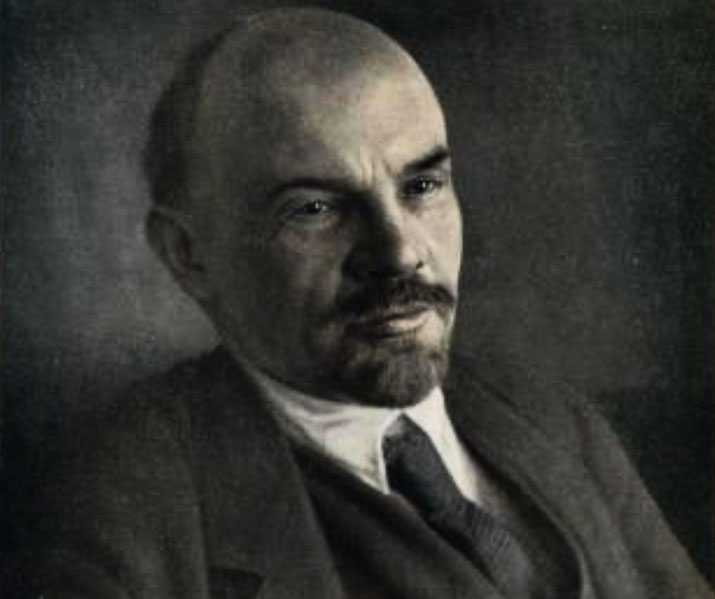
By 7 November 1917, the Bolsheviks had come under the leadership of Vladimir Lenin, and they overthrew this weakened government and declared a workers’ state founded on Marxist principles.
Soon after, a civil war broke out between the Bolshevik Red Army and various anti-Bolshevik White forces, some of whom received foreign support from Britain, France, the United States, and Japan.
From 1918 to 1921, this conflict devastated the population and ruined the economy, which in turn produced widespread famine that killed an estimated 5 million people across the former empire.
Eventually, the Bolsheviks consolidated power, and on 30 December 1922, they made the creation of the USSR official, uniting several republics into a federal structure controlled by the Communist Party.
Lenin, Kalinin, Chervyakov, Petrovsky, and Narimanov led the delegations that signed the founding treaty, and each of them spoke for his own republic.
At first, Lenin proposed a union of equal republics with limited autonomy, but in practice, all authority remained in Moscow.
The Communist Party dominated the government, press, education, and judiciary, and it used institutions such as the Politburo and Cheka (secret police) to enforce obedience.
To revive the post-war economy, Lenin introduced the New Economic Policy (NEP) in 1921, which allowed some private trade and small business activity.
For a short period, agricultural output increased, cities stabilised, and peasant markets returned.
After Lenin’s death on 21 January 1924, power had passed into the hands of competing party leaders rather than to a single successor.
Over the next five years, Joseph Stalin gradually defeated rivals such as Leon Trotsky, Grigory Zinoviev, Nikolai Bukharin, and Lev Kamenev.
By appointing loyalists to key party positions and controlling access to Lenin’s writings and image, Stalin built an unchallenged dictatorship that would define the next era of Soviet history.
What countries were part of the USSR?
At its height, the USSR officially included fifteen Soviet Socialist Republics, each defined according to national or geographic identity.
These were Armenia, Azerbaijan, Belarus, Estonia, Georgia, Kazakhstan, Kyrgyzstan, Latvia, Lithuania, Moldova, Russia, Tajikistan, Turkmenistan, Ukraine, and Uzbekistan.
Among them, the Russian Soviet Federative Socialist Republic was the largest in both territory and population, and it housed the capital city of Moscow, which was the administrative and political centre of the union.
Initially, four republics formed the USSR in 1922: Russia, Ukraine, Belarus, and the Transcaucasian Federation, which included Armenia, Georgia, and Azerbaijan.
The Soviet government soon expanded its control, and between 1924 and 1936, it established republics across Central Asia through the reorganisation of former imperial territories into Kazakhstan, Kyrgyzstan, Tajikistan, Turkmenistan, and Uzbekistan.
As Moscow redrew boundaries and imposed Soviet institutions, these new republics received constitutions, official languages, and flags, although decisions continued to flow from the central leadership of the Communist Party.
After the Molotov–Ribbentrop Pact of 1939, Soviet forces occupied and annexed the Baltic states, including Estonia, Latvia, and Lithuania, in June and July 1940, with formal incorporation taking place between 3 and 6 August.
Although the USSR claimed to incorporate them peacefully, its annexation involved mass deportations, political arrests, and suppression of national culture.
Between 1940 and 1953, approximately 300,000 people from the Baltic republics were deported to remote areas of the Soviet Union.
The Baltic republics remained within the USSR until 1991, despite never having accepted Soviet rule as legitimate.
In the same year, Moldova entered the USSR on 2 August 1940, following Soviet occupation of Bessarabia, which was previously held by Romania.
The Moldavian SSR became one of the least industrialised republics, but it still experienced the same forced collectivisation, Russification, and internal surveillance that affected daily life across the union.
Although all republics held the constitutional right to secede under Article 72 of the 1977 Soviet Constitution, none could act independently while the Communist Party maintained its monopoly on power.
The Soviet Union under Stalin
Soon after Stalin consolidated power, he launched a far-reaching program to transform the Soviet Union into a leading industrial and military force.
Beginning with the First Five-Year Plan in 1928, state planners set targets for coal, steel, oil, and machine production, which required massive investment in heavy industry.
To support industrialisation, Stalin imposed collectivisation on agriculture through the decision to force millions of peasants into state-run collective farms, which destroyed traditional village life and provoked violent opposition.
As a result, widespread resistance emerged in Ukraine, where peasant farmers hid grain, slaughtered livestock, and refused to cooperate.
The Soviet regime responded with forced requisitions, arrests, and roadblocks that prevented migration.
Between 1932 and 1933, these policies triggered a terrible famine known as the Holodomor, which caused the deaths of an estimated 3 to 5 million people and left deep scars on Ukrainian society.
Meanwhile, Stalin directed a large political purge to eliminate supposed enemies.
From 1936 to 1938, thousands of Communist Party members, Red Army officers, scientists, and ordinary citizens were arrested and tortured, then either executed or sent to Gulag labour camps.
Public trials such as the Trial of the Sixteen in 1936 featured forced confessions and carefully staged accusations, while propaganda promoted Stalin as the leader who claimed credit for Soviet progress and unity.
Approximately 1.5 million people passed through the Gulag system during the late 1930s, with around 680,000 executed during the Great Terror alone.
During the Second World War, the USSR initially avoided conflict after it signed the 1939 non-aggression pact with Nazi Germany, which secretly divided Eastern Europe into zones of control.
However, on 22 June 1941, Hitler violated the agreement and launched Operation Barbarossa, beginning a devastating invasion that pushed deep into Soviet territory.
In response, the Red Army mobilised under extreme conditions, eventually halting the German advance at battles such as Moscow and Leningrad, with the struggle for Stalingrad providing an important turning point. Commanders such as Georgy Zhukov played key roles in Soviet military strategy.
By 1945, the Soviet Union had lost between 24 and 27 million lives but ended the war as one of the victorious powers.
The Red Army captured Berlin and imposed communist regimes in Eastern Europe, which greatly increased Soviet influence from the Baltic Sea to the Balkans.
Stalin, who presented himself as the father of Soviet victory, now controlled a post-war empire built on ruin and repression.
Challenges during the Cold War
Following the war, the USSR imposed satellite governments in East Germany, Poland, Hungary, Romania, Bulgaria, and Czechoslovakia, each of which was structured along the Soviet model and backed by the presence of Red Army forces.
On 14 May 1955, these states joined the Warsaw Pact, which was a military alliance intended to rival NATO and preserve Soviet control over Eastern Europe.
Soon after Stalin’s death in 1953, Nikita Khrushchev rose to power and began to distance the regime from its violent past.
In his 25 February 1956 “Secret Speech,” Khrushchev condemned Stalin’s abuses and denounced the cult of personality, then launched a policy of de-Stalinisation.
Although he maintained control over the Communist Party, he loosened censorship and allowed a revival of some cultural expression, and he also released approximately 500,000 people from the Gulag.
Tensions with the United States continued throughout the 1950s and 1960s and were especially intense during the 1962 Cuban Missile Crisis, when Soviet nuclear missiles installed in Cuba provoked a naval blockade and very tense negotiations.
Soviet forces had deployed approximately 36 missile launchers and intended to station over 90 warheads, and this total included tactical weapons.
Eventually, Khrushchev agreed to withdraw the missiles, but the incident exposed Soviet weaknesses and led to his removal from power two years later.
Under Leonid Brezhnev, the USSR enjoyed a period of relative stability for many citizens, but economic growth slowed, and innovation declined.
The central planning system was now full of inefficiencies and failed to keep pace with the West in consumer goods and technology.
As shortages increased, citizens relied on black markets and informal networks, and they often turned to corruption to access everyday necessities.
By the 1980s, Soviet economic growth had declined to around 1% per year, with some years experiencing stagnation.
In 1968, the Brezhnev Doctrine justified the invasion of Czechoslovakia to crush the Prague Spring, stating the principle that no socialist state could abandon Marxism without Soviet intervention.
Although the USSR remained a nuclear superpower and continued to influence global politics, it began to exhaust itself through financial support for allies and for its empire, and through the commitment of troops to unwinnable conflicts.
By 1979, the Soviet invasion of Afghanistan showed the limits of its strength. The war, which was intended to stabilise a communist ally, dragged on for nearly a decade, and this drained an estimated $40 to $50 billion and cost the lives of approximately 15,000 Soviet soldiers.
At home, the USSR struggled under low production, environmental neglect, and a widening gap between official ideology and daily reality.
Why the USSR came to an end
After Gorbachev’s appointment in 1985, the Soviet leadership introduced glasnost and perestroika to modernise the system and address the rise in public discontent.
Glasnost encouraged open discussion of government policy and past repression, and it also opened debate on social issues.
Perestroika attempted to reform the planned economy through the introduction of market incentives and limited private ownership, and through greater autonomy for enterprises.
Soon, unintended consequences began to speed up the collapse of the system.
Citizens, who were now more aware of past terrible crimes and the problems in their current lives, demanded change more urgently.
Republics such as Lithuania and Georgia pressed for independence, and Ukraine followed the same path, while ethnic conflicts erupted in the Caucasus and Central Asia.
The Communist Party’s authority weakened as local leaders challenged Moscow’s control and independent newspapers exposed corruption.
By 19 August 1991, a coup attempt by hardline officials, including Gennady Yanayev, Dmitry Yazov, Boris Pugo, and Oleg Baklanov, aimed to reverse the reforms and restore central rule.
However, the public, supported by Russian President Boris Yeltsin, resisted the conspirators and defended the Russian parliament building in Moscow, where hundreds of thousands gathered in protest.
Although the coup failed, it destroyed the last traces of party unity and sped up the break-up of the USSR.
On 8 December 1991, the leaders of Russia and Ukraine, together with the leader of Belarus, signed an agreement dissolving the Soviet Union and replacing it with the Commonwealth of Independent States.
The USSR officially ended on 26 December 1991, a day after Gorbachev resigned on 25 December, and the red Soviet flag was lowered from the Kremlin for the final time.
Fifteen independent republics now appeared out of what had once been the world’s largest state, each of which faced the extremely difficult task of rebuilding from the ruins of the former empire.