
What was the Warsaw Pact?
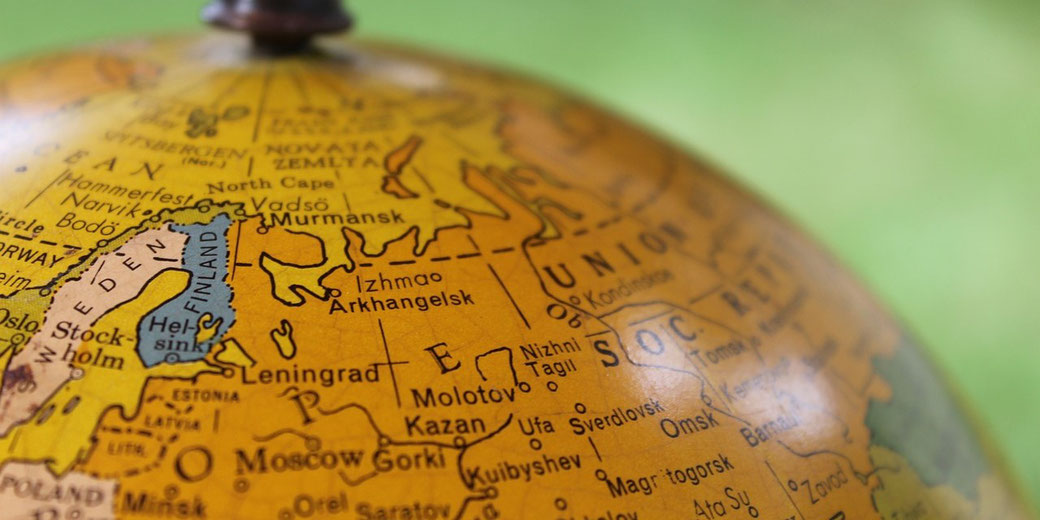
During the height of the Cold War, the global security order split into two armed blocs dominated by rival ideologies and nuclear arsenals.
While the United States relied on the North Atlantic Treaty Organization (NATO) to coordinate defence among Western democracies, the Soviet Union responded and tightened its grip over Eastern Europe through a military alliance that looked cooperative but worked as a tool of control.
This alliance, which became known as the Warsaw Pact, developed in 1955 as a direct response to Western rearmament, particularly the integration of West Germany into NATO, and it remained active until the collapse of the Eastern Bloc in the early 1990s.
What was the Warsaw Pact?
On 14 May 1955, eight Eastern European countries signed a treaty in Warsaw, commonly known in English as the Treaty of Friendship and Mutual Assistance,, which tied them to shared military action under Soviet command.
The members included the Soviet Union, Albania, Poland, Romania, Hungary, East Germany, Czechoslovakia, and Bulgaria.
Each had a communist government loyal to Moscow and accepted a security arrangement that placed strategic decisions in Soviet hands.
The treaty created a unified command structure for the "Unified Armed Forces," though all operational authority remained with the Soviet General Staff.
Albania ceased participation in Warsaw Pact activities by 1962 and formally withdrew in 1968.
To manage coordination, the alliance included a Political Consultative Committee, which issued joint statements and agreed on common defence goals.
It also maintained a permanent military staff that organised large-scale training activities and coordinated troop deployments along with the management of weapons systems.
Marshal Ivan Konev was one of the Red Army’s senior commanders and was initially in charge of the joint military command, though Soviet officers continued to direct every level of planning.
Although the pact presented itself as a partnership, Soviet control stayed almost complete, and no decisions occurred without Kremlin approval.
Why was it created?
At the time it formed, the USSR had already installed pro-Soviet regimes across Eastern Europe and maintained a strong military presence within their borders.
However, when West Germany joined NATO on 9 May 1955, Soviet leaders feared a revival of German militarism under Western leadership.
In direct response, they established the Warsaw Pact to justify their continued occupation and to present a united military front against what they saw as NATO aggression.
More importantly, the alliance often worked as a tool to control political dissent within the Eastern Bloc.
When it created a formal military structure, the USSR reinforced its claim to leadership and discouraged independent foreign policies among its allies.
The pact turned Soviet military presence into a permanent system that allowed rapid deployments across borders and forced the same military doctrines throughout the region.
Soon after its creation, the alliance showed its true purpose. On 1 November 1956, after days of political unrest, Hungarian leader Imre Nagy announced that Hungary would withdraw from the Warsaw Pact and implement political reforms.
In response, Soviet forces invaded and crushed the uprising. Nikita Khrushchev authorised the intervention to prevent Hungary from leaving the alliance.
Again on 20 August 1968, during the Prague Spring, Warsaw Pact troops, which were dominated by Soviet divisions, entered Czechoslovakia under Operation Danube to remove Alexander Dubček’s government that wanted reforms.
Romania refused to contribute troops to the invasion. The intervention led to the declaration of the Brezhnev Doctrine, which justified the use of force to maintain communist rule in member states.
In both cases, the alliance acted as a mechanism for restoring ideological conformity and punishing political deviation.
How effective was the Warsaw Pact?
On paper, the Warsaw Pact controlled one of the largest military forces in the world.
By the early 1980s, it included an estimated four to five million troops and fielded thousands of tanks and aircraft, along with missile systems that could threaten Western Europe.
It conducted regular exercises, such as 'Druzhba' (Friendship) and 'Shield', and it staged the massive Zapad-81, which involved approximately 100,000 troops according to Western estimates, although Soviet sources claimed higher figures.
However, beneath its scale, the alliance struggled with operational cohesion and big differences in military strength.
For example, Romania and Bulgaria operated older equipment and did not have the money to maintain modern forces.
Most states depended heavily on Soviet arms shipments and adopted Soviet military doctrines with little input of their own.
Many units used standard Soviet T-72 tanks and the AK-47 assault rifle, which ensured basic uniformity but did not solve coordination problems.
As a result, their forces often did not work well together, and morale often differed a lot between national units.
Over time, internal disagreements grew. As mentioned above, Albania grew critical of Soviet policies during the Sino-Soviet split and ceased participation by 1962, later formally withdrawing from the pact in 1968.
Romania was under Nicolae Ceaușescu and began to pull away from Soviet planning after the 1968 invasion of Czechoslovakia, refused to participate in joint invasions, and pursued an increasingly independent foreign policy after his 1971 visit to China.
Despite the public image of unity, the pact relied on pressure and fear rather than genuine agreement and worked only under the threat of Soviet intervention.
How the agreement came to an end
By the late 1980s, the Warsaw Pact had begun to break apart as communist regimes had lost popular support and Soviet influence had declined.
Under Mikhail Gorbachev’s leadership, the USSR introduced glasnost and perestroika, which encouraged political openness and economic restructuring.
As reform movements gained strength across the Eastern Bloc, long-standing authoritarian governments collapsed.
By 1989, mass protests and electoral revolutions in Poland, East Germany, Czechoslovakia, Hungary, and Bulgaria had swept aside the old communist leadership.
The fall of the Berlin Wall on 9 November marked the symbolic end of the Eastern Bloc, and by 3 October 1990, Germany had reunified, removing East Germany from the alliance.
In early 1991, Hungary, Poland, and Czechoslovakia announced their withdrawal from Warsaw Pact military cooperation.
On 1 July 1991, the remaining members met in Prague to sign an agreement dissolving both the military and political components of the pact, and, within months, the Soviet Union itself ceased to exist, which turned the Warsaw Pact into a relic of a world order that no longer exists.
How is it remembered today?
In many former member states, the Warsaw Pact is remembered less as a defensive alliance and more as a tool of outside control.
In Hungary, annual commemorations of the 1956 uprising recall the Soviet-led invasion as a national tragedy, and in the Czech Republic and Slovakia, the 1968 invasion is remembered as a symbol of crushed democratic hopes and foreign domination.
Many historians assess the Warsaw Pact as an instrument of Soviet power rather than a true alliance.
Its primary purpose largely focused on the suppression of dissent and the preservation of a rigid ideological system rather than on mutual defence.
By treating sovereign states as extensions of its own military structure, the USSR used the alliance to maintain regional control and enforce uniformity.
After the Cold War, several former members, including Poland, Hungary, and the Czech Republic, joined NATO and adopted democratic systems.
As they joined new international organisations, the Warsaw Pact came to be seen as a period of surveillance and repression, marked by forced loyalty.
Previously secret documents released in the 1990s showed that long-term military planning and key decisions were driven almost entirely by Soviet priorities.
Although its military command no longer exists, the alliance continues to inform how Eastern European countries view sovereignty, cooperation, and security guarantees.