The unseen side of Stalin: His life before power
Before he transformed the Soviet Union into a state ruled by terror, Joseph Stalin lived a life that was largely influenced by instability and underground politics that fed an increasingly obsessive desire for control.
Born in the Caucasus and trained in Orthodox theology, he gradually turned away from religion during his teenage years and eventually embraced Marxism as a set of ideas about power.
Between 1898 and 1917, he often operated from the shadows as he organised strikes and bank robberies, repeatedly escaped exile, and, by the end of those years, he had largely learned how to destroy rivals from within a revolutionary movement that demanded discipline over idealism.
Childhood in Georgia
Joseph Stalin entered the world in the Georgian town of Gori on 18 December 1878 (Old Style), which matched 6 December 1878 in the modern Gregorian calendar, and at that time Gori was a minor regional settlement within the Russian Empire.
His birth name was Ioseb Besarionis dze Jughashvili. His mother was Ekaterine Geladze, who worked as a washerwoman and held on to religious faith with the hope that her only surviving son might one day enter the priesthood.
His father was Besarion Jughashvili, who worked as a shoemaker but drank heavily and often beat both wife and child.
As Stalin's two older siblings had already died in infancy, he grew up in a household shadowed by grief and violence.
At age seven, he contracted smallpox, which left his face badly scarred. Not long after, a carriage accident severely injured his left arm, and this accident left it permanently weakened.
Other boys in Gori mocked his disfigurement and gave him the nickname “pockmarked Soso”.
Despite this, he showed early promise at the Gori Church School, where he excelled in reading and poetry, along with Russian grammar.
Although Georgian remained his first language, his command of Russian improved steadily, and by the age of ten, he had begun reciting classical verses and composing rhymes that impressed his teachers.
One teacher was Father Charkviani, who reportedly described him as intelligent and hard-working but rebellious.
Seminary years and the turn toward revolution
By 1894, Stalin had earned a scholarship to the Tiflis Theological Seminary, which was a well-known Orthodox school that trained boys for the priesthood.
Inside its stone walls, discipline remained strict and surveillance constant, and the curriculum stayed heavy with religious dogma.
The seminary enforced a Russification policy that pushed Georgian culture and language aside, which likely aggravated Stalin's resentment of the imperial order.
Over time, Stalin had lost interest in Orthodox theology and instead had begun reading banned literature.
He smuggled works by Victor Hugo and Charles Darwin into the dormitory, and later he moved on to Marxist tracts.
The seminary forbade such reading, but its oppressive regime seemed to deepen his hatred for authority.
Eventually, he joined a secret Marxist discussion group that introduced him to revolutionary thought and the strategies of Leninist politics.
Although his official record shows that he left the seminary in 1899, many suspected that he had been expelled for political activity.
However, surviving records suggest he withdrew after failing final examinations and skipping classes.
Either way, his path had already moved away from religious study toward revolutionary activism.
He started working as a propagandist in Batumi, where he helped organise strikes and distribute underground newspapers.
Early revolutionary activities
Between 1901 and 1913, Stalin worked as a full-time revolutionary in the service of the Russian Social Democratic Labour Party.
After the party’s 1903 split, he aligned himself with the Bolsheviks, who favoured a tightly controlled vanguard led by Lenin.
He adopted the pseudonym “Koba,” drawn from a Georgian folk hero in a novel by Alexander Kazbegi, who embodied ruthless defiance and personal vengeance.
The name matched the reputation he had begun to build, which had become increasingly calculated, silent, and merciless.
Over the next decade, he organised illegal labour unions and drafted propaganda as he orchestrated several robberies of state funds.
Most infamously, he helped plan the 1907 Tiflis bank heist, where his group stole more than 340,000 roubles when they attacked a convoy in broad daylight on 13 June with bombs and revolvers, along with hand grenades.
Reports at the time estimated that between 30 and 50 people were killed or wounded in the explosion and gunfire.
While Lenin privately supported the action, many others in the movement viewed it with alarm.
The heist was carried out with the assistance of Simon Ter-Petrosian (Kamo), who was a close associate of Stalin and known for his violent methods.
Nevertheless, the success of the operation appeared to strengthen Stalin’s reputation as someone who could carry out difficult tasks without attracting attention.
Again and again, the tsarist police arrested him. He faced multiple periods of exile in Siberia, where he endured isolation and severe weather.
In places such as Solvychegodsk and later the village of Kureika, where he spent months as he caught fish and cut wood, he lived under primitive conditions.
During his time in Kureika, between 1914 and 1916, he lived in a wooden hut and relied on fish and bread for food.
He fathered at least one child with Lidia Pereprygina, a teenage peasant girl, and possibly a second who reportedly died in infancy, though neither entered his later life.
Even in exile, he regularly maintained contact with Bolshevik agents, reported on internal party disputes, and stayed focused on Lenin’s directives.
Over time, the hardship seemed to fortify rather than break him.
Role in Bolshevik consolidation
After repeated escapes and re-arrests, Stalin returned to political activity in 1912, when Lenin appointed him to the Bolshevik Central Committee.
That same year, he assumed control of Pravda, the party’s newspaper, and began controlling its editorial line to align more closely with Lenin’s policies.
By 1912, Pravda had begun to appear several times a week and had reached a circulation of nearly 25,000 at its peak before being frequently shut down by tsarist censors.
Around this time, he also wrote Marxism and the National Question, a short but influential pamphlet published in 1913, in which he argued that class identity should come before ethnic concerns.
The pamphlet earned Lenin’s approval and helped Stalin seem like a loyal thinker who could apply Marxist ideas to the divided imperial population.
Some Bolsheviks, however, criticised its rigid emphasis on centralisation.
Within months of the increase in his influence, police arrested him again, and this time he was sent to a remote settlement in the Yenisei region of northern Siberia, where the cold remained relentless and escape routes nearly impossible.
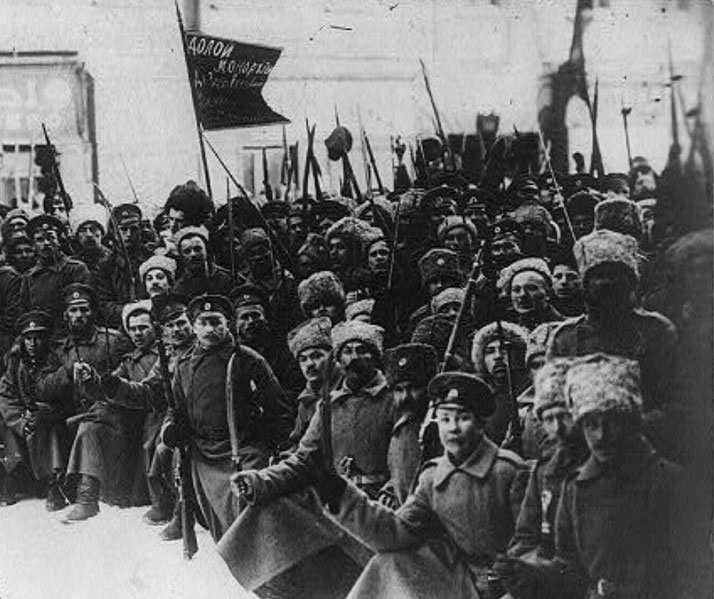
He had spent most of the First World War in exile, and returned to politics only after the February Revolution in 1917.
During those years, he lived quietly but remained politically engaged as he sent reports and memos, along with occasional letters, to key Bolsheviks, and he watched carefully as rivals rose and fell.
By the time he returned to Petrograd in March 1917, he had spent nearly two decades during which he gradually learned how to survive within a movement that valued secrecy and obedience and kept tight internal discipline.
Unlike Trotsky, who delivered rousing speeches to crowds, or Lenin, who published widely and defined strategy, Stalin worked behind the scenes.
Upon his return, he took up a position on the editorial board of Pravda alongside Lev Kamenev and cautiously supported the Provisional Government as he watched the balance of power change.
He managed personnel and controlled access to information in ways that helped him avoid attracting notice.
Over time, he eventually mastered the slow, careful and steady build-up of power.