
The sinking of Prince of Wales and Repulse: Britain's WWII catastrophe in the Pacific
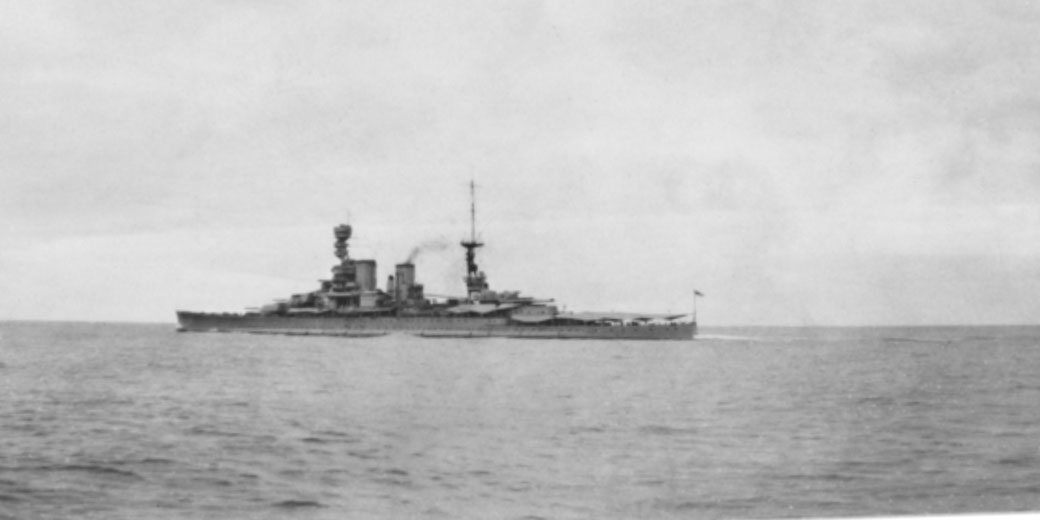
On 10 December 1941, two of the Royal Navy’s capital ships, HMS Prince of Wales and HMS Repulse, were sunk off the coast of Malaya by Japanese bombers.
The loss of both vessels stunned many in the British command and seriously challenged prevailing assumptions about the value of battleships in modern warfare.
As the first major surface fleet in history to be destroyed entirely by air power while underway and unsupported, Force Z’s destruction exposed strategic failures in imperial defence planning and helped to accelerate the fall of Singapore a few weeks later.
Force Z arrives in Singapore
During the final weeks of October 1941, the Admiralty approved the deployment of a small but powerful naval group that was intended to reinforce British holdings in the Far East.
The group became known as Force Z, and its centrepiece was HMS Prince of Wales, a new King George V-class battleship that had been completed earlier that year and had already taken part in the engagement with Bismarck in the Atlantic.
Accompanying her was HMS Repulse, an older but fast Renown-class battlecruiser that had seen action in the First World War and served in the Mediterranean and Indian Oceans during the interwar years.
Four destroyers, HMS Electra, Express, Tenedos, and the Australian HMAS Vampire, formed the screening escort that accompanied the two capital ships.
Soon after, Admiral Sir Tom Phillips arrived in Singapore to assume leadership of British naval forces in the region.
At the time, Phillips held the post of Commander-in-Chief, China Station, and took direct command of Force Z when the vessels docked at Keppel Harbour on 2 December.
British planners largely believed that a visible naval presence in Singapore would discourage Japan from expanding its military operations into British Malaya.
At the same time, they also maintained the view that fast capital ships could operate effectively without aircraft carriers, as they would instead rely on speed, armour, and anti-aircraft guns to survive air attacks.
That assumption had never been properly tested in the Pacific, where the Japanese held overwhelming air superiority by late 1941.
Phillips followed the policy of gunboat diplomacy and still doubted the value of air power, even after recent examples such as the British attack on the Italian fleet at Taranto.
Misjudged movements and missed warnings
On 8 December, hours after Japan had launched its attack on Pearl Harbor, Japanese troops began landing at Kota Bharu in northern Malaya.
In response, Admiral Phillips ordered Force Z to leave Singapore that evening in an attempt to intercept the Japanese invasion fleet.
He chose not to coordinate with the Royal Australian Air Force or the Far East Air Force because he feared that such contact might give away the operation.
RAF No. 453 Squadron was based nearby and equipped with Brewster Buffalo fighters, and it received no request to provide air cover.
Over the next day, Force Z moved up the east coast of Malaya as the weather grew worse.
Phillips received inaccurate reports of enemy landings near Kuantan and diverted his fleet there because he hoped to find and destroy enemy transports.
However, the Japanese had not landed at Kuantan. At the same time, Japanese reconnaissance aircraft from the 22nd Air Flotilla included units such as the Genzan and Mihoro Air Groups, along with elements of the Kanoya Air Group, and they had already spotted Force Z and tracked it throughout the afternoon of 9 December.
Due to the heavy rain, Japanese commanders delayed the attack until morning and prepared a large air attack from airfields in southern Indochina, including Saigon and Tan Son Nhut.
The air attack on 10 December 1941
At first light, the British ships found no enemy presence near Kuantan and turned south.
By late morning, Japanese bombers began to arrive in waves. Shortly after 11 a.m., high-level Mitsubishi G3M “Nell” bombers targeted Repulse, but her quick turns and changes of course allowed her to escape damage.
Minutes later, an organised torpedo attack by Mitsubishi G4M “Betty” bombers began.
Because of their training and ability to strike from multiple directions, Japanese crews quickly broke through the defensive screen in repeated passes.
At 11:13 a.m., Repulse took a torpedo hit to her port side. Although she still moved at high speed and attempted to evade, successive torpedo strikes overwhelmed her.
She sustained at least five hits and began to list heavily. By 12:33 p.m., she rolled over and sank, taking 508 men with her.
During the same attack, Prince of Wales lost rudder control early due to a torpedo strike, which left her unable to steer effectively.
One torpedo hit her port outer propeller shaft, and this impact caused heavy flooding that badly damaged propulsion and steering.
As she struggled to avoid further damage, Japanese bombers focused their attacks on her disabled hull.
Several torpedoes struck the port side, and two bombs pierced the upper decks. At 1:20 p.m., she capsized and sank, and 327 members of her crew died, including Captain John Leach and Admiral Phillips.
Although some reports later attributed the words "We shall win or lose by our own actions" to Phillips, no official record confirms this statement.
Rescue operations and casualties
As soon as the attack ended, the destroyers moved in under the threat of more attacks.
HMS Electra and Express worked quickly, and HMAS Vampire also moved in to rescue the survivors, and together they hauled over 2,000 men from the water.
Fuel oil coated the sea, and large fires still burned across the wreckage. The rescue effort took place under extreme pressure.
Captain William Tennant of Repulse was one of the few senior officers to survive, and he later described the attack and stressed the skill of the Japanese pilots.
Back in Britain, news of the loss reached Winston Churchill in the early hours of 11 December.
He later recorded that he had gone to bed that night “in low spirits,” and he recognised immediately that the disaster would alter the balance of power in Asia.
Until then, no capital ship under steam had ever been sunk solely by aircraft, and the event forced many military planners to accept that aerial torpedoes and bombers now often posed a greater threat than battleship guns.
The Times and other newspapers ran the story with grim headlines, and public confidence in the Empire's ability to defend Asia began to falter.
Strategic failure of the 'Singapore Strategy'
When they destroyed Force Z, the Japanese had cleared the seas around Malaya of British naval power.
The long-standing Singapore Strategy had been built around the idea, at least in theory, that Britain could dispatch a powerful fleet to Singapore in a time of crisis.
However, that idea depended on several assumptions that failed to hold by 1941.
Britain lacked sufficient time and escort ships, as well as the air cover required, to send a force large enough to deter or defend against a full-scale assault.
The operation also revealed long-standing weaknesses in cooperation between the armed services.
British naval command had isolated Force Z from air support and underestimated the risk posed by Japanese aircraft.
Senior officers also placed too much confidence in the toughness of battleships, which encouraged them to accept the sortie without fighter cover.
Even though Prince of Wales featured radar and advanced anti-aircraft weapons, none of those tools had any impact without fighter aircraft to protect them.
Japanese commanders were aware of British naval deployments, and they chose their moment carefully and executed their plan with skill and careful timing.
The absence of naval resistance allowed General Yamashita Tomoyuki’s forces to push rapidly down the Malayan Peninsula without fear of interruption.
Long-term consequences for the war in the Pacific
Within two months, Japanese forces had conquered Malaya and captured Singapore.
Over 80,000 troops from Britain and Australia surrendered, along with Indian soldiers, in one of the worst defeats in British military history.
The fall of Singapore delivered a shock to imperial authority across Asia, and many colonial subjects began to question whether Britain could continue to protect its overseas territories.
After the loss of Force Z, the Royal Navy had shifted its focus to the Indian Ocean and had left most Pacific operations in the hands of the United States Navy.
Carrier-based warfare now increasingly dominated naval planning, and battleships became less relevant to strategic outcomes.
In future engagements across the Pacific, the ability to use aircraft carriers to attack from the sea often determined success, not the size or speed of a gunship.
The sinking of Prince of Wales and Repulse helped to end the illusion that heavy surface ships alone could defend a global empire and also exposed the limitations of traditional naval thinking in a world where aircraft had begun to control the seas.
The wrecks of both ships now rest approximately 50 nautical miles east of Kuantan and were later designated war graves, though in recent years illegal salvaging has damaged the sites.