
Espionage or injustice? The Rosenberg communist spying trial that shook Cold War America
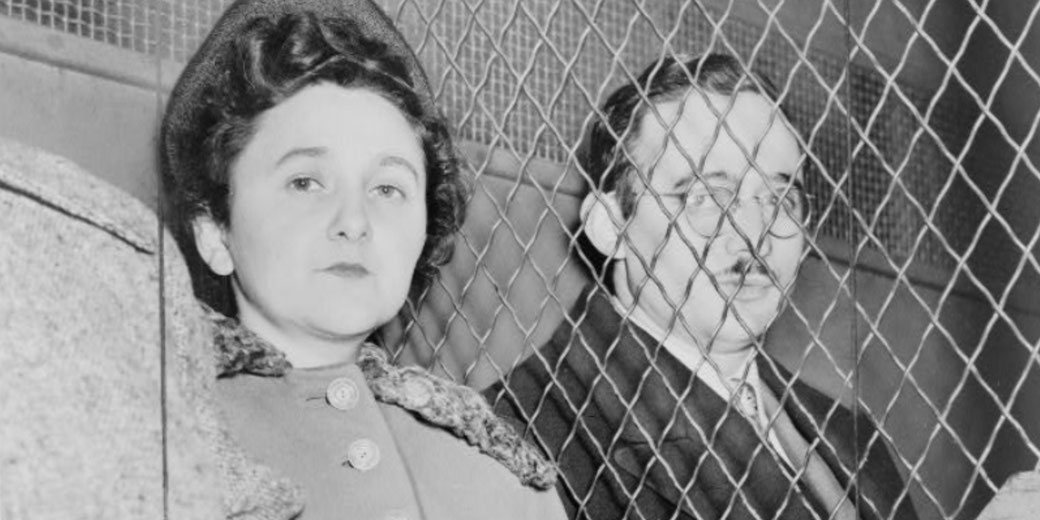
In June 1953, the United States executed Julius and Ethel Rosenberg at Sing Sing Prison after convicting them of conspiracy to commit espionage.
Their trial unfolded during a period of rising Cold War paranoia, fuelled by nuclear anxieties and fears of communist infiltration.
As public attention turned toward accusations of treason, their case became arguably one of the most politically charged and divisive legal battles in American history.
The anti-communist hysteria of Cold War America
After Soviet scientists successfully detonated their first atomic bomb in August 1949, American officials scrambled to understand how the USSR had acquired nuclear ability so quickly.
The Federal Bureau of Investigation soon identified the Manhattan Project as the likely source of the leak.
On 27 January 1950, British physicist Klaus Fuchs confessed to transferring atomic secrets to Soviet agents during his time at Los Alamos, where he had worked as part of the British Mission.
His arrest prompted a series of investigations that led to David Greenglass, who had worked as a machinist at Los Alamos.
When the FBI questioned him, Greenglass admitted to sharing classified material and identified his brother-in-law, Julius Rosenberg, as the organiser of a Soviet spy ring.
Greenglass had passed along a crude sketch of the implosion-type bomb used on Nagasaki, although later analysis showed that the drawing lacked technical detail and held little scientific value.
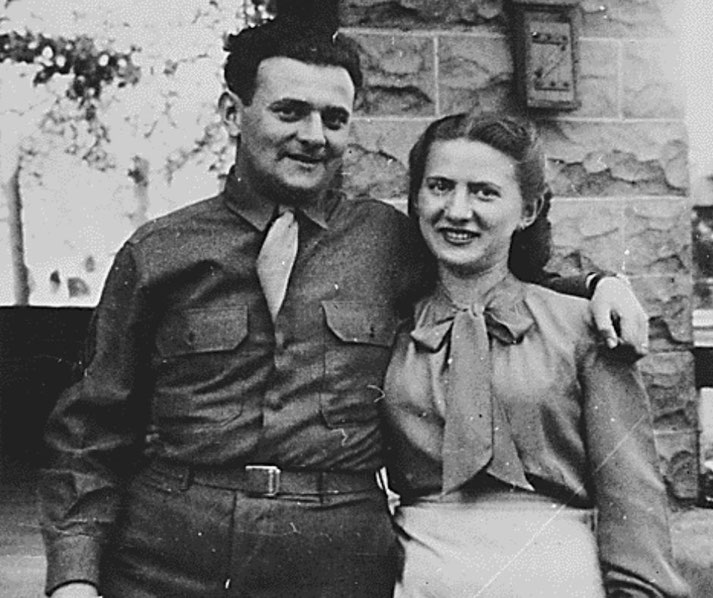
Soon after, Greenglass named his sister, Ethel Rosenberg, as a participant who had assisted with typing handwritten notes.
His earlier statements to the FBI, however, had attributed the typing to his wife, Ruth Greenglass.
The change in testimony helped shield Ruth from prosecution. Prosecutors believed they had uncovered an NKVD-run network that had apparently operated undetected during the war.
To build the strongest possible case, officials decided to prosecute the Rosenbergs under the Espionage Act of 1917.
That statute, drafted during the First World War, allowed for the death penalty if the crime occurred during wartime or involved military secrets.
Although the acts in question took place during the US–Soviet alliance, federal prosecutors argued that the ideological conflict of the Cold War had already begun and that espionage now posed a direct threat to American security.
They chose not to indict Ruth Greenglass, despite evidence that she had played a supporting role in the operation, though she denied that she had recruited Ethel.
The arrest and investigation
On 17 July 1950, FBI agents arrested Julius Rosenberg, who had previously worked as an engineer for the Army Signal Corps and maintained close connections with the Communist Party USA.
Less than a month later, they arrested Ethel Rosenberg on 11 August, in the hope that her detention would pressure Julius to cooperate.
At that stage, evidence against Ethel remained indirect and based almost entirely on the testimony of her brother.
Nevertheless, federal officials insisted she had participated willingly in her husband’s activities.
Both Rosenbergs refused to name names or bargain for reduced sentences.
Under further interrogation, David Greenglass provided what prosecutors viewed as the central piece of testimony that they needed.
He stated that Julius had received handwritten notes and sketches from him, which Ethel had typed before the couple handed them to Soviet operatives.
Decades later, Greenglass admitted that he had falsely implicated Ethel to protect his wife, Ruth, from prosecution.
During the original investigation, though, his testimony had placed Ethel at the heart of the conspiracy and had secured her indictment.
Soviet files, which were declassified decades later, identified Julius with the code names "Antenna" and later "Liberal," but no similar code name ever appeared for Ethel.

The trial and sentencing
On 6 March 1951, the Rosenbergs’ trial began in the US District Court for the Southern District of New York.
Judge Irving Kaufman presided over the case, while Roy Cohn and Irving Saypol led the prosecution.
From the outset, prosecutors presented the Rosenbergs as spies and as politically driven traitors whose actions, they argued, had threatened global peace.
The trial lasted three weeks, during which 23 witnesses gave evidence. The government relied heavily on David and Ruth Greenglass’s statements and argued that the Rosenbergs had delivered what it described as critical atomic designs to the Soviet Union and had thereby contributed to the USSR’s weapons program.
Later historical assessments, however, concluded that Julius’s contributions likely centred on industrial and military technology rather than detailed atomic designs.
Defence attorney Emanuel Hirsch Bloch attempted to discredit the Greenglasses, and he questioned the motives behind their cooperation.
He also pointed out that the government had presented no physical evidence directly linking the Rosenbergs to espionage, since there was no documentary or intercepted-communication record and no admissions of guilt.
However, jurors received the case during a time when McCarthyism had already increased public fears of communist subversion.
Roy Cohn later became well known as Senator McCarthy's chief counsel and claimed in later interviews that he had recommended Judge Kaufman for the trial.
According to Kaufman, the couple’s actions had contributed to the outbreak of the Korean War by giving the Soviets the same nuclear strength.
On 29 March, the jury returned a guilty verdict. A week later, the judge sentenced both defendants to death, stating that their crime had "put into the hands of the Russians the A-bomb years before our best scientists predicted."
Appeals, protests, and global reactions
Over the next two years, the Rosenbergs’ lawyers had filed multiple appeals on the grounds that the evidence was weak and the trial rules were unfair.
Every appeal failed. Meanwhile, public opposition to the death sentence began to grow.
Across the United States and Europe, artists, scientists, religious leaders, and political activists questioned whether the couple had received a fair trial.
Albert Einstein and Pope Pius XII both issued public appeals for clemency. In France, thousands marched in the streets, and in Italy, demonstrators surrounded the US embassy to demand that the execution be stopped.
French philosopher Jean-Paul Sartre attacked the proceedings as a "legal lynching."
At home, groups such as the National Committee to Secure Justice in the Rosenberg Case rallied public support and argued that anti-communist sentiment had corrupted the trial.
Some American media outlets, such as The Nation and The New Republic, published editorials that opposed the execution.
On 17 June 1953, just four days before the scheduled execution, the US Supreme Court voted 5–4 to deny a stay.
President Dwight D. Eisenhower refused to intervene. He stated that showing mercy would undermine national security and encourage further acts of betrayal.
For the administration, the sentence had value both as a punishment and as a deterrent.
Execution and aftermath
On 19 June 1953, Julius and Ethel Rosenberg died in the electric chair at Sing Sing Prison.
Many media accounts described a long and painful execution, particularly in Ethel’s case, where some witnesses reported that several jolts were required.
No official medical report confirmed this, but the claims contributed to public outrage.
The couple left behind two sons, Michael and Robert, who had lived with relatives throughout the whole case.
On the day of their execution, the Rosenbergs wrote farewell letters to their children.
The boys, who were later adopted by Abel and Anne Meeropol, took the surname Meeropol.
In the years that followed, Michael and Robert had campaigned to clear their parents’ names because they believed that their parents had been punished for their beliefs rather than their actions.
Their deaths drew international criticism and, in many places, widened splits within the American public.
Some viewed the executions as just punishment for treason, especially in light of Cold War tensions and the Korean conflict.
Others saw them as the product of fear-driven politics and argued that prosecutors had exaggerated the damage caused and had punished Ethel in particular for refusing to betray her husband.
Why the Rosenberg's story still matters today
After the collapse of the Soviet Union, declassified documents, particularly the Venona Project decrypts released in 1995, confirmed that Julius Rosenberg had acted as a courier for Soviet intelligence.
He had passed along information related to industrial and military technologies, although his role in the atomic espionage effort appeared more limited than prosecutors had originally claimed.
In 2008, co-defendant Morton Sobell admitted that he and Julius had passed non-atomic military information to the Soviets.
In contrast, Ethel Rosenberg’s involvement remained unproven. Her name did not appear in the Venona cables, and the key accusation against her, the alleged typing of stolen documents, rested solely on her brother’s disputed testimony.
As more historians revisited the case, many of them argued that the trial had reflected the political demands of its time rather than a neutral pursuit of justice.
Scholars pointed to a combination of aggressive prosecutorial tactics and a lack of supporting evidence, as well as to wider pressure on the judiciary to deliver a conviction that aligned with public sentiment.
In 2015, the release of sealed grand jury testimony appeared to further undermine the government’s case against Ethel.
Although Julius likely broke the law, many legal experts have maintained that execution was too severe.
Ethel’s sentence, they argued, showed how much Cold War fear had influenced even capital punishment decisions.
Today, the Rosenberg trial is still widely seen as one of the most controversial episodes in American legal history.
It showed how much fear could influence legal outcomes, especially when political ideology coloured every step of the judicial process.
Their case still raises questions for many commentators about how democracies should respond to national security threats, and at what cost to civil liberties and due process.