
How did Paul Keating’s Redfern Speech change Australia?
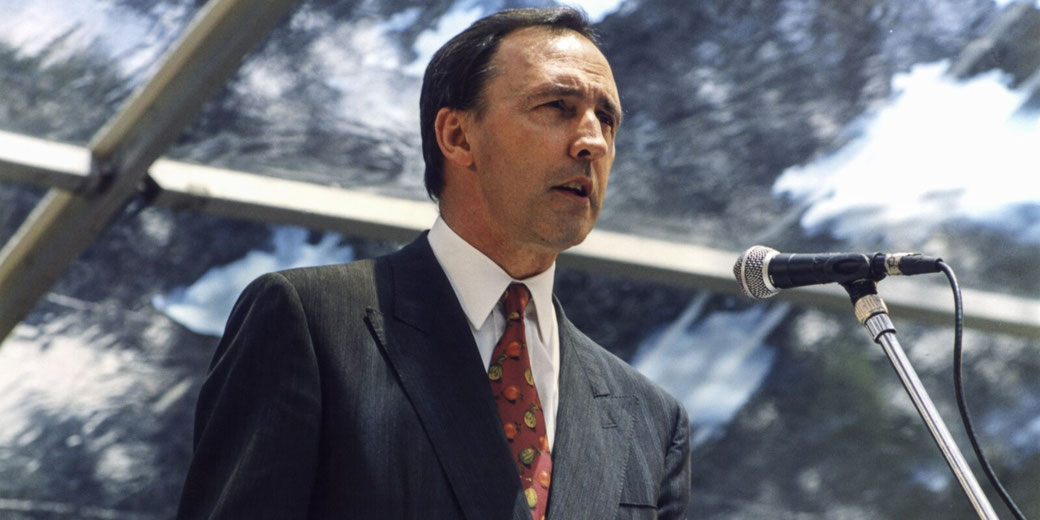
On 10 December 1992, in the Sydney suburb of Redfern, Australian Prime Minister Paul Keating gave a speech that directly confronted the nation's history of colonisation.
The event was held in Redfern Park and it was the launch of the International Year of the World’s Indigenous People, which was organised primarily by the Aboriginal and Torres Strait Islander Commission (ATSIC), with support from the Council for Aboriginal Reconciliation.
Keating used the occasion to deliver a message with far greater weight. For the first time, an Australian Prime Minister publicly acknowledged that non-Indigenous Australians had caused long-term harm to many Aboriginal and Torres Strait Islander peoples.
The social problems facing Australia at the time
At a time when legal and political developments had begun to bring about an initial national effort to confront the past, the speech aligned federal leadership with the idea that reconciliation required honesty, not comfort.
Just six months earlier, the High Court’s ruling in Mabo v Queensland (No 2) had overturned the legal fiction of terra nullius and recognised native title for the first time.
Keating’s remarks were part of a growing shift toward historical honesty. He generally did not use vague or evasive language.
Instead, he clearly blamed settlers and governments who had carried out dispossession that included forced family removals and systematic exclusion over more than two centuries.
Crucially, Keating described specific forms of injustice rather than vague grievances.
He referred to the theft of land, the forced separation of families, the destruction of culture, and the economic and social marginalisation that First Nations people continued to experience.
He rejected the idea that such events could be written off as accidents or products of their time.
Rather, he insisted that non-Indigenous Australians had to “open their hearts a bit,” admit that the suffering had been real, and take responsibility for what had been done in their name.
At one point, he asked, "How would I feel if this were done to me?"
What did the Prime Minister say?
Importantly, Keating chose to deliver the speech in Redfern, a suburb that had ongoing social disadvantage.
When he stood in front of a largely Indigenous crowd, which included respected figures such as Lowitja O'Donoghue, he presented himself as someone prepared to speak difficult truths in a place where those truths mattered most.
He argued that acknowledgement must come first, and that change could only begin once non-Indigenous Australians accepted their share of responsibility.
At the time, reactions were mixed, as some commentators praised the speech as an overdue act of moral leadership while others criticised it as divisive or excessive.
Yet over time, the speech became widely recognised as one of the most important speeches in Australia's political history.
It helped shift public language around Indigenous issues by providing a clear, direct example of how truth-telling could occur at the highest level of government.
For many Australians, it created a reference point for thinking about the country’s past and its obligations to First Nations peoples.
However, media responses varied. Some newspapers, such as The Sydney Morning Herald, endorsed the speech's honesty.
Other outlets expressed concern over its confrontational tone.
Why it was so significant
Over time, teachers and historians had treated the Redfern Speech as a key text for understanding modern Australia, which teachers used in classrooms to teach about colonisation and to explore questions of historical responsibility and political accountability.
Teachers often treated it as a primary source in class in which students examined its rhetorical choices, its legal and social context, and the way it broke from earlier political statements that had avoided naming the damage done.
Politically, the Redfern Speech set an important precedent. The Howard Government had largely resisted making a formal apology during its term.
The structure and tone of Keating’s words later influenced Kevin Rudd’s 2008 apology to the Stolen Generations.
Rudd’s statement to Parliament echoed the same principle that Keating had expressed sixteen years earlier, as it emphasised that reconciliation required an honest acknowledgement of past wrongs in addition to policy reform.
Without Keating’s earlier address, the 2008 apology might have lacked the same clarity of purpose or sense of continuity with earlier national conversations.
Don Watson, who was Keating’s speechwriter, later said that the Redfern Speech was one of the most difficult and important pieces he had ever written.
The ongoing impact of the speech
Culturally, the speech became part of Australian memory, since many Indigenous artists and thinkers referred to the speech when considering national identity.
Even decades later, references to Redfern continued to influence public debate about constitutional recognition and treaty negotiations, which informed discussion of the proposed Indigenous Voice to Parliament.
Internationally, some observers called it a relatively rare example of a Western leader directly confronting the effects of colonisation in clear moral terms.
Today, the Redfern Speech is widely regarded as one of the clearest examples of how political language can carry moral force.
While it did not fully solve the problems it named, it changed the way many Australians spoke about them, and it provided a model for future leaders to follow.