
The tragic life of J. Robert Oppenheimer, the 'father of the atomic bomb'
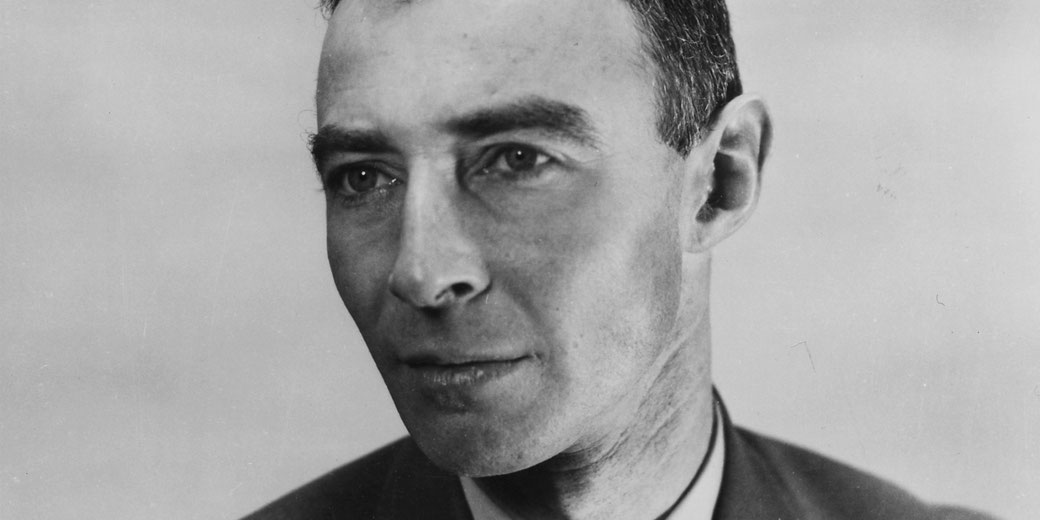
By 1945, the United States had turned science into a tool of war, and the man at the centre of this effort was J. Robert Oppenheimer.
As director of the Los Alamos Laboratory, he oversaw the creation of the world’s first atomic bombs, weapons that would destroy two cities and help bring the Second World War to an end.
Within a decade, however, the government that had once celebrated him as a national hero branded him a security risk and stripped him of power.
Early life and academic brilliance
Born on 22 April 1904 in New York City, Julius Robert Oppenheimer came from a wealthy family of German-Jewish immigrants who had embraced secular humanism and modern education.
His father was Julius, who built a profitable textile importing business, and his mother was Ella, who fostered a home environment filled with books and paintings.
Raised in an apartment that looked over Riverside Drive on Manhattan’s Upper West Side, Robert gradually developed a very advanced mind and a keen interest in both science and the humanities.
At the Ethical Culture Fieldston School, where he received his early education, Oppenheimer learned to value rational thought, a clear sense of moral responsibility, and intellectual discipline.
By the time he entered Harvard University in 1922, he had already studied classical literature and mineralogy, as well as Sanskrit, and by this stage he had also taught himself advanced mathematics and chemistry.
He completed his undergraduate degree in just three years, graduating summa cum laude, and soon pursued postgraduate work in physics, where he believed the most important advances could occur.
After brief and frustrating research at the Cavendish Laboratory in Cambridge, where he had worked under experimental physicist Patrick Blackett but had struggled with laboratory techniques, he moved to the University of Göttingen.
There, under Max Born’s supervision, he completed a doctorate in theoretical physics in 1927 and collaborated with some of the leading physicists of the era, among them Niels Bohr and Wolfgang Pauli.
During this period, he produced what many physicists later regarded as important work on quantum theory, and this work included a doctoral thesis on molecular wave functions.
He also suffered a mental health crisis and once placed a chemically tainted apple on Blackett's desk, an act reportedly meant as a gesture of hostility.
The incident had never been prosecuted or confirmed to have endangered anyone, and it was later raised during his security hearing.
By the late 1920s, he had returned to the United States and had begun teaching at both the University of California, Berkeley and Caltech, where he quickly became widely regarded as one of the most respected physicists in the country.
Eventually, Oppenheimer’s research interests broadened to include astrophysics and quantum field theory, along with research into nuclear reactions.
He attracted a growing number of graduate students and maintained a reputation as a demanding yet inspirational mentor.
Anecdotes from his students described his habit of writing equations with one hand and erasing them with the other, a reflection of both his brilliance and his chaotic energy.
Although socially awkward and often emotionally withdrawn, he engaged deeply with philosophical questions and took a growing interest in political and humanitarian causes.
The Manhattan Project and wartime leadership
After the discovery of nuclear fission in Germany in 1938, physicists across Europe and America who worked in nuclear physics warned that Nazi scientists might attempt to build an atomic bomb in the near future.
As tensions increased, the Roosevelt administration initiated a top-secret programme known as the Manhattan Project to develop nuclear weapons before Germany could succeed.
In 1942, General Leslie Groves selected Oppenheimer to direct the scientific research, despite concerns about his political background and lack of managerial experience.
Groves personally waived a requirement for security clearance, believing Oppenheimer’s expertise made him essential.
At Los Alamos, a remote site in New Mexico officially designated as Project Y, Oppenheimer assembled and led a team of physicists and chemists, along with engineers who worked under strict military supervision.
Although he had never overseen a project of such scale, he coordinated thousands of researchers across many fields and developed a cooperative environment that produced rapid results.
Nationwide, the Manhattan Project employed over 130,000 people across its various sites, which included Oak Ridge and Hanford, together with the laboratory at Los Alamos.
The laboratory pursued two bomb designs: a uranium-based “gun-type” model, later called “Little Boy,” and a more technically demanding plutonium-based implosion weapon, “Fat Man.”
On 16 July 1945, the team conducted the Trinity Test at Alamogordo, where the plutonium device detonated successfully.
As the blast lit the desert sky and the shockwave echoed across the plain, Oppenheimer later recalled a passage from the Bhagavad Gita in an interview: “Now I am become Death, the destroyer of worlds.”
Less than a month later, the United States dropped atomic bombs on Hiroshima and Nagasaki, a strike that killed over 200,000 people by the end of 1945 due to both immediate and radiation-related effects.
Ultimately, this attack prompted Japan's announcement of surrender on 15 August.
The formal surrender was signed on 2 September aboard the USS Missouri.
Oppenheimer had achieved his mission, but the aftermath seems to have left him troubled.
Disillusionment and political fallout
In the months following the war, Oppenheimer arguably became one of America’s most well-known scientific thinkers in public life.
As chairman of the General Advisory Committee to the Atomic Energy Commission, a position he assumed in 1947, he urged restraint in nuclear development and warned against the immediate construction of the hydrogen bomb.
He argued that the bomb would encourage a dangerous arms race and advocated for international control of nuclear technology.
Eventually, his influence attracted the attention of opponents within the military and political establishment.
During the early Cold War, suspicion of communist sympathies intensified, and Oppenheimer’s earlier political associations became a serious problem for him.
In the 1930s, he had donated to anti-fascist causes and maintained personal relationships with individuals linked to the Communist Party, including his brother Frank and former romantic partner Jean Tatlock.
Tatlock had been a committed member of the Communist Party, had died by suicide in 1944, and had remained under FBI scrutiny.
Although he never joined the party, his connections placed him under FBI surveillance.
By 1954, the Atomic Energy Commission was led by Lewis Strauss, and it initiated a hearing to determine whether Oppenheimer should retain his security clearance.
Over several weeks of closed-door testimony, the panel closely examined his political past and questioned his loyalty, then went on to challenge his judgement.
Edward Teller had clashed with Oppenheimer over the hydrogen bomb, and he testified, “I would feel personally more secure if public matters would rest in other hands.”
In the end, the AEC revoked his clearance and stated that he was a risk to national security instead of an espionage threat. His career in government was over.
Later years and philosophical reckoning
After the hearing, Oppenheimer returned to the Institute for Advanced Study in Princeton, where he resumed teaching and writing.
Although publicly restrained in his comments about what had happened to him, he grew increasingly thoughtful and withdrawn.
He continued to speak about the ethical responsibilities of scientists and the dangers of political interference in research, but he remained excluded from official influence over atomic policy.
Occasionally, he travelled to Europe and India, where he received honours and spoke to audiences who viewed him as a victim of political persecution.
In West Germany, he received the Pour le Mérite for Sciences and Arts in 1966, which recognised his scientific work.
He found comfort in philosophy and poetry, especially the Bhagavad Gita, which had helped him express the inner conflict he felt after Hiroshima.
He also continued to contribute to theoretical physics, and his work included early ideas related to gravitational collapse, which anticipated the modern concept of black holes.
However, the emotional strain of public disgrace, combined with the knowledge of what his scientific achievements had unleashed, weighed heavily on him.
By the early 1960s, some members of the scientific community and government began to call for a review of how he had been treated.
In 1963, President John F. Kennedy selected him to receive the Enrico Fermi Award, though it was awarded by Lyndon B. Johnson after Kennedy's assassination.
The gesture aimed to acknowledge his contributions and begin to repair his reputation.
Oppenheimer accepted the award in a brief ceremony, though he offered no public comment on the way political leaders had turned on him and ended his influence.
Death and historical legacy
Diagnosed with throat cancer in 1965, Oppenheimer endured treatment with acceptance, knowing that the illness would prove fatal.
He died on 18 February 1967 in Princeton, surrounded by a small circle of friends and family who had remained close to him.
At the time of his death, the Cold War arms race continued to speed up, and by 1967, nuclear stockpiles in the United States had gone over 31,000 warheads, a scale of destruction far removed from what he had originally envisioned at Los Alamos.
In the decades that followed, historians and scientists joined the wider public in re-examining his life and actions.
Some described him as a tragic figure who gave humanity the power to destroy itself, while others defended his efforts as necessary during a time of total war.
His security hearing became a case study in Cold War paranoia, academic freedom, and the limits of dissent within national security institutions.
Today, many people remember Oppenheimer mainly in connection with the birth of the atomic age.
He stood at the crossroads of science and state power, and this experience changed him in permanent ways.
His story still raises difficult questions about the price of knowledge and the responsibilities of intellect, together with the human consequences of invention.
In recent years, renewed public interest in his life followed the release of the 2023 film by Christopher Nolan, which explored the moral and psychological cost of his work and started debate again about his place in history.