
Operation Sea Lion: Hitler's plan to invade Britain
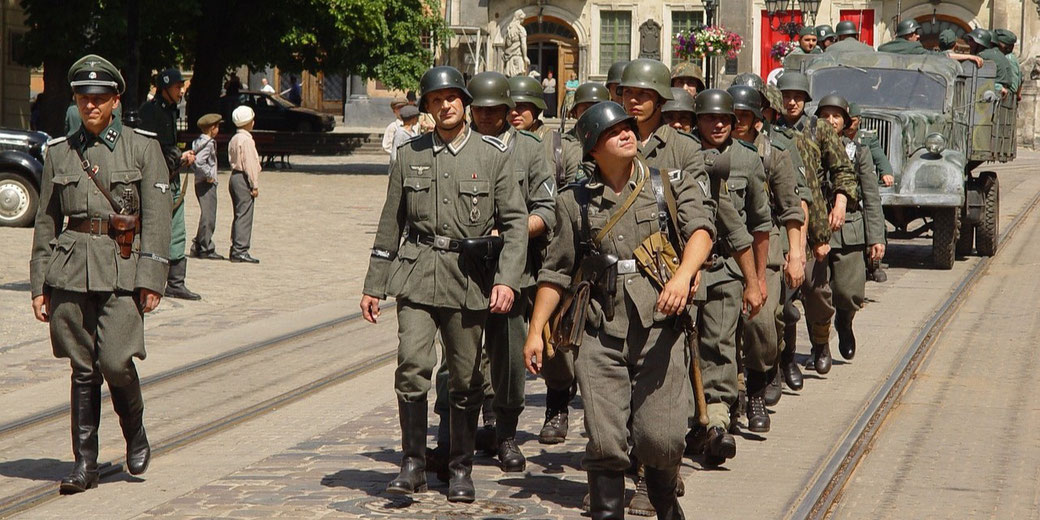
By July 1940, Adolf Hitler had overrun France and had forced Belgium and the Netherlands into surrender, then had pushed British forces off the continent at Dunkirk.
Despite these victories, Britain refused to enter negotiations, and Churchill’s refusal to consider peace forced Hitler to approve a plan that aimed to deliver a knockout blow by direct invasion.
Called Unternehmen Seelöwe, or Operation Sea Lion, it required swift conquest of southern England, but depended on air and naval superiority that Germany never secured.
The strategic thinking behind Operation Sea Lion
After France had surrendered in June 1940, Hitler expected that Britain was now isolated and would recognise that further resistance seemed hopeless.
Instead, Churchill’s immediate rejection of compromise prompted Hitler to issue Führer Directive No. 16 on 16 July, which ordered preparations for the invasion of Britain.
The directive stated that "as England, in spite of her hopeless military situation, shows no sign of willingness to come to terms, I have decided to prepare for, and if necessary, to carry out, a landing operation against her."
At that point, Hitler still believed that the simple threat of invasion might push British leaders to seek peace terms, and his directive showed both a military plan and psychological pressure.
In his Reichstag speech on 19 July, Hitler offered what he called "the hand of peace" to Britain, but Churchill dismissed it as a trap, because he had already restated British determination a month earlier in his speech on 18 June, in which he declared, "This was their finest hour."
From the beginning, senior German commanders expressed concerns. Grand Admiral Erich Raeder warned that the Kriegsmarine had lost about a third of its surface fleet in the Norwegian campaign and could not protect an invasion fleet from British warships.
Even so, Hitler insisted that planning continue, and military leaders began assembling a force of over 260,000 troops in total, which included an initial assault wave of around 90,000 to 130,000 planned for the landings on the south coast between Folkestone and Lyme Bay.
Army Group A, commanded by Field Marshal Gerd von Rundstedt, took charge of overall invasion plans, with the 16th Army under General Ernst Busch designated to lead the first wave, while the 9th Army under General Strauss was expected to follow in later landings.
To move such a large force, Germany needed to take over more than 2,000 river barges and fishing vessels, although only around 800 of these were considered suitable for crossing the Channel.
These included flat-bottomed Rhine barges and small steamers as well as larger tankers, many of which were unsuitable for open-water travel.
While General Alfred Jodl and other planners assumed the operation would succeed if the RAF were destroyed, they ignored the British advantage at sea and underestimated the defensive measures already underway.
Internal disputes between the services soon emerged, as each branch pushed for its own operational priorities without providing a unified plan.
How the invasion was supposed to work
Initially, the German strategy required the Luftwaffe to eliminate, as far as possible, the RAF’s ability to contest the skies.
Only after achieving air superiority could the invasion force safely cross the Channel.
To that end, Göring promised to destroy airfields and radar stations across southern England by carrying out sustained bombing raids in a campaign codenamed Adlerangriff, or "Eagle Attack," which began on 13 August 1940 and marked the formal start of the Battle of Britain.
Once ashore, selected formations from the 16th Army would secure a beachhead under the protection of Luftwaffe dive bombers, and these formations included the 17th Infantry Division and the 35th Infantry Division as well as the 1st Mountain Division.
Then, engineers and armoured detachments would push inland to capture Dover and Portsmouth before advancing north toward London.
To aid their advance, paratroopers were assigned to seize key bridges and road junctions across Kent and Sussex in order to disrupt British reinforcements.
Meanwhile, follow-up waves would land additional divisions, heavy equipment, and logistical support.
However, the operation faced serious supply problems from the outset. Converted barges lacked keels and travelled slowly, so they struggled to manoeuvre in rough seas.
As a result, they could only cross during narrow windows of calm weather and daylight.
Even if the first wave landed successfully, supplies and reinforcements could not be guaranteed.
The Royal Navy’s superiority remained a critical threat, since British destroyers and cruisers, along with submarines, could intercept convoys before they reached the shore.
In addition, German planners largely failed to account for the possibility of a long battle.
No reliable plan existed for getting their troops out again, and many barges were intended for one-way trips only.
If resistance proved stronger than expected, German troops would face getting surrounded and defeated without support.
Crucially, assumptions about rapid British surrender rested on weak intelligence reports and overconfidence.
Hitler himself warned his generals in late August that unless air superiority had been firmly achieved, he would not risk the operation.
British preparations and defensive measures
Meanwhile, British commanders assumed that a German landing was increasingly likely and prepared accordingly.
General Alan Brooke and General Bernard Montgomery focused on strengthening coastal defences and developing mobile reserves that were able to respond to any breakthrough.
Across southern England, engineers constructed pillboxes, anti-tank ditches, minefields, and roadblocks to slow enemy movement so that advancing troops moved into areas covered by fire.
Operation CROMWELL outlined coordinated counterattacks in the event of landings, while Operation Banquet included emergency plans to deploy training aircraft against invading forces.
At the same time, the British government mobilised the Home Guard, a civilian militia formed of those not eligible for front-line service.
Volunteers received basic training and weapons, which included rifles and grenades as well as improvised explosives.
Their task was to delay enemy forces and hold key positions until regular army units arrived.
By August, more than one million Britons had joined the Home Guard, so they formed a second line of defence behind the regular army.
At sea, the Royal Navy stationed capital ships and fast escorts in the Channel, with particular focus on Dover and Portsmouth Commands, and it also kept wider patrols across the western and northern approaches so that it could intercept German convoys.
Because the Kriegsmarine lacked sufficient escort vessels, the likelihood of a successful crossing remained low.
In the event of a landing, British naval forces could arrive within hours to disrupt the beachhead and isolate German troops.
In the air, Britain relied on its early-warning network, known as the Dowding System, which integrated radar stations with ground-based observers and fighter command.
Each time German aircraft crossed the Channel, operators tracked their movements and dispatched Hurricanes or Spitfires to intercept.
Despite significant losses, RAF Fighter Command retained enough strength to blunt German attacks and protect key airfields from destruction.
At the start of August 1940, the RAF had around 640 operational fighters, and it faced more than 2,600 German aircraft of various types.
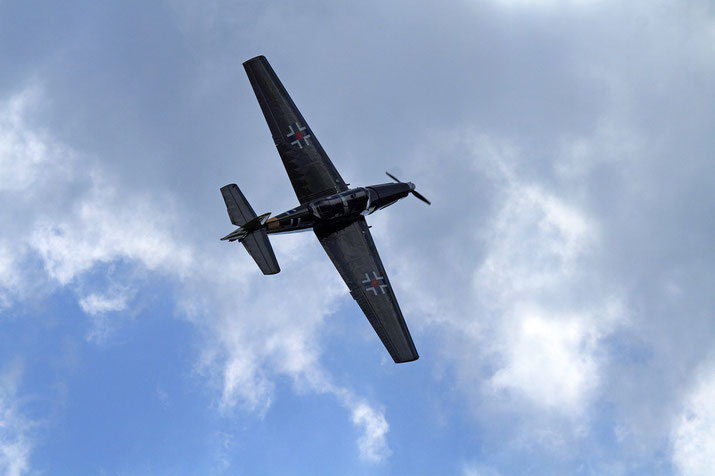
Why the invasion never happened
By early September, it had become clear that the Luftwaffe had effectively failed to eliminate the RAF.
During weeks of intense combat, British fighter squadrons had shot down hundreds of German aircraft, and many of the aircrews were experienced pilots who could not be easily replaced.
Although British losses were also heavy, airfields largely remained operational, and radar coverage continued to provide early warning of raids.
British intelligence drew on Ultra decrypts of German signals at Bletchley Park and gave useful information about Luftwaffe operations, which helped commanders coordinate timely interceptions.
Eventually, Göring shifted focus from airfields to the bombing of London because he believed that an attempt to terrify the civilian population would force a British collapse.
In fact, the change in strategy reduced pressure on the RAF, which used the reprieve to repair infrastructure and regroup so that it could increase sorties.
As German losses mounted and British defences held, Hitler postponed Operation Sea Lion, which had been planned as the invasion of Britain, without setting a new date on 17 September 1940.
From that point forward, no further serious effort was made to revive the plan.
The Luftwaffe’s inability to fully dominate the skies, combined with the Kriegsmarine’s limited reach and Britain’s strong coastal defences, convinced German leaders that the risks outweighed any potential gains.
Over time, German forces used the barges and materials that they had assembled for the invasion for other tasks, and German troops who had originally been assigned to Sea Lion were sent to the Balkans in early 1941 and to the Eastern Front later that year.
By mid-December 1940, after Führer Directive No. 21 had been issued on 18 December, Hitler had formally shifted his attention to the Soviet Union, and Führer Directive No. 21 ordered preparations for Operation Barbarossa, which he now viewed as the main front.
The failure of Sea Lion showed the limits of German power in the west and underscored the importance of air and naval control in modern warfare.
Historical significance of Operation Sea Lion
Operation Sea Lion showed how far German planning had already been stretched by mid-1940.
Hitler’s assumption that Britain would collapse under pressure led to a rushed and poorly coordinated strategy that lacked coordination between services.
While the Heer planned troop movements and objectives on land, the Kriegsmarine struggled to provide transport and protection, and the Luftwaffe failed to neutralise British air power.
Internally, the failure damaged Hitler’s standing with some senior officers who had already questioned whether the operation could work.
Meanwhile, Britain’s survival owed much, in large part, to its use of technology and decentralised command, together with effective mobilisation.
The Dowding System gave the RAF a clear advantage in how it fought each battle, while widespread civilian participation in defence efforts ensured that any invasion, which would in most cases face organised opposition, would be met with coordinated resistance.
As a result, Germany never achieved the upper hand in the Channel.
The abandonment of Sea Lion meant that Britain remained in the war and could be used as a base for future Allied offensives, and over the next four years, it gradually became the base for the liberation of Western Europe.
When the Allies launched Operation Overlord in June 1944, they succeeded where Germany had failed because they possessed the naval power and air control required to execute it, together with the necessary logistics, and the concept of invasion itself had stayed the same.
For Germany, Sea Lion’s collapse largely was the end of any remaining real hope for a quick end to the war in the west.
Its failure exposed the assumptions that had driven early German success and forced Hitler to confront the reality that Britain could not be intimidated into submission.