
Why Omaha Beach was the bloodiest of the D-Day landings
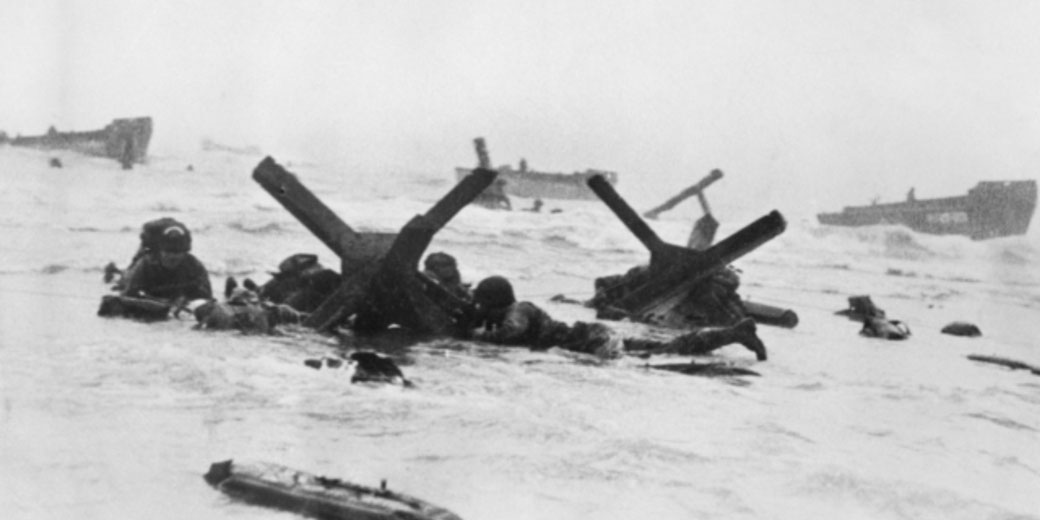
Just after dawn on June 6, 1944, as the tide rolled in along the Norman coast, American assault troops prepared to land on a beach that was code-named Omaha.
Assigned to the 1st and 29th Infantry Divisions, they were given the job of breaking through one of the most heavily defended sectors of Hitler’s Atlantic Wall.
Within minutes after the first landings began, several thousand men were dead, wounded, or missing, their bodies scattered across the waterline, as German fire poured down from fortified cliffs that overlooked every approach.
Why the terrain favoured the defenders
Along a stretch between Vierville-sur-Mer and Colleville-sur-Mer, the shape of the land created a natural killing ground.
High bluffs rose behind a narrow tidal flat, which forced troops who approached the shore to advance across open ground with almost no cover.
Prior to the assault, German engineers had transformed the beachfront into a network of traps, and they lined it with mined stakes, steel hedgehogs, barbed wire, and underwater explosives.
Just behind the sand, concrete seawalls and raised shingle banks hemmed in the Americans, who advanced.
At once, the defenders fired from concrete bunkers built into the slopes and ridgelines, each designed with overlapping fields of fire that overlapped and covered almost every inch of the beach.
Key strongpoints such as WN-62 and WN-72 housed machine guns with extremely high rates of fire, including the MG42, which could fire up to 1,500 rounds per minute.
German crews aimed machine guns and mortars, along with anti-tank weapons, at densely packed soldiers who still tried to disembark.
From above, they picked off men who tried to take cover behind obstacles that had been placed to destroy landing craft and delay armoured vehicles.
Because the tide pushed the landing craft towards the shoreline obstructions, many troops found that they had disembarked in precisely the range of fire that the Germans had calibrated their weapons to cover.
What German troops were located there?
Soon after the beach sectors had been assigned to the Americans, German High Command had transferred the 352nd Infantry Division into the area, and this move reinforced parts of the sector alongside the 716th Division that had originally held the line.
Led by Generalleutnant Dietrich Kraiss, elements of the 914th, 915th, and 916th Grenadier Regiments had dug in across the approaches to Omaha.
Allied intelligence failed to detect the change, which meant that instead of encountering inexperienced troops, the Americans faced veterans trained in defence-in-depth who had spent weeks on the construction of strongpoints.
Their positions included reinforced pillboxes and underground shelters, along with trench lines that withstood both aerial and naval bombardments.
By the time the first assault waves approached the shore, German crews had already taken up positions with fully operational weapons, stocked ammunition, and pre-sighted ranges.
Each strongpoint functioned as a fortress that could fight on its own. Mortar fire covered the sandbars, and machine guns swept from one end of the beach to the other, and artillery pieces, including 88mm Flak guns and smaller 50mm and 75mm weapons, targeted landing craft with armour-piercing shells.
As soon as the Americans landed, the defenders responded with disciplined, coordinated, and constant fire.
Inadequate bombardment and poor intelligence
Before the landings began, Allied commanders ordered intense aerial and naval strikes intended to knock out German defences.
However, bombing runs by over 300 B-24 Liberators released their payloads too far inland, since pilots had been instructed to avoid hitting friendly forces by mistake.
Overcast skies hid the targets, and many bombs missed their intended target areas.
Naval gunfire began around 05:50 AM, with battleships such as USS Texas and USS Arkansas, which fired volleys, but smoke and shifting tides led to incorrect targeting.
Other vessels also participated, and these included USS Nevada and HMS Glasgow, but most strongpoints at Omaha remained intact, and crews had already returned to their positions by the time the landing craft appeared on the horizon.
Meanwhile, Allied intelligence reports did not fully account for the strength and preparedness of the defenders, as well as their weaponry.
Because planners believed the 352nd Division operated elsewhere, they significantly underestimated the number of enemy troops and the layout of defensive zones, along with the likely volume of fire.
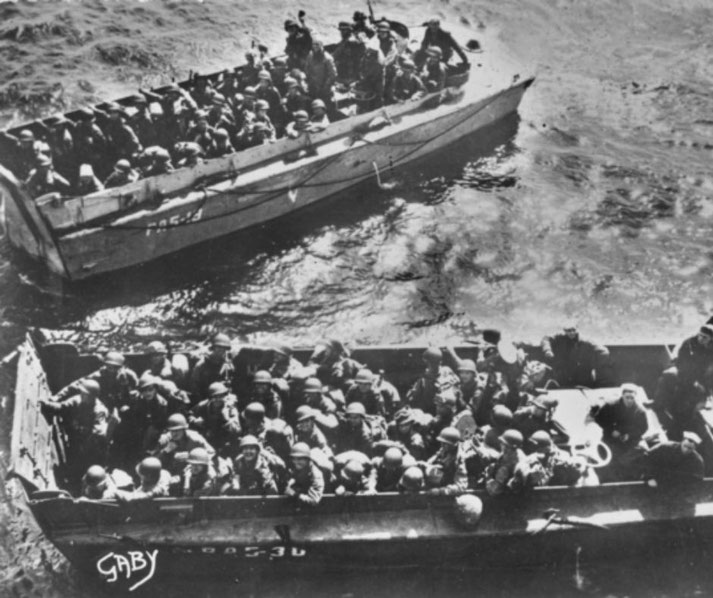
Heavy seas scattered the landing craft as they approached, and this separation left companies far from their assigned targets.
In many cases, infantrymen landed in front of the most fortified sectors.
Additionally, engineers from the 5th and 6th Engineer Special Brigades were tasked with clearing mines and blowing gaps in the obstacles and came ashore under direct fire, often without infantry or tank support.
Heavy casualties among the first waves
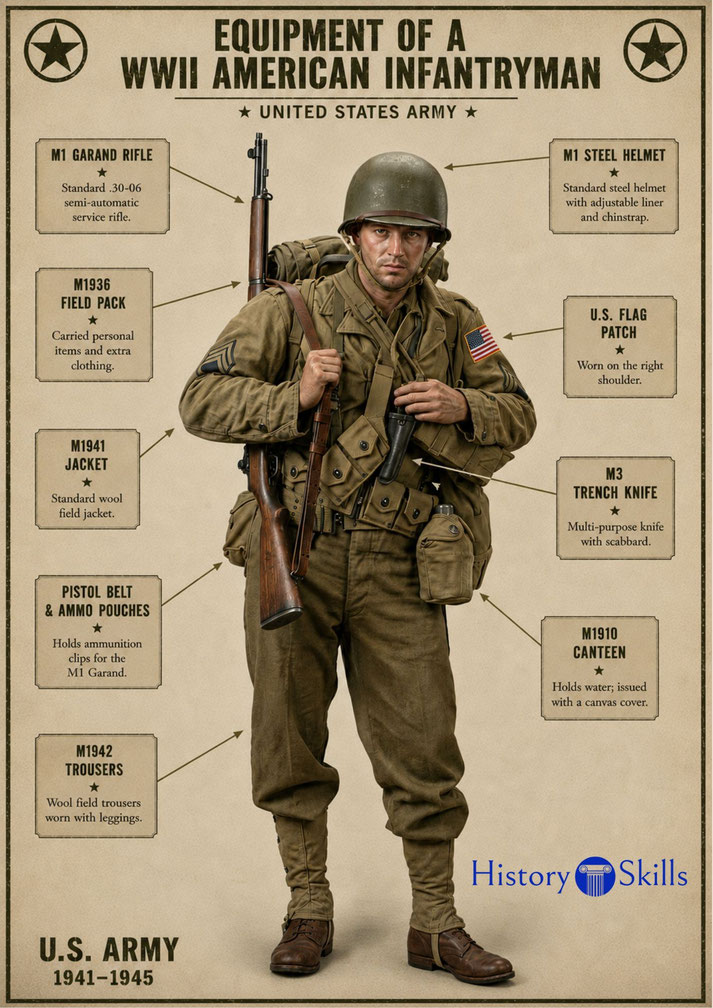
At 06:30 AM, the first wave of American troops stepped out into surf that was already thick with floating mines and shell bursts, along with machine-gun fire. In many cases, ramps dropped into chest-deep water that measured around 12°C, and soldiers, who were encumbered by packs and rifles and by the weight of radios, struggled to wade ashore under very heavy fire.
Some boats had already exploded before the men on board could get out. Others deposited men directly into areas where the fire was most deadly, where no cover existed, and where pre-sighted weapons hit their targets with deadly accuracy.
Quickly, entire platoons lost organisation. Commanders fell within minutes of the first landings, and this loss forced junior officers and sergeants to take charge in the middle of confusion.
Some troops tried to find shelter behind tank obstacles or crawled into shallow craters created by earlier shelling.
Medics moved across the beach under fire and dragged the wounded from the surf as they sorted injuries by urgency with very few supplies.
By late morning, many companies had lost over half their strength, and Company A of the 116th Infantry Regiment suffered estimated casualties that reportedly exceeded 90 percent.
In total, casualties at Omaha reached around 2,400 to 2,500, with approximately 1,000 to 1,200 killed and another 1,000 wounded.
Hundreds more were listed as missing in the confused reports compiled after the battle.
Of the five landing beaches, Omaha accounted for the highest number of Allied losses on D-Day.
Slow progress and hard-won success
Eventually, by midday, small groups of survivors began to move up the draws, which were natural gullies between the bluffs and offered the only possible routes inland.
While not part of the main Omaha sectors, Rangers from the 2nd Battalion were under the command of Lt. Col. James Earl Rudder and scaled the cliffs at Pointe du Hoc under fire and destroyed ammunition stores near where large German coastal guns had recently been relocated.
Destroyers such as USS Doyle, USS McCook, and USS Carmick moved dangerously close to the beach, and they shelled German positions with direct fire that suppressed some of the strongpoints enough to let troops advance.
As scattered infantry units regrouped, engineers blew gaps in barbed wire and minefields, and this work cleared paths for reinforcements.
Throughout the day, isolated squads pressed forward and did not wait for orders, driven by survival and the instinct to escape the deathtrap of the beach.
Progress remained uneven, and some sectors stalled for hours under continued fire.
Still, by nightfall, American forces had secured a small, shallow position atop the bluffs, though they had gained only a few kilometres at the cost of very heavy losses.
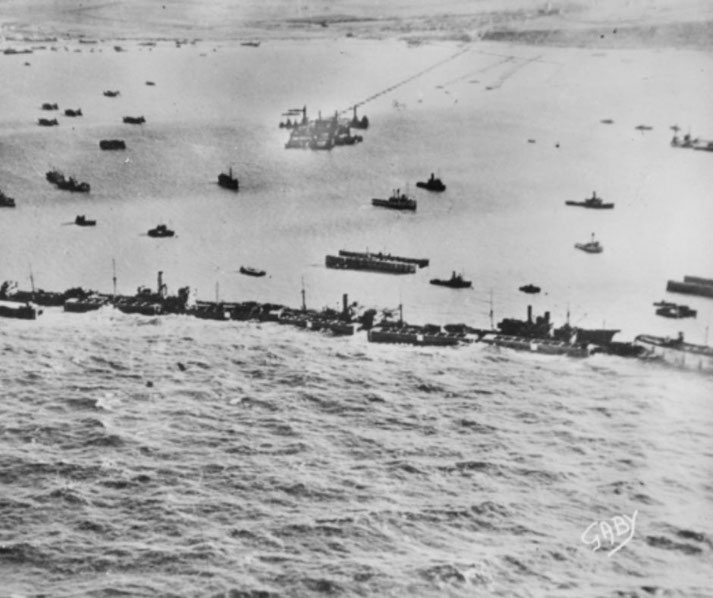
By the end of D-Day, Omaha Beach had earned its reputation as arguably the most fiercely fought landing zone of the invasion.
Its natural defences, reinforced enemy positions, flawed Allied assumptions, and delayed support combined to produce a battlefield soaked in blood and littered with wreckage.
Almost every gain came at a terrible cost, and every survivor carried memories forged in fire and fear, strengthened by determination.
Today, the Normandy American Cemetery, which lies above the bluffs at Colleville-sur-Mer, still bears silent witness to those who fell on that beach.