
The very first feature film in Australian history was actually about Ned Kelly
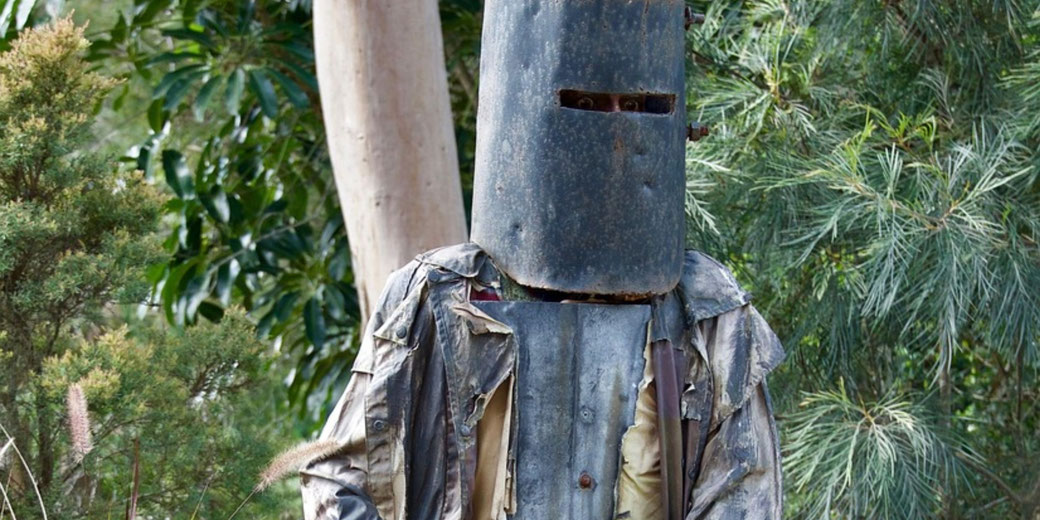
On 26 December 1906, Australian audiences gathered at Melbourne’s Athenaeum Hall to witness something no one had attempted before: a full-length dramatic film that told the story of a real figure from their recent past.
Titled The Story of the Kelly Gang, the production reportedly ran for more than an hour and used moving pictures to retell the rise and fall of Ned Kelly, who had been executed just twenty-six years earlier.
At a time when most films lasted less than ten minutes, the project captured national attention and introduced a new way of telling stories that helped change cinema.
Contemporary press reports from The Argus and The Age described the audience as generally captivated by the realism and length of the film, which had been promoted locally by Clement Mason, the venue manager.
The film is now widely recognised as Australia’s first feature film and the earliest known feature-length film that told a story in the world.
Who made The Story of the Kelly Gang?
During the early years of the twentieth century, Melbourne’s theatre scene did well as entertainment technology grew quickly, and that growth created opportunities for major projects.
In this environment, Charles Tait collaborated with his wife Elizabeth and his brothers John, Nevin, and Frank, who used their theatrical experience and commercial networks to create an early film production.
To handle the technical aspects, they worked with the Melbourne-based photographic firm Johnson and Gibson, who had begun testing motion picture technology for public release.
The cinematographer may have been Samuel Crew, whom some sources credit with the role, although full credits were never published, and there is still some doubt.
The total cost of the production reached about £1,000, which was a large amount for a local project of its kind at the time.
To create realistic sets, the team chose filming locations that matched the setting of colonial Victoria during the Kelly Gang’s final years, and they primarily used bushland around Heidelberg, St Kilda, Rosanna, and Eltham.
This allowed them to recreate key incidents such as the bank robbery at Euroa, the hold-up at Jerilderie, and the siege at Glenrowan.
One of the most famous surviving scenes shows the gang as they donned their armour before the final confrontation.
At the same time, the film included home scenes that portrayed Ned Kelly as a protective son and loyal brother, which matched a common view of him as a rebel who had resisted unfair treatment by the government.
Why was the Story of the Kelly Gang banned?
For the cast, the Taits selected a mix of amateur actors and stage performers from local theatre companies, many of whom changed their acting for the silent film.
Frank Mills likely played the role of Ned Kelly, although the lack of detailed credits made exact identification difficult and caused some debate.
To fit the film's length, they used approximately 4,000 feet of nitrate film, which gave a running time of about 60 to 70 minutes, based on surviving reports.
To guide audiences, cinema staff, who narrated scenes and played sound effects, sometimes used live music to keep attention and add emotion.
Soon after its release, the film had become a major draw, so it toured across Victoria and later appeared in New South Wales, Queensland, and South Australia, before being screened in New Zealand and the United Kingdom.
At first, many praised its new approach and its historical topic. However, state officials included members of the Victorian police, who criticised the film for showing criminals in a sympathetic way.
As a result, several Australian states introduced censorship laws that banned the depiction of bushrangers on screen, so the ban ended the bushranger film genre in mainstream cinema by 1912.
Other productions, such as Thunderbolt (1910) and Captain Midnight, the Bush King (1911), also stopped being made as the ban took effect.
The film’s social and historical significance
Over time, the original film reels became damaged because nitrate film was unstable, which meant that much of the footage was either destroyed or lost.
However, over the following decades, film historians had gradually worked to recover what survived and had found fragments during the 1970s and 1980s in private collections and old storage vaults.
During the early 2000s, additional parts were found, including rare production photographs, a programme booklet, and original advertisements.
Restoration work by Graham Shirley and staff at the National Film and Sound Archive of Australia had produced a 17-minute reconstruction, which UNESCO added to the Memory of the World register in 2007.
As a filmmaking achievement, The Story of the Kelly Gang showed that films could tell a long dramatic story instead of relying on novelty or short comic scenes, and that audiences would more readily connect with local stories, especially when told with clear emotion and vivid visual detail.
State bans ended the bushranger genre in Australia’s mainstream cinema. The film’s influence continued for many years as an important technical achievement and as a way of engaging with colonial history.
The film helped preserve a legend from the frontier past and raised questions about how Australians should remember people who broke the law but continued to occupy a central place in public memory.