
What is NATO and why was it formed?
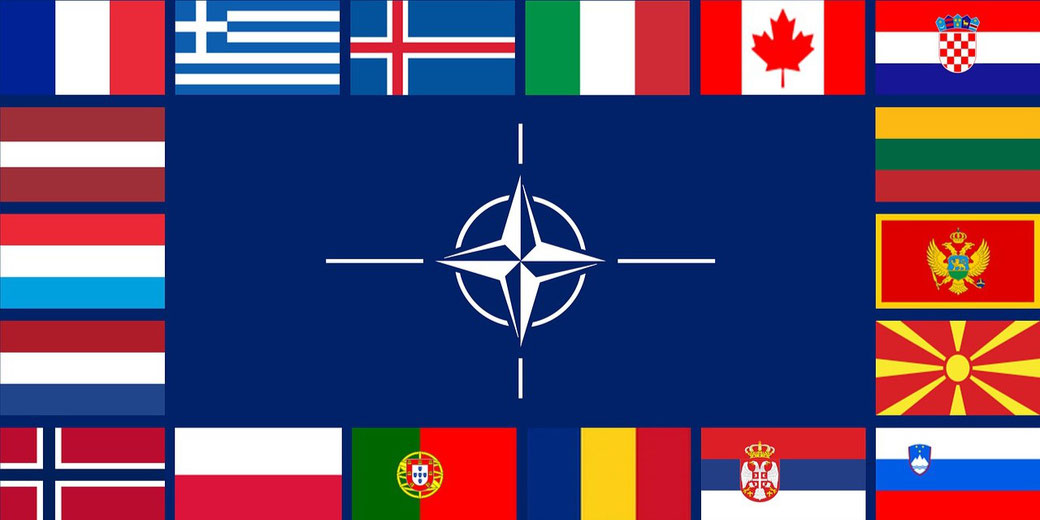
After 1945, Europe lay badly damaged by war, economically shattered, and politically divided between liberal democracies in the West and communist regimes in the East.
Soviet troops remained stationed across Eastern Europe, and Moscow had installed pro-communist governments from Poland to Bulgaria by 1948.
As American policymakers watched Stalin consolidate control, they moved to form a military alliance that would bind Western Europe to the United States and deter any further Soviet expansion by threatening a coordinated response to any act of aggression.
Origins and Purpose of NATO
Following the surrender of Nazi Germany, much of Europe entered a period of serious uncertainty.
Entire cities had been flattened by bombing campaigns, transport and communications systems no longer functioned, and millions of people lived in temporary housing or refugee camps.
By late 1946, the Soviet Union had extended its control over Poland, Hungary, Romania, and the eastern zone of Germany that was then under Soviet occupation, and communist parties remained active in several Western countries.
Western leaders grew increasingly alarmed by the possibility of a political takeover backed by Soviet pressure or secret interference.
As early as 1947, the Truman administration had issued the Truman Doctrine and had launched the Marshall Plan to resist Soviet political influence and rebuild Western European economies.
Yet senior officials in both Europe and North America recognised that economic aid alone would not be enough to provide security.
In response, Western nations signed the Treaty of Dunkirk in 1947 and the Treaty of Brussels in 1948, forming a defensive pact among several European states.
The United States showed it was willing to participate by passing the Vandenberg Resolution in June 1948, which authorised American involvement in a peacetime alliance.
By that year, negotiations had begun for a permanent organisation that would provide military protection and coordinate defence policies among like-minded states.
By the time the North Atlantic Treaty was signed on 4 April 1949, twelve countries had committed to the new organisation. Belgium, Canada, Denmark, France, Iceland, Italy, Luxembourg, the Netherlands, Norway, Portugal, the United Kingdom, and the United States agreed to uphold democratic institutions and defend one another in the event of attack.
Crucially, NATO provided a clear framework for American forces to remain in Europe during peacetime.
This arrangement indicated to the Soviet Union that any attempt to use force would prompt a collective military response.
The alliance headquartered in London, moved to Paris in 1952, and finally relocated to Brussels in 1967 after France had withdrawn from NATO’s integrated military command.
Lord Ismay was its first Secretary General and summarised NATO's mission as keeping "the Russians out, the Americans in, and the Germans down."
Western governments viewed Soviet actions, such as the 1948 Berlin Blockade and the rigging of elections in Eastern Europe, as confirmation that the USSR intended to spread communism by coercion.
NATO, therefore, had two main purposes: it deterred direct military aggression, and it reassured European states that the United States would not retreat into isolation.
When American nuclear and conventional forces were stationed in Europe, the alliance created a credible deterrent that significantly shifted the balance of power.
Article 5
At the centre of the NATO treaty lies Article 5, which declares that an armed attack against one or more members shall be considered an attack against them all.
That clause set out clearly the concept of collective defence, ensuring that no state would have to face invasion alone.
Each member agreed to take action in response, using any means it judged necessary, including armed force.
Significantly, the article did not require automatic military retaliation. Instead, it allowed each country to respond according to its own laws and capabilities, while still reinforcing the collective nature of the alliance.
The clause provided the legal foundation for NATO’s strategy and gave political importance to the presence of American forces and nuclear weapons on European soil.
Eventually, NATO used Article 5 for the first and only time following the terrorist attacks on the United States on 11 September 2001.
On the next day, member states unanimously agreed that the attack triggered their collective defence obligation.
As a result, NATO aircraft conducted patrols over American cities, and the alliance initiated a support mission that led to its long-term involvement in Afghanistan.
That decision confirmed that the article applied to traditional warfare and also to new security threats that emerged in the 21st century.
During the Cold War
Throughout the Cold War, NATO operated as a deterrent force primarily designed to prevent Soviet military intervention in Western Europe.
Its strategy depended on American military presence, shared command structures, and the threat of nuclear retaliation.
By 1955, when West Germany joined the alliance, the Soviet Union responded by forming the Warsaw Pact with its Eastern European satellite states, and this created a formal division of the continent into two armed blocs.
General Dwight D. Eisenhower had served as Supreme Commander during World War II and became NATO's first Supreme Allied Commander Europe (SACEUR), reinforcing the central role of the United States in the alliance's military structure.
Over time, NATO adapted its strategic doctrine. During the 1950s, it relied on the policy of “massive retaliation,” which promised a large-scale nuclear response to any act of aggression.
Later, by the early 1960s, the alliance adopted “flexible response,” which allowed a step-by-step reaction that ranged from conventional resistance to limited nuclear strikes.
That shift occurred in response to both military logic and political reality, as not every incident justified total nuclear war.
During the 1980s, NATO deployed Pershing II and cruise missiles in Western Europe.
This deployment increased tensions but it reinforced deterrence against Soviet SS-20 missile deployments.
Internally, NATO experienced occasional political strain. In 1966, French President Charles de Gaulle removed France from NATO’s integrated military structure, though the country remained part of the political alliance.
De Gaulle insisted on national control over French nuclear weapons and military policy.
Despite this withdrawal, French officers continued to coordinate with NATO commands, and France formally rejoined the military structure in 2009.
Tensions also arose between Greece and Turkey, especially following the 1974 Turkish invasion of Cyprus, which led to Greece temporarily withdrawing from NATO's military command until 1980.
Meanwhile, NATO expanded its reach across southern Europe. Greece and Turkey joined in 1952, which helped secure the eastern Mediterranean, and Spain entered in 1982, following the death of Franco and the country’s transition to democracy.
Each new member strengthened NATO’s geographic position but also introduced regional interests that sometimes complicated consensus within the alliance.
Post-Cold War Transformation
After the collapse of the Soviet Union in December 1991, NATO found itself without a main enemy.
Instead of dissolving, the alliance redefined its mission to address instability in Eastern Europe, ethnic conflict in the Balkans, and emerging global threats.
Throughout the 1990s, it took on a more active role in peacekeeping and military intervention, and it developed partnership with newly independent states.
Initially, NATO intervened in the Bosnian conflict. It enforced a no-fly zone and later launched airstrikes against Bosnian Serb positions.
That was the first combat action in NATO’s history. In 1999, it again used military force during the Kosovo crisis, when it bombed Serbian targets to stop human rights abuses and mass displacement.
After the conflict, NATO troops provided security on the ground under a United Nations mandate, while administrative authority over Kosovo was exercised by the UN Interim Administration Mission in Kosovo (UNMIK).
These operations included IFOR and SFOR in Bosnia and KFOR in Kosovo, which showed NATO's transition into an organisation that enforced peace.
At the same time, NATO began its eastward expansion. Several former Warsaw Pact members, including Poland, Hungary, and the Czech Republic, joined in 1999, followed by Estonia, Latvia, Lithuania, Slovakia, Slovenia, Bulgaria, and Romania in 2004.
Later additions to NATO's membership included Albania and Croatia in 2009, Montenegro in 2017, and North Macedonia in 2020.
The inclusion of the Baltic states placed NATO forces on Russia’s border, sparking strong criticism from Moscow.
Russian leaders saw the alliance’s expansion as a threat to their strategic depth, even though each country had voluntarily applied to join and met the required democratic and military standards.
Russia's 2008 invasion of Georgia and 2014 annexation of Crimea further deepened concerns about NATO's credibility and intentions.
After 2001, NATO increasingly took on global responsibilities. The alliance led the International Security Assistance Force in Afghanistan, first under a UN mandate and later as part of the broader war on terrorism.
That operation was the longest and most sustained combat mission in NATO’s history, and it involved troops from across the alliance and partner nations.
NATO also supported anti-piracy operations near the Horn of Africa and provided military support during the 2011 intervention in Libya, where it enforced a no-fly zone and coordinated airstrikes.
Legal questions arose from the Kosovo and Libya interventions, particularly regarding operations conducted without explicit UN Security Council approval.
What is its future?
Today, NATO operates in a security environment that largely arises from renewed great-power rivalry and regional instability, together with new types of threats.
Following Russia’s full-scale invasion of Ukraine in February 2022, the alliance shifted its focus back to collective defence, and it reinforced its eastern flank with additional troops and equipment.
NATO battlegroups were stationed in Poland, Estonia, Latvia, and Lithuania as part of its Enhanced Forward Presence.
Finland joined NATO in 2023, and Sweden completed the process in 2024, reflecting a dramatic shift in Nordic security policy.
Both states moved quickly to abandon neutrality, citing growing threats from Moscow.
Popular support for joining NATO surged in both countries following the invasion.
At the same time, NATO continues to confront cyberattacks, disinformation campaigns, and the challenge of strategic competition with China.
In its 2022 Strategic Concept, NATO identified Russia as the most serious and direct threat to member security, while also acknowledging China’s growing influence and its efforts to change global rules and standards.
The alliance now works with partners in the Indo-Pacific to exchange intelligence and coordinate planning on technological and economic threats.
Estonia hosts NATO’s Cooperative Cyber Defence Centre of Excellence in Tallinn, which shows increased attention to cyberwarfare since the 2007 cyberattack on Estonian infrastructure.
Internally, NATO faces ongoing pressure to maintain unity. Defence spending remains uneven, even though members agreed in 2014 to spend at least 2 percent of GDP on defence, and several states still fall short of that target.
The United States provides most of the military forces and equipment, and this situation leads to periodic tensions over how they share the costs.
Disagreements over Turkey’s foreign policy, Hungary’s political direction, and differing views on strategic priorities have also sometimes tested unity.
Prominent criticism such as that voiced by former US President Donald Trump raised questions about continued American commitment and prompted calls for fairer contributions from European allies.
Even so, the alliance continues to modernise. It has invested in new technologies and improved mobility for rapid response forces, and it expanded cooperation with partner countries.
NATO is still the only multinational security structure with a permanent command structure and integrated planning, as well as legally binding mutual defence commitments.
Its ability to endure depends on maintaining both military readiness and political unity in the face of fast-changing global conditions.
The 2023 Vilnius Summit reaffirmed collective defence commitments and increased support to Ukraine, underscoring NATO's ongoing evolution.