
The Ultimate Game of Chicken: Understanding Mutually Assured Destruction
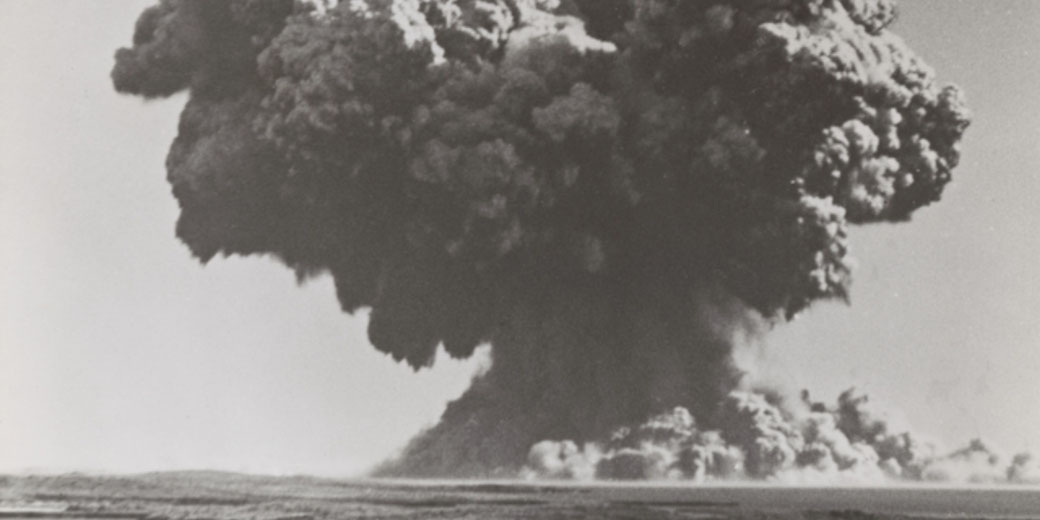
Between 1949 and 1991, the international balance of power largely rested on the threat of nuclear destruction on a massive scale rather than peaceful negotiation.
As the United States and the Soviet Union constructed rival arsenals capable of killing hundreds of millions within hours, they developed a doctrine that inteded to replace traditional warfare with permanent, careful restraint.
Known as Mutually Assured Destruction, or MAD, this policy grew out of the acceptance that any direct conflict between nuclear powers would destroy both the attacker and the defender.
What is Mutually Assured Destruction?
Mutually Assured Destruction described a strategic doctrine in which two opposing states that were each armed with enough nuclear weapons to completely destroy the other generally refrained from using them due to the certainty of retaliatory total destruction.
The policy relied on the logic of deterrence rather than conquest. Any nuclear attack would guarantee a response that made the cost of aggression exceed any possible gain.
At its core, MAD required each side to maintain second-strike capability, which meant that each side had the capacity to respond to a nuclear first strike with an equally destructive counterattack.
For that reason, both the United States and the Soviet Union developed redundant systems of delivery, and these systems included hardened missile silos, nuclear-armed submarines, mobile launch platforms, and strategic bombers that ensured a retaliatory strike could still be launched, even under attack.
As a result, nuclear weapons became less tools of battlefield use and more instruments of psychological control.
Strategic planners framed them as deterrents rather than weapons, and military doctrines centred on the assumption that no rational actor would risk a war that could not be survived.
Post-WWII context for its development
After the end of World War II, the United States held a brief monopoly on nuclear weapons, demonstrated most brutally in the atomic bombings of Hiroshima and Nagasaki in August 1945.
The explosive yield of the Hiroshima bomb reached about 15 kilotons, while the Nagasaki device measured roughly 21 kilotons.
However, in August 1949, the Soviet Union successfully detonated its first atomic bomb, which ended that monopoly and started an arms race that quickly grew in speed and scale.
Over the next decade, both nations developed thermonuclear weapons of vastly greater power than the bombs used in Japan.
In 1952, the United States tested the first hydrogen bomb, and the Castle Bravo test in 1954 produced a 15-megaton explosion.
The Soviet Union responded with a boosted fission weapon test in 1953, followed by its first true two-stage thermonuclear bomb detonation in 1955.
By the late 1950s, both sides had begun to deploy intercontinental ballistic missiles, which allowed nuclear warheads to strike distant targets within minutes.
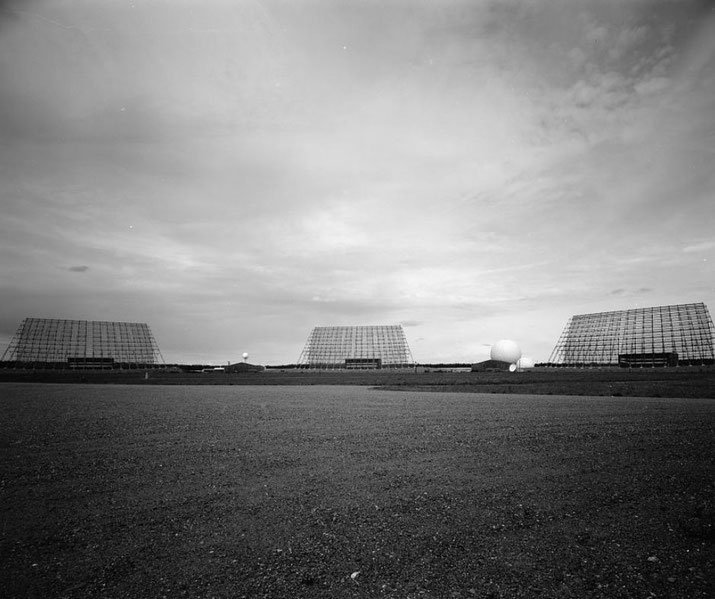
As a result, military spending increased, and governments raced to construct early-warning systems and radar networks, which they supported with increasingly sophisticated rapid-response protocols.
Under the Eisenhower administration, Secretary of State John Foster Dulles introduced the policy of “massive retaliation,” which declared that any Soviet attack, regardless of scale, could provoke a full nuclear response.
That strategy aimed to deter aggression but carried the risk of encouraging rapid escalation in regional crises.
In 1950, the classified report NSC-68 formalised a strategy of containment that supported rearmament and framed Soviet expansion as an existential threat.
Eventually, by the early 1960s, strategic parity had developed. With both superpowers capable of destroying each other entirely, the logic of Mutually Assured Destruction became widely accepted as a formal doctrine, and it soon dominated Cold War defence policy.
Where did the idea of MAD come from?
Early conceptions of MAD developed from academic analysis rather than from military experience.
In 1946, Bernard Brodie argued in The Absolute Weapon that the primary purpose of nuclear weapons should be to prevent war rather than to win it.
His claim represented a major shift in strategic thinking, as he proposed that deterrence rather than battlefield victory should guide nuclear planning.
Later, RAND Corporation analysts such as Thomas Schelling and Albert Wohlstetter strengthened this theoretical basis.
Schelling applied game theory to nuclear standoffs, and he suggested that deterrence depended on an adversary’s belief in a credible threat.
A nuclear deterrent worked only if the enemy believed that retaliation would follow, even in the event of mutual destruction.
By contrast, Wohlstetter focused on the technical requirements of survivable second-strike forces, which required the dispersal and concealment of assets, along with reliable rapid communication systems.
By the early 1960s, US Secretary of Defense Robert McNamara had incorporated these ideas into national defence policy.
In strategic discussions, he suggested that the destruction of 25 percent of the Soviet population and 50 percent of its industry would be sufficient to deter any rational Soviet leadership from initiating war, although this figure reflected theoretical targeting plan rather than a formal threshold.
That calculation became a baseline for measuring the credibility of America’s deterrent force.
Soviet leaders such as General Secretary Leonid Brezhnev publicly embraced the concept of parity during the Strategic Arms Limitation Talks, and this reinforced MAD as a shared understanding.
As a reuslt, MAD developed gradually across a range of academic and technical communities within military institutions, where theorists and strategists came to the conclusion that once nuclear weapons were introduced they must never be used.
Some analysts, such as Kenneth Waltz, supported MAD as a stabilising force, while others like Herman Kahn explored scenarios in which nuclear war might be waged and survived, challenging its foundational assumptions.
When MAD almost triggered nuclear war
No single event arguably illustrated the danger of MAD more clearly than the Cuban Missile Crisis of October 1962.
After American reconnaissance aircraft had identified Soviet ballistic missile installations under construction in Cuba, President John F. Kennedy imposed a naval blockade and demanded their removal.
For thirteen days, the world hovered on the edge of nuclear war, as both sides mobilised their forces and issued indirect threats.
Soviet Premier Nikita Khrushchev faced enormous pressure from his military commanders to resist US demands.
Meanwhile, American forces moved to DEFCON 2, their highest state of readiness short of full nuclear launch.
On 27 October, the Soviet submarine B-59 operated near the blockade line and came under American pressure from signalling depth charges.
The officers aboard believed that war had started and prepared to fire a nuclear torpedo.
However, Vasili Arkhipov, the flotilla commander aboard B-59 who outranked the submarine's captain, refused to approve the launch.
His decision prevented a direct escalation and possibly saved the world from nuclear disaster.
Ultimately, both sides reached a settlement. Khrushchev agreed to withdraw Soviet missiles from Cuba, while Kennedy privately promised to remove American Jupiter missiles from Turkey within a few months, though the United States publicly denied that any deal had been made.
The crisis exposed the razor-thin margin for error within the MAD framework and demonstrated that a single misunderstanding could result in mass death.
Another major risk occurred in 1983, during NATO’s Able Archer 83 exercise. As Western forces simulated a nuclear conflict, Soviet intelligence agencies misinterpreted the drills as a potential cover for a real first strike.
At the same time, a Soviet early-warning system malfunctioned and falsely reported incoming US missiles.
Lieutenant Colonel Stanislav Petrov judged the warning to be an error and chose not to escalate.
His decision was similar to Arkhipov’s decision two decades earlier, and it averted disaster because he refused to act on a potentially fatal assumption.
A similar scare occurred in 1979 when a NORAD computer system mistakenly indicated a Soviet launch, prompting emergency alerts across multiple command centres before being identified as a false alarm.
The end of the Cold War
During the 1970s and 1980s, both superpowers sought ways to manage their growing nuclear arsenals and reduce the risk of accidental war.
The process began with the Strategic Arms Limitation Talks (SALT I and II), as the United States and the Soviet Union negotiated limits on the number of missile launchers and delivery systems.
In 1972, they signed the Anti-Ballistic Missile Treaty, which restricted defensive missile systems and ensured that mutual vulnerability remained intact.
Later, under the Reagan administration, the announcement of the Strategic Defense Initiative in 1983 introduced a new element of uncertainty.
SDI proposed space-based defences that might intercept enemy missiles and that could disrupt the balance of assured destruction.
Soviet leaders viewed the program as a threat to deterrence because they feared that the United States might gain the ability to launch a first strike without fear of retaliation.
Eventually, negotiations resumed, and Mikhail Gorbachev’s rise to power in 1985 signalled a new willingness to engage with the West.
His internal reforms and diplomatic efforts led to the signing of the Intermediate-Range Nuclear Forces (INF) Treaty in 1987, which eliminated thousands of missiles and introduced verification measures that increased transparency.
In 1991, the Strategic Arms Reduction Treaty (START I) established concrete limits on warhead numbers and delivery systems, marking the first step in deep reductions.
By the end of 1991, the Soviet Union had collapsed, and the Cold War had ended.
Although the ideological conflict disappeared, nuclear stockpiles remained, and both the United States and Russia retained the capacity for second-strike retaliation.
As a result, the foundations of MAD endured, even after the political conditions that had created it no longer existed.
The ongoing influence of MAD today
Since the Cold War’s conclusion, Mutually Assured Destruction has largely remained a continuing feature of nuclear policy.
The United States and Russia continue to deploy thousands of warheads, many of which are still on high-alert status and connected to rapid launch systems.
During the Cold War's peak in the mid-1980s, the global stockpile approached 64,500 warheads, which included both deployed and reserve weapons.
Today, the number has decreased to roughly 12,500 globally, with the United States and Russia holding over 90 percent.
Although arms control agreements such as START and New START have reduced the overall numbers, the logic of deterrence has not disappeared.
Elsewhere, the doctrine has shaped regional conflicts that involve nuclear powers.
India and Pakistan have both fought conventional wars and continue to experience border clashes, which affect their relations, and they rely in part on nuclear deterrence to restrain full-scale escalation.
However, their shorter decision times and lack of robust communication protocols introduce significant risks.
Similarly, North Korea’s pursuit of long-range missiles and nuclear warheads has raised fears that serious mistake or misinformation could lead to unintended disaster.
Technological change has introduced new challenges, and cyber warfare poses the threat of disrupting command-and-control systems or faking attack warnings.
Some analysts worry that artificial intelligence, if integrated into launch protocols, could accelerate response times beyond human control.
Others argue that a growth in missile defence systems might tempt states to believe that they could survive or neutralise a first strike, weakening the foundation of MAD.
Recent US intelligence assessments also suggest that China’s arsenal is currently estimated at around 500 warheads and could increase to 1,500 by 2035, raising further questions about future deterrence dynamics.
For now, the doctrine continues to shape strategic decisions and military planning, and its continuing presence does not show trust in its stability but an absence of real alternatives.
As long as nuclear weapons remain, so too does the logic of Mutually Assured Destruction, which maintains peace by ensuring that any war would be unthinkable, rather than by reducing the risk of war.