
Did the Marshall Plan really stop communism?
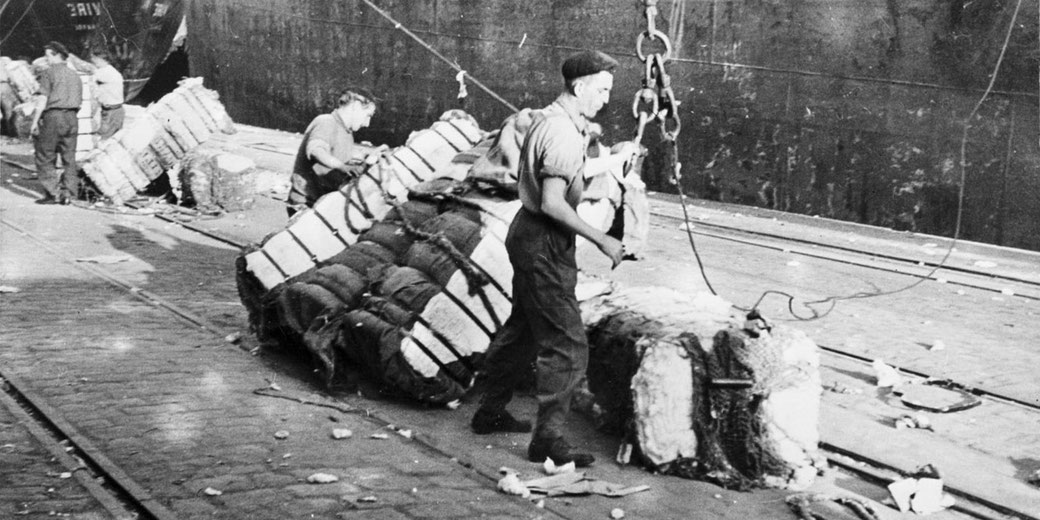
In the winter of 1946–1947, Western Europe faced a fresh post-war crisis. Destroyed infrastructure and collapsed agricultural output had pushed political systems to breaking point, creating conditions that made communist parties increasingly attractive to millions of desperate voters.
Secretary of State George C. Marshall, who was speaking at Harvard University on 5 June 1947, proposed one of the most consequential foreign policy programmes in modern history: a massive injection of American economic assistance that was designed to pull Western Europe back from the edge.
The question historians have debated ever since is whether that programme actually stopped communism, or whether something more complicated happened.
The world that made the Marshall Plan necessary
As the Second World War ended in 1945, the scale of destruction across Europe was almost incomprehensible.
Unemployment and food shortages fed strikes and political unrest in several countries.
By 1947, agricultural production sat at about 83 per cent of 1938 levels, industrial production sat at about 88 per cent, and exports had fallen to about 59 per cent.
Britain, the Netherlands, and France reached pre-war production levels by the end of 1947, and Italy and Belgium followed by the end of 1948.
Food shortages hit France, Italy, the Netherlands, and the western zones of Germany particularly hard.
In occupied Germany, the winter of 1946–1947 brought daily food energy intake that often ranged from about 1,000 to 1,500 kilocalories.
What is more, coal shortages had left homes cold and factories idle across much of the continent.
That winter also punished transport and power systems severely. In Britain, domestic electricity supply was restricted to nineteen hours per day, and snow had trapped about 750,000 railway wagons of coal.
The Royal Navy launched Operation Blackcurrant, which used diesel generators aboard submarines to supply emergency power to coastal towns and dockyards.
The cold hit the continent hard as well, and reports from Berlin spoke of about 170 deaths from cold and lack of food.
Into this vacuum stepped well-organised communist parties, particularly in France and Italy.
The French Communist Party, the Parti communiste français (PCF), received 28.26 per cent of the vote in the legislative election of 10 November 1946, which made it the single largest party in the National Assembly.
The party had also held cabinet posts until 5 May 1947, when Prime Minister Paul Ramadier expelled communist ministers after a dispute over wages policy.
Italy’s Partito Comunista Italiano (PCI) drew support from industrial workers in the north and landless labourers in the south, and it had held ministerial office in the early post-war coalition.
In Italy, that arrangement ended on 31 May 1947, when Prime Minister Alcide De Gasperi removed communist and socialist ministers from the cabinet and formed a government without the left.
Both parties had earned genuine credibility through their roles in wartime resistance movements.
Their popularity followed real economic suffering in neighbourhoods, factories, and rural districts.
President Harry Truman understood this dynamic clearly and, on 12 March 1947, he addressed a joint session of Congress and requested $400 million in emergency assistance for Greece and Turkey, both of which faced armed conflict connected to communist movements.
Congress enacted the Greek and Turkish Assistance Act on 22 May 1947. That speech established what became known as the Truman Doctrine.
The United States would support free peoples resisting subjugation by armed minorities or outside pressures.
The Marshall Plan, which Truman signed into law on 3 April 1948, applied the same logic to Western Europe as a whole.
How the programme actually worked
President Truman signed the Foreign Assistance Act of 1948 on 3 April 1948. Title I of that law, the Economic Cooperation Act, authorised the European Recovery Program (ERP) and created the Economic Cooperation Administration (ECA).
Paul G. Hoffman was appointed as the administrator on 7 April 1948 and entered duty on 9 April 1948.
From 3 April 1948 to December 1951, the United States financed the bulk of the ERP.
Some accounting for deliveries and regional programmes continued to 30 June 1952.
Across that period, aid to participating countries totalled about $13.3258 billion in dollars of the time.
Grants came to about $11.8207 billion and loans came to about $1.5051 billion.
Figures in current dollars varied by method. A State Department fact sheet later put the programme at $13.3 billion from 1948 to 1951 and at more than $88 billion in later dollars.
Aid went to Austria, Belgium-Luxembourg, Denmark, France, the Federal Republic of Germany, Greece, Iceland, Ireland, Italy including Trieste, the Netherlands, Norway, Portugal, Sweden, Switzerland, Turkey, and the United Kingdom.
The largest totals went to the United Kingdom ($3,189.8 million) and France ($2,713.6 million), followed by the Federal Republic of Germany ($1,390.6 million) and Italy including Trieste ($1,208.8 million).
The aid arrived in several forms, but much of it came as commodities such as food, fuel, raw materials, and industrial machinery that were purchased in the United States and shipped to Europe.
This arrangement supplied urgently needed goods to Europeans and it also expanded American export markets.
Recipient nations deposited local currency equivalents of the aid into accounts known as “counterpart funds,” which governments then used for domestic reconstruction projects with American approval.
The programme also carried a deliberate ideological design, since participation required acceptance of market-based policies, reduction of trade barriers, and movement toward European economic integration.
On 16 April 1948, European participants signed the convention that established the Organisation for European Economic Co-operation (OEEC), which entered into force on 1 July 1948.
The OEEC later became the institutional ancestor of today’s Organisation for Economic Co-operation and Development (OECD).
The ECA also promoted productivity programmes. Its technical assistance work included study tours and training visits that had brought about 24,000 Europeans to the United States to study factory production, farm methods, and management routines.

The Soviet response and the division of Europe
Joseph Stalin’s reaction to the Marshall Plan was swift and revealed a lot about communist objectives at the time.
In July 1947, Britain and France had called European governments to Paris to plan a joint response to Marshall’s offer.
The Conference of Sixteen met at the Quai d’Orsay from 12 July to 22 September 1947 and produced a report that asked for about $22.4 billion over four years.
The Soviet delegation, which was led by Foreign Minister Vyacheslav Molotov, withdrew from the earlier Paris talks with Britain and France and rejected the programme in public.
Under Soviet pressure, Poland, Czechoslovakia, Hungary, Romania, Bulgaria, and the Soviet zone of Germany declined participation, and several did so after initial signals of interest.
Stalin’s answer came through the Molotov Plan, which relied on bilateral trade agreements.
It later developed into the Council for Mutual Economic Assistance. Comecon was publicly announced on 25 January 1949 after a Moscow economic conference in early January, and its founding members were the Soviet Union, Bulgaria, Czechoslovakia, Hungary, Poland, and Romania.
Germany soon became a central demonstration site for the Cold War. On 20 June 1948, the western occupation zones introduced the Deutsche Mark, and each resident received start-up money of 40 DM.
Four days later, on 24 June 1948, the Soviet Union began the Berlin Blockade, cutting road, rail, and canal access to the western sectors of Berlin.
The blockade ended on 12 May 1949 and left a stark lesson for European governments about the limits of goodwill in Soviet policy.
However, this division was not necessarily an unintended result. George Kennan, who had written the famous “Long Telegram” of February 1946 and the anonymous “X Article” of 1947, understood that an offer of aid to Eastern Europe forced Stalin into a clear choice.
Stalin could accept American conditions or he could reject assistance that ordinary people needed.
The second option kept political control inside the Soviet bloc and also made the split in Europe easy to see.
Did it actually reduce communist political power?
The most direct evidence that the Marshall Plan weakened communist political support in Western Europe came from elections in France and Italy.
In France, the PCF’s vote share fell from 28.26 per cent in 1946 to 26.43 per cent in the legislative election of 17 June 1951.
Economic improvement, restored supplies, and expanding employment gave centrist parties space to compete in workplaces and neighbourhoods that had previously leaned left.
In Italy, the key test came in the parliamentary election of 18 April 1948, which was held weeks after the plan took effect in law.
Turnout reached 92.2 per cent. The PCI and its socialist allies ran on a joint ticket called the Popular Democratic Front and won 31.0 per cent of the vote.
The Christian Democrats under Alcide De Gasperi won 48.5 per cent. American officials had pushed hard in the campaign.
The United States government’s Voice of America began broadcasting anti-communist material to Italy on 24 March 1948.
The CIA later admitted that it had given $1 million to what it called “centre parties,” and American agencies encouraged Italian-Americans to write letters to relatives urging them not to vote communist.
Marshall aid also helped centrist governments deliver visible improvements in living standards.
Governments that could relax rationing, rebuild housing, and restart industrial employment could compete against communist promises of radical redistribution.
Historians also noted that recovery had begun before Marshall aid arrived in large quantities.
Alan Milward argued in The Reconstruction of Western Europe, 1945–1951 that industrial output had already risen by 1947.
On this reading, the plan accelerated recovery and it strengthened confidence in centrist governments.
The limits of what economic aid could achieve
The Marshall Plan did not stop communism everywhere. In Czechoslovakia, the Communist Party seized full control in the coup of 21–25 February 1948.
On 25 February, President Edvard Beneš accepted the resignations of non-communist ministers and allowed the formation of a new government that was dominated by communists.
The fall of Czechoslovakia showed that economic assistance could not reverse political takeovers backed by organised force inside the Soviet sphere.
China underwent a communist revolution in 1949. Korea went to war in 1950, and Greece remained in civil war until 1949, where the outcome also depended on the end of Yugoslav support for the insurgents after Tito’s break with Stalin in 1948.
These cases pointed to a consistent pattern, in that the Marshall Plan worked best in countries that had working state institutions, established capitalist economies, and non-communist parties that were capable of winning elections and governing effectively.
However, it achieved little where armed movements and external pressure determined political outcomes.
The longer strategic consequence
Whatever its limits as a purely anti-communist tool, the Marshall Plan produced results that lasted long after the first Cold War decade.
The requirement for European economic cooperation encouraged new structures for joint planning and trade.
The European Coal and Steel Community was created by the Treaty of Paris, which was signed on 18 April 1951 and entered into force on 23 July 1952.
The European Economic Community followed in the Treaty of Rome, which was signed on 25 March 1957 and entered into force on 1 January 1958.
The plan also made the Federal Republic of Germany the leading industrial economy in Western Europe.
That choice carried political meaning, since it offered an everyday comparison between prosperity in the west and shortages in the German Democratic Republic.
Many East Germans did not need posters or pamphlets to understand the message.
Marshall received the Nobel Peace Prize in 1953, and he was the only army general ever to receive it.
The award showed that many people viewed the plan as constructive rather than simply strategic.
As such, the Marshall Plan did not stop communism in the way a battlefield victory stops an enemy advance, but it reduced communist electoral strength in parts of Western Europe by easing shortages, restoring jobs, and giving non-communist governments resources to govern.
It also reinforced the split in Europe by forcing the Soviet Union to reject an offer that many Eastern Europeans had genuinely wanted.
As such, economic aid could not replace security arrangements. NATO was created in 1949, and the North Atlantic Treaty was signed on 4 April 1949 and entered into force on 24 August 1949.
The Marshall Plan and NATO formed two major parts of American Cold War strategy in Europe, one economic and one military.
So the honest answer to whether the Marshall Plan really stopped communism was straightforward.
In Western Europe, broadly yes, and in ways that mattered for the next four decades.
Outside those borders, the question did not fit the political reality.