
Maralinga nuclear tests: A dark chapter in Australia's atomic age
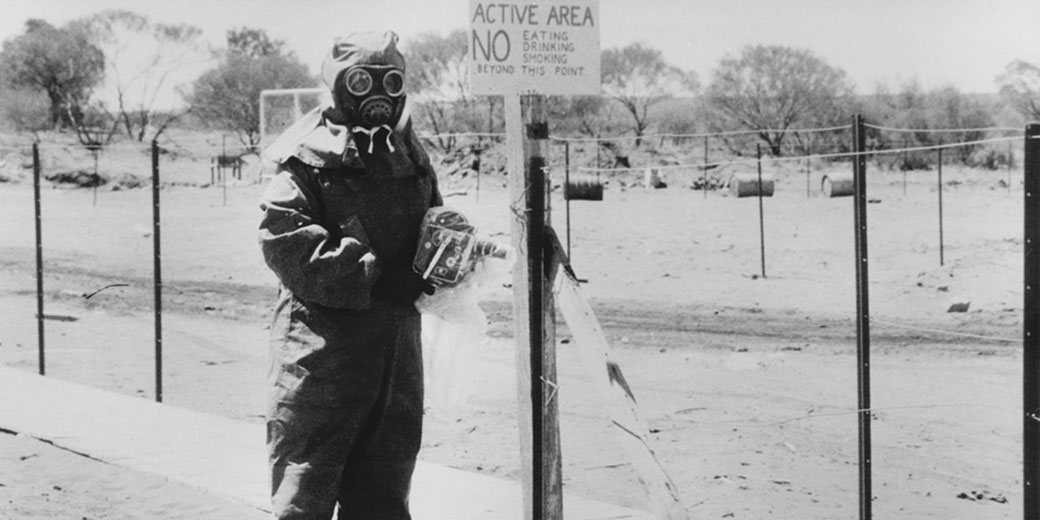
Amid winds that often shifted across the sunbaked plains of South Australia's western desert, a secretive series of British nuclear tests unfolded between 1956 and 1963.
These tests, which took place on the traditional lands of the Maralinga Tjarutja people, involved at least seven major atomic detonations along with dozens of minor radioactive experiments.
Most Australians did not really know what occurred behind the wire fences, and the radioactive contamination together with the forced removal of Aboriginal communities created long-term health effects that, in many cases, produced harm which took decades to uncover and acknowledge.
How the atomic age came to Australia
After the Second World War, British leaders worked increasingly to develop an independent nuclear arsenal to retain international power and status, even as the United States tightened restrictions on nuclear co-operation.
Since no remote locations within the British Isles could safely hold regular atmospheric tests, British defence officials approached Australia, which they saw as a loyal ally with wide, sparsely populated inland areas.
In 1950, Prime Minister Robert Menzies approved their request without cabinet approval or public consultation.
This allowed the United Kingdom to begin testing atomic weapons on Australian territory.
Initially, the tests had taken place on the Monte Bello Islands off the northwest coast of Western Australia in 1952, where Britain carried out its first successful nuclear explosion, Operation Hurricane.
This was followed by two detonations at Emu Field in 1953 under Operation Totem.
However, the practical problems at those isolated locations soon prompted British and Australian authorities to select a new site.
In 1955, they chose a remote section of desert known as Maralinga, located roughly 800 kilometres northwest of Adelaide, which appeared to offer flat terrain, access by road and air, and space for long-term infrastructure development.
Soon after construction began, engineers rapidly transformed the desert into a heavily guarded test range that included barracks, laboratories, an airstrip, and secure storage facilities.
As the military presence increased, secrecy around the site also increased to a significant extent.
Aboriginal people who had lived on the land for thousands of years were forcibly removed or displaced without adequate explanation or support.
At the same time, the Australian public received only vague statements about scientific research and national security, and officials worked closely with British personnel to expand the test program.
Unleashing the atomic power at Maralinga
On 27 September 1956, Operation Buffalo began with a series of four atomic detonations.
One of these explosions was an air-dropped bomb codenamed “Buffalo Two” that released a blast equivalent to fifteen kilotons of TNT.
That explosion was nearly identical in yield to the Hiroshima bomb and produced a mushroom cloud that towered over the desert and scattered radioactive particles over a wide radius.
The other Buffalo detonations, which were known as One Tree, Marcoo, and Breakaway, also released significant amounts of radiation.
Each blast left scorched earth, leftover radiation, and dangerous fallout that, at times, spread across the desert on unpredictable winds.
Operation Antler followed in 1957 and involved three tests that examined new nuclear weapon designs.
One of the weapons was a boosted-fission device known as “Tadje.” These experiments generally aimed to improve effectiveness and reduce the size of warheads for potential deployment.
At the same time, scientists carried out more than 500 minor trials that used conventional explosives to spread radioactive materials such as plutonium, uranium, and beryllium.
Many of those trials formed part of Operation Vixen B, which dispersed over 20 kilograms of plutonium across the test site.
Those tests, which lacked safety barriers, spread contamination across wide areas and created environmental dangers that, in some locations, lasted for many years.
British and Australian officials had provided few accurate updates to the public and dismissed safety concerns raised by some scientists.
Internal reports warned of radiation dangers, especially in connection with plutonium residue, yet authorities pressed ahead without any new assessment of the long-term risks.
Over time, it became increasingly clear that safety procedures for both personnel and the environment fell well short of what the situation required.
The fallout on the Maralinga Tjarutja community
For generations, the Maralinga Tjarutja people had lived across the western desert and they maintained spiritual and everyday ties to their land through language, ceremony, and oral knowledge that elders passed to younger people.
Once the government had seized control of the area, officials began to remove communities and to transport them to distant missions such as Yalata, hundreds of kilometres away.
However, relocation work was often rushed and incomplete, and this left some Aboriginal families behind in areas later exposed to radioactive fallout.
In several documented cases, families stayed within range of the blasts and did not know what had occurred or why officials had abandoned them.
One group took shelter behind sand dunes and witnessed a detonation from only a short distance away, inhaled dust, and watched the sky darken without any protective equipment or warning.
Patrol officers whose job was to clear the region often lacked understanding of Aboriginal culture and failed to locate all people who travelled on traditional songlines.
Among those affected was Yami Lester, a Yankunytjatjara man who was blinded as a teenager after he saw a blast and who later became one of the most outspoken campaigners for justice.
As a result, the Maralinga Tjarutja suffered both physical harm and cultural dispossession.
Sacred sites were damaged or sealed off, while access to hunting grounds and water sources disappeared, and ceremonial spaces also fell inside the forbidden zone beneath the concrete and razor wire of the testing range.
Many who attempted to return were blocked by guards or warned about invisible dangers they could not see or fully understand.
Over the following decades, oral histories that survivors kept and retold described the emotional cost of exile and the confusion that government silence often created.

The horrible health impacts of the testing
Soon after the tests concluded, both Aboriginal communities and military veterans began to report very serious health problems.
Former servicemen experienced long-term illnesses including thyroid disorders, respiratory conditions, infertility, and multiple cancers, especially those that doctors linked to radiation exposure.
Aboriginal families also suffered high rates of stillbirths and childhood cancers, along with other long-term diseases that, according to community memories, had no prior history in their communities.
As later evidence showed, many servicemen were ordered to take part in so-called “decontamination” activities that required them to walk through recently blasted areas, to collect radioactive debris, and to handle contaminated materials with little or no protective gear.
Some were exposed during simulated exercises that tested, under controlled conditions, the effects of atomic blasts on troops and equipment.
At the same time, Indigenous people had contact with contaminated soil and waterholes, and they breathed in radioactive dust long after the military had moved on.
Eventually, whistle-blowers and campaigners drew widespread attention to the poor safety rules and the hiding of internal warnings from medical personnel and scientists.
Some officials had raised concerns during the 1950s and 60s, but higher authorities ignored them or actively silenced their findings.
As evidence grew, it became clear to many observers that both governments had put secrecy and diplomatic relations ahead of the health of those exposed.
In 2006, the Australian government formally acknowledged a connection between radiation exposure and illness in veterans, and this allowed limited compensation, though some had received earlier support under previous schemes.
How the Australian public responded to the tests
At the time of the detonations, public information about Maralinga stayed strictly controlled.
Press access was limited, official statements stayed vague, and politicians reassured the public that Australia made a valuable contribution to Commonwealth defence.
Few Australians fully understood the scale of testing or the level of danger posed by radiation, and those who questioned the program often struggled to access reliable data.
During the 1970s and 1980s, public attitudes gradually began to shift as more information came out from veterans’ groups and journalists, and from Aboriginal leaders who demanded truth and accountability.
Anti-nuclear movements grew in size, and pressure mounted for a government inquiry.
In 1984, the Royal Commission into British Nuclear Tests in Australia, chaired by Justice James McClelland, carried out a thorough investigation that exposed years of carelessness and poor safety supervision, along with deliberate hiding of evidence.
The 1985 report concluded that the tests had been carried out with disregard for human safety and condemned the failure to warn or protect Aboriginal communities.
The Commission also investigated testing at Emu Field and the Monte Bello Islands, and this work revealed similarly very serious risks and oversights.
The Commission’s findings shocked many Australians and started wide debate about politicians' responsibility and Australia's independence in its decisions.
It confirmed that both Indigenous civilians and military personnel had been exposed to dangerous levels of radiation without informed consent, medical monitoring, or proper follow-up.
Public support for further nuclear programs collapsed in many quarters, and demands for reparations and repair of the damage grew louder.
Clean-up efforts and reparations
In response to the Royal Commission, both the British and Australian governments agreed to fund a clean-up operation.
After years of delay, the project finally began in 1996 and involved the removal of large quantities of contaminated soil and the destruction of radioactive debris, as well as efforts to make the most heavily polluted areas safer.
Technicians used methods such as vitrification, which melted soil so that it trapped radioactive particles in solid glass-like structures.
However, outside checks and reports by nuclear engineer Alan Parkinson criticised the clean-up as incomplete and stated that some areas were not safe for people to live there permanently.
In 2009, the Australian government returned ownership of the Maralinga lands to the Maralinga Tjarutja people, restored their legal title, and admitted the historical wrongs that officials had carried out against them.
Yet, questions about the safety of the land stayed, as radioactive isotopes such as plutonium can stay in the soil for thousands of years.
Many elders warned that permanent return would, in practice, require constant checks and more repair work.
Veterans received limited compensation, which often came only after long legal battles and government red tape.
Some Aboriginal claimants also received payments, though many continued to seek recognition of cultural loss and medical harm, along with the emotional pain they endured.
Governments issued formal apologies, yet the damage could not be undone. The clean-up cost over $100 million AUD, and the Australian government paid most of this amount.
The Maralinga nuclear tests exposed how Cold War goals, racial discrimination, and official secrecy created a tragedy that damaged lives and poisoned land, and that also fractured trust.
Today, the winds still blow across the red sand of Maralinga, and they carry stories of survival, resistance, and the unfinished task of justice.