
What was it like to fight inside a WWII tank?
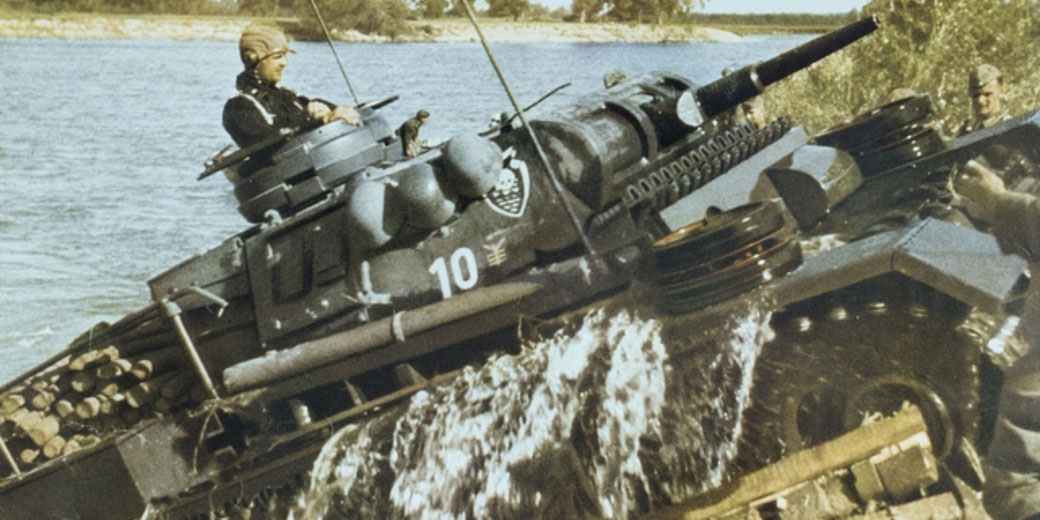
Mechanised battle tanks influenced most major ground campaigns during the Second World War, as they provided mobile firepower from the plains of Poland to the bocage of Normandy and the deserts of Cyrenaica.
Between 1939 and 1945, hundreds of thousands of men served inside those armoured vehicles, working in a mix of suffocating heat and deafening noise, all under the constant threat of being burned alive.
Within steel hulls that often measured barely three metres across, five-man crews battled enemy tanks as well as physical exhaustion and mechanical failure that often could break even experienced soldiers.
The cramped interior and crew roles
Inside a World War II tank, there was very limited space: often no taller than a standing man and narrower than a hallway.
Most tanks usually confined five crewmen to tight, enclosed compartments. For example, the average height of a Sherman M4 was 2.74 metres, while a Panzer IV measured approximately 2.68 metres tall and roughly 2.88 metres wide.
The standard arrangement in many models, such as the American Sherman, German Panzer IV, Soviet T-34, or British Churchill, included a commander, gunner, loader, driver, and either a radio operator or machine gunner.
Each crewman worked in a restricted station, surrounded by bulky ammunition racks, control levers, exposed wiring, and engine compartments that gave off heat.
At the top of the turret, the commander watched for enemy movement as he peered through periscopes or rotated cupolas.
He had to identify targets rapidly, issue orders and coordinate manoeuvres with short commands or radio signals.
Directly beneath or beside him, the gunner aligned the main gun as he adjusted traverse and elevation with hand cranks.
Meanwhile, the loader hauled 75mm or 76mm shells from storage racks, inserted them into the breech, and prepared the next round before the gun recoiled from its previous shot.
Shell types varied according to the threat, ranging from high-explosive (HE) rounds for infantry targets to armour-piercing capped ballistic cap (APCBC) shells used against enemy vehicles.
At the front of the hull, the driver worked with limited visibility and navigated with the help of vision slits or driving periscopes as he operated heavy controls and multi-speed gearboxes.
To his side, the radio operator or bow gunner handled communications and manned the hull-mounted machine gun.
Every action had to occur in almost perfect sequence, since one error, whether a mistimed reload, a poor bearing call, or a jammed control, could expose the tank to fatal attack.
Physically, the interior punished the body, since intense heat radiated from engines and guns.
However, cold air also froze metal to skin during winter. A thick mix of oil fumes and cordite smoke combined with a haze of diesel exhaust that lingered constantly, while narrow passageways bruised shins and scraped knuckles with every movement.
To deal with this, crews wore padded uniforms and steel helmets but remained vulnerable to injury from everyday tasks.
The chaos of combat from inside a tank
During combat, the tank became an assault on the senses. When the engine revved, the interior roared with sound, as tracks often clattered over stone, gears screeched during turns, while every movement of the turret created a grating metallic groan.
Often, the crew could not hear one another without the intercom system, which failed frequently under stress or weather exposure.
American Shermans were equipped with SCR-508 radios and throat microphones, which improved coordination but still suffered from interference or breakdown.
Each time the main gun fired, the recoil slammed through the vehicle and the blast shook every loose component.
The breech ejected hot casings that clanged across the compartment, and toxic smoke poured from the barrel and shell.
Briefly, the tank filled with a sharp haze that stung the eyes and lungs. The gunner and loader had to remain focused despite the physical strain of repeated firings and the intense vibrations that numbed their limbs.
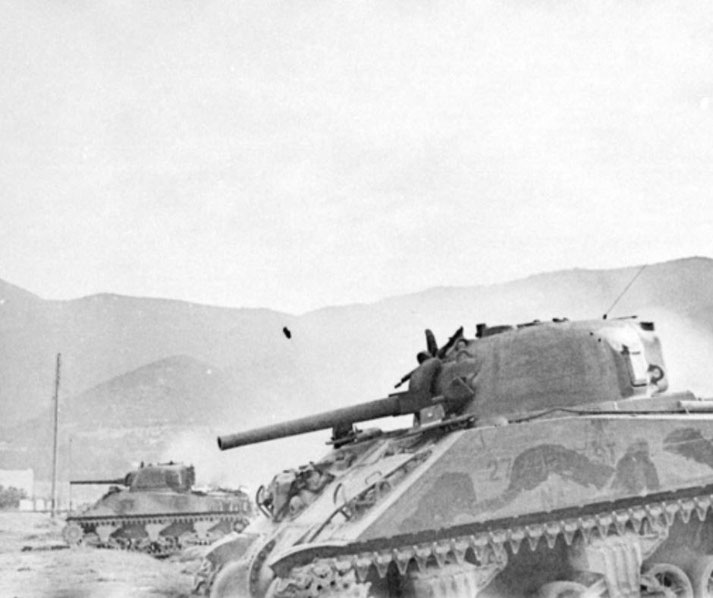
Often, temperatures inside could reach over 50°C, especially during long periods of movement or summer operations.
Even at idle, the engine emitted heat that soaked into walls and floor panels. In the North African desert, crews baked inside their tanks during daytime operations.
In the Russian winter, moisture in the air froze overnight and coated instruments with frost.
There were no fans, no insulation, and no fresh air beyond what crept through open hatches.
Importantly, the effects on the body built up, as rews often suffered from dehydration and heat exhaustion that settled into chronic fatigue.
Headaches and coughing fits became almost routine. Without rest or relief from the environment, many tankers developed stress symptoms that reduced concentration during battle.
Armoured units looked powerful from the outside, and life inside stayed extremely hard and unforgiving.
The constant struggle to keep your tank operational
In battle, the tank’s effectiveness relied heavily on coordination. As the commander called out enemy positions and the gunner adjusted aim, the loader retrieved the correct shell type, often APCBC for vehicles, high explosive for troops, or smoke for concealment.
Each round weighed between 15 and 20 kilograms, and reload times varied by crew skill and turret layout under differing levels of fatigue.
Delay often meant death.
At close range, tank duels often unfolded in seconds, which meant that a single incorrect bearing or a missed shot exposed the vehicle to return fire.
Many early Soviet T-34s lacked turret basket floors, forcing crewmen to stand or crouch uncomfortably, which increased reloading times.
Later T-34/85 models introduced partial turret baskets that improved crew movement.
Meanwhile, American Shermans, particularly later models, had designs that were easier for crews to use, including powered turret traverse and a fully rotating turret basket with padded seating.
This often gave their crews an advantage in reaction speed and battlefield awareness.
For experienced crews, after they had spent hundreds of hours together, tankers anticipated one another’s movements and reacted fluidly under stress.
Newer recruits, by contrast, often hesitated or panicked during their first engagements.
Gunner error, poor communication, or improper shell selection often led to missed opportunities, or worse, sudden destruction.
During large offensives such as Operation Bagration or the Ardennes campaign, tank units often operated in platoons or squadrons.
Radios allowed coordinated movement across entire battlefronts, but only when properly maintained.
Interference, mechanical damage, or poorly trained operators frequently led to uncoordinated advances or accidental friendly fire.
Life between battles
Between operations, tank crews slept inside or beside their vehicles, often exposed to wind, rain, or snow.
The interior became their living quarters and workspace, the only shelter they had.
With no beds, no cooking areas, and no privacy, they endured long nights on hard surfaces surrounded by tools and munitions, along with whatever spare parts they could keep close at hand.
Rain seeped through unsealed hatches, and cold crept through the floor. Engine maintenance or alerts often interrupted sleep.
Importantly, looking after the tank's machinery took up most of their time. Every day, crews checked oil levels, cleaned filters, replaced worn track links, and greased moving parts.
On the Eastern Front, frost locked up wheel assemblies, forcing Soviet crews to thaw components with fires or blowtorches.
In desert theatres, sand destroyed fuel pumps and air intakes. Spare parts were often rare.
Crews often stripped destroyed vehicles for usable parts. Crews often stored personal items such as family photos and letters, along with small mascots inside the tank, and they clung to small comforts in an otherwise punishing routine.
Rations often offered little relief as crews survived on tinned stew, biscuits, and preserved meat.
Water shortages sometimes grew critical during long advances. Tea or coffee, when available, was heated over engine blocks or makeshift stoves.
Hygiene almost disappeared entirely. Dirty uniforms and lice was a common feature of life inside the tank, along with oil-stained skin that never came clean. Illness could spread easily, and medical aid remained unavailable unless crews reached support units.
Sometimes, morale collapsed. Tanks such as the early Sherman M4A1 carried ammunition in unprotected sponsons, which caused them to ignite quickly when hit.
Some American crews called them “Ronsons,” after the cigarette lighter. Crews who had survived one tank’s destruction often struggled with the trauma long afterward.
Facing death inside the tank
In battle, death often came with terrifying speed, since high-velocity anti-tank shells penetrated armour, ignited fuel stores, and detonated ammunition.
Escape hatches, often too small for quick exits, jammed under impact or became blocked by shrapnel and wreckage.
As such, crewmen practised evacuation drills repeatedly, but real-life emergencies often left no time.
In particular, 'spalling' occurred when steel fragments from the interior wall broke off upon impact and caused widespread injuries even without full penetration.
Often, shards tore through padded jackets and embedded in limbs or struck faces.
Helmets and visors protected against minor wounds, but nothing shielded crewmen from the force of internal explosions.
Nearby high-explosive blasts rocked tanks violently, which threw men against controls and knocked them unconscious.
Tank casualties could rise sharply during offensives that involved massed armour.
At Kursk, for instance, Soviet records revealed thousands of tanks that were lost in days, while at El Alamein, German Panzer divisions suffered devastating losses that came from Allied artillery and air support.
Crews understood the risks. Most knew they often had only seconds to react if the tank was hit, and few had survived multiple direct strikes.
Some survived only by abandoning burning tanks and joining other crews, often in vehicles already damaged or incomplete.
Commanders rotated crews when possible to avoid combat fatigue. However, high turnover rates and constant casualties had created battlefield conditions that forced many veterans to remain in action far longer than regulations advised.
Stories circulated of tankers like Otto Carius, who had fought in a Tiger and had survived numerous engagements, and such men became symbols of both skill and luck in a role where survival was rare.