
From the secretive Cheka to the modern FSB: The disturbing history of the Russian KGB
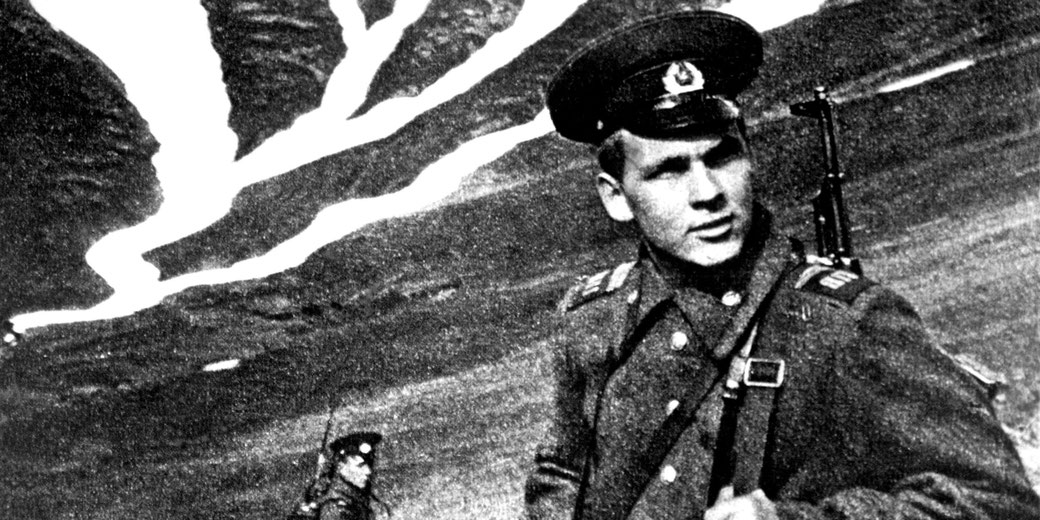
From 1917 onward, the Soviet state often relied on a series of intelligence agencies to enforce political control and punish dissent against what it defined as ideological threats.
Over time, their names and command structures changed from the Cheka under Lenin to the KGB during the Cold War and finally the FSB under Putin, but the essential purpose of the institution largely stayed constant.
With each transformation, the agency expanded its powers, refined its methods, and deepened its role within the system of authoritarian rule.
The Cheka: The revolution’s 'knife'
On 20 December 1917, six weeks after the October Revolution, Lenin authorised the creation of the All-Russian Extraordinary Commission for Combating Counter-Revolution and Sabotage, which soon became known as the Cheka.
Led by Felix Dzerzhinsky, a Polish revolutionary who had spent years in tsarist prisons, the Cheka operated with no judicial oversight and reported directly to the highest Bolshevik leadership.
Its role involved more than security, and it acted as the armed extension of the Party’s authority during a time of civil war and economic collapse that coincided with internal resistance, which grew across the country.
By mid-1918, the Cheka’s reach had come to cover almost every major city, port, and railway junction.
Armed squads arrested suspected enemies and used ruthless interrogations to extract confessions, and they carried out summary executions in basements and prisons as well as at remote sites.
In cities such as Petrograd, Kharkov, and Kazan, agents carried out mass shootings in retaliation for strikes, uprisings, or sabotage.
Red Terror campaigns began in earnest after the attempted assassination of Lenin in August 1918, left thousands dead, and created an atmosphere of fear that discouraged resistance or even criticism.
Most modern estimates place the number of victims between 50,000 and 100,000, though some sources have claimed figures as high as 200,000.
In Moscow, the notorious Lubyanka prison became a central site for interrogation and execution.
By 1921, the Cheka had built an informal but very large system of repression, with more than 200 known prisons and detention centres scattered across the country.
Its records rarely included legal charges or trial transcripts. Instead, executions followed loosely defined ideological criteria, and those arrested often disappeared without warning.
Methods of punishment included firing squads and cells kept at freezing temperatures, along with other severe techniques that were designed to terrorise detainees.
As a result, the Soviet population quickly understood that state power appeared to have no limits when exercised by Dzerzhinsky’s organisation.
From the GPU to the NKVD: Institutionalising terror
After the Civil War ended, the Bolsheviks restructured the Cheka into the GPU and later the OGPU.
Although officially more controlled, the new organisation generally kept the earlier organisation’s severe methods.
It enforced ideological conformity and monitored the intelligentsia as it responded with severe crackdowns on peasant unrest.
By 1934, the OGPU had merged with the People’s Commissariat for Internal Affairs, and this merger created the NKVD, which then became the main tool of state terror during Stalin’s rule.
Under the direction of Genrikh Yagoda and later Nikolai Yezhov, the NKVD carried out mass arrests and executions during the Great Purge.
Between 1936 and 1938, Party members, Red Army officers, factory workers, and writers faced accusations of espionage, sabotage, or political disloyalty.
Interrogators used sleep deprivation and beatings, together with threats against family members, to force confessions.
Public trials followed staged scripts, and verdicts usually resulted in immediate execution or long terms in labour camps.
During this campaign, internal NKVD records reported at least 681,692 executions under Order No. 00447.
Soviet prosecutors relied heavily on Article 58 of the RSFSR Penal Code, which permitted arrest for vague offences such as "anti-Soviet activity."
During that same period, Stalin ordered targeted operations against certain national minorities.
Polish, German, Latvian, and Finnish communities suffered mass arrests, with men who were labelled as foreign spies and shot, while women and children faced deportation.
Among the worst operations was the NKVD's Polish Operation of 1937–38, during which over 111,000 people were executed.
In 1940, the NKVD carried out the Katyn Forest massacre, in which more than 22,000 captured Polish officers and intellectuals were executed under orders that were signed by Beria and approved by the Politburo.
The Soviet government denied responsibility until 1990.
After Stalin’s conquests in Eastern Europe, the NKVD gradually assumed control over secret police services in satellite states.
Its operatives trained local agents, suppressed anti-Soviet resistance, and deported perceived enemies to Gulag camps.
By the end of the Second World War, the NKVD had come to operate as an internal security force and as a key tool of Soviet control across newly conquered regions.
The Cold War era
After Stalin died in 1953, the state had dismantled the NKVD and reorganised its roles.
By 1954, the Soviet leadership created the Committee for State Security (KGB) as the new central authority for both internal repression and foreign intelligence.
Although it presented itself as lawful and professional, it continued to use informants, wiretaps, and secret detentions to control dissent and enforce ideological conformity.
Inside the Soviet Union, the KGB monitored public figures and intellectuals, along with private citizens.
It kept files on suspected critics and intercepted communications, and it routinely searched homes without warrants.
Prominent dissidents such as Andrei Sakharov and Aleksandr Solzhenitsyn endured surveillance, internal exile, and periods of detention in psychiatric hospitals.
The government labelled political opposition as mental illness and used forced medication and sensory deprivation, along with physical restraint, as tools of control.
The KGB also played a role in suppressing reform movements in satellite states, and it acted during the 1968 Prague Spring.
Abroad, the KGB developed into what many observers regarded as one of the largest intelligence agencies in the world.
It funded and trained guerrilla groups, gathered military and industrial secrets, and launched disinformation campaigns to undermine Western institutions.
The KGB embedded agents in trade missions and embassies, along with media outlets, so that it could extend its reach outside the Eastern Bloc in many regions.
Its most effective operations included the infiltration of NATO departments, the recruitment of long-term agents in Western Europe and the United States, as well as Operation RYAN, a major surveillance effort launched in the 1980s to detect a possible nuclear first strike by NATO.
By the late 1970s, the KGB had expanded its internal staff to over 400,000, a figure that included border troops and support personnel, while relying on millions of unofficial collaborators.
In East Germany, a comparison point can be found in the Stasi, which reportedly maintained approximately one informant per 18 citizens, a scale that highlights the very wide reach of Soviet surveillance.
The scale of KGB operations enabled it to detect and crush most forms of organised dissent before they gained momentum.
At the same time, the organisation operated as a high-status group within Soviet society.
High-ranking officers received housing and cars, along with special rations unavailable to ordinary citizens.
Their loyalty to the Communist Party secured their position as the regime’s most trusted enforcers.
Collapse and reinvention: From KGB to FSB
As the Soviet Union collapsed in 1991, the KGB formally disbanded as an institution.
However, its personnel and archives remained largely intact, along with internal structures.
The foreign intelligence wing became the SVR, while domestic security passed to the FSK, which later evolved into the FSB in 1995.
Although the new Russian constitution guaranteed civil rights, the security services faced relatively few legal barriers and continued many Soviet-era methods under new leadership.
During the 1990s, the FSB often struggled with internal corruption and regional instability, as well as weakened political oversight.
In 1998, Vladimir Putin, an ex-KGB officer stationed in East Germany during the Cold War, became FSB director.
Within two years, he became president and began to restore the agency’s influence within the Russian government.
Under his administration, former intelligence officers filled key positions in the judiciary and the media, along with major business sectors.
In 1999, a series of apartment bombings in Moscow and other cities shocked the nation.
Some critics, including Alexander Litvinenko and investigative journalists, later accused the FSB of staging the attacks to justify the Second Chechen War and consolidate Putin's power, though no conclusive evidence exists and the official explanation continues to be contested.
As Putin consolidated power, the FSB received wider powers to police digital communications and monitor protest movements, and it used this power to arrest activists under vague legal definitions such as “extremism” or “foreign interference.”
In 2006, Federal Law No. 153-FZ granted the FSB power to issue formal warnings to individuals whom the authorities judged to be a possible threat to state security, even before any crime had been committed.
Deaths of government critics such as journalist Anna Politkovskaya and whistleblower Alexander Litvinenko drew widespread international condemnation, especially after they died from radioactive poisoning in London in 2006.
In 2020, the attempted assassination of Alexei Navalny with a nerve agent provided further evidence of the agency’s ongoing use of targeted violence.
Within Russia, the FSB typically worked together with other state institutions to suppress dissent.
It maintained a very extensive surveillance network, targeted opposition politicians, and oversaw politically motivated prosecutions.
In regions such as Chechnya and Crimea, its agents carried out raids and arrested civil society leaders, whom they then subjected to interrogations under conditions that mirrored Soviet-era tactics.
Since 2016, the Yarovaya Law has expanded its surveillance capabilities further, and this law generally requires the storage of all digital communications and metadata by service providers.
The FSB has also sought access to encrypted services such as Telegram, which was temporarily banned in Russia between 2018 and 2020 before the ban was lifted.
By re-establishing the security services as a central part of government power, the Kremlin restored many of the methods and systems once used by the KGB to enforce compliance.