
The human impact of the Great Depression: Stories of struggle and resilience

During the 1930s, the collapse of America’s economic systems stripped away stability and the chance for a better future from households across much of the country.
Unemployment had surged past 25 percent by 1933, banks had failed by the thousands, and farmland across the Dust Bowl had withered beneath choking storms of topsoil.
By 1936, the Dust Bowl had already forced hundreds of thousands of people to leave, many of whom abandoned their homes and travelled west.
As a result, millions endured hunger and eviction and also long-term joblessness, while traditional institutions failed to provide relief.
Yet during this turmoil, families invented ways to survive.
What was the Great Depression?
After the stock market crash of October 1929, economic panic swept across the United States, and within months, production had collapsed and banks had run out of reserves as factories closed their gates.
Between 1929 and 1933, over 9,000 American banks failed, which wiped out savings and pushed the nation toward a near standstill.
By early 1933, more than 15 million Americans had been unable to find work, and the nation’s financial system had come close to collapse.
Families who had once owned businesses or homes often suddenly relied on soup kitchens, while landlords evicted tenants who could no longer pay rent.
Many factories in Detroit, Cleveland, and Pittsburgh operated at reduced capacity or shut down entirely, while farms in Kansas and Oklahoma lost both crops and customers.
As wheat prices dropped to record lows, farm foreclosures rose, and entire towns emptied as people fled in search of short-term seasonal work.
At the same time, many city dwellers stood in food queues that stretched for blocks, and many could no longer afford shoes, coal, or schoolbooks for their children.
Initially, the federal government refused to offer direct aid. President Herbert Hoover had taken office months before the crash, and insisted that recovery depended on business confidence and private charity, stating that "the voluntary cooperation of our people will bring us through without the aid of government."
As a result, voluntary organisations strained to meet rapidly rising demand. Local efforts, though earnest, failed to reach entire districts where families slipped into homelessness.
However, anger spread rapidly in many communities. As unemployment dragged on, Americans began to reject the idea that poverty seemed to show personal failure.
They demanded solutions that never arrived.
Eventually, for many families and communities, the Depression transformed from an economic failure into a social disaster.
Marriages declined and birth rates fell as suicide rates climbed. Meanwhile, displaced workers took to the rails, drifted from job to job, or settled in makeshift camps on the edge of towns.
Within just a few years, the idea of the American Dream, once defined by home ownership and stable work, had been replaced by a more urgent goal: survival.
How did people cope?
Across the United States, families faced shortages with determination, and this meant that daily routines changed to stretch every possible resource.
Without access to steady wages, people traded services and repaired broken tools with scrap metal, then reused materials that others had thrown away.
In cities, tin cans and cardboard became valuable. On farms, old seed sacks doubled as curtains, rags, or clothing.
For many households, survival depended on mothers finding new ways to cook with limited ingredients.
Potato soup and cornbread became staples, and bean stew often joined them on the table: some meals used nothing more than bacon grease and flour to create gravy poured over stale bread.
In towns where wild greens grew along riverbanks or roadsides, families gathered dandelions and mustard leaves for salads.
Leftovers were saved, recycled, or stretched into next-day dishes. Families who had once bought meat weekly now rationed it monthly, if at all.
Meanwhile, out-of-work men travelled long distances in search of temporary jobs.
Thousands rode freight trains without tickets as they hoped to find work on construction sites, fruit farms, or docks.
As they rode the Southern Pacific or Union Pacific lines, many adopted the name "hobos" and developed their own system of signs and symbols that governed etiquette to survive rail life.
Chalk markings on fences indicated where a friendly meal might be offered or warned of dogs, violence, or police who did not welcome them.
Unfortunately, few jobs appeared. Yet the men built strong bonds along the tracks, and they shared information and food with each other.
Some estimates suggest that by the mid-1930s, more than 250,000 teenagers had also become travellers without a permanent home.
Children also often faced pressure to contribute, and many dropped out of school to help with chores, deliver newspapers, or gather firewood.
Some younger siblings wore clothing stitched from cast-offs, while others stayed home during winter months to avoid walking barefoot in the cold.
Nevertheless, some schools offered free lunches, which encouraged families to keep children enrolled.
In this way, classrooms often became a rare safe place. The early forms of the National School Lunch Program, developed toward the end of the decade, began to organise these local efforts into a national program.
Flour sack dresses
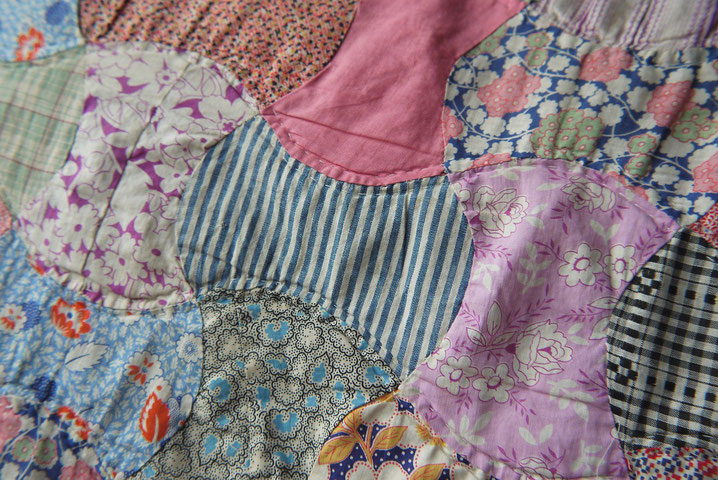
As clothing wore out and store-bought clothes grew unaffordable, many families turned to an unexpected solution: cotton sacks used for flour, sugar, or animal feed.
Each sack once held several kilograms of dry goods and provided enough fabric to make children’s clothing or small household items.
In farming communities, mothers who bought flour, sugar, or animal feed inspected the designs carefully before purchasing supplies.
Some store owners even allowed women to exchange plain sacks for printed ones, which displayed colourful floral or gingham patterns.
Initially, sack companies had not expected their packaging to become clothing. However, once women began sewing the fabric into dresses, aprons, or pyjamas, the companies responded.
They started using softer cotton, introduced brighter dyes, and stamped their logos with washable ink that could be removed more easily.
Several companies, including the Bemis Brothers Bag Company and Percy Kent Bag Company, began to advertise to housewives directly and recognised that the market was growing.
Mothers developed patterns from newspaper sheets, copied neighbours’ designs, or passed down stitching techniques from older generations.
Some created pleats, embroidery, or decorative collars to personalise the clothes.
Even within hardship, parents maintained pride in their children’s appearance. In schoolyards, children in flour sack dresses stood out, since resourcefulness had replaced store-bought trends and their clothing still showed a sense of style.
Although some girls experienced embarrassment when classmates mocked their clothing, others recalled the care and skill with which their mothers had made each outfit.
Churches, sewing circles, and extension agents who travelled from town to town often held workshops where women could learn new dress patterns or exchange surplus fabric.
One Oklahoma woman later recalled, "My mother made sure we looked tidy. You couldn’t tell our dresses came from flour sacks unless you knew where to look."
So flour sack dresses showed more than careful saving of money. They symbolised domestic effort and maternal creativity in a period when everything had to be made to last.
Hooverville life
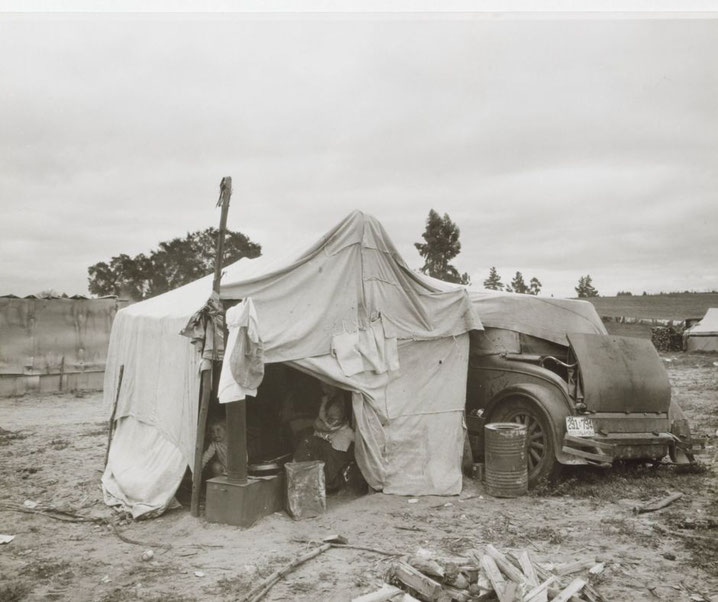
As thousands lost homes to eviction, foreclosure, or joblessness, shantytowns emerged along city outskirts and public spaces.
These makeshift settlements, which were known as “Hoovervilles,” consisted of structures assembled from crates, tar paper, scrap metal, or discarded signs.
Each home protected the people inside from the cold or rain, though most offered no electricity, plumbing, or solid flooring.
In fact, families squeezed into one-room shelters that often leaked or froze in winter.
Across the country, these settlements gained names that showed both desperation and defiance.
In Seattle, families built hundreds of dwellings near the shipyards. By 1932, Seattle’s Hooverville had housed more than 1,000 people.
In St. Louis, one of the largest Hoovervilles contained its own mayor and barbershop, along with a basic garbage collection system.
New York’s Central Park housed dozens of men in converted drainage pipes.
Wherever they appeared, Hoovervilles followed similar patterns. Residents developed rules to manage disputes, protect belongings, and share food.
Small fires burned in oil drums for warmth, while children played among the piles of timber and tin and created games from broken tools and discarded furniture.
Police often tolerated the settlements, understanding that shelter options were still very limited.
In some cities, however, officials dismantled Hoovervilles with bulldozers or burned them down to prevent their expansion.
One such eviction occurred in Cleveland in 1933, where protests erupted after the camp’s destruction left hundreds without shelter.
Still, they returned, and the camps kept reappearing on vacant land, abandoned railyards, or beside rivers. Most residents had nowhere else to go.
People often earned coins by collecting scrap metal, begging, or offering services like shoe polishing.
Churches and community groups occasionally brought hot meals or blankets, which residents distributed with care.
Although the housing was temporary, the community bonds were often strong.
Residents described how they looked out for one another, especially when strangers arrived.
In the middle of national collapse, Hoovervilles provided shelter and created a new kind of neighbourhood forged under pressure.
The genius of community gardens
As hunger and worry about food worsened and unemployment dragged on, many urban and rural residents began to convert empty lots into garden plots.
Known simply as relief gardens, these spaces often allowed families to produce vegetables without relying on strained relief agencies.
City officials recognised the benefits and often provided tools, seeds, or land leases, especially once federal work programs gathered momentum under the Roosevelt administration.
In 1933, the Federal Emergency Relief Administration (FERA) helped fund over 200,000 such plots.
People who had never gardened before often learned from older neighbours or agricultural agents who shared their knowledge.
They planted potatoes, beans, onions, and cabbage in neat rows. They weeded and watered their plots together, then harvested side by side.
In cooler regions, families dug root cellars to store produce through the winter. Seeds were saved and shared, and fences were patched with rope and broken chairs.
Children hauled water in buckets, and mothers canned surplus vegetables for leaner months.
In many towns, schoolyards or abandoned rail sidings became productive spaces.
The routine of gardening often provided more than food. It created order during a time of economic chaos and kept people busy with useful work when jobs were still scarce.
Gardeners felt pride in harvesting food with their own hands. Their families ate more nutritiously than those reliant on stale bread or canned rations.
Relief gardens also often helped build friendships between neighbours. When one plot produced well, the grower often offered seeds or cuttings to others.
When pests appeared, gardeners shared remedies. When fences needed mending, help arrived quickly.
The gardens created small networks of support, where dignity returned with each successful harvest.
By the late 1930s, thousands of such gardens had been active across American cities.
In Detroit alone, more than 5,000 relief gardens that families tended were active by 1935.
They gave people more than food and helped people feel in control of their lives again.
In times of economic collapse, they showed how abandoned land and ordinary labour could turn scarcity into security, one row of vegetables at a time.