
How Hitler saved Mussolini from imprisonment during World War II
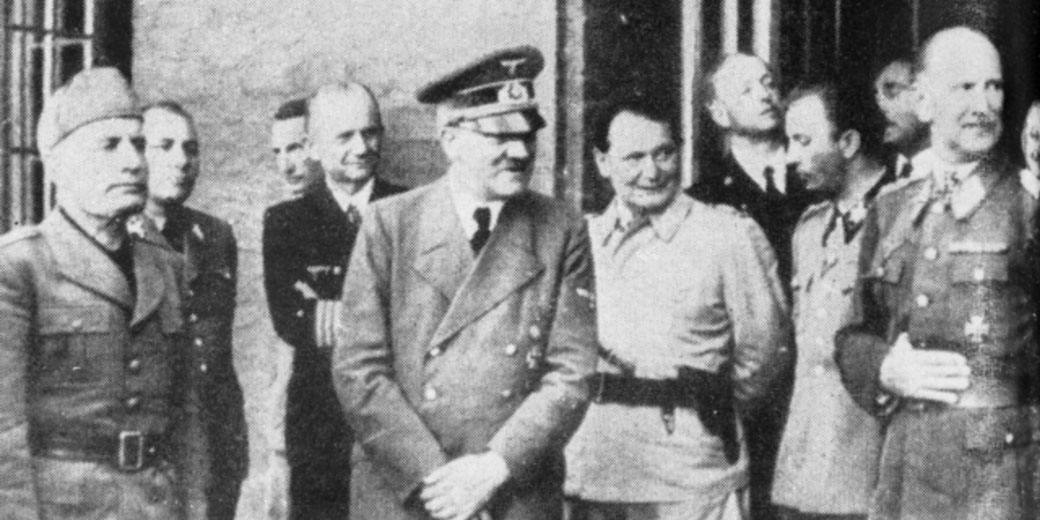
By mid-1943, the Axis alliance faced serious internal splits as Italy’s military collapse sped up under continued Allied pressure.
As such, Benito Mussolini was no longer able to maintain control and had been removed from power and imprisoned by his own king.
Within weeks, Adolf Hitler ordered a special SS and paratrooper unit to conduct one of the most daring operations of the war, an operation that would rescue Mussolini from a mountain lodge in central Italy and reimpose fascist rule in the north under German command.
The Context: Italy’s fall in 1943
During July 1943, Allied forces launched Operation Husky to seize control of Sicily, a move designed to weaken the southern front and force Italy’s withdrawal from the war.
The operation, which began on 9 July and ended on 17 August, involved about 180,000 Allied troops in a combined amphibious and airborne assault.
Under General Dwight D. Eisenhower, the combined land and air assault overwhelmed Italian and German defenders, and General Alfredo Guzzoni’s command could not prevent the Allied advance.
German forces under General Hans-Valentin Hube managed an organised withdrawal.
By early August, German units began evacuating what was left of their forces, and the political situation in Rome collapsed.
At the same time, Italian cities endured relentless bombing raids that damaged infrastructure and made food shortages worse.
Public anger grew as military defeats mounted and basic services collapsed; so, within the Fascist Grand Council, senior leaders began to abandon Mussolini and called for his dismissal.
On 24 July, Dino Grandi presented a motion of no confidence that passed by a vote of 19 to 7.
On 25 July, King Victor Emmanuel III summoned the Duce to the Quirinal Palace.
After formally informing him of his dismissal, the king ordered Mussolini’s immediate arrest by military police.
Behind the scenes, Marshal Pietro Badoglio accepted the premiership and pledged public loyalty to Germany.
Secretly, however, he contacted Allied commanders in order to seek an armistice and a negotiated exit from the war, and General Giuseppe Castellano later signed the Armistice of Cassibile on 3 September.
Over the following weeks, Italy’s government tried to delay and to switch sides to avoid German retaliation and further Allied attacks.
The arrest of Benito Mussolini
To conceal Mussolini’s location from German intelligence, Italian authorities moved him frequently under tight security.
At first held on the island of Ponza, he was later transferred to La Maddalena near Sardinia.
Eventually, he was placed in the Hotel Campo Imperatore, an alpine lodge located high on the Gran Sasso plateau in Abruzzo.
At over 2,125 metres above sea level, the site could only be reached via a single cable car or steep mountain track, which made an aerial rescue operation very difficult but not impossible.
When the Italian government isolated Mussolini in a location with limited access and low visibility, it aimed to ensure he would remain unreachable.
The hotel was originally a ski resort and had been turned into a detention site. At the same time, they continued discussions with Allied representatives.
On 8 September, German forces began occupying key Italian regions, and many Italian troops surrendered or were disarmed by German forces, while others resisted or fled.
During this period, Hitler suspected that Mussolini’s life was in danger because Italian officers loyal to the new regime could have viewed his death as a way to guarantee their alignment with the Allies, and as a result, his survival became a German strategic priority.
Hitler’s reaction to Mussolini’s arrest
Almost immediately, Hitler demanded a plan to locate and recover Mussolini, viewing his removal as both a political failure and a threat to German control in southern Europe.
He summoned key commanders to his Rastenburg headquarters and instructed various intelligence and military units to track Mussolini’s movements and begin planning for his extraction.
At the centre of the operation was SS-Sturmbannführer Otto Skorzeny, an Austrian officer whose reputation and personal loyalty to Hitler combined with an imposing physical bearing to recommend him for the role.
Skorzeny, who had been wounded during the invasion of the Soviet Union and who bore a prominent facial scar, was well-known among Hitler’s inner circle.
Early reports suggested that Mussolini was still alive, though his exact location shifted multiple times.
As soon as confirmation arrived that he had been transferred to the Gran Sasso, Skorzeny began coordinating with General Kurt Student’s airborne command, although operational planning and tactical command of the raid were handled by General Harald Mors.
Hitler authorised a plan to recover Mussolini alive and reinstall him as the figurehead of a new fascist regime under German occupation.
To Hitler, maintaining the appearance of Axis unity mattered as much as regaining military control.
Restoring Mussolini would offer propaganda value and ensure a semblance of legitimacy in the German-controlled north.
Planning Operation Eiche (Oak)
After confirming Mussolini’s location, German intelligence agencies coordinated aerial reconnaissance over the Gran Sasso.
They had checked the terrain and defensive strength. The hotel, which was located at the summit of a steep plateau with only a cable car for access, posed a serious logistics problem for any traditional assault.
German commanders quickly ruled out bombing or a paratrooper drop, as either could kill Mussolini or destroy the building.
So, they proposed an unusual plan. Fallschirmjäger troops would land gliders directly onto the plateau beside the hotel, allowing a rapid and silent assault.
Code-named Operation Eiche (Oak), the mission called for twelve DFS 230 gliders to be towed by Heinkel He 111 bombers.
Each carried special troops who were heavily armed for close-quarters action. Skorzeny insisted on leading the operation himself despite lacking paratrooper training and joined the lead glider.
General Harald Mors, however, commanded the tactical ground forces responsible for securing the area.
Planning sped up as the weather cleared and German intelligence assessed that the Italian guards, who had no intention of harming Mussolini, had strict orders to prevent any escape or handover.
As a result, planners decided that a show of force might prompt surrender without bloodshed.
By early September, final preparations had been completed.
The Gran Sasso raid
On 12 September 1943, under clear skies, the gliders were released from their tow planes and descended towards the Gran Sasso.
After careful flying, most landed safely on the narrow rocky plateau, only metres from the hotel entrance.
So, within seconds, the commandos exited the gliders and surrounded the building, where the Italian guards, surprised and outnumbered, surrendered without resistance.
Inside, Skorzeny located Mussolini and announced that Hitler had sent him to liberate the former leader.
Although visibly ill and weakened, Mussolini complied without protest. Within minutes, a Fieseler Fi 156 Storch reconnaissance aircraft arrived on the plateau.
Piloted by Captain Walter Gerlach, the tiny plane managed to land on the uneven terrain and prepared for departure.
The Storch, which was known for its very short take-off and landing capability, was well suited for such a mission.
Skorzeny insisted on boarding with Mussolini, which added extra weight to the small aircraft.
Though the plane’s load approached its maximum capacity, the pilot still successfully took off from the uneven slope and reached a nearby airfield.
From there, Mussolini had been flown first to Rome Ciampino, then to Vienna, and finally to Munich.
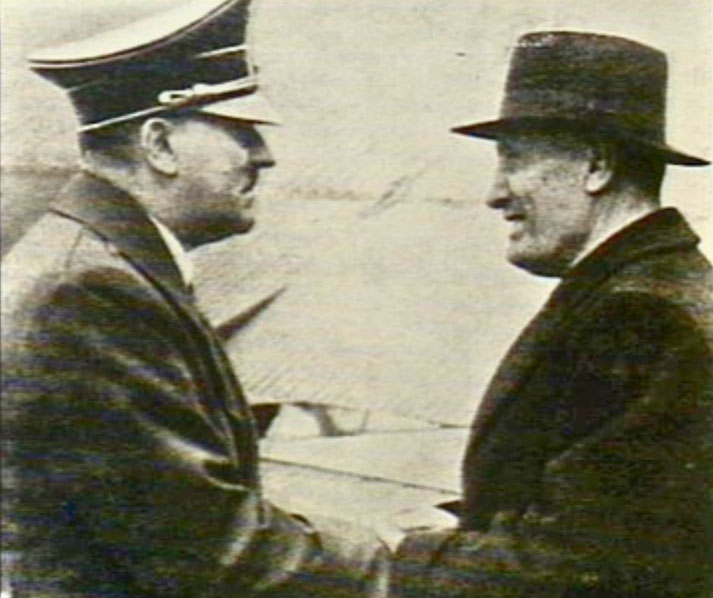
Two days later, he reunited with Hitler at Rastenburg, where he received instructions to form a new fascist administration under German command.
The aftermath of Mussolini’s rescue
Soon after his meeting with Hitler, Mussolini announced the formation of the Italian Social Republic (Repubblica Sociale Italiana), which was based in Salò on Lake Garda.
German authorities supplied the new state with weapons, security forces, and propaganda assistance.
The regime, which was officially independent, operated under German supervision and lacked authority and broad support among Italians.
By this stage, partisan resistance, which had grown across northern Italy, faced Allied forces that advanced steadily from the south.
As German troops strengthened the Gothic Line to slow the Allied advance, the Salò Republic provided limited military assistance and became a tool for punishing collaborators and silencing dissent.
Mussolini ordered the execution of several former colleagues, including his son-in-law Galeazzo Ciano, in an attempt to demonstrate resolve and reassert control.
Over the next eighteen months, the republic collapsed under pressure from all sides.
In April 1945, Mussolini attempted to flee toward the Swiss border in disguise, but was captured by partisans from the 52nd Garibaldi Brigade near Dongo.
On 28 April, in the village of Giulino di Mezzegra, they executed him along with Clara Petacci.
Their bodies were later displayed in Milan’s Piazzale Loreto, the same location where Fascist forces had previously strung up resistance fighters in 1944.
Hitler’s decision to rescue Mussolini prolonged the fighting in Italy and kept up the appearance of unity, yet it failed to restore fascism’s authority or to reverse the Axis defeat.
The mission made Skorzeny famous within Nazi circles, and in later years he became involved in efforts that helped some former Nazis escape, which some writers tied to informal networks called ODESSA.
Ultimately, Mussolini’s second government never regained the influence or authority it had once held.