
The Gulf of Tonkin Incident: Did America lie to start a war?
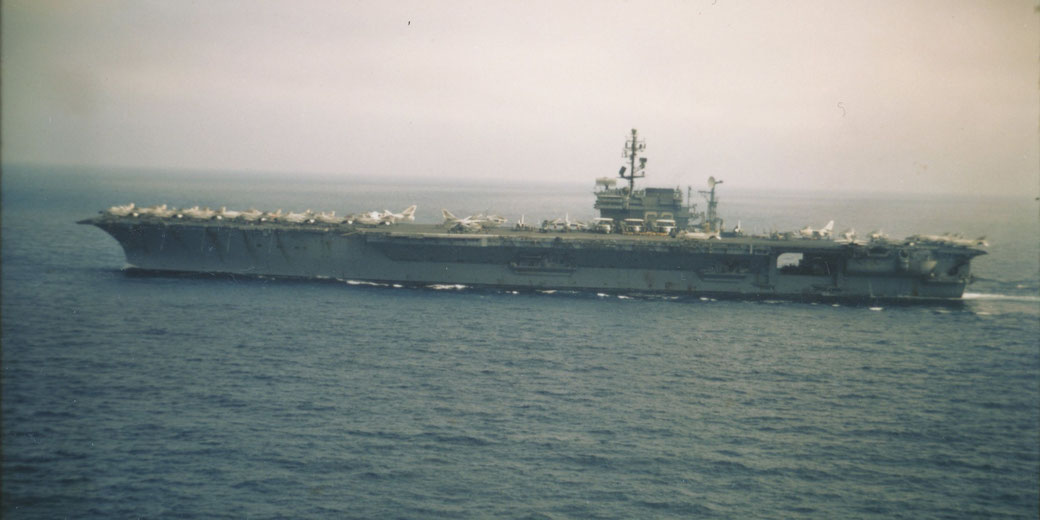
In August 1964, as Cold War tension continued to fuel Washington’s obsession with the aim of stopping communist expansion in Southeast Asia, a brief naval encounter off the coast of North Vietnam rapidly triggered full-scale U.S. involvement in the Vietnam War.
Within days, President Lyndon B. Johnson received very broad congressional support to wage war, and officials justified this decision with reports of two unprovoked attacks on American destroyers that were operating in the Gulf of Tonkin.
Years later, as declassified evidence exposed errors and deliberate gaps in the reports, it became increasingly clear to many historians that the incident had not occurred exactly as described and that American leaders had, in significant ways, manipulated facts to justify the decision to send more forces to war.
Why were American ships near Vietnam?
After the Geneva Conference of 1954 divided Vietnam along the 17th parallel, American officials had gradually strengthened their commitment to the defence of South Vietnam, which remained under the leadership of Ngo Dinh Diem.
They had provided economic aid and military equipment to South Vietnam and had steadily expanded training for the South Vietnamese Army, and they had also deployed CIA teams to run sabotage operations against the communist North.
One of these missions was Operation 34A, which had launched in early 1964 and had included coastal raids by South Vietnamese commandos who used American boats and relied on American intelligence as they coordinated closely with U.S. advisers.
On the night of 30–31 July, South Vietnamese commandos attacked Hon Nieu Island in one such raid.
By mid-1964, U.S. destroyers such as the USS Maddox had begun a series of DESOTO patrols in the Gulf of Tonkin that aimed to intercept North Vietnamese radar signals and monitor military communications.
These patrols gathered electronic intelligence through advanced SIGINT gear and took place near the same coastal areas that South Vietnamese raiding teams targeted.
North Vietnamese leaders had closely tracked the movements of the American ships and had witnessed the attacks on nearby islands, and they reasonably concluded that the two efforts were part of a single coordinated strategy.
Even so, the Johnson administration publicly claimed that the destroyers operated in international waters and had no direct connection to aggressive action.
However, the Maddox navigated within 11 nautical miles of the North Vietnamese coast, a distance that fell inside Hanoi’s declared 12-nautical-mile territorial limit, which the United States did not recognise.
According to later naval logs and interviews, the destroyer had in fact sailed within close range of Hon Me Island at the very moment when South Vietnamese raids grew more frequent, which made a North Vietnamese military response more likely.
Mission orders from the Pentagon had instructed the Maddox to collect radar and signals intelligence under Operation SIGAD USN-467P and had stated that its presence might cause electronic responses from North Vietnamese installations.
The first alleged attack: August 2, 1964
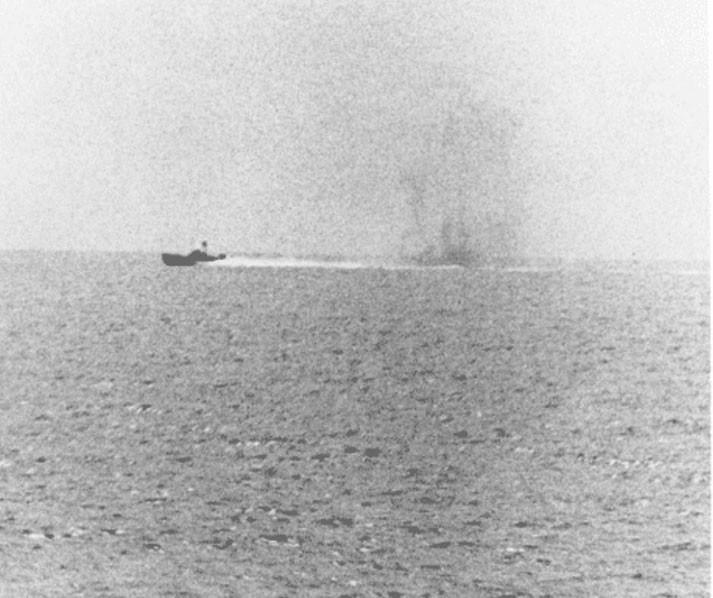
On 2 August, the Maddox was on patrol and intercepted three North Vietnamese P-4 torpedo boats that had been launched from the shore in response to radar reports of an approaching vessel.
The destroyer fired warning shots when the boats drew closer, and a brief naval exchange followed, during which the Maddox fired over 280 rounds, which included 5-inch shells and smaller-calibre weapons, and was supported by jet aircraft from the carrier USS Ticonderoga.
The destroyer was equipped with 5-inch guns and advanced radar and suffered no damage, while two North Vietnamese boats were badly damaged and one withdrew burning.
According to U.S. officials, the attack had no justification and occurred in neutral waters.
However, internal assessments acknowledged that the Maddox had not only crossed into contested territory but also operated alongside South Vietnamese raids that had taken place on Hon Nieu Island the night before.
Intelligence reports confirmed that the North Vietnamese tracked both events closely and likely interpreted the Maddox's presence as part of the broader operation.
In Washington, President Johnson reviewed the situation with his advisers but chose to avoid immediate retaliation.
He calculated that military escalation so close to an election could damage his campaign unless public support could be guaranteed.
For the moment, he limited his response to public condemnation and a warning that any future attacks would be met with force
The controversial second incident: August 4, 1964
Two nights later, reports surfaced of another engagement, this time involving both the Maddox and the newly arrived USS Turner Joy.
The destroyers reported sonar and radar contacts that resembled fast-moving vessels and possible torpedo launches.
In heavy rain and low visibility, crews fired rapidly at what they believed were enemy boats.
For several hours, both ships engaged in evasive manoeuvres, launched depth charges, and opened fire into the darkness
At first, reports sent to Washington confirmed that another attack had taken place.
Yet within hours, doubts emerged. Commander John Herrick, who led the patrol group, radioed that weather conditions had caused multiple radar anomalies and that no visual contact had been made.
He questioned whether any enemy had been present at all. Commander Robert Barnhart of the Turner Joy later confirmed that no enemy vessels had been seen during the engagement.
By the next morning, Herrick advised halting further action until firmer evidence could be reviewed
Even so, Johnson chose to treat the second incident as fact. On the evening of 4 August, he addressed the nation, declaring that U.S. ships had again been attacked on the high seas.
He ordered air strikes against North Vietnamese naval bases and depots. Two days later, Congress passed the Gulf of Tonkin Resolution, granting him authority to use "all necessary measures" to assist any Southeast Asian nation threatened by communist aggression.
Only two senators, Wayne Morse of Oregon and Ernest Gruening of Alaska, voted against it.
The resolution passed 416–0 in the House and 88–2 in the Senate.
Suppression of doubts and intelligence misuse
Within days, intelligence officials discovered inconsistencies in the reports of the second incident.
Intercepts from the National Security Agency revealed no North Vietnamese orders for attacks and no indication that boats had left port on the night of 4 August.
Transcripts of radio traffic lacked references to combat, and field reports from aircraft crews stated that no hostile vessels had been seen during the supposed engagement
Nonetheless, Pentagon officials continued to compile reports supporting the administration’s version.
They edited intelligence summaries, removed qualifying language, and withheld Herrick’s doubts from the record.
When McNamara testified before Congress, he provided a polished account of North Vietnamese aggression but omitted any mention of uncertainty or confusion.
Behind closed doors, senior officers acknowledged the lack of evidence but accepted the political need to maintain unity.
Assistant Secretary of Defense John McNaughton admitted privately that the administration’s real aim was "to avoid a humiliating U.S. defeat".
Eventually, declassified documents confirmed that the second attack had almost certainly never happened.
The radar and sonar contacts turned out to be false echoes, distorted by stormy weather and overactive watchmen.
Even the ship commanders later admitted that no reliable proof existed of enemy boats in the area that night.
In 2005, the NSA released an internal report titled Spartans in Darkness by historian Robert J. Hanyok, which acknowledged deliberate distortions of intelligence to support the official narrative
Strategic motives behind the escalation
By mid-1964, pressure had mounted within the administration to escalate military involvement in Vietnam.
General William Westmoreland had requested ground troops, the Joint Chiefs urged sustained bombing, and the National Security Council anticipated increased Viet Cong activity in the South.
The Tonkin incident, whether manufactured or misunderstood, offered an ideal moment to rally public support and avoid a drawn-out debate on war powers
Johnson had long feared that a gradual slide into war would erode his domestic reform agenda.
By securing congressional authorisation in a single dramatic moment, he gained the freedom to act without the burden of political opposition.
Public opinion, boosted by patriotic fervour and confidence in government, shifted decisively.
Few questioned the evidence presented, and most accepted the administration’s narrative without protest
In the months that followed, the president approved Operation Rolling Thunder, a bombing campaign designed to weaken North Vietnam’s will to fight.
In March 1965, American marines landed at Da Nang, marking the beginning of full-scale U.S. ground involvement.
By the end of the year, troop numbers had surpassed 180,000, with further increases planned for 1966