
The 8 greatest military leaders in history
From the scorched fields of Gaugamela to the frozen forests of the Ardennes, military commanders have often changed the outcomes of wars because they transformed tactics and pushed their forces to the brink in order to exploit strategic weaknesses with incredible accuracy.
Their campaigns were often fought across continents and against overwhelming odds and generally did not succeed by blind chance.
Instead, they triumphed because these leaders adapted to uncertainty, inspired loyalty, and understood how to convert battlefield success into long-term political power.
What makes someone a great military leader?
Commanders who achieved repeated victories in war clearly understood the main principles of strategy, but consistent success demanded far more than battlefield competence.
To earn lasting recognition, they needed to respond effectively to adversity and to organise their forces with creativity and skill so that they could lead with conviction that inspired both obedience and admiration.
Often, great military leaders rose to importance during times of political turmoil or a crisis that threatened their survival, where indecision or failure would have led to disaster.
Their ability to react quickly and to assess risk, as they directed the full weight of their armies toward achievable goals, separated them from less capable contemporaries.
In addition, their presence could keep morale steady in the face of hunger, fatigue, or defeat.
Importantly, many of these commanders often introduced or perfected new tactical systems or logistical solutions.
They reorganised military structures and improved mobility, and they deployed forces in ways that forced their enemies to abandon their usual methods.
By doing so, they defeated specific opponents and transformed military doctrine for generations.

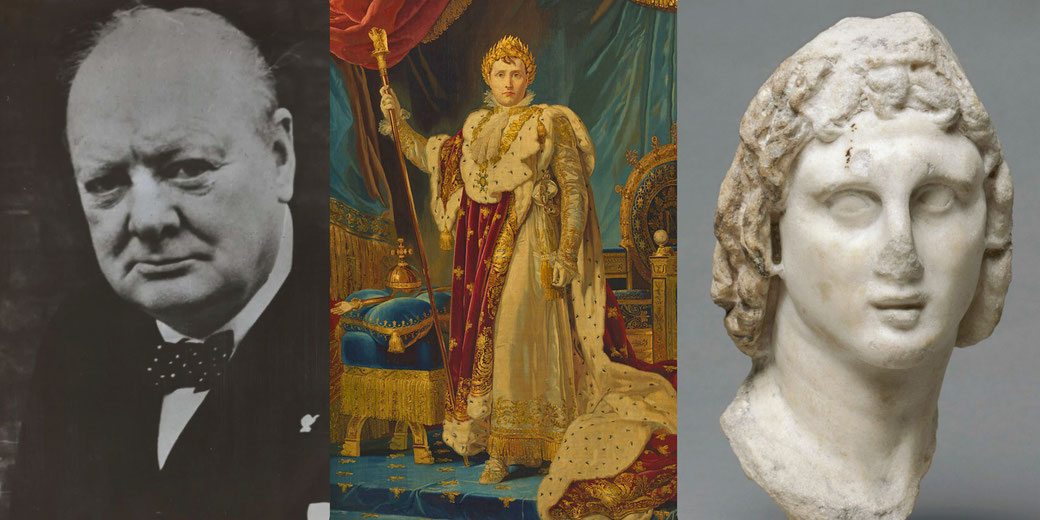
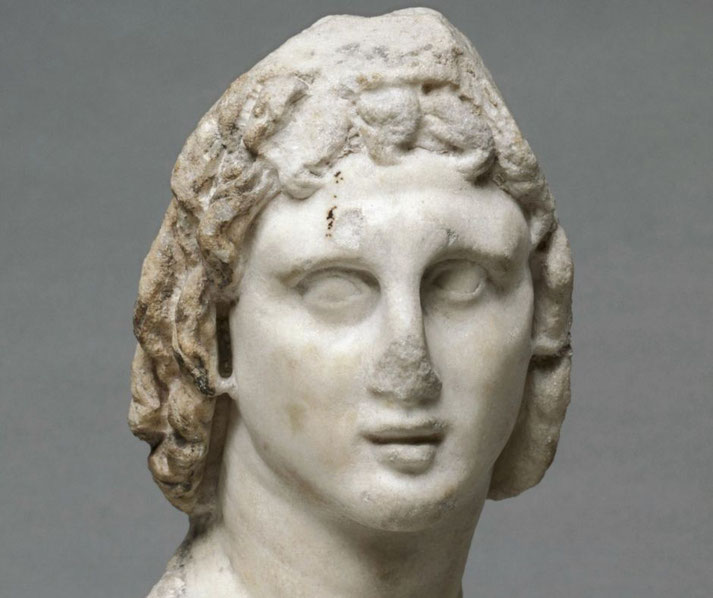
1. Alexander the Great
At the age of twenty, Alexander became king of Macedon following the assassination of his father, Philip II, in 336 BC.
Within just two years, he began a campaign that would extend from Greece to the edge of India and that toppled the ancient Persian Empire.
This campaign also created dozens of cities that carried his name.
Against the Achaemenid forces of Darius III, Alexander won major victories at Issus in 333 BC and at Gaugamela in 331 BC.
At Issus, he broke through the Persian line by leading a cavalry charge that targeted Darius directly, while at Gaugamela he used a combination of feints and oblique manoeuvres to unbalance a much larger army (often exaggerated in ancient sources to exceed 200,000 but more likely estimated by modern historians at around 100,000, with his force of approximately 50,000).
He relied heavily on the Macedonian phalanx and his elite Companion Cavalry to deliver precise and devastating attacks.
His tactical discipline was coupled with personal leadership in the thick of battle and gave him control over the Persian heartland within months.
Soon after, he pressed further eastward and, in 326 BC, he defeated the Indian king Porus at the Battle of the Hydaspes, where Macedonian phalanxes endured war elephants and monsoon conditions.
His soldiers were exhausted and thousands of kilometres from home and refused to march further.
As a result, Alexander turned back and crossed the rugged terrain of the Gedrosian Desert to return west.
By integrating local elites into his administration and adopting elements of Persian royal ceremony, Alexander demonstrated military skill and judgement and a vision of imperial rule that reached further than Macedonian customs.
His sudden death in 323 BC in Babylon left his immense empire without a clear successor, triggering decades of conflict among his generals.
Even so, his campaigns changed the way people fought wars and ran empires in the ancient world.
2. Julius Caesar
Born in 100 BC into a patrician Roman family, Julius Caesar climbed the political ladder because he cultivated alliances and proven military success.
As governor of Gaul from 58 to 50 BC, he embarked on a brutal campaign of conquest that brought modern France and parts of Germany under Roman control.
At the height of the Gallic Wars, he commanded approximately ten legions and may have inflicted hundreds of thousands of casualties, and he integrated new provinces into Roman rule.
Caesar’s military achievements included the Siege of Alesia in 52 BC, where he encircled the Gallic chieftain Vercingetorix with dual lines of fortifications to repel both the besieged defenders and a massive relief force.
Although heavily outnumbered, his army maintained unity and discipline, resulting in a clear victory that crushed the last major Gallic resistance.
By 49 BC, Caesar’s political enemies in Rome demanded that he disband his army.
Instead, he crossed the Rubicon with a single legion, committing an illegal act that triggered civil war and marked a point of no return.
He quickly defeated Pompey at the Battle of Pharsalus in 48 BC, then pursued further campaigns in Egypt and North Africa, followed by operations in Spain.
Within a few years, he became the sole ruler of the Roman Republic.
Significantly, Caesar understood that military conquest had to be supported by political legitimacy.
He publicised his achievements through detailed commentaries and granted generous pardons to defeated rivals, which preserved his public image.
After he had declared himself dictator for life in 44 BC, he was assassinated by senators who feared that his consolidation of power threatened Rome’s republican traditions.
His death accelerated the transition from Republic to Empire and demonstrated how military supremacy could no longer be separated from political control.
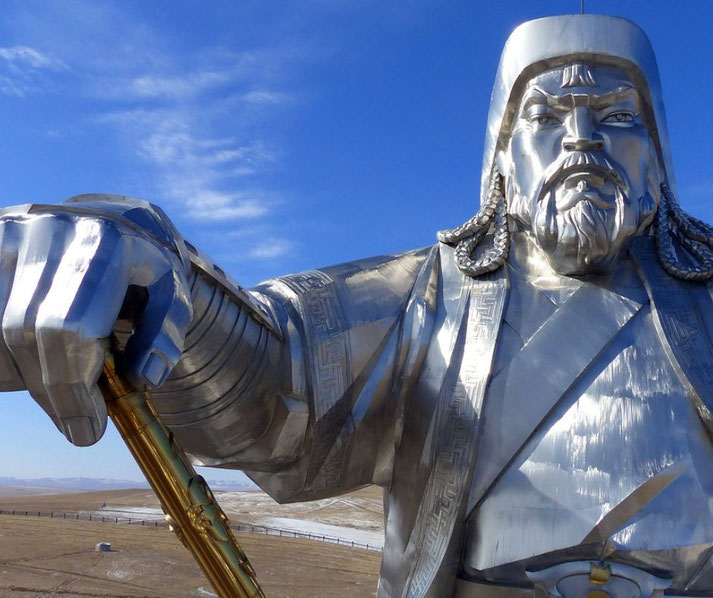
3. Genghis Khan
Born around 1162 in the Mongolian steppes, Temüjin had overcome clan rivalries and a succession of betrayals that ended in imprisonment before he united the Mongol tribes under his command.
After proclaiming himself Genghis Khan in 1206, he launched a series of campaigns that built one of the largest single land empires that joined his territories in recorded history.
His military machine relied on speed and strict discipline supported by decentralised coordination.
In 1219, he led a devastating campaign against the Khwarezmian Empire after its shah murdered his trade delegation.
Rather than rely on brute force alone, Genghis Khan split his army, which was estimated at 150,000, into independent columns that moved rapidly and struck targets simultaneously.
Cities such as Samarkand and Bukhara fell within months, with resistance often crushed and populations either absorbed or destroyed.
In Nishapur, mass executions followed the death of a Mongol commander, and some sources claim that tens of thousands were killed, though modern historians debate the scale of the slaughter.
Additionally, Genghis Khan revolutionised military structure by creating units based on multiples of ten and assigning officers who had shown merit rather than kinship connections.
His commanders included Subutai and Jebe and they operated with independence, which allowed Mongol forces to adapt quickly to changing conditions.
They used feigned retreats, psychological warfare, and an extensive intelligence network to outmanoeuvre more conventional armies.
By the time of his death in 1227, the Mongol Empire had come to span from the Sea of Japan to the Caspian Sea.
His successors continued his conquests into China, Russia, and Eastern Europe.
His impact continued in the territories he conquered, in the administrative systems and trade routes that his campaigns established, and in the military doctrines they inspired.
4. Saladin
Salah ad-Din Yusuf ibn Ayyub was born in Tikrit in 1137 and began his career under the Zengid ruler Nur al-Din.
After he had risen through military and administrative positions, he established the Ayyubid dynasty and eventually unified Muslim Egypt and Syria in the face of Crusader aggression.
When he consolidated power across regions long divided by tribal and dynastic rivalries, Saladin positioned himself as the spiritual and military leader of resistance to the Latin states established after the First Crusade.
In 1187, he launched a full-scale assault against the Kingdom of Jerusalem and lured the Crusader army into a trap at the Horns of Hattin.
His forces captured most of the Christian nobility, including King Guy of Jerusalem, and seized the relic of the True Cross.
Approximately 20,000 Crusader troops were taken prisoner, opening the road to the holy city.
Unlike earlier conquerors, Saladin did not sack Jerusalem when it surrendered.
Instead, he imposed a ransom policy that allowed Christians to leave safely, which earned him a reputation for generosity even among his enemies.
During the Third Crusade, he defended his gains against King Richard I, and he avoided large-scale confrontation and preserved the strategic depth of his territories.
Saladin combined military success with political legitimacy and careful political skill.
He relied on both religious authority and administrative skill to maintain unity among people who came from many different populations.
Upon his death in 1193, he left behind a state that could withstand renewed Crusader pressure, and a name that people across the Islamic world and European chivalric tradition continued to honour.
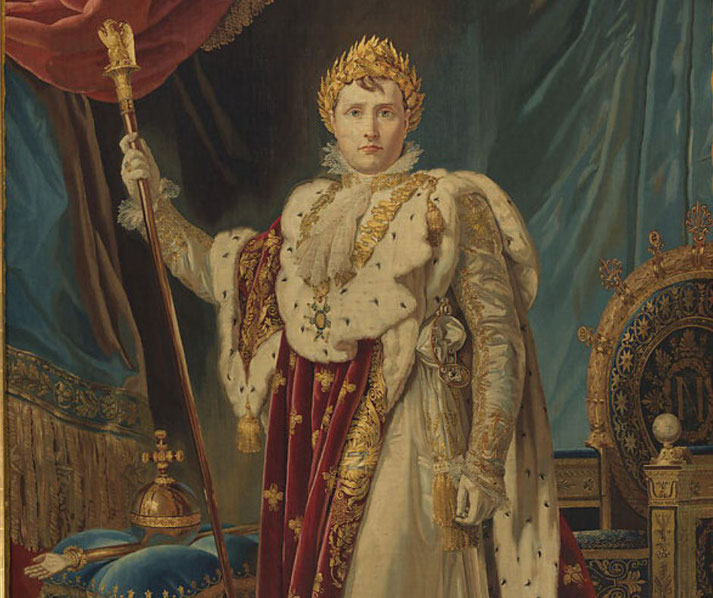
5. Napoleon Bonaparte
Born in 1769 on the island of Corsica, Napoleon Bonaparte rose to fame during the French Revolutionary Wars.
His success in the Italian campaigns of 1796–1797 demonstrated his capacity to turn poorly supplied troops into a dominant force because he manoeuvred around enemy strongholds and defeated Austrian forces in a series of rapid engagements.
After he had become First Consul in 1799, he built the Grande Armée and introduced reforms that improved mobility and unit independence in ways that strengthened battlefield communication.
In 1805, he crushed Russian and Austrian forces at Austerlitz by baiting them into attacking what appeared to be a weakened flank.
His mastery of operational deception and concentration of force brought him victory after victory across Central Europe.
Between 1806 and 1807, he destroyed Prussian power at Jena and defeated Russian forces at Friedland, and these victories compelled peace terms that redrew the map of Europe.
However, his 1812 invasion of Russia exposed the limits of logistical support over vast distances.
With more than 600,000 men under his command, he captured Moscow but failed to force a decisive surrender, and winter conditions devastated his retreating forces, leaving fewer than 100,000 survivors.
Napoleon’s use of the Continental System to undermine British trade also backfired, straining relations with allies and weakening his economic position.
After a brief exile in 1814, he returned for the Hundred Days campaign in 1815, but was defeated at Waterloo by the Duke of Wellington and Prussian forces under Blücher.
He spent his final years in exile on Saint Helena. His contributions to military theory and administrative reform, along with his impact on the political organisation of Europe, are still very influential.
6. Gustavus Adolphus
Gustavus Adolphus was born in 1594 and became king of Sweden during a time of conflict with Denmark and Poland, as well as with Russia.
Early in his reign, he reformed the Swedish military into a modern fighting force that could contend with larger powers during the Thirty Years’ War.
At the Battle of Breitenfeld in 1631, his army defeated the powerful Catholic League under Count Tilly because his army used mobile artillery and flexible regiments that were supported by coordinated infantry-cavalry attacks.
His innovations included standardised firearms and lighter, more manoeuvrable cannon alongside integrated units that could reload and fire in continuous volleys.
He also introduced compulsory education for officers to improve command effectiveness.
He introduced conscription, decentralised command structures, and mobile logistics systems, which allowed his smaller forces to sustain campaigns deep in hostile territory.
In 1632, he met Imperial forces at Lützen and secured victory, although he was killed in battle while leading a charge.
During this period, he coordinated with Protestant allies such as the Elector of Saxony to secure broader support.
Gustavus left behind a military tradition that significantly altered the balance of power in Europe.
His strict discipline and his talent for battlefield innovation and leadership influenced generals from Napoleon to Clausewitz, and established Sweden as a serious military power for the next generation.
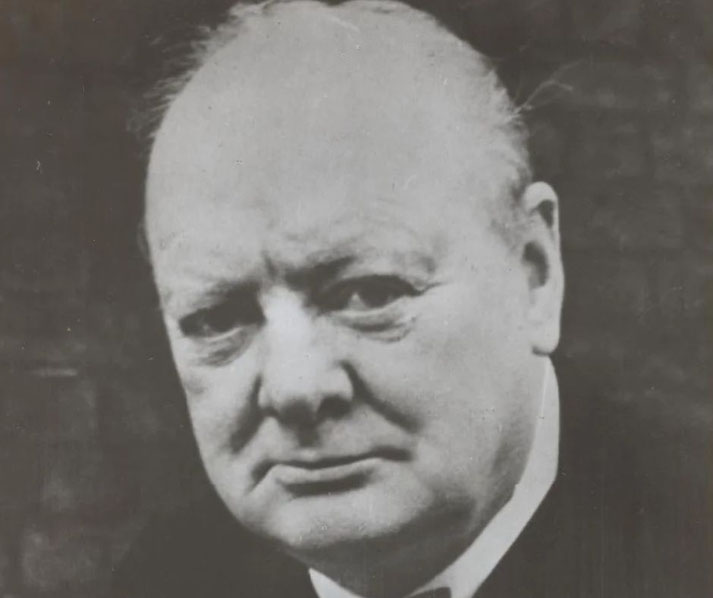
7. Winston Churchill
When Winston Churchill became Prime Minister in May 1940, Nazi forces had swept across Western Europe, and Britain faced the possibility of invasion or surrender.
With France collapsing and the United States still neutral, Churchill confronted isolation with determination and clarity.
He gave radio broadcasts and speeches that steadied public morale during the Battle of Britain and the Blitz. His speeches combined realism and defiance, and they urged citizens to resist tyranny with determination.
As head of the War Cabinet, he managed internal disputes as he oversaw the defence of the British Isles and he directed overseas campaigns.
Churchill worked closely with Franklin Roosevelt and Joseph Stalin, and he maintained unity within a difficult alliance.
He played key roles in decisions such as the Dunkirk evacuation and supported the creation of the Special Operations Executive, which had been initiated by ministers such as Hugh Dalton.
His influence helped direct strategy in the Mediterranean and the Pacific before major operations in Western Europe.
Despite electoral defeat in 1945, he stayed a leading voice in British politics and returned to office in 1951.
Although not a general, Churchill’s leadership blended political endurance with a deep understanding of strategic priorities.
He bridged military planning and national morale, and this gave Britain the stability it needed to continue fighting until total victory in 1945.
8. Dwight D. Eisenhower
Dwight D. Eisenhower was born in 1890 in Texas and graduated from West Point in 1915 and worked in various administrative roles until World War II transformed his career.
In 1943, he became Supreme Allied Commander in Europe, and he oversaw the most complicated multinational military operation in modern history.
He directed Operation Overlord, which began on 6 June 1944 with the D-Day landings on the beaches of Normandy. Eisenhower coordinated logistics and command structures as he aligned strategic goals across American, British, Canadian, and Free French forces.
More than 156,000 troops landed on the first day alone, and the success of the landings paved the way for the liberation of France and the defeat of Nazi Germany.
As the Western Allies advanced, he managed internal disputes among high-ranking generals and he responded to German counterattacks such as the Ardennes Offensive.
His leadership was also shaped by key meetings such as the Casablanca Conference, which helped coordinate Allied efforts.
He did not attend the Tehran Conference, which was led by Roosevelt, Churchill, and Stalin.
His decisions prioritised unity over personal glory, and he maintained focus on the overall objective of victory in Europe.
After the war, Eisenhower worked as military governor of occupied Germany and was later elected President of the United States.
His military career is still widely seen as a model of coalition leadership and steady decision-making, supported by global logistical coordination in modern warfare.