
How the critical need for fuel drove Germany and Japan into more desperate situations in WWII
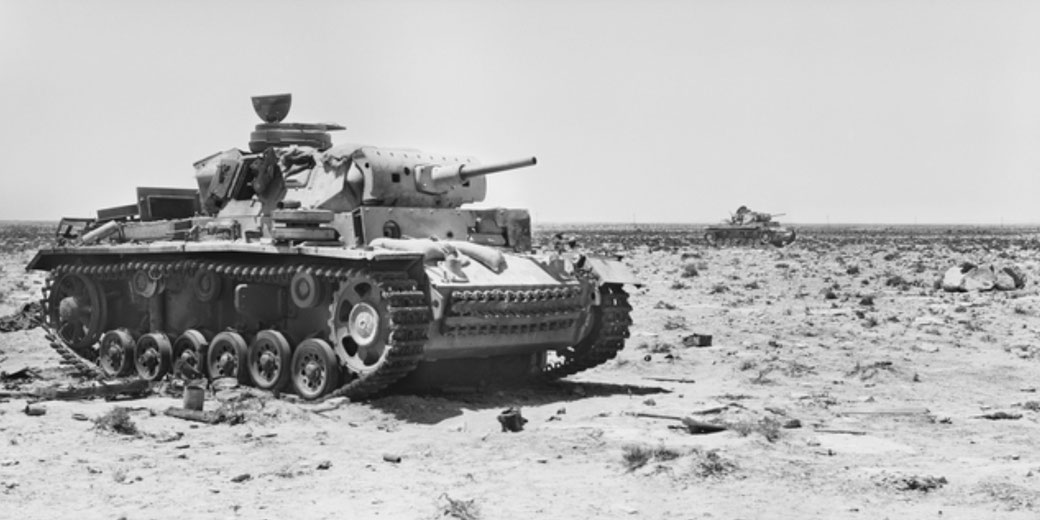
Petroleum largely defined the limits of Axis military power during the Second World War. From the oilfields of Ploiești to the refineries of Palembang, Germany and Japan identified specific fuel targets as essential for survival and expansion.
As their access narrowed and their supply networks collapsed, both nations committed to military offensives that unravelled under the weight of fuel scarcity and the strain of operations on too many fronts.
Germany’s oil dilemma
Germany lacked natural petroleum reserves, and its entire economy depended on imports and chemical substitutes.
Even before the war, German scientists at companies like IG Farben had developed synthetic fuel from coal through hydrogenation processes, which proved expensive and inefficient.
Facilities at Leuna and Pölitz produced enough for peacetime industry, with the Böhlen plants adding further output that still, in overall terms, fell short of the demands of long campaigns of mechanised warfare.
When war broke out in 1939, Germany’s largest supplier became Romania, whose Ploiești oil fields soon delivered over 50 percent of Germany’s imported crude.
At peak output in 1941, these fields produced nearly six million tons of oil annually, though only about three to four million tons were actually exported to Germany due to competing demands and limits on transport.
However, these sources remained insufficient for large-scale military operations, especially when coupled with a naval blockade and the constant steady loss of reserves through sustained offensives.
After the invasion of the Soviet Union in June 1941, German fuel needs increased to levels that Germany could not meet.
The Wehrmacht’s motorised divisions used vast amounts of fuel as they advanced deep into Soviet territory, and the Luftwaffe demanded even more for long-range operations across the Eastern Front.
For instance, a single Tiger I tank required approximately 500 litres of fuel per 100 kilometres.
As a result, Hitler turned his attention to the oilfields of the Caucasus. The launch of Operation Blue in the summer of 1942 showed a major shift in Germany’s strategic focus, as Army Group A moved south to capture Maikop and Grozny, with Baku set as the ultimate objective.
Although Maikop fell to German forces in August, Soviet engineers had already demolished the facilities, and repair efforts failed to restore production to operational levels.
German engineers struggled to restart the wrecked facilities and equipment, and by the time any partial operation returned, the frontline had already moved on.
Soon, the German advance slowed under the combined weight of difficult terrain and overstretched supply lines, as Soviet resistance increased.
The push toward Grozny stalled, and the drive toward Baku never materialised.
Soviet forces concentrated their defence around Stalingrad, where the southern thrust collapsed in prolonged street combat.
As the Sixth Army became encircled and destroyed in February 1943, the last hope of securing direct access to Soviet oil vanished.
By then, the wider costs of the oil offensive for Germany’s war effort could no longer be undone.
Over the following year, the Allies stepped up their bombing campaign against German industry.
American-led strikes under the Oil Campaign targeted synthetic fuel plants and storage sites across Germany and Romania.
Refineries at Leuna and Scholven-Buer and the plants at Pölitz sustained repeated attacks.
The raid on Ploiești was known as Operation Tidal Wave in August 1943, and caused serious short-term damage and killed hundreds of skilled workers, disrupting operations at several refineries.
Although initial assessments reported 40 percent infrastructure damage, refining capacity resumed partial output within weeks, reducing the long-term impact.
Synthetic fuel output dropped sharply, and by mid-1944 it had fallen to less than 25 percent of its pre-war production.
As a result, the Luftwaffe in many cases grounded aircraft and panzer divisions often remained immobilised, so the mechanised advantage that had once driven German victories disappeared.
During the Battle of the Bulge in December 1944, German forces launched a final counterattack, but they lacked the fuel to maintain momentum.
Commanders targeted Allied fuel depots at Stavelot, but they failed to capture them intact.
Once their limited supplies had run out, they abandoned vehicles and retreated, unable to regroup or resist the Allied advance.
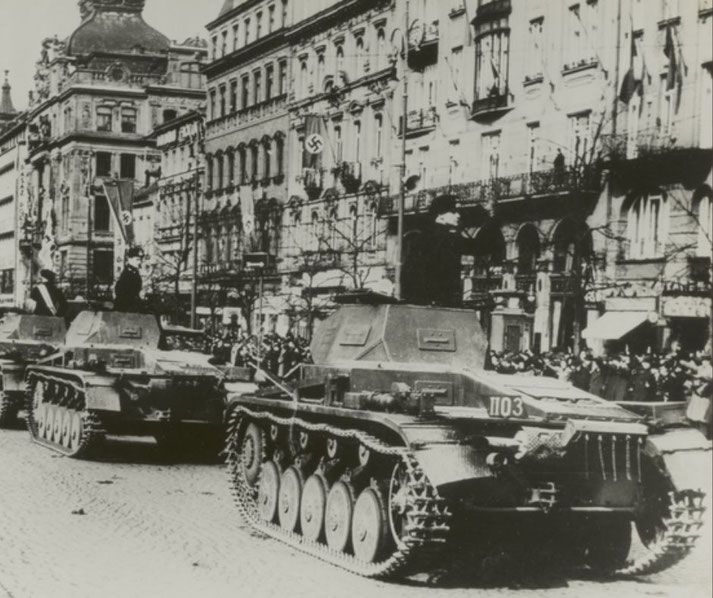
Japan’s Pacific predicament
Japan’s rise to military prominence in the early twentieth century occurred in defiance of its geographic limits, and it faced a lack of oil, which was the most serious of these limitations.
The home islands produced none, and Japan’s growing navy and air force and an expanding industrial sector all depended on petroleum imports.
By the 1930s, over 80 percent of Japan’s oil came from the United States, with additional supplies which arrived from the Dutch East Indies and British colonies in Southeast Asia.
By 1941, Japan had stockpiled approximately 43 million barrels of oil. As Japanese forces expanded their occupation of China, the need for oil escalated.
By 1940, military leaders in Tokyo recognised that future operations would be constrained by energy shortages unless they could secure long-term supplies.
In July 1941, Japan occupied southern Indochina, which triggered a severe economic reaction from the West.
The United States, Britain, and the Netherlands froze Japanese assets and enforced a complete oil embargo.
With imports cut off, Japan relied on stockpiled reserves that would last, at most, two years.
The imperial government now faced a strategic choice: either withdraw and lose influence or launch a war to seize oil-rich territories.
Military leaders, convinced that time was running out, endorsed the latter course.
On 7 December 1941, Japan attacked Pearl Harbor to cripple the American Pacific Fleet and secure time for further conquests.
Japanese forces advanced rapidly into Southeast Asia, as they seized Borneo and Sumatra and then drove into parts of Malaya.
Oilfields at Tarakan and Balikpapan became primary targets, with Palembang treated as especially important because of its refining capacity.
The Palembang refinery site on Sumatra was one of the largest in Asia and became central to Japanese planning.
Japanese engineers began restoring the refineries, but sabotage and equipment damage, which affected key installations, delayed recovery.
Even when production resumed, serious problems persisted. American submarines ran a focused campaign against Japanese merchant shipping and destroyed hundreds of oil tankers.
By 1944, they had sunk nearly 86 percent of Japan’s tanker fleet, according to wartime and post-war estimates.
As a result, Japan struggled to transport oil from the Dutch East Indies to the home islands.
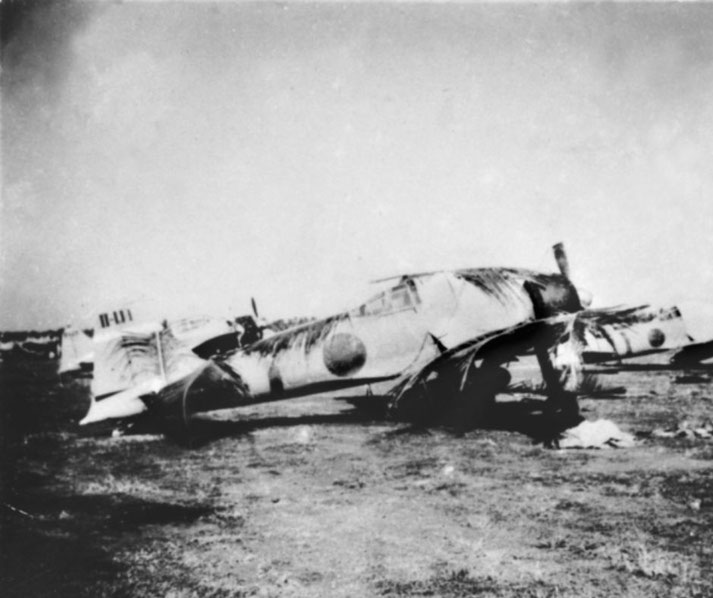
By early 1944, the shipping crisis had grown worse to the point that fuel deliveries had dropped to less than 10 percent of their intended volume in many months.
The Imperial Japanese Navy, once dominant in the Pacific, increasingly kept its largest warships in port to conserve fuel.
Inexperienced pilots received limited training, while supply chains to forward positions collapsed.
During the Battle of Leyte Gulf in October 1944, Japanese commanders knew their vessels could not return, yet they sailed anyway, committing to a last stand against American forces.
In 1945, this desperation culminated in Operation Ten-Go, when the battleship Yamato was sent on a one-way mission with barely enough fuel to reach Okinawa.
When the fleet broke apart, Japan could not replace the ships, and its naval power ceased to operate as a coherent force.
In the months that followed, kamikaze attacks increasingly became a replacement for normal tactics.
These one-way missions, which required minimal fuel and no return strategy, reflected Japan’s inability to sustain a regular air campaign.
Meanwhile, industrial production on the home islands fell sharply. Rail networks failed without oil, and factories lost electricity, so many military units received little or no fuel supply.
Japan’s empire had been built through military expansion and began to collapse as its energy system fell apart.
Final collapse and the consequences of shortage
By 1945, both Germany and Japan had entered a near-complete breakdown in supply.
In Germany, fuel production had fallen to less than 10 percent of its 1943 output, and the transport network had broken apart under Allied bombing.
By this stage, entire divisions stood idle, dependent on horse-drawn carts and captured vehicles, and more than 60 percent of Wehrmacht transport operated without fuel.
In many units, aircraft remained grounded for lack of aviation fuel, and even emergency reserves ran dry.
The once-mechanised Wehrmacht no longer operated as a mobile force. Field commanders stripped civilian stockpiles and raided depots, but such measures only prolonged the inevitable.
In Japan, conditions deteriorated even more rapidly. Aircraft sometimes flew training missions without fuel, and they moved forward only through the momentum of a tow or glide, and some pilots launched from catapults or hillsides just to simulate take-off.
Industrial cities often endured repeated blackouts, and transport across the islands in many regions slowed to a crawl.
By mid-1945, Japanese forces could not even defend their home territory effectively, and the army began stockpiling fuel for one final homeland defence that never came.
Without energy, Japan’s war machine effectively stopped moving, and with it, the empire that had once stretched across the Pacific unravelled in silence.
Both Axis powers had largely designed their war strategies around territorial conquest rather than long-term economic strength.
They had expected that captured oilfields would resolve their shortages, but they had misjudged the costs of transporting, refining, and defending those assets.
As Allied forces struck supply lines and refineries, the systems that had once fuelled German and Japanese offensives gradually collapsed.
The final defeat of both powers did not come solely from the battlefield. It came from exhaustion across their armed forces and a complete halt in movement as the machines that could no longer run slowly suffocated for lack of fuel.