
The 'Dyatlov Pass Incident': The strangest unsolved mystery of the 20th century?
In late January 1959, nine experienced Soviet hikers vanished in the northern Ural Mountains during a ski expedition that was meant to earn them the highest grade of hiking certification then available in the USSR.
Their bodies were later found scattered across the snow-covered slopes of Kholat Syakhl and presented injuries that ranged from mild bruises to crushed bones and missing facial tissue, but with no external signs of trauma that aligned with the damage.
For decades, specialists from different fields have returned to the case, but there are still more questions than answers about what really happened.
The trek begins: February 1959
On 23 January 1959, ten students and graduates who studied at the Ural Polytechnic Institute boarded a train from Sverdlovsk to begin their journey north.
Led by Igor Dyatlov, a 23-year-old radio engineering student, the group aimed to reach the peak of Mount Otorten, a remote summit in the northern part of Sverdlovsk Oblast near the Komi Republic.
The group included eight men and two women, all of whom held Grade II hiking certification under the Soviet system.
Completion of this trek would likely have awarded them Grade III, which was the highest standard-level classification available under the Soviet system, although elite titles existed beyond it, which required at least 300 kilometres of cross-country skiing in difficult terrain over a minimum of 16 days.
The full group consisted of Igor Dyatlov (radio engineering), Yuri Doroshenko (power engineering), Lyudmila Dubinina (civil construction), Zinaida Kolmogorova (radio engineering), Alexander Kolevatov (nuclear physics), Rustem Slobodin (mechanical engineering), Yuri Krivonischenko (industrial physics), Semyon Zolotaryov (sports instruction), and Nikolai Thibeaux-Brignolles (civil engineering).
The tenth member, Yuri Yudin, studied economics and geology.
After they had travelled by train to Ivdel and then travelled by truck to Vizhai, the last inhabited settlement in the area, the team began their ski trek on 27 January.
On the next day, Yuri Yudin turned back due to illness, which later spared his life.
The remaining nine entered the forested foothills, as they gradually ascended toward the mountain range.
They carried personal records and equipment would ultimately leave a detailed trail of their progress until their sudden disappearance.
By 1 February, the hikers had reached the eastern slope of Kholat Syakhl, translated from the Mansi language as “Mountain of the Dead”.
Rather than descend into a nearby forested area that offered shelter, they pitched their tent on an exposed section of the slope.
Some researchers have proposed that they chose this spot either to avoid losing altitude or to challenge themselves in preparation for future expeditions.
A tent in the snow: the final camp
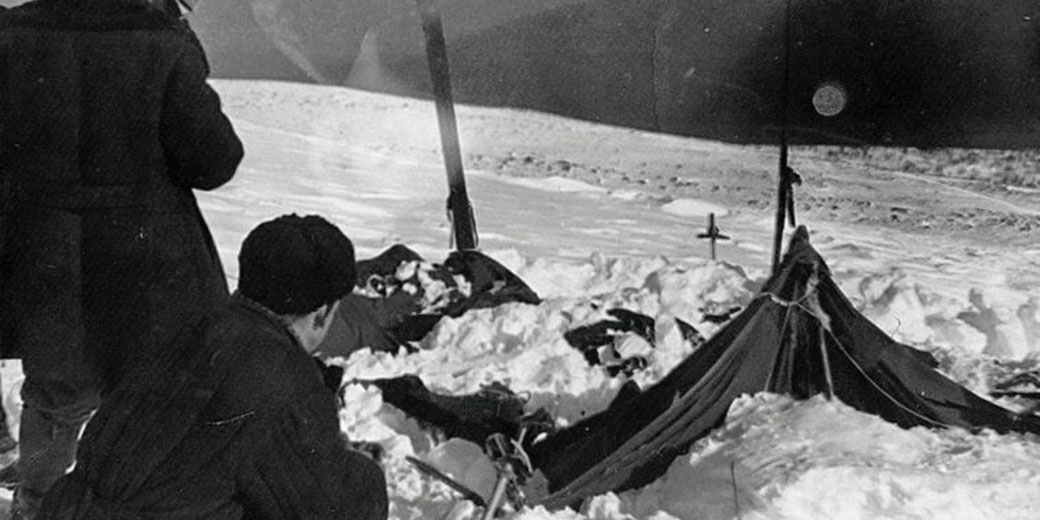
On 26 February, searchers first discovered the abandoned tent partially buried in snow and, later that same day, located the first bodies.
Immediately, the scene raised concerns, since the tent had been cut open from the inside, which suggested that the hikers had attempted to escape rather than open it normally.
Inside, essential items such as clothing and boots along with their provisions lay untouched, and nine pairs of footprints led calmly down the slope toward the tree line, nearly a kilometre away.
At the forest’s edge, the bodies of Yuri Doroshenko and Yuri Krivonischenko lay near a small campfire beneath a cedar tree.
Both men wore only underwear and socks, and burns on their arms and legs, which indicated that they had been close to the fire for some time.
Investigators found broken branches above them, likely caused by someone climbing the tree either to escape or to search for the tent in the darkness.
Roughly 300 to 600 metres uphill from the tree line, search teams recovered the bodies of Igor Dyatlov, Zinaida Kolmogorova, and Rustem Slobodin.
Their positions suggested they had been attempting to return to the tent. Each showed signs of minor injuries and hypothermia, with Slobodin’s skull showing a small fracture.
None of the wounds alone could explain their deaths.
A more sinister discovery
In early May, when the snow had begun to melt, searchers eventually located the remaining four bodies: Lyudmila Dubinina, Semyon Zolotaryov, Alexander Kolevatov, and Nikolai Thibeaux-Brignolles, who were buried in a ravine about 75 metres deeper into the forest.
Unlike the injuries of the others, their injuries were quite severe. Dubinina had crushed ribs and internal bleeding, and her eyes, tongue, and part of her lips were missing.
Zolotaryov also had fractured ribs and massive internal trauma, while Thibeaux-Brignolles had suffered a fatal skull fracture.
Kolevatov’s wounds were less extensive but still unexplained.
Significantly, no external wounds matched the internal damage. The injuries resembled the kind typically caused by high-impact pressure, such as in a car crash, but no signs of blunt force appeared on the skin or surrounding snow.
Medical experts have proposed that the soft tissue loss seen in Dubinina’s case could have resulted from post-mortem scavenging or decomposition in the damp environment of the ravine.
Investigators noted that the bodies had attempted to construct a makeshift shelter from cedar branches and had taken clothing from the earlier victims.
For example, Dubinina wore Krivonischenko’s burnt trousers.
Even more puzzling, Dubinina’s and Zolotaryov’s clothing carried small amounts of radioactive contamination that measured up to 5,000 decays per minute on some items.
Although not strong enough to cause acute radiation poisoning, the presence of radioactive material raised questions that the original investigation could not answer.
Authorities reported no visible military debris or direct evidence of weapons testing in the immediate vicinity, though some later researchers suggested possible parachute mine testing or radioactive dispersal in the wider region.
The Soviet investigation
Lead investigator Lev Ivanov, who was a seasoned criminal prosecutor, had opened a criminal case shortly after the first bodies were found.
However, by May, with no evidence of foul play or outside interference, the case closed with a vague conclusion that the group had died from “a compelling natural force.”
The final report used the phrase стихийная сила, which translates literally as “elemental force.”
Internally, Ivanov appeared unconvinced by this phrasing, later hinting in interviews that unexplained military concerns or pressure may have influenced the outcome, though his comments remained cautious and indirect.
Access to the site became restricted, and many documents were classified, leaving researchers with limited information for years.
Importantly, the final report ruled out murder, hypothermia alone, or animal attacks.
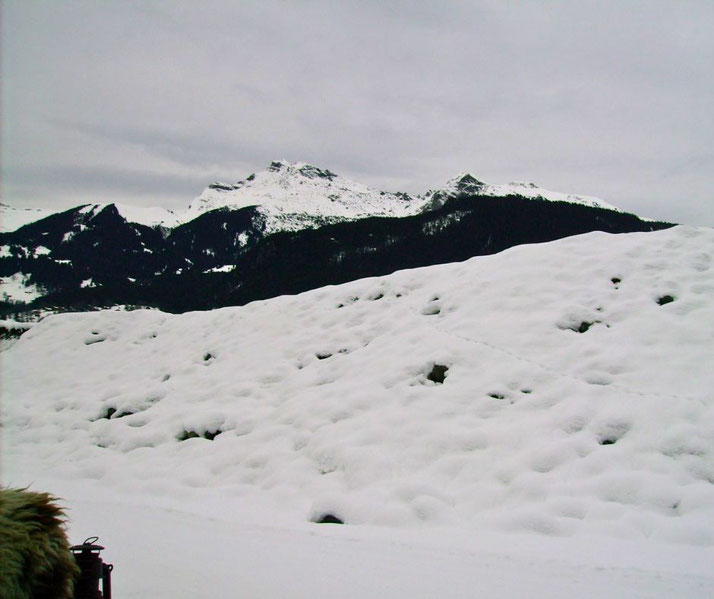
Though avalanche had been suggested early on, the slope appeared too shallow for a typical snow slide, though later studies argued that its 20 to 30 degree gradient fell within the lower range of slab avalanche potential, and the tent’s partial visibility contradicted that possibility.
Moreover, the pattern of injuries among the final four victims did not match known avalanche trauma, which typically results in asphyxiation or crushing with visible external injuries.
No neighbouring hikers reported adverse conditions that night, and no avalanche debris was visible in the area.
As news of the tragedy trickled out in Soviet newspapers, few outside Sverdlovsk paid attention.
Only in the post-Soviet years, when the files began to surface under glasnost in the late 1980s and further restrictions lifted throughout the 1990s, did public interest grow and new investigations begin.
Theories and speculation
Since the partial release of materials from the original investigation, researchers have proposed a wide array of explanations.
In recent years, a modified avalanche theory has received support after a 2020 study published in Communications Earth & Environment, which used computer modelling adapted from Disney’s Frozen animation software to demonstrate how a slab of compacted snow might have struck the tent.
According to this theory, the pressure from such a slab could have caused blunt internal trauma without displacing the entire structure or leaving much surface evidence.
However, sceptics point out that the tent remained partially standing, no signs of heavy snow were found at the site, and the footprints indicated a calm, rather than panicked, departure.
Additionally, the massive internal injuries seen in Zolotaryov and Dubinina would likely have prevented them from walking any distance, yet both had moved far from the tent.
Some researchers have proposed katabatic winds, strong, sudden downhill gusts which are known to flatten camps and cause panic, as a potential cause.
Although possible in some conditions, such winds usually leave patterns of environmental damage, which investigators never recorded.
Another theory involves infrasound caused by wind interacting with the surrounding ridgelines.
In rare cases, low-frequency vibrations may cause psychological distress, though no clear evidence of such an event at Dyatlov Pass has ever been found.
Alternatively, some theorists have focused on the political situation. Given the Cold War setting, speculation has included secret weapons testing, accidental exposure to chemical agents, or an encounter with rogue military units.
However, the search teams found no military waste, shell fragments, or chemicals at the scene.
Radiation, while present on some clothing, did not appear on surrounding objects or terrain.
More speculative claims have suggested alien involvement or an attack by cryptids such as the yeti, which gained traction in some tabloid coverage during the 1990s, but those explanations, although colourful, lack any physical basis.
A continuing puzzle
Over sixty years later, the Dyatlov Pass incident is still unresolved, and official reinvestigations have leaned toward a natural cause such as a slab avalanche or wind-induced panic.
Unfortunately, these models fail to account for all physical evidence. The location of the bodies, the absence of severe external injuries, the missing soft tissue, and the presence of radioactive material continue to raise more questions than they answer.
As such, no definitive theory has ever matched every detail found at the site. The hikers had prepared meticulously, and their decision to flee into sub-zero temperatures without shoes or coats still defies survival logic.
The lack of eyewitnesses and the limited scope of the original investigation have left modern researchers to reconstruct events using photographs, weather models, forensic reports, and a handful of official files.
The area where the incident occurred was later renamed “Dyatlov Pass” by Soviet authorities in honour of the group’s leader.
Within the stillness of Kholat Syakhl, where snow again covers the ground each winter, the Dyatlov Pass incident continues to be one of the most chilling and perplexing unsolved events of the twentieth century.