
The miracle at Dunkirk: How Operation Dynamo saved over 300,000 lives from Hitler's forces
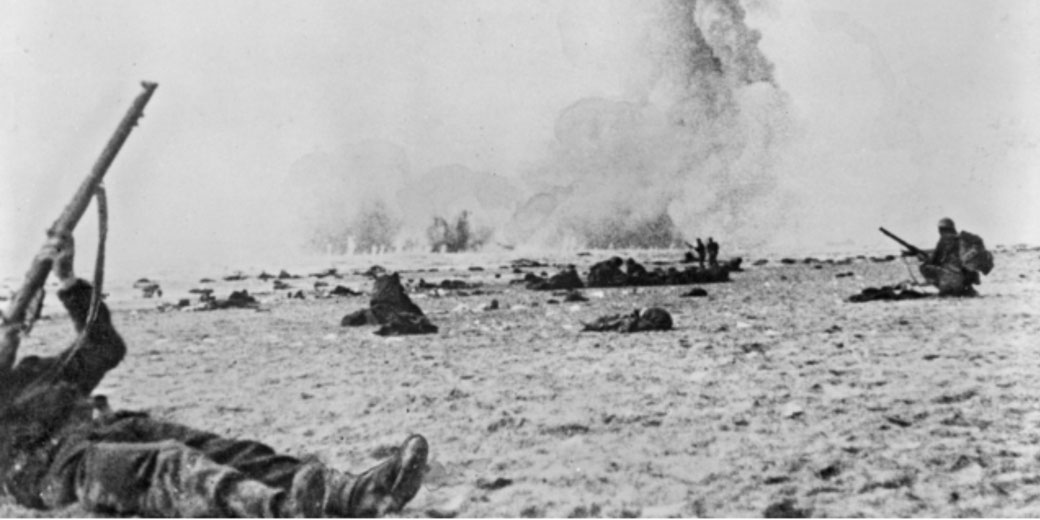
By late May 1940, the Allied campaign in France had collapsed into a desperate retreat, as German Panzer divisions sliced through northern France and surrounded British and French forces near the coastal town of Dunkirk.
On the beaches, over 300,000 soldiers faced almost certain destruction or captivity. German air and ground attacks pressed in from all sides, and this left the Allies with no land route home and no time for conventional withdrawal.
However, over nine days, a hastily coordinated evacuation known as Operation Dynamo, which used warships, lifeboats, fishing trawlers, and civilian ferries, transported hundreds of thousands across the English Channel under fire.
The event stunned observers and prevented the complete destruction of the British Expeditionary Force, which would have crippled Britain’s ability to continue the war.
How the British army walked into a trap
After Britain declared war on Nazi Germany on 3 September 1939, it began preparing for conflict on the western front by sending the British Expeditionary Force (BEF) to support French armies along the Franco-Belgian border.
Many officers had expected the war to develop into a long stalemate, much like the First World War, and had believed that France’s heavily fortified Maginot Line would prevent a rapid German breakthrough.
During the winter and early spring of 1939–40, very little significant fighting occurred in the west, and military planners had remained focused on defensive operations.
Then, on 10 May 1940, Germany launched a rapid invasion of Belgium and the Netherlands, with German forces entering Luxembourg at the same time.
As expected, the Allies responded by sending forces forward to confront the German advance in Belgium.
At the same time, German Army Group A, under General Gerd von Rundstedt, pushed armoured divisions through the Ardennes Forest, a region that the Allies had considered unsuitable for tanks, and crossed the Meuse River at Sedan.
The operation followed a strategy known as the “sickle cut,” developed by General Erich von Manstein and executed by armoured commanders like General Heinz Guderian, whose forces advanced with speed and coordination.
Within ten days, German forces had driven westward and reached the English Channel, cutting off the BEF and parts of the French Army from the rest of Allied forces to the south.
As a result, the Allied forces in Belgium and northern France found themselves effectively trapped in a pocket between the advancing Germans and the sea.
Attempts to launch coordinated counterattacks failed, and Allied divisions fell back in disorganised stages toward Dunkirk.
General Lord Gort was commander of the BEF and recognised that breaking the encirclement would not succeed and began preparing for evacuation.
German divisions closed in from the south, and pressure mounted with every passing hour, yet Dunkirk remained the only major accessible port for a mass withdrawal.
Controversially, Adolf Hitler approved a temporary halt to the advance of German panzer divisions between 24 and 26 May, a decision originally proposed by Generals von Rundstedt and von Kluge, who feared overextension and needed time to strengthen their positions.
This delay gave the Allies a critical window to reinforce Dunkirk’s defences and begin organising the evacuation.
What was Operation Dynamo?
At Dover Castle, inside an underground command centre built during earlier conflicts, Vice Admiral Bertram Ramsay received orders on 26 May to take charge of the evacuation.
He named the effort Operation Dynamo after the dynamo room inside his command post.
Ramsay had very little time to prepare and very few available vessels, which meant that he had no real guarantee that the operation could succeed.
Nevertheless, he understood that even a partial evacuation would preserve some of the BEF and prevent a total military disaster.
Initially, Royal Navy vessels carried out the evacuation, and they used destroyers and minesweepers along with requisitioned passenger ships.
However, Dunkirk’s harbour suffered heavy damage from German bombing raids, and much of the coastline consisted of wide, shallow beaches where large ships could not approach.
As such, many troops had no means of boarding rescue vessels directly. Ramsay’s staff recognised that without smaller boats to ferry men between the beaches and the larger ships offshore, the evacuation would stall.
To meet this challenge, the Admiralty issued an urgent appeal to civilian boat owners across Britain.
Many of these craft, which were privately owned fishing boats, sailing yachts, lifeboats, and river ferries, were later known as the “Little Ships of Dunkirk.”
While some were crewed by volunteers, others were operated by Royal Navy personnel.
Importantly, their shallow draughts allowed them to load soldiers directly from the surf and navigate the restricted waters close to shore.
Over the following days, the growing flotilla allowed the evacuation to scale up and operate almost continuously despite Luftwaffe attacks and rough sea conditions.
Specific examples such as the paddle steamer Medway Queen, which reportedly rescued 7,000 men, and the 15-foot fishing boat Tamzine were important because the latter was the smallest vessel involved.
Why were British civilians called on to help?
Large naval ships required deep harbours and piers, but Dunkirk’s waterfront had been damaged, and much of the surrounding shoreline was unsuitable for boarding directly.
Soldiers often had to queue in waist-deep water for hours while waiting for rescue. Since large ships could not safely approach the beach, Royal Navy commanders needed a fast solution to move thousands of men from the sand to deeper waters.
Soon, the Admiralty turned to the civilian population, and boat owners from ports and coastal towns along the Thames and the Solent, and from the English south coast, began contributing their vessels.
Some owners insisted on navigating the Channel themselves, while others handed their boats over to the Navy.
More than 700 small craft ultimately participated in total, with some estimates rising above 800 depending on how support vessels are counted, and this number included pleasure cruisers and tugs as well as river launches.
Many of these vessels, which often made multiple crossings in very dangerous conditions, carried wounded or shell-shocked men back to British ports such as Ramsgate, Dover, and Margate.
The Ministry of Shipping and local maritime authorities, which coordinated these efforts, relied on around 200 civilian volunteers who piloted their own vessels across the Channel.
Despite their lack of armour or weaponry, the small civilian boats proved essential.
They transferred soldiers to destroyers and transports anchored offshore, and they also rescued isolated groups directly and towed liferafts packed with survivors.
Their presence on the water became a powerful public image of determination and national resolve.
Their efforts enabled the evacuation to continue even when infrastructure failed, and the Little Ships helped turn what could have become a massacre into a rescue mission.
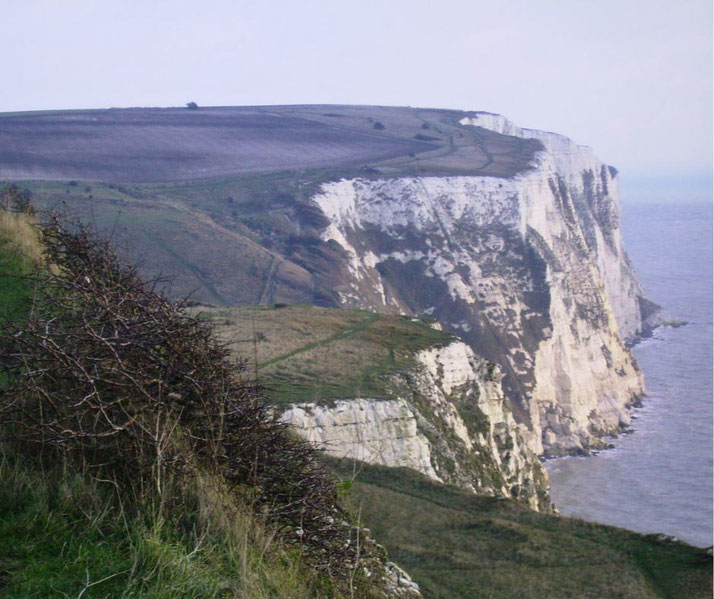
The life-threatening challenges facing the evacuees
German commanders, who focused their fire on the beaches and ships, at several points nearly crippled the evacuation.
The Luftwaffe conducted repeated raids using Junkers Ju 87 Stuka dive bombers and Heinkel He 111 medium bombers, which ignited fuel dumps and destroyed piers, and they set ships alight.
Troops waiting on the beaches had little shelter and often spent hours in open sand exposed to bombing runs and machine-gun attacks from low-flying fighters.
RAF squadrons from No. 11 Group flew protective sorties over Dunkirk, shooting down approximately 198 enemy aircraft, but suffering around 145 losses themselves.
Meanwhile, German artillery batteries located south of the perimeter shelled evacuation points with increasing intensity.
Men who waited in long queues often broke formation when shells began landing nearby, and officers struggled to maintain order in worsening conditions.
In many cases, wounded soldiers received only basic aid before they were loaded onto boats, and some died while waiting to board.
Others tried to swim to ships offshore but drowned or were caught in burning oil slicks from damaged vessels.
Worsening weather and tidal shifts complicated the situation. Sudden changes in wind sometimes disrupted small craft operations and capsized overloaded boats.
Many rescue attempts had to be called off due to rough surf. Even so, volunteer crews pressed on, and they repeatedly went back into danger to recover as many as possible.
Each soldier saved from the beaches marked another success, though the risk of failure remained constant.
How the evacuation happened...
Evacuation began during the evening of 26 May, but initial numbers fell short of expectations.
On the first night, under heavy fire and poor weather, fewer than 8,000 troops were evacuated.
Over the next two days, as organisation improved and more small vessels arrived, the daily total increased.
By 30 May, nearly 54,000 had been rescued in a single day. Still, the perimeter continued to shrink, and every successful rescue depended on careful timing and firm discipline, and it demanded sheer courage.
The East Mole was a long narrow breakwater that projected into the harbour and unexpectedly became one of the most important features of the operation.
Although not built for loading troops, the Mole allowed destroyers and transports to moor and take on soldiers at a much faster rate than beach landings allowed.
Ramsay later estimated that nearly three-quarters of all evacuated soldiers embarked from the East Mole, highlighting its unplanned but vital contribution to the effort.
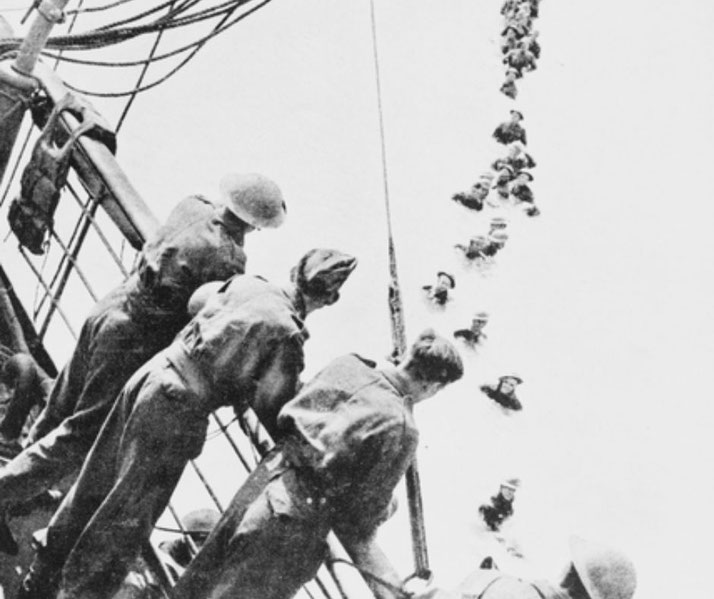
Losses mounted day after day. On 29 May, HMS Grenade exploded at the Mole after being hit during an air raid, then, on 30 May, HMS Wakeful was struck by a torpedo and sank rapidly with the loss of nearly 700 lives.
HMS Basilisk and HMS Keith were also lost to bombing while evacuating men from the beaches.
On 1 June, heavy losses continued, though the worst maritime disaster occurred later, during Operation Aerial.
The passenger liner RMS Lancastria had been filled with troops who were retreating near Saint-Nazaire and was bombed on 17 June and sank in minutes with an estimated 4,000 casualties.
Although RAF fighters flew protective patrols, they could not prevent all attacks due to the limited range of their aircraft and the number of German sorties.
During the night of 3–4 June, the final evacuation phase began. Rearguard units, which were mostly French, held off German advances for as long as they could until the last possible moment.
These included elements of the French First Army, which fought with determination to maintain the perimeter.
The last British ship left at 3:40 a.m. on 4 June, and in total Operation Dynamo rescued 338,226 men.
This total included approximately 123,000 French and 16,000 Belgian soldiers.
Equipment losses remained enormous, as British forces abandoned more than 2,000 guns and 85,000 vehicles.
In addition, they left behind 500,000 tons of supplies, along with most of their tanks and aircraft deployed in France, though Fighter Command's core strength in Britain remained largely intact.
Yet the saving of the army’s personnel meant Britain could continue the war.
Additional evacuations of Allied troops from western French ports continued under Operation Cycle and Operation Aerial in the weeks that followed.
Why the Dunkirk evacuation was so important
Had the BEF been destroyed or captured, Britain would have faced the rest of the war without most of its trained soldiers.
Many senior military planners feared that a complete loss would force the government into peace negotiations or leave Britain almost defenceless against invasion.
By rescuing hundreds of thousands of men, Operation Dynamo had given Britain the means to reorganise its army and defend the home front, and it allowed the country to continue fighting.
Prime Minister Winston Churchill, in his speech to Parliament on 4 June, acknowledged the extraordinary achievement but warned the nation not to confuse survival with victory.
He reminded listeners that Britain still faced a powerful enemy and that the war had only just begun.
His call to “fight on the beaches” stirred the public, but his recognition that wars are not won by evacuations provided necessary perspective.
Outside Britain, the evacuation influenced foreign views of the war. Many reports in American newspapers praised the courage of the civilian sailors and the determination of the rescued troops.
Photographs and newsreels captured the human cost and the emotional weight of the event, which led to increased sympathy for Britain abroad.
The failure of the German army to destroy the BEF marked one of the first strategic mistakes of the Nazi campaign.
Although the beaches of Dunkirk had become a trap, the efforts of thousands, both military and civilian, transformed disaster into survival.
The men who were rescued there would form the backbone of future Allied campaigns.
Their escape made continued resistance possible and ensured that Britain would remain in the fight.