
Who were the Dambusters?
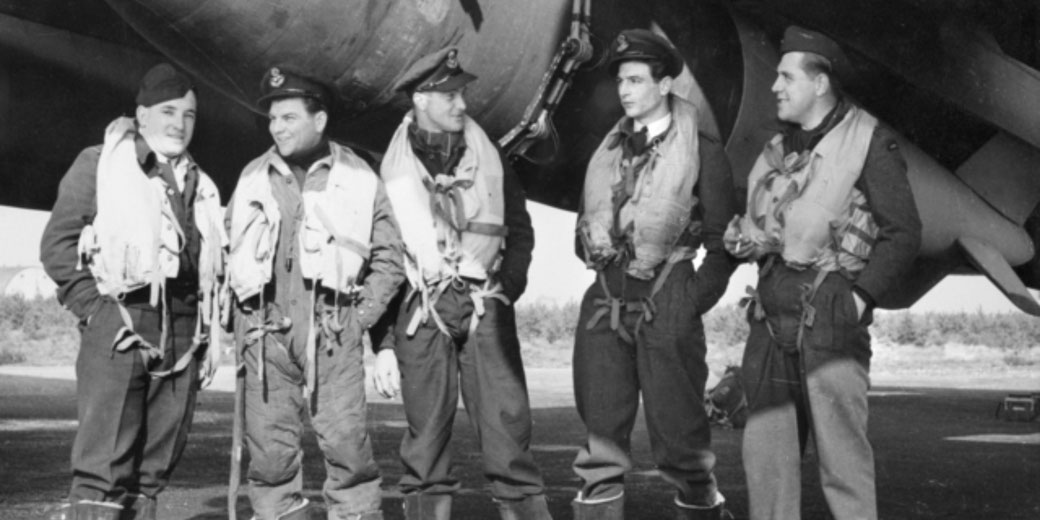
By 1943, the British Air Ministry had begun targeting key infrastructure within Nazi Germany that directly supported the German war machine.
One such target, in particular, included the very large hydroelectric dams of the Ruhr Valley, which powered arms factories and controlled river systems in order to support industrial output vital to the Nazi regime.
To destroy them, the RAF specifically formed No. 617 Squadron and developed an experimental bomb that could skip across water and strike with deadly accuracy, and this new weapon created one of the most daring air raids of the Second World War.
Formation of No. 617 Squadron
On 21 March 1943, the Royal Air Force created a new squadron with a single goal: to attack targets that people had previously considered too hard to destroy with conventional bombing.
Wing Commander Guy Gibson, already a decorated veteran with over 170 operations to his name, received the order to lead the unit.
At only 24 years of age, he had earned both the Distinguished Service Order and the Distinguished Flying Cross, and his leadership quickly turned the squadron into a tight-knit and highly trained group.
Prior to this command, Gibson had completed two full operational tours in which he flew Hampdens, Manchesters, and Lancasters.
To build the unit, Gibson selected experienced aircrew from several Lancaster squadrons across Bomber Command.
Pilots, navigators, wireless operators, engineers, bomb aimers, and gunners, who each had long operational records, transferred to RAF Scampton in Lincolnshire.
There, under strict secrecy, they began especially demanding low-level flying exercises and bombing drills over British reservoirs, including Derwent and Eyebrook, with additional night navigation training carried out over the same waters.
The precise nature of their mission remained concealed, but their repeated rehearsals over water, in which they used inert practice bombs, hinted at a special objective.
No. 617 Squadron later relocated to RAF Coningsby in August 1943, but its original training and launch of the mission had been based at Scampton.
Eventually, crews learned that their role would require a very high level of skill.
Success demanded very accurate flying and close coordination between every crew member under conditions of extreme danger.
Every detail, from altitude to timing, had to be exact.
Barnes Wallis and the Bouncing Bomb
To make the mission possible, British engineer Barnes Wallis designed a weapon that was unlike anything used before.
Known as the “Upkeep” mine, the device was cylindrical and required backspin, altitude control, and high speed to bounce across water toward its target.
Early in 1943, Wallis tested the concept with models and prototypes over reservoirs, and he eventually perfected a bomb that could skip over water like a stone and detonate against a dam wall at depth by means of a hydrostatic fuse.
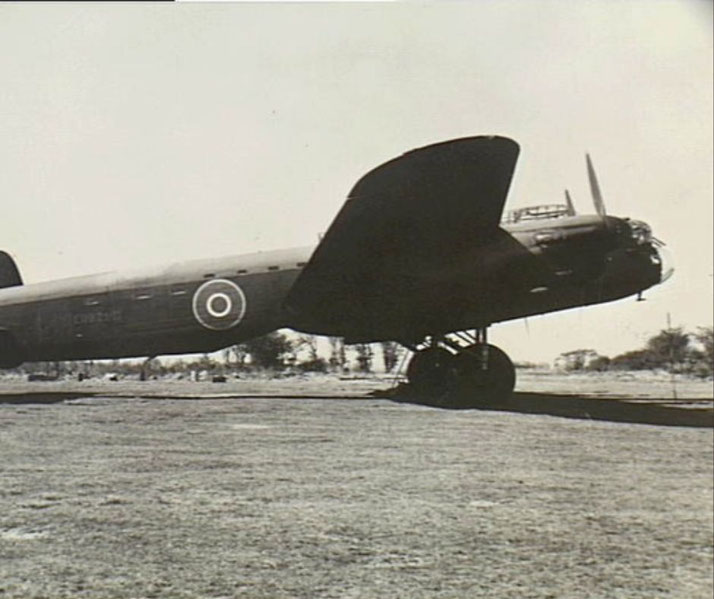
To fit the weapon, engineers stripped the Lancaster B Mk III aircraft of their bomb bay doors and, in some cases, removed the mid-upper turrets to improve stability and reduce weight.
Most aircraft retained their rear turrets for defensive purposes. They fitted a V-shaped frame to cradle the spinning bomb, which had to rotate at precisely 500 revolutions per minute.
Two downward-facing spotlights installed beneath the fuselage converged at exactly 60 feet, and this arrangement enabled pilots to maintain the required altitude during the bombing run.
As a result, pilots and bomb aimers had to judge distance and height in relation to their speed with split-second accuracy.
Crews trained relentlessly under low-light conditions, and they flew over lakes and mock targets to ensure they could replicate those requirements under enemy fire.
The modified aircraft became known as the Avro Lancaster B Mark III (Special), also referred to as the Type 464 Provisioning, designed specifically for the Upkeep mission.
Strategic targets in the Ruhr Valley
German industry depended very heavily on three dams that were located in North Rhine-Westphalia: the Möhne, Eder, and Sorpe.
The Möhne Dam had been completed in 1913 and stood 40 metres high and held back a reservoir that supplied water to steelworks and coal plants, along with city water systems throughout the Ruhr.
The Eder Dam was less protected and controlled the Weser River and provided hydroelectric power to nearby towns and military sites.
The Sorpe Dam differed structurally, as it consisted of compacted earth and concrete, which made it more difficult to breach.
Importantly, these dams supported factory operations and also helped the movement of raw materials and energy across western Germany.
A breach could cause downstream flooding, wreck transport networks, and interrupt energy production for weeks.
For that reason, the German military stationed flak batteries and laid torpedo nets in the surrounding lakes.
However, low-level flight offered a way to avoid radar detection, and the bomb’s bouncing design could overcome underwater barriers.
Execution of Operation Chastise
At 9:28 p.m. on 16 May 1943, nineteen Lancaster bombers of No. 617 Squadron took off from RAF Scampton.
The crews, which had been divided into three waves, flew low across the North Sea and navigated carefully over the Dutch and German countryside to reach their assigned targets.
Some aircraft crashed en route or encountered flak, but most reached the dams.
Gibson’s aircraft led the attack on the Möhne Dam, drawing fire while the following crews lined up for bombing runs.
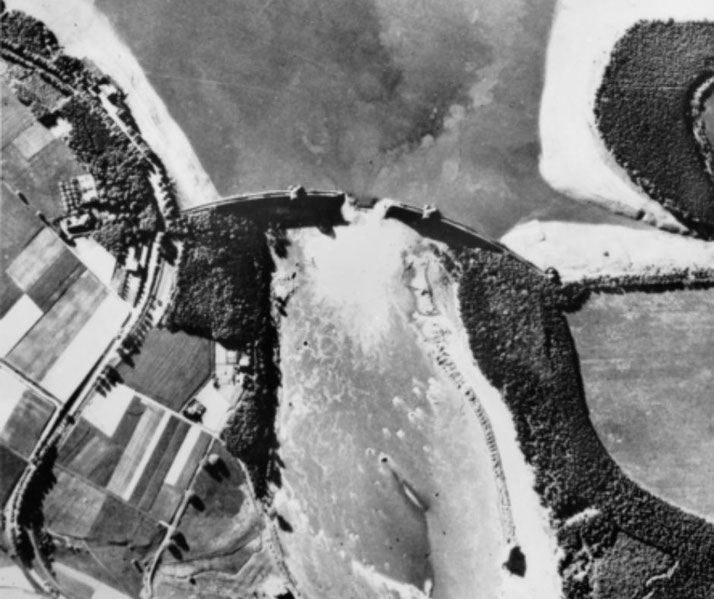
After several failed drops, Flight Lieutenant David Maltby released a bomb that struck the dam squarely, causing a large breach that released millions of tonnes of water into the valley below at 00:56 a.m.
The Eder Dam, which lacked heavy defences but was located in difficult terrain, also broke open after repeated attacks.
Flight Lieutenant Les Knight delivered the successful strike at around 2:15 a.m.
Meanwhile, the Sorpe Dam resisted all attempts. Its design and thickness absorbed the impact of multiple bombs, although cracks in the structure forced the German authorities to carry out urgent repairs.
The third wave, led by Flight Lieutenant Joe McCarthy, conducted the Sorpe assault.
During the operation, eight aircraft failed to return. Out of the 133 airmen who participated, 53 lost their lives.
Several of the fallen came from Australia, Canada, and New Zealand, and others from the United States and the Caribbean, and this pattern highlighted the international make-up of the RAF bomber crews.
Consequences and historical significance
Flooding from the breached dams destroyed homes, factories, roads, and bridges.
An estimated 1,200 to 1,600 people died, and this figure included approximately 749 Ukrainian and Eastern European forced labourers housed in barracks downstream.
Power generation and industrial production dropped noticeably soon after the raid, and some German plants experienced extended delays.
To prevent future attacks, the German high command moved thousands of workers and large amounts of concrete to strengthen other dam defences.
At home, the mission received wide publicity, and newspapers praised the technical brilliance of the bomb and the bravery of the crews.
Churchill described it as a “brilliant feat of arms,” and King George VI awarded Gibson the Victoria Cross.
The raid, while not permanently crippling to German industry, forced the Nazi regime to reallocate vital resources and helped to boost morale across Britain and its Commonwealth.
Later assessments raised moral questions about the civilian death toll and questioned the long-term military value of the operation.
Over the next two years, No. 617 Squadron continued to carry out special bombing missions, and they used Wallis’s newer “Tallboy” and “Grand Slam” bombs and targeted heavily protected sites, submarine pens, railway viaducts, and even the German battleship Tirpitz, which they helped sink in Tromsø fjord on 12 November 1944.
They also destroyed the Saumur railway tunnel and the Bielefeld viaduct. The latter attack was carried out on 14 March 1945 with a Grand Slam bomb, which was the first successful operational use of that weapon.
These missions further confirmed their reputation for very accurate strikes against difficult targets.
Public interest in the raid grew even further after Paul Brickhill’s 1951 book The Dam Busters and the 1955 film adaptation, which fixed the operation in popular memory.