
Understanding the Cold War: What is the difference between capitalism and communism?
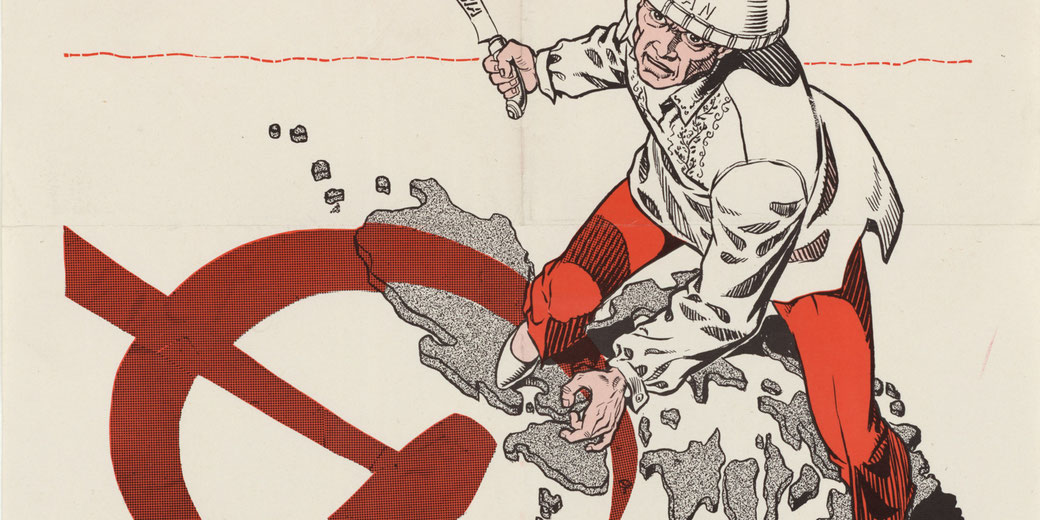
After the Second World War had ended in 1945, two rival powers, each with a conflicting vision for how societies should be structured, began a global struggle that influenced nearly every continent for the next forty years.
The United States promoted a model of individual liberty and private enterprise within a multi-party political system, while the Soviet Union advanced a system of centralised control and economic collectivism within a one-party state.
As tensions rose between them, each superpower relied on propaganda, military alliances, and secret intelligence work to expand its influence and discredit the other, which turned the Cold War into a worldwide contest that affected governments and economies, as well as main ideas about politics and economics.
The basics of communism
According to Karl Marx and Friedrich Engels, class struggle determined the course of human history.
They argued that industrial capitalism produced extreme inequality because it allowed a small elite to profit from the labour of the working class.
To correct this imbalance, they proposed the abolition of private ownership and the establishment of a classless society, where all property would be shared, and resources shared out according to need.
After the Bolsheviks had taken power in Russia in 1917, their leaders began to restructure the economy and political system to reflect Marxist ideas.
Lenin argued that a vanguard party should lead the revolution and establish a dictatorship of the proletariat.
In 1922, the Soviet Union was formed as the first state built on communist principles.
Under this system, all land and factories, along with financial institutions came under government control, and production targets replaced market signals.
Central planners working under agencies such as Gosplan determined what goods should be produced and how much should be made, as well as where they should be distributed.
Under Joseph Stalin, the Soviet state expanded its control over daily life by enforcing political conformity and suppressing dissent, with private enterprise removed from every sector of the economy.
From 1928 onwards, Stalin implemented a series of Five-Year Plans that aimed to rapidly industrialise the USSR, often at the expense of human life.
Forced collectivisation of agriculture caused widespread famine, particularly the 1932–33 Holodomor in Ukraine, which many historians interpret as a man-made disaster that resulted from Soviet policy.
Some scholars also argue that it constituted a deliberate act of political repression against the Ukrainian population.
As a result, individuals worked in state-run industries, lived in government-assigned housing, and relied on rationing and planned distribution for their basic needs.
Although the regime promised equality and full employment, shortages of consumer goods and living standards that fell became widespread.
The basics of capitalism
By contrast, capitalist economies developed gradually across Western Europe, particularly from the seventeenth to the nineteenth centuries, as private property rights and commercial exchange supported by industrialisation created new economic opportunities.
Thinkers like Adam Smith wrote the 1776 work "The Wealth of Nations", which set out the main ideas behind capitalism, and argued that individual self-interest would lead to general prosperity.
In capitalist systems, individuals or corporations generally own the means of production, and markets, driven by supply and demand, determine which goods are produced and at what price.
Because producers compete to attract consumers, they invest in new technologies, cut waste, and respond quickly as needs changed.
During the Industrial Revolution, factories and financial markets expanded in countries such as Britain and France, while the United States became a leading example of capitalist development.
Over time, governments introduced limited regulation and social reforms, including trade unions and workplace safety laws, along with public education.
In the twentieth century, especially after the Great Depression, economists such as John Maynard Keynes called for government intervention to stabilise markets and prevent mass unemployment.
However, the underlying principle of capitalism remained unchanged: economic freedom allowed individuals to pursue profit and accumulate wealth, then decide how to use their resources.
As a result of this system, capitalist countries often offered more consumer choice and higher standards of living for the middle class, alongside rapid innovation in science and technology.
However, they also experienced periodic recessions, high income inequality, and limited protections for those without marketable skills or capital.
Still, supporters of capitalism argued that it rewarded effort and allowed personal freedom, while critics pointed to exploitation and economic instability, as well as corporate influence over politics.
Why were they in conflict?
At the end of the war, both the United States and the Soviet Union claimed to represent the future of civilisation.
Soviet leaders insisted that communism would free workers from exploitation, while American officials warned that it imposed severe rule and stifled human rights.
As each side expanded its influence, suspicion hardened into bitter distrust.
Soon after the war, Stalin established communist governments across much of Eastern Europe, ensuring Soviet control from Poland to Bulgaria.
In 1946, Winston Churchill gave his famous "Iron Curtain" speech, declaring that Eastern Europe had fallen under Soviet domination.
That same year, American diplomat George Kennan sent the "Long Telegram," outlining the threat posed by Soviet expansion and recommending a strategy of containment.
In response, US policymakers introduced the Truman Doctrine in 1947, offering military and financial aid to countries resisting communism.
Shortly after, the Marshall Plan injected American capital into Western Europe to rebuild economies and strengthen democratic institutions.
Tensions escalated further as military alliances solidified. NATO, created in 1949, united Western nations in collective defence.
The USSR answered with the Warsaw Pact in 1955, binding Eastern European countries into a Soviet-led military alliance.
Each development reinforced the belief that coexistence would be temporary, and that one system must eventually prevail over the other.

Economic differences
Within the Soviet system, central planners held authority over nearly every economic decision.
Each five-year plan set production quotas, prioritised strategic industries, and dictated how resources should be distributed between agriculture and industry, as well as infrastructure.
Because prices were fixed by the state, there was little incentive to improve efficiency or respond to shortages.
Many goods that factories produced often did not meet consumer needs, and black markets developed to fill the gaps left by official shortages.
In capitalist systems, economic decisions occurred across a many different private groups and individuals.
Investors chose where to invest their money, business owners decided how to organise production, and consumers shaped demand by choosing which goods and services to purchase.
If a company failed to satisfy its customers, it went out of business, which created both risk and a sense of energy and change.
Eventually, the results of these basic differences became clear. In communist states, factories often produced goods that people did not want or need, while food shortages and long waiting lists for housing became common.
In contrast, capitalist economies (particularly in West Germany and Japan, together with the United States) often delivered rapid growth and innovation alongside living standards that rose during the 1950s and 1960s.
For example, Soviet GDP growth reached 5–6% annually in the 1950s, but much of it came from heavy industry rather than consumer satisfaction, whereas capitalist states prioritised both output and demand.
Differences in government structures
The Soviet Union and its satellite states followed a one-party model in which the Communist Party held complete control over politics.
Article 6 of the 1977 Soviet Constitution formally set out this control. Although constitutions and elections existed on paper, candidates were chosen by the party, and no rival parties were allowed.
In practice, citizens had few legal means to challenge decisions or remove leaders.
Across the capitalist world, democratic institutions operated on ideas of political competition.
Governments consisted of multiple parties, free elections occurred at regular intervals, and courts could review legislation.
As a result, laws could be debated, criticised, and amended, and individuals had greater freedom to speak, publish, and organise politically.
For instance, British voters removed the Labour government in the 1951 election, demonstrating peaceful transfer of power.
Importantly, the Soviet government controlled political offices, and it also controlled education, media, religion, and cultural institutions.
Almost every major idea or public event had to reflect party ideology. In contrast, Western states allowed greater freedom for independent organisations and community groups, even though wealth, corporate influence, and social divisions continued to shape access to power and representation.

How the different systems influenced their people
Within communist societies, education promoted collective loyalty and loyalty to communist ideas.
Children studied revolutionary history, celebrated Marxist figures, and learned that capitalism had caused war, poverty, and imperialism.
Socialist realist art glorified workers and soldiers, along with peasants, with authors like Maxim Gorky who championed proletarian values.
Workers were usually expected to accept assigned jobs, and cultural life was restricted to themes that promoted socialist values and worker heroism.
By comparison, capitalist societies encouraged individual ambition, creative expression, and participation in public life, even though access to education and opportunity varied by race, class, and geography.
Students explored a wider range of historical interpretations, while authors and artists and musicians operated with greater freedom to criticise, parody, or experiment.
Cultural icons such as Elvis Presley and the Beatles became global symbols of capitalist consumer culture.
State-controlled economies generally provided housing and healthcare along with employment guarantees, but they restricted personal choice and rewarded political loyalty over performance.
In market economies, people moved jobs, relocated cities, and launched businesses, though many also experienced job insecurity and struggled without guaranteed services.
Both systems shaped expectations about freedom and responsibility, as well as ideas of success.
The use of diplomacy and spying by both sides
As Cold War tensions escalated, diplomacy became a public theatre, while intelligence agencies conducted secret operations behind the scenes.
The United States used the CIA to gather intelligence and undermine pro-communist movements, then support allies.
Meanwhile, the Soviet KGB infiltrated Western institutions, recruited informants, and monitored dissidents both at home and abroad.
Eventually, intelligence operations expanded into every field. American U-2 spy planes flew over Soviet territory to photograph military installations, while Soviet agents passed information on NATO weapons programs to Moscow.
Spy scandals such as the Cambridge Five and later Aldrich Ames revealed the extent of Cold War espionage.
In both camps, scientists and scholars and embassy staff often served two roles as public officials and secret agents.
Cultural diplomacy also became a battlefield. The United States sponsored music tours and art exhibitions supported by scientific demonstrations to promote capitalism’s creativity and openness.
The USSR responded with space missions and educational exchanges, alongside exhibitions that portrayed socialism as technologically advanced and socially just.
International events like the 1955 Geneva Summit and the 1975 Helsinki Accords showed periodic attempts to reduce tensions, but each superpower still sought to persuade neutral states when it presented itself as modern and peaceful and tried to project an image of prosperity.
Places where communism and capitalism clashed
In Europe, the division of Germany highlighted the physical and borders based on opposing ideas during the Cold War.
West Berlin became a small capitalist zone deep inside East Germany, and this position led to repeated confrontations.
The 1948–49 Berlin Airlift kept the city supplied after a Soviet blockade, while the 1961 Berlin Wall sealed the border to prevent East Germans from fleeing to the West.
In Asia, the Cold War turned violent when North Korea’s invasion of the South in 1950 began a three-year war that drew in both superpowers.
The Korean Peninsula remained divided after the conflict ended in a military deadlock, and in Vietnam, communist forces led by Ho Chi Minh eventually drove out the French, and then resisted American efforts to support the South.
This struggle became a long and costly war that ended in 1975 with communist victory.
Over 2 million Vietnamese and more than 58,000 Americans died in the conflict.
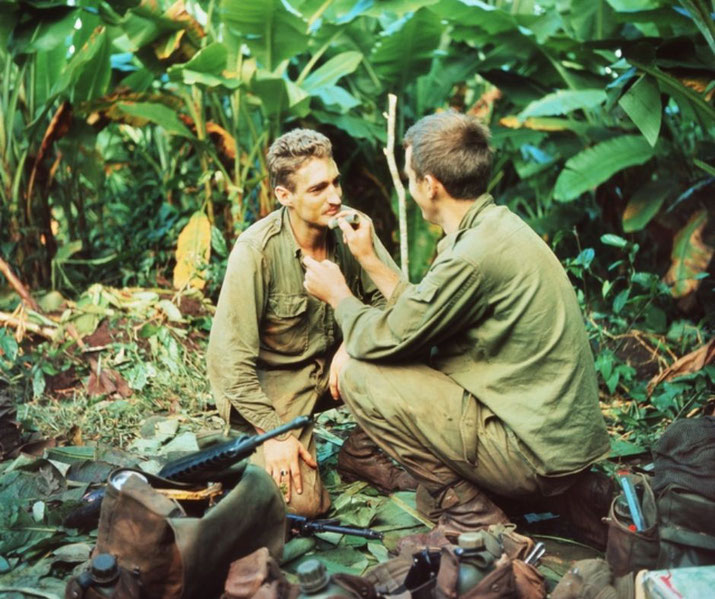
Elsewhere, Latin America became an important theatre of conflict after Fidel Castro’s revolution brought communism to Cuba in 1959.
The Soviet placement of nuclear missiles on the island in 1962 sparked the Cuban Missile Crisis, which brought the world to the brink of nuclear war.
Meanwhile, in Africa and the Middle East, civil wars and independence movements became indirect battlegrounds where the United States and Soviet Union funded rival factions, often without regard for local consequences.
From Angola to Afghanistan, Cold War rivalries transformed local conflicts into global ones, and this pattern left long-term consequences for post-colonial states.