
Australia's Pearl Harbor: The devastating bombing of Darwin in WWII
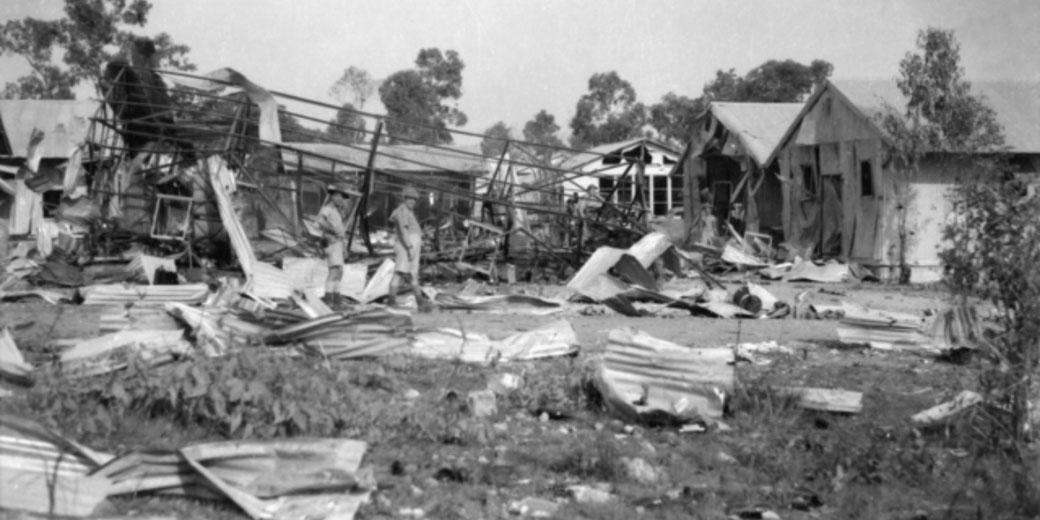
At 9:58 a.m. on 19 February 1942, Japanese carrier-based aircraft launched an organised attack against Darwin, which was the largest port in northern Australia.
Within minutes, bombs tore through ships and military installations, and also hit nearby civilian buildings, which meant that the harbour effectively turned into a war zone.
As the waterfront exploded in fire and black smoke, Australia experienced its first direct assault from a foreign power.
As such, it clearly showed just how vulnerable the continent had become.
Background to the attack
By early 1942, Japan had already seized many areas across Southeast Asia, such as Malaya and the Philippines, and also the Dutch East Indies.
After striking the American Pacific Fleet at Pearl Harbor on 7 December 1941, Japanese forces turned their attention southward to isolate Australia and control critical shipping routes.
Within weeks, they had pushed Allied forces out of key positions and had caused a major defeat with the fall of Singapore on 15 February, which led to the surrender of over 130,000 Allied troops, including 15,000 Australians.
Given its location and facilities, Darwin had become increasingly essential for Allied military logistics.
American, British, Dutch, and Australian forces had regularly used the port and nearby airfields, which helped reinforce the Dutch East Indies.
By February, the town had already hosted about 7,000 military personnel and worked as the main staging point for Allied operations in the region.
Japanese commanders decided that disabling Darwin would prevent further interference with their southern operations.
In fact, reconnaissance flights had already surveyed the area in early February.
The first wave: A city engulfed in fire
Soon after the first sirens sounded on the morning of the 19th of February, 1942, 81 aircraft from the carriers Akagi, Kaga, Hiryū, and Sōryū approached Darwin from the northwest.
These carrier-based planes formed part of a larger first wave, which together included a total of 188 aircraft.
Many of the Japanese pilots had already participated in the Pearl Harbor attack, and they flew in tight formations as they aimed their bombs carefully and hit their targets.
The Neptuna was a supply ship that had unloaded ammunition at the dock during the attack, and its explosion sent flames across the wharf and killed dozens.
Nearby, the USS Peary was an American destroyer that had lain at anchor in the harbour and tried to get underway during the attack, but was struck repeatedly and sank with over 80 crew lost.
Other ships, such as the British Motorist and Zealandia, were also hit, and vessels such as Mauna Loa either sank or burned at anchor.
At the RAAF airfield, bombs had already destroyed hangars and workshops and wrecked aircraft before any defensive action could be organised.
Pilots ran to their planes as explosions erupted across the base, but still few managed to get airborne as the nearby civil aerodrome also sustained damage.
Communications collapsed as command posts were hit, while many troops and civilians found themselves cut off or unable to receive orders.
Fuel tanks at Stokes Hill burst into flames, black smoke covered the waterfront, and terrified residents fled inland without knowing whether further waves would follow.
The lack of early warning and confusion among radar operators meant no coordinated air defence was mounted in time.
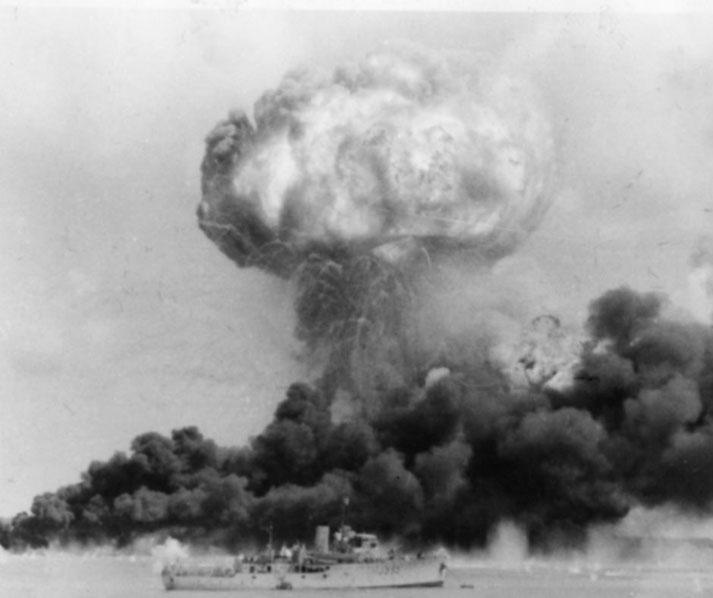
The second wave and continued devastation
At approximately 11:45 a.m., a second wave of 54 Japanese bombers arrived from bases in Timor and Ambon.
They included Mitsubishi G4M "Betty" and Ki-21 "Sally" bombers, which targeted the RAAF base and other military sites that had survived the first assault.
By then, fires already raged across Darwin, and defences remained disorganised.
More aircraft were destroyed on the ground, while barracks and fuel depots suffered direct hits.
Ammunition stores exploded and supplies were lost. The Darwin Post Office was obliterated, killing nine civilians sheltering inside.
By the time the final bombs had fallen, vast sections of the town lay in ruins, and telephone and telegraph services had been severed.
The air raids killed at least 235 people, wounded over 400, and left hundreds more displaced.
Eight ships sank in the harbour, including both Allied naval vessels and merchant ships. More than 30 aircraft had been destroyed.
Only four Japanese planes failed to return. However, their success forced Allied commanders to recognise that northern Australia lacked the capacity to defend itself against sustained aerial assault.
How did Australia respond?
Japanese planners viewed the attack as a tactical success. Although they never intended to invade the Australian mainland, they had struck a key Allied base and paralysed its operations.
For Australia, the psychological impact proved severe. Until that day, most Australians had believed that their distance from Europe and Asia made their continent safe from direct attack.
The federal government, fearing panic, responded by limiting information about the raids.
Prime Minister John Curtin gave a national radio address, yet his speech downplayed the scale of the disaster.
Neverthelss, civilian evacuations began almost immediately, which saw thousands leave Darwin by boat or overland.
Military authorities imposed martial law and began an urgent review of defence arrangements.
Confusion during the raids had exposed major failures in command structure, training, and emergency coordination.
In response, new radar systems were installed, and anti-aircraft batteries were reinforced.
General Douglas MacArthur arrived in Australia the following month, and the country became the primary base for the Allied counter-offensive in the Pacific
Over the next 21 months, Japanese aircraft launched more than 60 air raids against northern Australia, as Broome, Katherine, and Townsville also experienced attacks, yet none matched the scale of the first Darwin raid.
On 3 March 1942, the Japanese planes attack on Broome killed at least 88 people, many of whom were civilians and refugees.
The bombings forced the government to overhaul its defence strategy and reallocate resources to domestic protection.
Northern towns were militarised, and civil defence training became widespread
For decades, the extent of the attack was under-reported in official records, and postwar analysts revisited estimates of Japanese aircraft involved and total losses.
Today, Darwin honours the anniversary each 19 February as Bombing of Darwin Day.
The Darwin Military Museum at East Point preserves stories from the raids, and monuments across the city commemorate those who died