
The strange rules of court etiquette under Louis XIV

Every morning at the Palace of Versailles, around one hundred courtiers filed into a gilded bedchamber to watch King Louis XIV wake up and get dressed, competing for the honour of handing him his shirt.
Many could assume that these were eccentric personal habits, but this daily ritual was designed to be part of a calculated system of etiquette that the king used to monitor and control the French nobility for over fifty years.
From who could sit in his presence to how a courtier could announce themselves at a door, every detail of life at Versailles had a political purpose attached to it.
Why the Sun King demanded obedience
Louis XIV’s obsession with controlling his court grew from a childhood trauma that he never forgot.
In 1648, when Louis was just ten years old, a revolt known as the Fronde erupted across France as powerful nobles and members of the Parlement of Paris attempted to limit royal authority.
The uprising forced the young king to flee Paris in 1649, an experience he found deeply humiliating.
For the next four years, civil war consumed the kingdom, and the memory of nobles openly defying the crown convinced Louis that he could never allow the aristocracy to act independently again.
After Cardinal Mazarin’s death in 1661, the twenty-three-year-old Louis announced that he would govern without a chief minister, centralising all political authority around himself.
Over the following two decades, he transformed Versailles from a modest hunting lodge into the official seat of the French court, formally relocating it there in 1682.
By requiring the most important nobles to live at Versailles, Louis kept them under constant surveillance.
As the Duc de Saint-Simon later recorded in his memoirs, the king noticed every face at court and took careful note of anyone who was absent, since failure to attend was treated as a form of disloyalty.
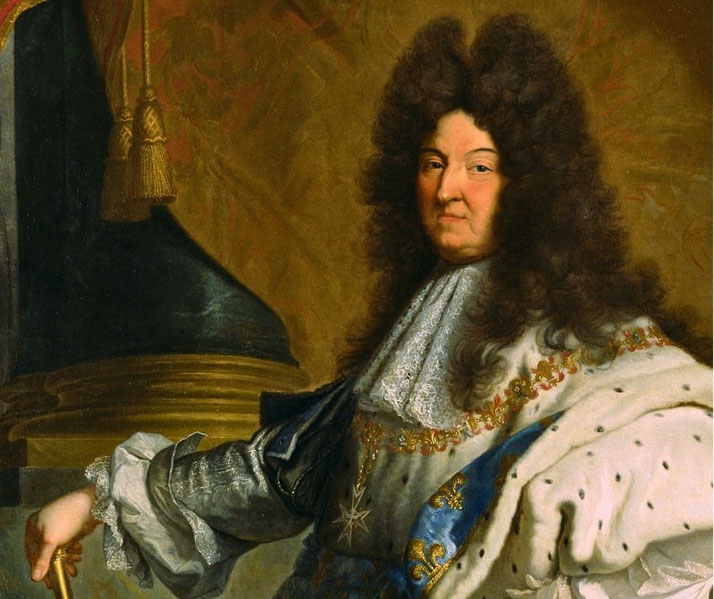
The morning political ceremony
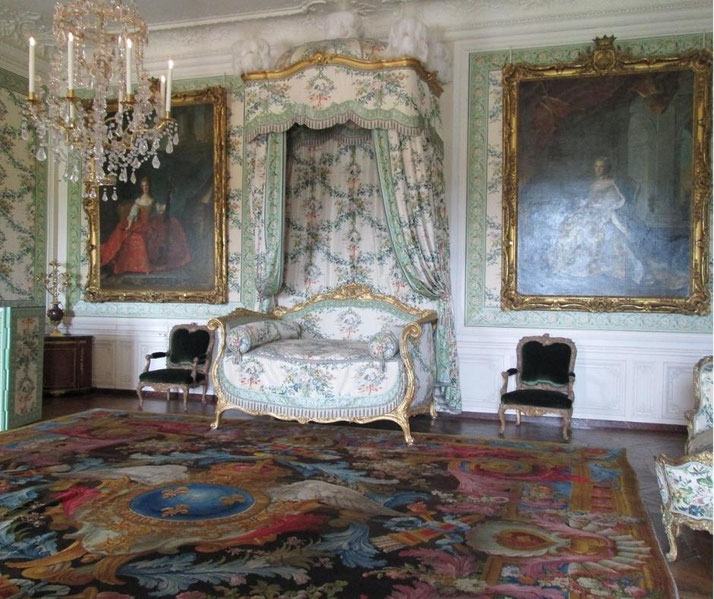
One of the strangest features of life at Versailles was the lever du roi, a formal ceremony that turned the king’s morning routine into a public performance.
At around eight o’clock, the head valet de chambre, Alexandre Bontemps (who held the post for most of Louis’s reign), opened the curtains of the royal bed.
The chief physician and chief surgeon entered at the same time, along with the king’s childhood nurse for as long as she lived.
After a brief initial inspection, the curtains were drawn shut again.
At a quarter past eight, the Grand Chamberlain led in the first group of courtiers who had the privilege of the grande entrée, a coveted right that could be purchased with the king’s approval.
As the morning continued, additional waves of nobles were admitted in strict order of precedence, with each entrance carefully staged to reinforce the hierarchy.
The privilege of handing the king his shirt fell to the highest-ranking gentleman present, and courtiers rehearsed their petitions carefully, knowing they had only a brief window to catch the royal ear.
By the time Louis entered the Grande Galerie to begin his official day, close to one hundred men had passed through the bedchamber.
The coucher, or bedtime ceremony, followed the same pattern in reverse each evening, with the added honour of holding the royal candlestick assigned to a different courtier each night.
Who could sit and where
Since seating at Versailles was governed by an extraordinarily rigid hierarchy, the type of chair a person occupied conveyed their exact social position.
Only the king and queen could sit in a fauteuil, an armchair with padded arms. If a foreign monarch visited, they too received a fauteuil, as diplomatic protocol required it.
Members of the immediate royal family, such as the king’s brother Philippe, Duc d’Orléans, were permitted an armless chair with a back.
For duchesses, the tabouret was the prize: a padded, cylindrical stool that confirmed their position above all other noblewomen in the room.
The right to a tabouret was fiercely contested, and various groups of court ladies lobbied for years to have the privilege awarded to their own circle.
The wives of the Maréchaux, for example, argued that they too deserved a tabouret, but were ultimately refused.
Everyone else was expected to stand for the entire duration, regardless of how long the event lasted.
Even during family dinners in the king’s private apartment, the princes of the blood had to stay on their feet, because only the king and princesses could sit.
Scratching on doors and dressing for the king
Etiquette at Versailles covered even the smallest physical gestures. Knocking on a door with one’s knuckles was considered a serious breach of protocol, so courtiers were required to scratch gently on the door frame with the fingernail of their left little finger.
Many grew that nail long specifically for this purpose. Only ushers had the authority to open doors, which meant that if a courtier wished to leave a room, they had to wait until the usher obliged.
Dress codes were equally demanding when, in 1668, Louis passed an edict requiring all courtiers to be fashionable at all times.
The king himself favoured red-heeled shoes and restricted the right to wear them to a select group of nobles, turning footwear into a visible indicator of royal favour.
He also designed a garment known as the Grand Habit de Cour for women at court, featuring a boned bodice and a long train, because he considered informal styles such as the mantua too casual for Versailles.
Men were expected to carry a sword as part of their attire, and those who arrived without one could reportedly rent a sword at the palace gates.
During the Grand Couvert, the king and queen ate their evening meal in public view.
Only the royal family could sit at the table, and duchesses with the tabouret privilege could be seated nearby.
All other courtiers were obliged to stand and watch. A courtier could not address the king or any member of the royal family unless spoken to first, and even a brief remark from a royal was considered a significant favour.

Etiquette as a tool of absolute power
As the sociologist Norbert Elias argued in his influential study The Court Society (1969), the system of etiquette at Versailles was never about good manners for their own sake.
Every ceremony, from the lever to the Grand Couvert, carried what Elias called a “graded prestige-value” that the king could adjust to reward loyalty or signal displeasure.
By keeping nobles occupied with the constant competition for proximity and favour, Louis prevented them from uniting against the crown or returning to their provincial estates where they might build independent power bases.
In practice, a courtier’s entire career depended on their willingness to perform these rituals correctly and consistently, because even a minor breach could result in lasting disgrace.
After 1684, when Louis consolidated his ceremonies into a single bedchamber at the very centre of the palace, his control over court life was nearly total.
A literary figure who bestowed the flattering title “Chronocrator” on Louis that same year captured the idea precisely: the Sun King had become the master of time itself, because every minute at Versailles belonged to him.