
Why the Soviet Union Invaded Afghanistan in 1979
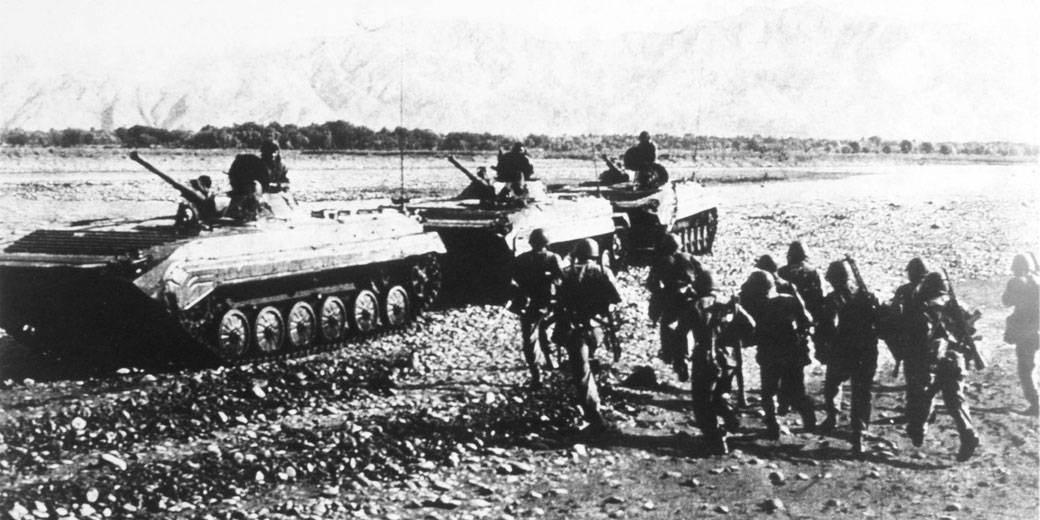
On the night of 24 December 1979, Soviet Defence Minister Dmitry Ustinov ordered the 40th Army to cross into Afghanistan, which launched an operation that would consume the Soviet Union for nearly a decade and that would later be seen as a significant contributing factor in its dissolution.
As the final foreign military intervention that the USSR undertook before its collapse in 1991, the invasion arguably became one of the Cold War’s most consequential miscalculations, and it drew both superpowers into a bitter proxy struggle on Central Asian soil.
The Saur Revolution and the road to instability
Afghanistan’s path toward Soviet intervention began well before December 1979, due to a series of internal upheavals in the country.
On 27 April 1978, military officers who were loyal to the People’s Democratic Party of Afghanistan (PDPA) launched a violent coup against President Mohammad Daoud Khan, who had overthrown his cousin, King Mohammad Zahir Shah, in 1973.
Known as the Saur Revolution, the uprising involved approximately 250 tanks and armoured vehicles, and by the following morning, Daoud and most of his family had been killed inside the Arg presidential palace.
Nur Muhammad Taraki was the leader of the PDPA’s Khalq faction, and he assumed power as chairman of the Revolutionary Council.
From its earliest days, the government introduced sweeping socialist reforms that directly challenged Afghanistan’s conservative tribal and religious structures.
Land redistribution programmes threatened wealthy landowners, and the regime’s promotion of women’s rights angered traditional rural communities.
Rural resistance grew rapidly, and between 1978 and 1979, the Khalq government had imprisoned and executed nearly 5,000 political opponents, which intensified hostility toward the regime.
Why did the PDPA tear itself apart?
From the outset, the PDPA contained two rival factions whose hostility proved just as destructive as external threats.
The Khalq faction was led by Taraki and drew support primarily from Pashtun military officers, and the Parcham faction was headed by Babrak Karmal and attracted a more urban membership base.
Shortly after the Saur Revolution, Taraki and his deputy Hafizullah Amin purged Parcham members from the government, and they sent Karmal into exile as ambassador to Czechoslovakia by July 1978.
As tensions within Khalq escalated through 1979, Moscow grew increasingly alarmed because a major uprising in Herat during March had involved army mutinies and urban unrest, along with anti-government violence on a large scale, with the death toll likely running into the thousands.
Several Soviet advisers and family members were also killed in the upheaval, which prompted the Kremlin to consider military force more seriously.
The leadership communicated a plan to remove Amin from power, but Amin had learned of the plot beforehand.
In September 1979, forces loyal to Amin overthrew Taraki, and by October, Taraki had been executed.
Amin then consolidated power by assuming the positions of chairman of the Revolutionary Council and chairman of the Council of Ministers, as well as general secretary, simultaneously.
The Soviet decision to invade
Amin’s violetn seizure of power horrified the Soviet leadership, and Moscow began gathering combat units along the Afghan border during autumn 1979.
A special commission that comprised KGB Chairman Yuri Andropov and Foreign Minister Andrei Gromyko, along with Defence Minister Ustinov, pressed General Secretary Leonid Brezhnev to authorise intervention.
These officials argued that Amin had lost control and that a radical Islamist government could sponsor fundamentalism across Soviet Central Asia, which would threaten Uzbekistan and Tajikistan.
Soviet leaders also came to suspect that Amin was unreliable and possibly open to American influence, even though firm evidence for that fear was lacking.
Also, several geopolitical factors influenced Moscow’s calculations. The 1979 Islamic Revolution in Iran had dramatically increased oil prices, which may also have improved Soviet revenues at a critical moment.
Soviet leaders also believed that the United States had already begun limited covert support for the insurgency, and that Pakistan was likely to play an important part in any expansion of that assistance.
On 12 December 1979, Brezhnev and the Politburo formally approved the decision to intervene, and they cited Article 4 of the Treaty of Friendship, Good Neighbourliness, and Cooperation, which the Soviet Union and Afghanistan had signed on 5 December 1978.
Operation Storm-333 and the fall of Amin
When the invasion began on 24 December, it formed part of the wider Soviet intervention that was often associated with Operation Baikal-79, and it involved a massive airlift that brought thousands of Soviet troops into Afghanistan in the opening days, as ground forces simultaneously crossed the border from the north.
Approximately 30,000 troops entered the country by air and ground in the opening phase.
The Soviet military commitment later rose to between roughly 80,000 and 115,000 troops at different stages of the war.
They had seized Kabul within days and on 27 December, Soviet special forces stormed the Tajbeg Palace in an operation that was codenamed Storm-333.
The assault involved KGB Alpha and Zenith groups, with support from the Muslim Battalion and Soviet airborne units, and it ended with the killing of Amin.
Babrak Karmal was the exiled Parcham leader and was immediately installed as head of government.
Moscow had envisioned a swift operation that would stabilise the Afghan army, and many Soviet leaders expected a limited mission that would last months rather than years, but events on the ground proved catastrophically different.
How did the world respond?
Since the invasion had effectively ended the period of reduced superpower tensions known as détente, Washington’s response was immediate.
President Jimmy Carter denounced the aggression and announced the Carter Doctrine during his 1980 State of the Union address, in which he pledged military force to protect American interests in the Persian Gulf.
The administration imposed economic sanctions along with grain embargoes, and it called for a boycott of the 1980 Moscow Olympics, which more than 60 nations observed.
Critically, the Carter administration began funnelling Soviet-manufactured weapons to the Afghan mujahideen through Pakistan’s intelligence services in a covert programme known as Operation Cyclone.
Pakistan’s Inter-Services Intelligence, or ISI, controlled much of the distribution of foreign aid to the resistance, and Saudi Arabia matched large portions of American funding for the anti-Soviet war.
Under the Reagan administration, aid had increased to $400 million per year at its peak, and the provision of shoulder-fired Stinger anti-aircraft missiles in 1986 proved particularly significant, as these weapons neutralised Soviet air superiority.
A war that consumed a superpower
As the conflict dragged through the 1980s, a grinding stalemate had developed, as over 100,000 Soviet troops controlled the cities and garrisons, but the mujahideen operated freely throughout the countryside.
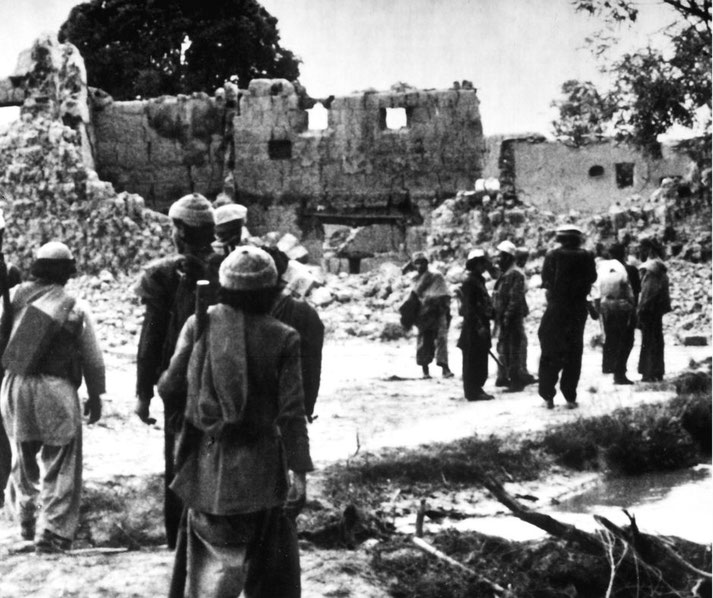
Soviet forces attempted to eliminate civilian support through systematic bombing of rural areas, which triggered a humanitarian catastrophe.
By 1982, approximately 2.8 million Afghans had fled to Pakistan and another 1.5 million to Iran, and the war created one of the largest refugee crises of the 1980s, with more than 5 million Afghans displaced abroad.
When Mikhail Gorbachev assumed the Soviet leadership in March 1985, the war had consumed an estimated 18 billion roubles and had claimed approximately 15,000 Soviet lives.
Afghan losses were far greater, with hundreds of thousands and perhaps more than a million Afghans killed over the course of the war.
Gorbachev’s policy of glasnost allowed public criticism of the war for the first time, and the financial burden proved unsustainable alongside a weakening economy.
Following the Geneva Accords of April 1988, Soviet forces finally withdrew on 15 February 1989, and they left behind a country that descended further into civil war.
The Soviet-backed government of Mohammad Najibullah survived until 1992, but the invasion had already become a significant contributing factor in the dissolution of the USSR in 1991.
Many later came to describe Afghanistan as the Soviet Union’s Vietnam.