
The extraordinary 18,000-mile voyage of Russia’s Baltic Fleet in 1904
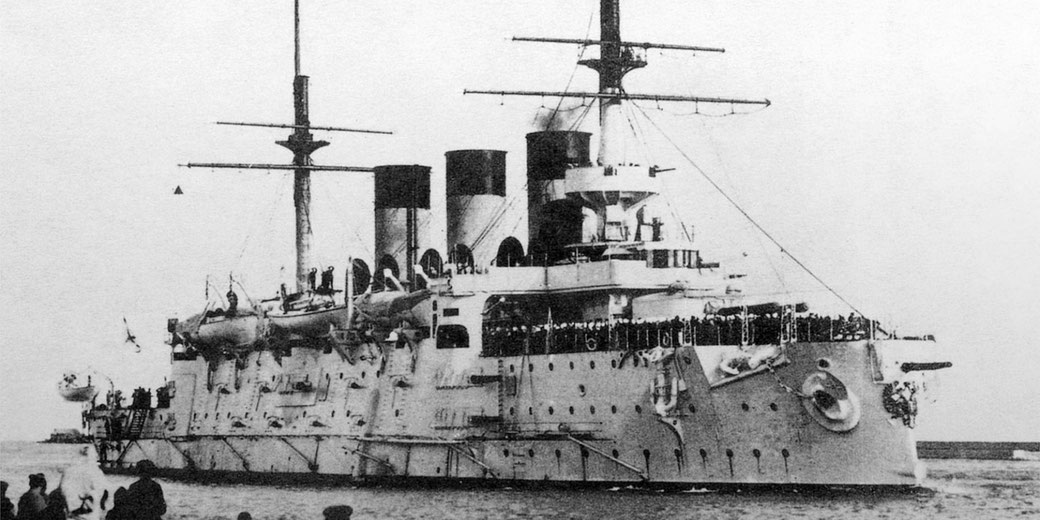
In October 1904, Tsar Nicholas II ordered a fleet of warships to sail from the Baltic Sea to the Pacific Ocean, a distance of roughly 18,000 nautical miles, in one of the most ambitious and ill-fated naval expeditions in modern history.
Under the command of Rear Admiral Zinovy Rozhestvensky, the Second Pacific Squadron left the ports of Reval and Libau with orders to relieve the besieged Russian naval base at Port Arthur.
What followed over the next seven months was a disastrous sequence of blunders and deteriorating morale that ended in catastrophic defeat at the Battle of Tsushima in May 1905.
Why Russia sent its fleet halfway around the world
Since February 1904, Russia had been at war with Japan over competing imperial interests in Manchuria and Korea, and the conflict at sea had gone badly from the very beginning.
A surprise Japanese torpedo attack on Port Arthur in February had damaged several warships before war was even formally declared.
In April, Vice Admiral Stepan Makarov, widely considered Russia’s most capable naval commander, was killed when his flagship Petropavlovsk struck a mine outside the harbour.
His replacement, Rear Admiral Wilgelm Vitgeft, died at the Battle of the Yellow Sea in August 1904, which left the remnants of the First Pacific Squadron trapped inside Port Arthur under Japanese siege.
Faced with mounting losses and no experienced commanders left in the Pacific, the Tsar approved a plan to send the bulk of Russia’s Baltic Fleet to the Far East, renaming it the 'Second Pacific Squadron'.
Rozhestvensky’s fleet would break the Japanese blockade and overwhelm Admiral Togo Heihachiro’s Combined Fleet through sheer numbers.
On paper, the plan had a certain logic, as Russia possessed more battleships than Japan.
In practice, though, the difficulties of moving an entire battle fleet across three oceans would prove almost insurmountable.
The Dogger Bank disaster
Even before the fleet had cleared European waters, Rozhestvensky’s expedition descended into chaos.
Rumours had spread through the squadron that Japanese torpedo boats were lurking in the North Sea, supposedly hidden along the Danish and Norwegian coasts.
Many of the crews were inexperienced conscripts drawn from landlocked regions of the empire, and few had any meaningful time at sea.
On the night of 21–22 October 1904, as the fleet passed through the Dogger Bank fishing grounds roughly 200 miles off the English coast, Russian lookouts spotted lights in the fog.
Convinced they were under attack, the warships opened fire on what turned out to be the Gamecock Fleet, a group of British trawlers from Kingston upon Hull that had their nets down.
The bombardment lasted approximately twenty minutes, killing two fishermen, George Henry Smith and William Richard Leggett, while injuring six others.
The trawler Crane was sunk and five boats were damaged. In the confusion, Russian ships also fired on each other, killing a sailor and an Orthodox priest aboard the cruiser Aurora.
Internationally, the incident provoked outrage, as Britain placed the Royal Navy on a war footing and several cruiser squadrons shadowed the Russian ships through the Bay of Biscay.
Only a diplomatic intervention, which led to a commission of inquiry at The Hague and a Russian compensation payment of £66,000, prevented the crisis from escalating into war.
A gruelling passage around Africa and across the Indian Ocean
As a direct consequence of the Dogger Bank affair, Britain pressured France and Portugal to deny the Russian fleet access to their colonial ports.
Coal-powered warships consumed enormous quantities of fuel, and the entire squadron required an estimated 500,000 tons of coal for the journey.
Since neutral harbours were now off-limits, the Admiralty contracted vessels from the Hamburg-Amerika Line to deliver coal at sea, an exhausting process that left decks and machinery caked in black dust.
Concerns that the newer Borodino-class battleships drew too much water to pass through the Suez Canal forced the fleet to split after leaving Tangier on 3 November 1904.
Rozhestvensky took the larger warships around the Cape of Good Hope, adding thousands of miles to the voyage, and the older vessels under Rear Admiral Dmitry von Folkersam transited the canal to rejoin the squadron at Nossi-Be off Madagascar.
Tropical heat, cramped quarters, and rotting food supplies wore down morale over the following weeks, since enlisted men received virtually no shore leave from mid-October until January 1905.
At Madagascar, Rozhestvensky received devastating news: Port Arthur had surrendered to the Japanese on 2 January 1905, which meant the First Pacific Squadron no longer existed.
The entire strategic purpose of the voyage had collapsed, and Rozhestvensky proposed returning home, yet the Tsar insisted he press on toward Vladivostok.
Reinforcements in the form of the Third Pacific Squadron, a collection of outdated vessels that Rozhestvensky bitterly called “the self-sinkers,” were dispatched under Rear Admiral Nikolai Nebogatov and eventually joined him at Cam Ranh Bay in French Indochina.
Could the fleet have succeeded at all?
By the time the combined Russian squadrons entered the China Sea in May 1905, the fleet was in a dire state.
Hull fouling from months without drydock maintenance had reduced the speed of several capital ships, and gunnery training had been almost non-existent because the Tsar had allocated only enough ammunition for the anticipated battle, leaving nothing for exercises.
When Rozhestvensky finally permitted target practice in the Indian Ocean, no ship hit its target, and several managed to strike the vessel towing it.
Japanese crews, by comparison, had spent months refitting at Busan and drilling relentlessly under Admiral Togo’s demanding standards.
Rozhestvensky also faced a critical navigational decision, as three possible routes led into the Sea of Japan toward Vladivostok.
The Tsushima Strait between Korea and Japan was the shortest, yet it passed within range of every major Japanese naval base.
Rozhestvensky chose Tsushima, and he did not share his decision with subordinates until 25 May, two days before the battle.
Annihilation at Tsushima
On 27 May 1905, Admiral Togo’s Combined Fleet intercepted the Russian squadron in the Tsushima Strait.
The Japanese possessed superior speed and better armour-piercing shells, along with crews that had trained extensively.
Over two days of fighting, the result was total destruction. Russia lost 4,380 men killed and 5,917 captured, with eleven battleships sunk or scuttled.
Only three warships reached Vladivostok. Japanese losses amounted to 117 killed and three torpedo boats sunk.
Rozhestvensky himself was seriously wounded during the first day and was captured.
Admiral Togo reportedly visited him in hospital and offered words of respect for the seamanship the Russian commander had demonstrated.
Upon his return to Russia, Rozhestvensky faced a court martial, took full responsibility, and was sentenced to death, a punishment later commuted by the Tsar.
For the Russian Empire, the humiliation of being the first European power to lose a modern war to an Asian nation discredited the Tsar’s government and fuelled public anger that contributed directly to the Revolution of 1905.
For Japan, the victory confirmed its status as a major naval power and opened the way for imperial expansion across the Pacific, a trajectory that would culminate in the Second World War.