
The lost colony of Roanoke: America's oldest unsolved mystery
On a remote island along the coast of present-day North Carolina, England’s first attempt at permanent colonisation in the New World collapsed without explanation.
In 1590, when a long-delayed English supply ship arrived at Roanoke Island, its crew expected to find over a hundred settlers who lived in a community that seemed secure and continued to get larger.
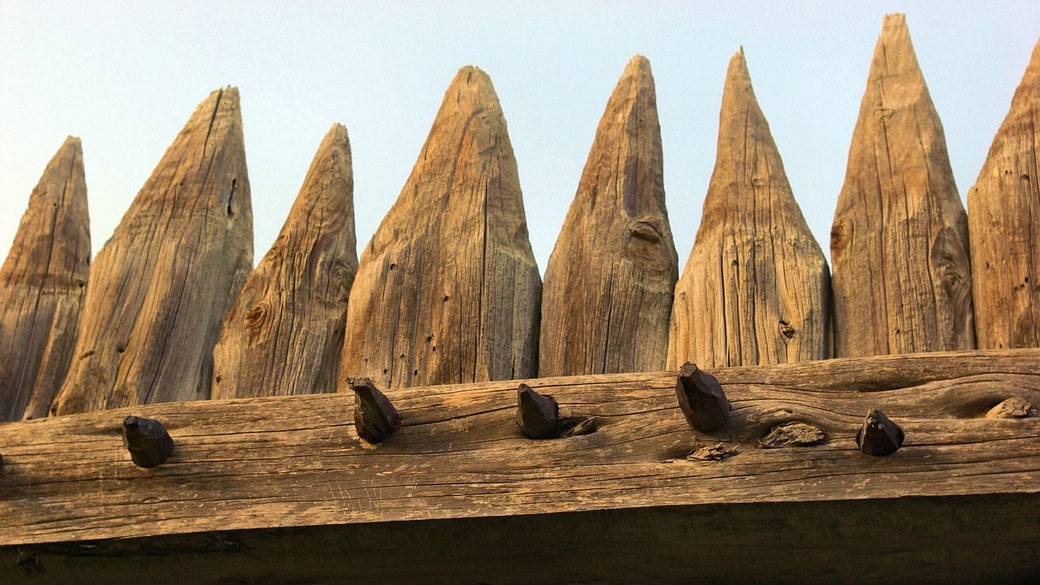
Instead, they encountered an eerie silence among the overgrown ruins, together with a single clue: the word “CROATOAN” carved into a wooden post.
For over four centuries, historians have investigated this disappearance, and no clear answer has yet explained the fate of the families who vanished.
The origins of the colony
In 1584, Queen Elizabeth I granted Sir Walter Raleigh a patent to explore and colonise lands in North America, on the condition that he established a working settlement within seven years.
Although Raleigh remained in England and never set foot in the New World, he had funded a series of expeditions and had selected experienced seafarers to carry out his plans.
During the first two voyages, launched in 1584 and 1585, English explorers had surveyed the Atlantic coast and had identified Roanoke Island as a potential base.
Located between the barrier islands and the mainland, Roanoke appeared to provide some natural protection and access to navigable waters.
Among these explorers were Thomas Harriot, who studied the region’s natural resources, and John White, who created detailed maps and illustrations.
Even so, Roanoke presented serious challenges. Its sandy soil limited farming and left the settlement exposed to violent storms, and the island also lay far from reliable supply lines.
Nevertheless, Raleigh pressed ahead. In 1585, he sent a military expedition under Sir Richard Grenville and Ralph Lane aboard a fleet that included the Tiger and the Roebuck.
After they built a small fort and began initial contact with local Algonquian-speaking peoples, the English settlers soon entered a series of conflicts, particularly with the Secotan tribe.
Relations broke down, and the colonists faced food shortages and rising tensions and abandoned the fort and returned to England with Sir Francis Drake in June 1586.
When Grenville returned later that year and found the settlement deserted, he left fifteen men to maintain England’s claim, although no one heard from them again.
Later reports suggested that those men may have been killed by local tribes.
The 1587 expedition and the birth of Virginia Dare
In 1587, Raleigh changed tactics. Rather than relying on military outposts, he backed a colony run by civilians under John White, an artist and cartographer who had joined earlier voyages.
This new group, which included 115 settlers, among them women and children, aimed to build a stable community that could support itself.
Family names such as Dare and Harvie, along with Tappan, appeared on the list that the colony kept.
Although the expedition intended to settle near the Chesapeake Bay, the commanders decided to disembark at Roanoke rather than continue north, possibly due to the pilot's unwillingness or other practical problems.
Upon arrival, they discovered only the ruins of the previous colony and no sign of the fifteen men who had been left behind by Grenville.
As the settlers tried to set up the colony again, they experienced the birth of Virginia Dare, granddaughter of John White and daughter of Eleanor Dare.
As the first English child born in what would later become the United States, Virginia Dare represented a symbolic step toward permanent colonisation, and her survival stayed uncertain.
Hostile relations with nearby tribes and limited food supplies created a strong sense of growing danger, which isolation from England intensified.
Eventually, the settlers urged White to return to England to request aid.
Reluctantly, he agreed to sail, knowing he left his daughter and granddaughter, together with the entire colony, in very unsafe conditions.
The delayed return and the mysterious disappearance
John White had intended to return quickly, but events in England prevented any immediate rescue.
Soon after his arrival, the Anglo-Spanish War had grown worse. In 1588, as the Spanish Armada prepared its assault on England, Queen Elizabeth ordered all ships held for national defence.
Raleigh and other investors had pleaded for vessels, but none were made available for use on voyages across the Atlantic.
White remained stranded in England for three years, unable to fulfil his promise to return.
Eventually, in August 1590, White found a place on a private expedition and sailed back to Roanoke.
Upon reaching the colony, he found the settlement abandoned. The houses lay empty, and the surrounding area had grown wild.
No corpses or signs of violence appeared. Most notably, the word “CROATOAN” had been carved into a wooden palisade, and the letters “CRO” appeared on a tree.
The carving appeared fresh and had not worn away, suggesting it had been made recently.
Before leaving, White had instructed the colonists to carve a cross into the post if they had moved under threat.
No such mark had been made, and he concluded that the move had not been forced.
He believed the colonists had gone to Croatoan Island, where a friendly tribe had lived.
However, before he could search for them, violent storms damaged the ships and forced the expedition to abandon the region.
White never returned and died in England without ever learning the fate of his family or the other colonists.
What are the most likely theories?
Since the disappearance, generations of scholars have tried to explain what happened.
One of the most widely accepted theories proposes that the settlers moved to Croatoan Island, which is present-day Hatteras Island, and mixed into the local population.
Archaeological finds on the island, such as 16th-century English tools, suggest English presence, but those items could have reached the area through trade rather than relocation.
Oral traditions from the Croatan people have included references to ancestors with light eyes or pale skin, though such accounts cannot be checked with certainty.
Some evidence points to the possibility that the colonists, who split up and moved inland, joined other tribes such as the Chowanoke or Tuscarora.
Reports from later English settlers describe encounters with Native Americans who spoke English phrases, built houses with European-style features, or practised Christianity.
These accounts were recorded decades after the disappearance and are based on stories rather than firm proof.
Other descriptions noted children with grey or blue eyes, though none of these details can be proven to belong to Roanoke’s settlers.
No written record from the colony ever surfaced, and no archaeological site has revealed any evidence of bodies consistent with the missing group.
Alternatively, the colonists may have died from starvation, disease, or exposure.
Some historians argue that Powhatan tribes grew more powerful across the region during the 1590s and may have viewed the Roanoke settlers as a threat and destroyed them.
Years later, the Powhatan chief Wahunsenacawh reportedly claimed responsibility for killing the colonists during a conversation with go-betweens who then passed on the story to Captain John Smith.
However, Smith never spoke to the chief directly about the matter, and the claim lacked proof from other sources.
Without bodies, burnt ruins, or written evidence, the story stayed uncertain.
The enduring enigma
After Roanoke’s failure, England eventually changed how it had planned future colonisation efforts.
The hard lessons strongly influenced the foundation of Jamestown in 1607. Unlike Roanoke, Jamestown included soldiers and craftsmen and benefited from regular resupply efforts.
English leaders now understood the risks posed by isolation and poor planning, and they adopted more disciplined methods.
The disappearance of an entire colony also produced a powerful cultural story. In particular, Virginia Dare became a symbolic figure in American literature.
In the 19th century, writers such as Lydia Sigourney and Eliza Lanesford Cushing turned her into a romantic figure, a lost child of empire, and imagined her survival among Native peoples as a bridge between civilisations.
Her name was given to counties and monuments, and it appeared in community groups such as the Virginia Dare Memorial Association.
Ongoing archaeological work, which still continues, takes place along Roanoke and Hatteras Islands and at sites along Albemarle Sound.
Recent excavations at “Site X” near the Chowan River were conducted by the First Colony Foundation in 2012 and uncovered English ceramics and metal objects, which probably dated to the late 1500s.
Some researchers have questioned whether these items reflect contact with the Roanoke settlers or other early English visitors.
Another dig at Cape Creek on Hatteras Island revealed similar artefacts. Both sites suggest English movement away from the original fort, and so far no single location has produced clear proof.
Some historians now believe that the settlers divided into smaller groups and moved separately, and some of them went to Croatoan as others travelled inland.
To this day, no document, burial site, or store of objects has provided clear evidence about the fate of the Roanoke colonists.
As a result, the mystery is still open. Among the many failed colonial attempts across history, none vanished with so little trace, and none has fascinated researchers for as long.
The lost colony of Roanoke, more than any other English colonial experiment, became America’s oldest historical riddle.