
What Happened at Port Arthur in 1894? The Lüshun Massacre explained
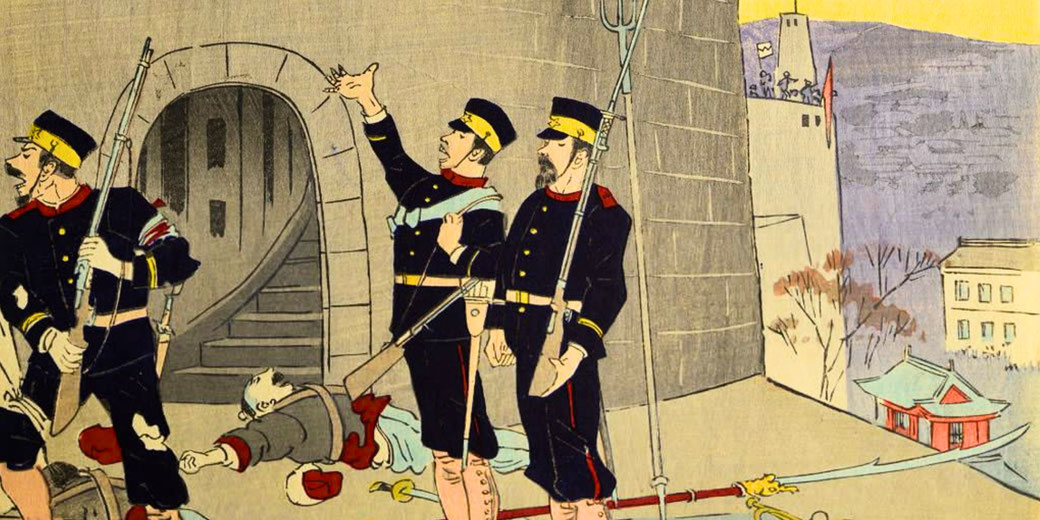
During the First Sino-Japanese War, a single act of violence helped expose the cost of modern imperial expansion. On 21 November 1894, Japanese troops captured the Chinese coastal city of Port Arthur and, over the next two days, carried out what many observers later described as one of the most brutal massacres of the war.
Foreign journalists later reported mass executions, mutilated bodies, and widespread killings that turned a military victory into a serious scandal.
Why Japan was interested in Port Arthur
Japanese generals targeted Port Arthur (modern Lüshunkou District, Dalia) which was a fortified naval base that had been constructed with Russian assistance at the tip of the Liaodong Peninsula, after they seized Pyongyang in September and Jiuliancheng in October.
By late 1894 the Japanese military had won a series of rapid victories across the Korean Peninsula and southern Manchuria that had largely forced Qing forces into retreat.
Its location had made it a key position for controlling access to the Bohai Sea, and its arsenals and dry docks had given it important tactical value for sustaining future operations along China’s northern coast.
Under the command of General Yamaji Motoharu, the Japanese Second Army began its advance on the city, which included the 1st Division, who had orders to eliminate all resistance and secure a strategic harbour for naval support.
However, no written directive had been found that explicitly authorised a massacre.
On 21 November, Japanese infantry encountered weak opposition from discouraged Qing troops who largely lacked both coordination and leadership.
The city’s fortifications had been carefully designed to withstand a siege but the defending forces had largely failed to man key positions or organise counter-attacks.
Qing command structures had collapsed following previous defeats, and no effective leadership appeared to rally the defence.
By late afternoon, Port Arthur lay in Japanese hands due to the fact that Japanese units had advanced quickly, which had forced the defenders to abandon their posts or surrender without prolonged fighting.
As such, only scattered resistance and a handful of isolated troops remaining outside the city walls.
Port Arthur Massacre casualties
Soon after the city fell, Japanese soldiers began killing Chinese prisoners of war, many of whom had apparently already disarmed and surrendered.
Some were executed in groups along alleyways or beside drainage ditches, while others were dragged from shelters and stabbed with bayonets.
Entire units had been marched to the outskirts of the city and shot without trial, which led later estimates to place the death toll at approximately 2,000 to 4,500, although early reports such as those by foreign journalists reported the number as high as 20,000.
Next, the violence spread to civilians as Japanese soldiers moved through the city’s streets and began entering homes, shops, and warehouses in search of hidden soldiers or collaborators.
Any man suspected of resistance faced immediate death, while many women and children were cut down without explanation or warning.
Over the following days, the killing continued as reports described many corpses heaped in doorways, bodies that lay in wells, and blood that pooled in gutters as Japanese patrols worked in an organised way across each district.
American journalist James Creelman, who arrived after the massacre had ended, described scenes of horror, which were mainly based on interviews and firsthand observations.
He counted at least hundreds of bodies that still lay unburied and wrote of women who had been mutilated, men who had been stabbed repeatedly, and children who had been trampled underfoot or thrown into pits.
In one article, he wrote that "blood ran in rivers and the city was a place of death".
His articles were published in the New York World, which quickly captured global attention and stirred outrage across Europe and North America.
Official denials
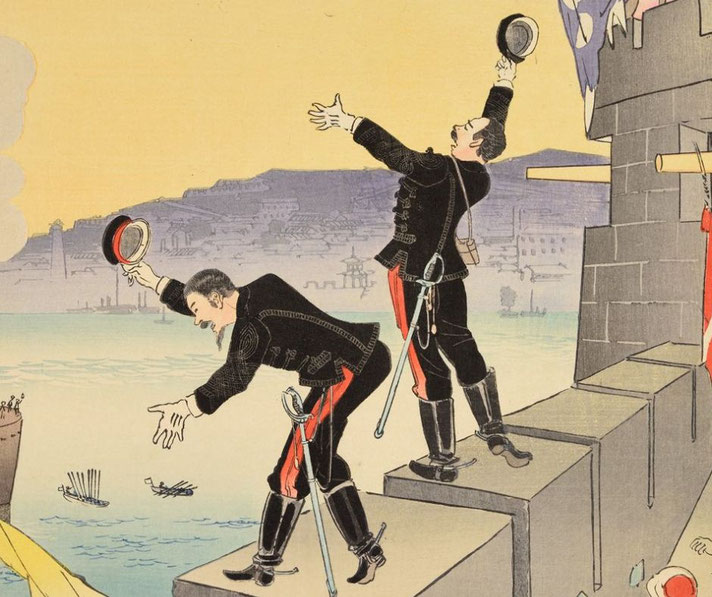
For a time, Japanese officials publicly denied that any atrocity had taken place.
Later, though, they suggested that remaining Chinese fighters had staged ambushes or fired from rooftops, which led to confusion and retaliation by Japanese soldiers.
However, foreign observers dismissed these claims because no clear evidence ever showed that Chinese troops had launched such attacks.
Crucially, no senior Japanese officer had faced formal charges or punishment publicly, and no inquiry had been launched to determine responsibility, as no international legal mechanism existed at the time to investigate such crimes.
Japanese military censors restricted coverage within Japan, and photographs, interviews, and on-site accounts largely reinforced the scale of the massacre in foreign newspapers.
Within Japan, reactions varied. Some public celebrations had focused on the successful capture of a strategic Chinese stronghold, and most newspapers had ignored the reports of violence against civilians.
However, a small number of writers and Buddhist leaders expressed private concern that the massacre had stained Japan’s reputation and betrayed the principles of its modern military.
Some warned that a warrior code based on unconditional loyalty could become dangerous without the restraints of legal oversight.
Among foreign diplomats, the event caused a clear change in opinion as trust in Japan’s civilised image declined somewhat.
Japan had once been admired for its disciplined modernisation during the Meiji era and now appeared capable of the same brutality it had once accused Western empires of committing.
Aftermath of Port Arthur Massacre
After the war ended, Japan annexed Taiwan through the Treaty of Shimonoseki and secured informal influence over Korea, but had been forced to return Port Arthur to official Chinese control after the Triple Intervention by Russia, France, and Germany.
Russia had immediately occupied and fortified the port to block Japanese control in Manchuria.
However, the city remained disputed, and Japan retook Port Arthur in 1905 during the Russo-Japanese War after a prolonged and bloody siege against Russian defenders.
Still, the memory of the 1894 massacre never disappeared. Many Chinese historians cited it as a warning of what future Japanese aggression could bring, while Western critics remembered it as a failure of military restraint and international law.
As Japan continued its imperial expansion in the twentieth century, the events at Port Arthur had arguably provided an early example of wartime violence carried out without consequences.
Foreign outrage largely failed to prevent future atrocities, and Japan’s military structure remained unchallenged by civilian courts or diplomatic pressure.
Today, the Port Arthur Massacre is a grim reminder of how uncontrolled military power, even under the banner of modernisation, can often descend into deliberate violence.