How Nintendo survived World War II and transformed into a gaming powerhouse
In 1889, a craftsman named Fusajiro Yamauchi began painting playing cards by hand in Kyoto, founding a small business that would one day produce Super Mario Bros. and the Nintendo Entertainment System.
Between that founding and those breakthroughs lay decades of upheaval, because the company survived a world war that nearly destroyed its home city before stumbling through a string of failed business ventures that almost ended it financially.
Each of those turns involved specific people making some very challenging decisions.
A card maker in Meiji-era Japan
Fusajiro Yamauchi founded Nintendo Koppai on 23 September 1889, at a time when Japan was undergoing rapid modernisation under the Meiji government.
His shop in the Shimogyo ward of Kyoto produced hanafuda cards: a type of Japanese playing card featuring 48 hand-painted designs arranged into 12 suits, each corresponding to a month of the year.
Hanafuda had a very long history in Japan as a workaround for government bans on Western-style playing cards, and Yamauchi saw commercial potential in producing high-quality versions for widespread sale.
As demand grew across Kyoto and Osaka, Yamauchi hired apprentices to mass-produce the cards, since he could no longer keep up with orders alone.
The cards also attracted the attention of Japan’s criminal underworld, as the Yakuza favoured hanafuda for high-stakes gambling and customarily demanded a fresh deck for each session.
By the early 1900s, Nintendo had become one of Japan’s largest playing card manufacturers, and in 1907, Yamauchi expanded the business further by producing Western-style playing cards for the Japanese market: the first company in the country to do so successfully.
Since Yamauchi had no son to inherit the business, he followed the Japanese custom of mukoyoshi, or adoptive marriage, and brought his son-in-law, Sekiryo Kaneda, into the family.
Kaneda took the Yamauchi surname and assumed the presidency in 1929 after Fusajiro’s retirement, renaming the company Yamauchi Nintendo & Co. in 1933.
For the next decade, Nintendo continued to rely on card production as its primary revenue source, but the onset of World War II in the Pacific would force the company in an entirely new direction.
A near-miss with the atomic bomb
During World War II, Nintendo operated under the constraints of Japan’s militarist government, which controlled many aspects of commercial life.
To stay afloat, the company took a government contract to produce Aikoku Hyakunin Isshu, a patriotic version of the traditional Japanese poetry card game designed to promote nationalist sentiment among the population.
In October 1943, Nintendo also released a backgammon board aimed at children that featured cartoon animals dressed as soldiers, with Japanese flags triumphant over torn American and British flags at the bottom of the image.
Such propaganda products were common across Japanese industry during the war, much as American firms like Disney signed wartime contracts with the U.S. military during the same period.
As the war drew to a close in 1945, Nintendo faced an existential threat that had nothing to do with playing cards.
When the United States developed the atomic bomb, Kyoto initially sat at the top of the military’s target list, because the city was a major industrial centre with a population of roughly one million.
Henry Stimson, the U.S. Secretary of War, personally intervened against targeting Kyoto, citing its immense cultural and historical importance to Japanese civilisation.
His intervention succeeded, and Hiroshima was selected instead. Had Stimson not prevailed, Nintendo’s Kyoto headquarters would have been reduced to ash, and the company’s entire future would have ended before it truly began.
Hiroshi Yamauchi and the search for a new direction
After Japan’s surrender in August 1945, Nintendo began rebuilding alongside the rest of the country.
Sekiryo Yamauchi established a distribution company called Marufuku Co. Ltd in 1947 to handle the firm’s card sales, but his health declined rapidly over the following years.
A stroke in 1949 forced him to hand control of the company to his 22-year-old grandson, Hiroshi Yamauchi, who became one of the youngest corporate presidents in Japan.
Hiroshi was an authoritarian leader who reportedly fired employees who challenged his decisions, and he recognised quickly that playing cards alone could not sustain the company’s future.
A trip to the United States in 1956 confirmed his suspicion: the largest playing card manufacturer in the world, the United States Playing Card Company, operated from a surprisingly modest office, which told Hiroshi everything he needed to know about the limits of the industry.
In 1959, Hiroshi secured a licensing deal with Walt Disney that allowed Nintendo to print characters like Mickey Mouse on plastic playing cards.
Over 600,000 packs sold in the first year, and the profits allowed Nintendo to list on the Osaka and Kyoto stock exchanges in 1962.
Hiroshi then renamed the company Nintendo Co., Ltd., dropping the reference to playing cards for the first time in its history.
Flush with new capital, Hiroshi invested in a series of ventures designed to diversify the business.
He launched a taxi company called Daiya Transportation and invested in short-stay “love hotels,” where couples rented rooms by the hour.
He also attempted to sell individually portioned instant rice. All of these ventures failed, especially since labour disputes crippled the taxi service, and the food business lacked brand credibility.
By the mid-1960s, Nintendo’s stock had fallen from 900 yen to just 60 yen, and the company was sliding toward bankruptcy.
From factory floor to toy revolution
As the playing card market continued to shrink in the mid-1960s, a chance encounter on a factory floor changed Nintendo’s trajectory.
During a tour of one of the company’s hanafuda plants around 1966, Hiroshi Yamauchi spotted a maintenance engineer named Gunpei Yokoi amusing himself with an extendable arm he had built during his breaks.
Yamauchi immediately instructed Yokoi to develop it into a marketable product, and the result was the Ultra Hand: a toy that sold over one million units in Japan and became Nintendo’s first commercial hit outside of playing cards.
Yokoi’s success prompted Yamauchi to create a dedicated research and development department, initially staffed by just Yokoi and one other employee working out of a Kyoto warehouse.
Yokoi went on to develop electronic toys such as a light-sensitive Beam Gun and the Love Tester, a novelty device that claimed to measure romantic compatibility between two people.
His guiding principle, which he later called “lateral thinking with withered technology,” involved using inexpensive, well-understood components in inventive ways to create affordable products.
The philosophy would define Nintendo’s approach to product development for decades to come.
In 1977, Nintendo released the Color TV-Game, its first home video game console, which was co-developed with Mitsubishi and designed by engineer Masayuki Uemura.
The console was a dedicated device with built-in games and no interchangeable cartridges, but it sold well enough in Japan to convince Yamauchi that electronic entertainment had a genuine commercial future worth pursuing.
The leap into video games
By the early 1980s, the global arcade industry was booming, and Yamauchi wanted Nintendo to compete in this growing market.
In 1981, he gave a critical assignment to Shigeru Miyamoto, a young industrial designer who had joined the company in 1977.
Miyamoto’s task was to repurpose unsold cabinets from Radar Scope, a failed arcade title, and his solution was Donkey Kong: a platform game featuring a carpenter called Jumpman, later renamed Mario, who had to rescue a woman from a giant gorilla.
Donkey Kong became a worldwide sensation, earning Nintendo hundreds of millions of dollars in revenue and establishing the company’s reputation in the global gaming industry.
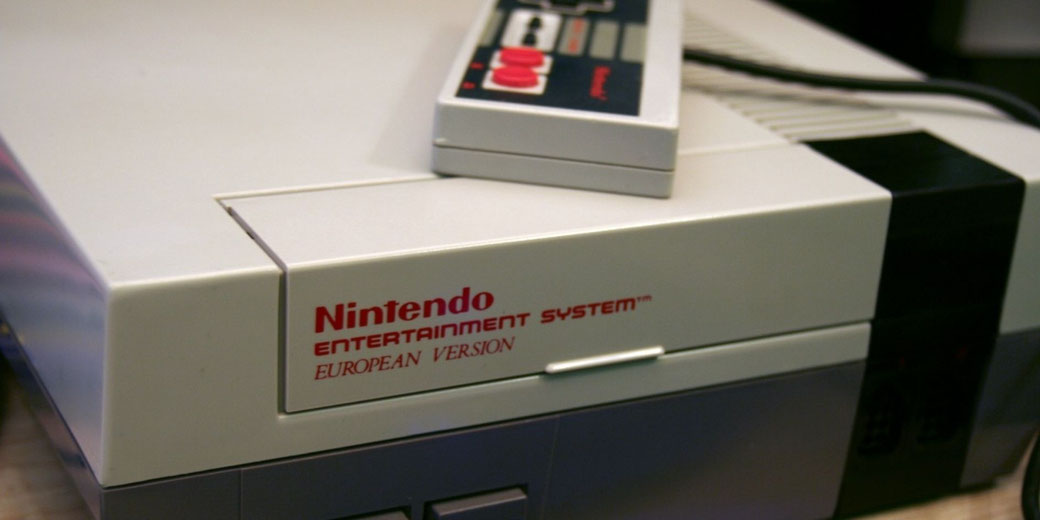
Building on this momentum, Nintendo launched the Family Computer, known as the Famicom, in Japan in 1983: a cartridge-based home console designed by Masayuki Uemura.
In 1985, the company released a redesigned version in North America called the Nintendo Entertainment System, or NES, entering a market that had collapsed following the video game crash of 1983.
The NES succeeded because Nintendo imposed strict quality controls on third-party developers through a licensing system and a lockout chip known as the 10NES, which prevented unlicensed games from running on the hardware.
By 1990, the NES had sold over 60 million units worldwide, and Nintendo controlled over 80 per cent of the American console market.
The NES era also produced some of the most influential video games ever created. Super Mario Bros., designed by Miyamoto and released in 1985, redefined what side-scrolling platform games could achieve, selling over 40 million copies and becoming the best-selling game of its generation.
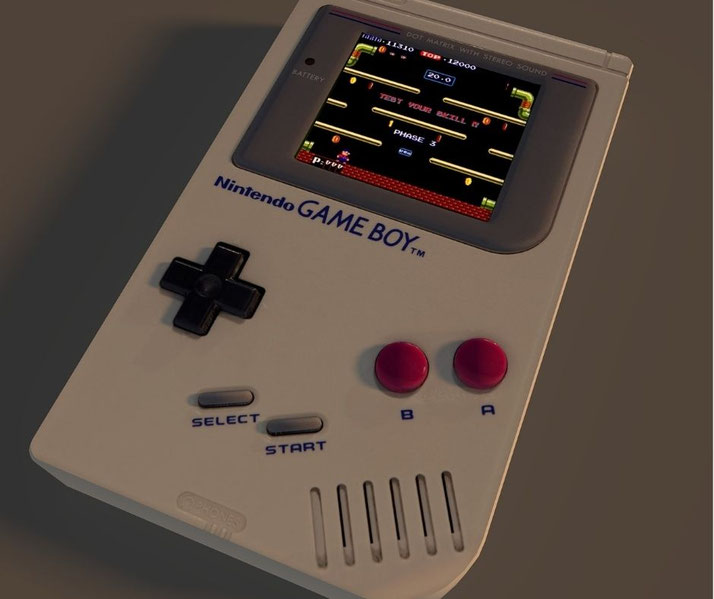
In 1989, Gunpei Yokoi brought his design philosophy to portable gaming with the Game Boy, a handheld console bundled with Tetris that would go on to sell over 118 million units across its product line.
From a hand-painted card workshop in 19th-century Kyoto to a company that controlled global electronic entertainment by the early 1990s, Nintendo’s transformation had taken a full century.