
Napoleon's catastrophic invasion of Russia: A military miscalculation of epic proportions
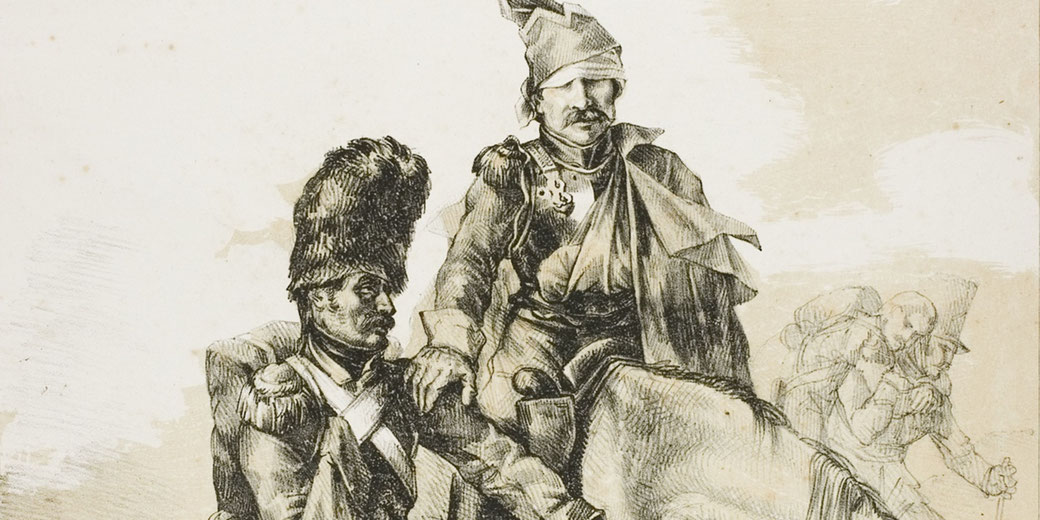
In June 1812, Napoleon Bonaparte led over 600,000 men into the campaign, though only around 450,000 crossed the Niemen River into Russian territory with the intention of compelling Tsar Alexander I to enforce the Continental System and remain loyal to the French Empire.
Within about six months, over 500,000 of those troops had died or deserted, and the remainder limped westward in broken groups that no longer resembled the Grand Army that had marched east in triumph.
By December, the shattered remnants of his invasion force clearly meant the failure of the Russian campaign and the beginning of the collapse of Napoleon’s control over Europe.
Planning and overconfidence
To prepare for the campaign, Napoleon had assembled the largest army Europe had seen up to that time, and he had drawn men from France, Italy, the Confederation of the Rhine, the Duchy of Warsaw, and other dependent territories.
Of the total force, fewer than half were French, while the rest included 95,000 Poles, 30,000 Italians, 25,000 Germans, and smaller numbers of Dutch and Swiss soldiers, along with units that had been drawn from the Illyrian Provinces.
Many of the allied units lacked unity or training and showed little loyalty to the Bonaparte regime.
He expected a swift campaign that would break the Russian army early and bring Alexander I to the negotiating table before the severe cold of winter took hold.
At the root of the conflict lay, to a large extent, Russia’s refusal to fully carry out the Continental System, which Napoleon had designed to damage British trade by cutting off access to European markets.
By late 1811, relations between the two empires had grown worse, and by early 1812, war appeared almost unavoidable.
Napoleon’s strategy depended on quick movement and advantage on the battlefield, which had helped him win at Austerlitz and Jena.
However, the scale of Russia’s territory and the poor condition of its roads caused significant and unexpected delays from the outset.
He had brought an estimated 20,000 to 25,000 supply wagons for food and munitions, and he had also allocated separate wagons for medical services, but their slow progress across muddy tracks helped cause immediate shortages.
By the time the first wagons broke down and the summer heat began to exhaust the troops, signs of strain had already appeared across the French columns.
The long march to Moscow
From the first weeks of the invasion, Russian commanders such as Barclay de Tolly and Prince Bagration avoided direct battle and instead kept up a steady retreat as they destroyed supply depots and crops during their withdrawal, and they wrecked infrastructure along the way.
As a result, French troops in many units began to starve even before reaching Smolensk.
Villages lay in ashes, wells were poisoned, and local peasants disappeared into the forests, and so no food or fodder remained for the advancing army.
Small bands of local fighters launched ambushes on foraging parties and lone convoys that moved through the forests near Vitebsk and Dorogobuzh.
Eventually, Napoleon reached Smolensk by 17 August and captured it after a short battle.
However, the Russians once again slipped away, denying him the deciding battle he had anticipated.
By that point, the Grand Army had lost tens of thousands of men to illness, desertion, or exhaustion.
The loss of horses further crippled transport and artillery units, forcing soldiers to abandon wagons and equipment that could no longer be moved.
Without food or rest, the army pressed on toward Moscow, stretched thin across the burned countryside and increasingly vulnerable to partisan attacks.
The bloody Battle of Borodino
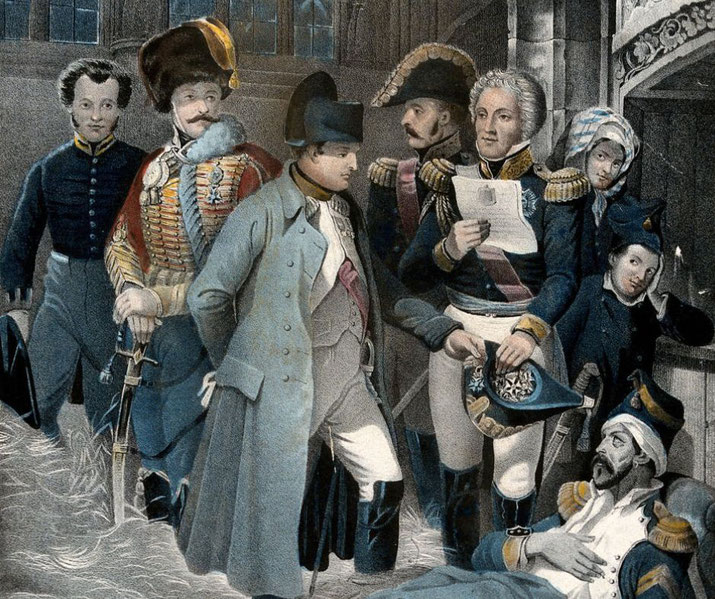
On 7 September 1812, outside the village of Borodino, the Russian army finally halted its retreat and prepared to make a stand.
Napoleon was now desperate for a major battle and brought together more than 130,000 men and over 500 guns for the attack.
The Russian line was reinforced with fortifications such as the Raevsky Redoubt and the Bagration Fleches and fielded between 120,000 and 135,000 men.
The battle began around 6 a.m. and raged across the fields and ridges west of Moscow.
General Bagration was mortally wounded as he defended the left wing, but Russian forces continued to resist until nightfall.
By evening, the French had forced the Russians to withdraw from their positions, but at a terrible cost.
The Grand Army suffered around 30,000 to 35,000 casualties, while Russian losses likely ranged from 38,000 to 45,000.
Most importantly, the Russian army had survived and maintained order as it retreated toward Moscow.
Napoleon chose not to commit the Imperial Guard, which might have tipped the balance, and the French never fully broke the Russian left flank.
For Napoleon, the victory brought him little real gain. He had taken ground but failed to destroy his opponent or force a surrender.
His remaining forces, exhausted and undersupplied, faced an uncertain future as they entered a city already on the verge of destruction.
Moscow in flames
On 14 September, Napoleon entered Moscow and expected negotiations to begin.
Instead, he found a city emptied of its officials and stripped of provisions, and set alight by arsonists.
Count Fyodor Rostopchin was the city's governor and had planned the evacuation and had probably approved the fires.
As flames consumed vast parts of the city, shelter and supplies became nearly impossible to find.
French soldiers scavenged what they could and endured exposure and hunger in the ruins of a burned capital, and they struggled against disease that spread through the surviving quarters.
An estimated two-thirds to four-fifths of the city had been destroyed.
For over a month, Napoleon waited in vain for a peace agreement. No peace envoy arrived, and messages sent to Tsar Alexander received no reply.
Meanwhile, conditions worsened. French troops looted the few remaining stores that still held supplies while disease spread rapidly in overcrowded quarters.
By mid-October, Napoleon could no longer delay a retreat, but the road to safety had already been destroyed by his own advance.

The disastrous retreat from Russia
On 19 October, the French began to withdraw along the same ruined path that they had used to reach Moscow.
Initially, Napoleon tried to lead his forces south toward Kaluga, where unspoiled land might offer supplies.
However, Russian forces blocked the road, and he was forced to turn back toward Smolensk.
As November began, the first snows fell, and temperatures fell sharply. On some nights, the temperature dropped to nearly –30°C, freezing exposed men in their sleep.
Quickly, cold weather became arguably the greatest enemy. Soldiers lacked winter clothing, and horses collapsed by the thousands.
Men who were starving searched corpses for food and burned their own gear for warmth.
Russian regulars and Cossack cavalry swarmed around the retreating columns as they attacked stragglers and cut down rearguards.
Marshal Ney’s rearguard action at Krasny from 15 to 18 November provided brief resistance, but order continued to unravel.
French discipline collapsed under the weight of frostbite and hunger, and men slid into despair as order disintegrated.
At the Berezina River near Studianka in late November, Napoleon faced a final disaster, as Russian forces had reached both banks, and the French had no secure crossing.
Engineers worked in great haste to build pontoon bridges as artillery duels raged around them.
Between 26 and 29 November, between approximately 20,000 and 25,000 men drowned, froze, or were crushed in the chaos.
Although Napoleon escaped with only a small part of his remaining forces, the ordeal at Berezina delivered the final blow to the invasion.
The dramatic repercussions of Napoleon's failure
By early December, fewer than 10,000 soldiers remained organised as combat units, though total survivors may have numbered up to 30,000 when including stragglers and non-combatants.
Most survivors were unfit for further action because they had suffered through five months of constant hardship.
On 5 December, Napoleon left the army and raced back to Paris, where he resumed political control and ordered the conscription of new armies.
However, the sense of his invincibility had vanished.
Soon after news of the disaster had spread, Prussia abandoned its alliance with France.
Austria prepared to re-enter the war, and Britain increased its military and financial support to Napoleon’s enemies.
By February 1813, Russia and Prussia had signed an alliance in the Treaty of Kalisch, creating the basis for the formation of the Sixth Coalition, and its combined armies began the advance into German territory that would eventually bring them to the gates of Paris in 1814.
The following October, Napoleon suffered another crushing defeat at the Battle of Leipzig.
The Russian campaign of 1812 clearly exposed the failure of Napoleon’s way of fighting when it stretched across a very large area and faced an opponent willing to trade space for time.
His dependence on rapid offensives and tight control from the centre broke down as supply chains failed and winter closed in.
The army that had once marched to Vienna and Madrid collapsed through a series of repeated mistakes and campaigns that pushed his forces too far, and it also suffered from the natural resistance offered by distance and climate.