
Who was Imre Nagy and why was he executed?
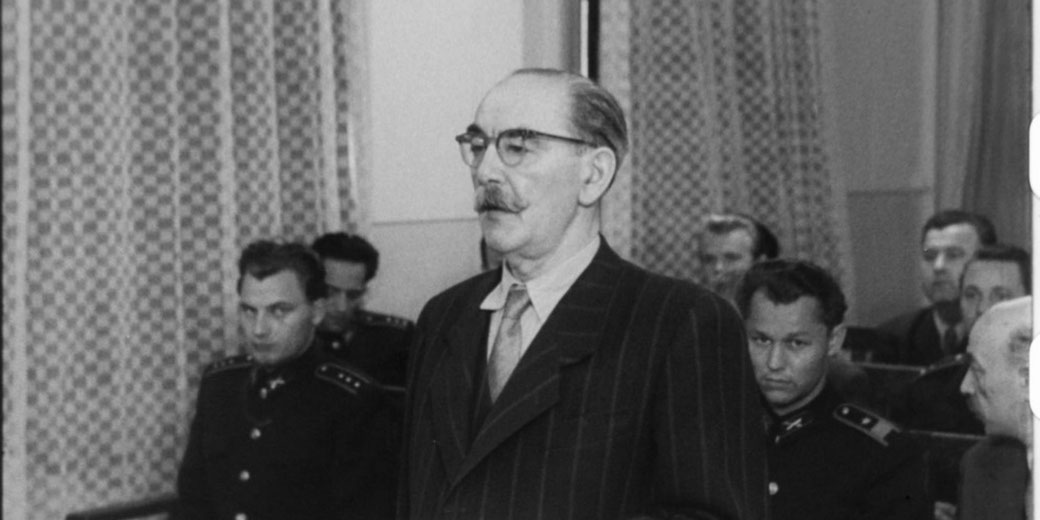
On 16 June 1958, the Hungarian government secretly hanged a former prime minister and buried his body face-down in an unidentified grave, withholding any public announcement until the following day.
The man they killed was Imre Nagy, a lifelong communist who had dared to side with his own people during the Hungarian Revolution of 1956 by declaring Hungary’s neutrality and its withdrawal from the Warsaw Pact.
His execution at the age of 62 sent a chilling message across the Eastern Bloc: any leader who defied Moscow’s authority would pay the ultimate price.
From peasant locksmith to committed communist
Imre Nagy was born on 7 June 1896 in Kaposvár, a small city in southern Hungary.
His parents were both servants in the household of a local official, and his upbringing was modest.
After performing poorly at secondary school, Nagy left formal education at the age of 16 and became an apprentice locksmith, earning a journeyman’s certificate as a metalworker by 1914.
When the First World War broke out, Nagy was drafted into the Austro-Hungarian army and sent to the Eastern Front.
In 1916, Russian forces captured him, and he spent the remainder of the war as a prisoner.
During his captivity, Nagy encountered Marxist-Leninist ideology for the first time, and the experience converted him to communism.
He joined the Bolshevik cause and fought with the Red Army during the Russian Civil War, becoming a dedicated member of the communist movement.
After briefly returning to Hungary in 1921, Nagy eventually settled in Moscow in 1929, where he spent the next fifteen years working as a researcher at the Institute for Agrarian Sciences.
He deepened his understanding of agricultural policy during that period, a subject that would later define his political career.
He returned to Hungary in late 1944 as Soviet forces occupied the country, and he quickly assumed several ministerial positions in the new communist government between 1944 and 1948.
The "New Course" and the challenge to Stalinism
Since 1949, Hungary had been under the control of Mátyás Rákosi, a hardline Stalinist who ruled through fear and repression.
Rákosi’s secret police force, the ÁVH (Államvédelmi Hatóság), imprisoned an estimated 100,000 people and oversaw the execution of approximately 2,000 Hungarians during his years in power.
Forced industrialisation and the collectivisation of agriculture caused living standards to fall sharply, which meant that ordinary Hungarians grew increasingly resentful of the regime.
After Joseph Stalin’s death in March 1953, the Soviet leadership in Moscow forced Rákosi to hand over the position of prime minister to Imre Nagy, who took office in July 1953.
Nagy quickly announced what he called a “New Course“ for Hungary: a reform programme designed to slow forced industrialisation and ease restrictions on private farming, with the overarching aim of improving daily conditions for citizens.
His policies were popular because they addressed years of economic hardship and political fear.
Among his most significant early actions, Nagy ordered the release of political prisoners and the closure of internment camps that had operated under Rákosi’s rule.
Rákosi retained his position as General Secretary of the Hungarian Workers’ Party and spent the following months undermining Nagy at every opportunity.
By April 1955, the Soviet Politburo had grown dissatisfied with Nagy’s direction, and the National Assembly dismissed him from office.
Nagy was expelled from the party and forced into political isolation, yet his brief tenure as prime minister had given Hungarians a taste of reform that they would not easily forget.
Revolution on the streets of Budapest
On 22 October 1956, students at the Technical University in Budapest formed an association and drafted a list of sixteen demands, calling for the withdrawal of Soviet troops from Hungary and the reinstatement of Imre Nagy as prime minister.
The following day, 23 October, approximately 200,000 people joined a mass demonstration that marched through central Budapest to the Parliament building.
As the crowd swelled throughout the afternoon, demonstrators toppled the massive bronze statue of Stalin that had stood in the centre of the city.
Later that evening, a group of protesters marched to the Radio Budapest building to demand that their sixteen points be broadcast to the nation.
The ÁVH secret police opened fire on the unarmed protesters, and the gunfire killed and wounded several people.
Ernő Gerő, who had replaced Rákosi as party leader in June 1956, requested immediate Soviet military intervention, and by the early hours of 24 October, Soviet tanks were already rolling through the streets of Budapest.
Under immense public pressure, the Hungarian Workers’ Party reinstated Nagy as prime minister on 24 October.
Over the following days, Nagy acted swiftly to address the demonstrators’ demands.
On 28 October, he declared a ceasefire and called for Soviet forces to withdraw from Hungary.
At the same time, he ordered the dissolution of the ÁVH and announced the creation of a multiparty political system.
Then, on 1 November, as fresh Soviet troops continued to pour into Hungary, Nagy took the most consequential step of all: he declared Hungary’s neutrality and announced its formal withdrawal from the Warsaw Pact, appealing to the United Nations for support.
Soviet tanks and the crushing of the uprising
Moscow had no intention of tolerating Hungary’s departure from the Warsaw Pact.
On 4 November 1956, Soviet Premier Nikita Khrushchev ordered a full-scale military invasion, sending thousands of troops and hundreds of tanks into Budapest.
Fierce street fighting erupted across the city, and at 5:20 a.m. that morning, Nagy made a desperate final broadcast over Hungarian radio, announcing that Soviet forces had attacked the government and appealing to the world for help.
By 10 November, the Soviet military had crushed all organised resistance. Over 2,500 Hungarians died in the fighting, and approximately 200,000 fled the country as refugees in the weeks that followed.
The Kremlin installed János Kádár, a former member of Nagy’s own cabinet who had secretly defected to the Soviet side, as Hungary’s new leader.
On the morning of 4 November, Nagy and several of his closest associates had taken refuge in the Yugoslav embassy in Budapest.
After eighteen days inside the embassy, Kádár provided a written guarantee of safe conduct on 22 November.
As soon as Nagy stepped outside, Soviet agents seized him, placed him on a bus, and transported him to Snagov in Romania, where he was held under house arrest.
Over the following months, the Kádár government pressured Nagy to publicly recognise the new regime and renounce his actions during the revolution, but Nagy consistently refused.
A secret trial and a calculated execution
In Moscow in late March 1957, Kádár and Soviet leaders agreed to bring Nagy to trial.
He was transported back to Hungary, and a secret trial began on 5 February 1958 in the military court of Budapest.
The proceedings continued intermittently until 15 June, with the entire 52 hours of testimony tape-recorded behind closed doors.
Nagy and his co-defendants, including Defence Minister Pál Maléter and journalist Miklós Gimes, faced charges of high treason and attempting to overthrow the state.
Maléter had been arrested on 3 November during ceasefire negotiations with Soviet commanders, seized at the very table where he had been negotiating in good faith.
On 15 June 1958, the court delivered its verdict. The court sentenced Nagy to death alongside Maléter and Gimes, and several other defendants received lengthy prison sentences.
At dawn on 16 June, all three condemned men were executed by hanging. The Hungarian government did not announce the executions until the following day.
Nagy’s body was buried in Lot 301 of Budapest’s Municipal Cemetery, a section where authorities had quietly interred other victims of the post-revolution reprisals, and his grave was left without any identification.
Rehabilitation and the reckoning of 1989
For more than three decades, public discussion of the 1956 revolution and Nagy’s involvement in it was forbidden in Hungary.
The Kádár government treated the uprising as a counter-revolutionary conspiracy and systematically erased Nagy from official records.
As communist authority weakened across Eastern Europe in the late 1980s, Hungarian opposition groups began demanding proper recognition of the revolution’s victims.
In 1988, the Committee for Historical Justice was founded with the specific aim of locating and reburying the executed leaders of 1956.
On 16 June 1989, exactly 31 years after his execution, Nagy was exhumed and reburied with full honours at a ceremony in Heroes’ Square, Budapest, attended by approximately 250,000 people.
A 26-year-old opposition activist named Viktor Orbán delivered a speech at the event calling for the withdrawal of Soviet troops and free democratic elections.
Later that year, Hungary’s Supreme Court posthumously rehabilitated Nagy and dismissed all charges against him as unfounded.
The ceremony at Heroes’ Square is now widely regarded as one of the critical turning points in Hungary’s transition from communist rule to democracy.
Within months of the event, Hungary held free elections for the first time in over four decades, and 23 October, the anniversary of the 1956 revolution, has been a national holiday in Hungary ever since.