
Why the 1956 Hungarian Uprising happened and how it was crushed
On 23 October 1956, students and other residents gathered in central Budapest for demonstrations that swelled rapidly, and later that night an enormous crowd tore down a bronze statue of Joseph Stalin.
This was an open challenge to Soviet authority in the Cold War era. Within hours, however, the Hungarian secret police opened fire on unarmed demonstrators outside the national radio building, and the gunfire had transformed a peaceful protest into a full-scale armed uprising.
The events of the following two weeks arguably exposed the willingness of the Soviet Union to use overwhelming military force against its own satellite states, abut also confirmed the inability of Western democracies to intervene behind the Iron Curtain.
Stalinism and suffering under Rákosi
Since the late 1940s, Hungary had endured one of the most repressive regimes in the Eastern Bloc under Mátyás Rákosi, who was the General Secretary of the Hungarian Communist Party.
Rákosi modelled his government on Stalinist principles, which meant the State Security Police was known as the ÁVH and carried out mass purges of perceived political enemies.
At least 7,000 party officials were purged during the early 1950s on fabricated charges, and between 1950 and 1952, the ÁVH had forcibly relocated thousands of citizens to seize property for loyal party members.
Economically, the Soviet Union extracted industrial and agricultural goods from Hungary at exploitative rates, which left the population generally impoverished.
Living standards fell steadily, and for many Hungarians, the Rákosi years had created a considerable well of resentment that would fuel the uprising of October 1956.
How did Khrushchev’s secret speech change everything?
On 25 February 1956, Soviet Communist Party First Secretary Nikita Khrushchev delivered a dramatic address to a closed session of the 20th Congress of the Communist Party, in which he denounced Stalin’s cult of personality and condemned the mass terror of the Great Purge.
Because the speech was never officially published in the Soviet Union, its content spread informally through party briefings before it reached Western media when the New York Times printed the full text on 5 June 1956.
Across the Eastern Bloc, the speech ignited hopes for political reform. For Hungarians, the implications were particularly significant, as Khrushchev’s criticisms directly undermined the Rákosi regime.
On 18 July 1956, the Soviets removed Rákosi, but his replacement was Ernő Gerő, who was nearly as unpopular and who refused meaningful political concessions.
As a result, Hungarian intellectuals and students began organising openly for democratic reform throughout the summer and autumn of 1956.
From protest to armed uprising
On 22 October, students at the Building Industry Technological University in Budapest adopted a list of sixteen demands that called for concrete political changes.
They demanded the withdrawal of Soviet troops and the return of Imre Nagy to head a new government, and they also called for free elections, freedom of speech and press, as well as the restoration of multi-party political life.
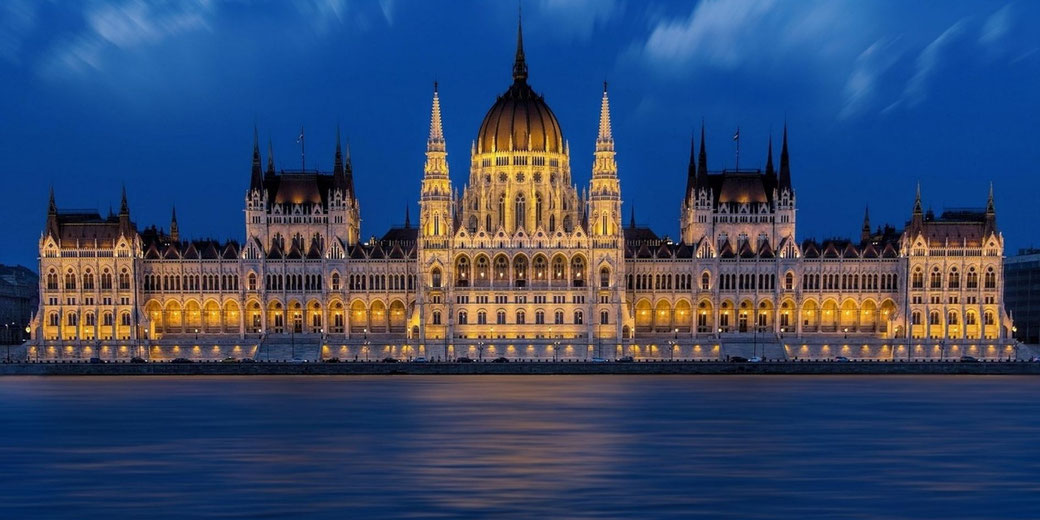
On 23 October, a student demonstration in Budapest attracted thousands of citizens who marched through the city toward the Parliament building with demands for free elections and the withdrawal of Soviet troops.
Demonstrators gathered first at Bem’s statue, then moved toward the centre, and by early evening the crowd outside Parliament numbered in the hundreds of thousands.
A student delegation entered the radio building to broadcast their demands, but the ÁVH detained them and refused to air the programme.
By about 6 p.m., crowds in the capital had swollen to roughly 200,000 to 300,000 people as students and workers, along with office staff, moved through the city in a wave of protest.
At the statue of General József Bem, where the rally drew about 20,000 people, demonstrators laid wreaths and recited nationalist poetry, and another crowd gathered at the Petőfi statue in a parallel rally that reinforced the message of national independence.
At about 8 p.m., a radio address by Ernő Gerő offered no concessions, and the speech only hardened public anger.
At about 9.30 p.m., the Stalin statue fell, and the public destruction of the regime’s main symbol turned protest into open defiance.
Shortly after 9 p.m., ÁVH personnel threw tear gas from upper windows and then opened fire on the crowd outside the radio building.
As news of the shootings spread, the protest became an armed revolt, because demonstrators had seized weapons from government depots and obtained rifles from sympathetic soldiers, and they also collected arms from barracks and police stations.
Workers from industrial districts such as Csepel and Újpest drove into the centre in trucks, and many arrived with weapons that had been taken from factories and depots, along with local units.
Under orders from Soviet Defence Minister Georgy Zhukov, Soviet tanks entered Budapest, and the first armoured columns appeared in the city at about 2 a.m. on 24 October.
The government did not issue a formal announcement until about 9 a.m., and state broadcasts claimed that Hungarian authorities had asked for Soviet assistance.
The origin of that request was still disputed, and the public heard only fragments and rumours as fighting spread.
On 25 October, crowds gathered once more near the Parliament area at Kossuth Square, and gunfire ripped through the mass of civilians.
Estimates of the dead ranged from roughly 300 to 800, and the killings became known as Bloody Thursday.
In response to the widening crisis, the Communist Party appointed the reformist Imre Nagy as Prime Minister on 24 October, as they hoped his reputation would calm the population.
Nagy called for a ceasefire on 28 October and described the uprising as a “great, national and democratic event.”
Over the following days, he formally disbanded the ÁVH and restored multi-party politics, and on 1 November he declared that Hungary would withdraw from the Warsaw Pact.
He then appealed to the United Nations for recognition as a neutral state.
The Soviet invasion and its aftermath
At 5:20 a.m. on 4 November, Nagy broadcast a grim 35-second radio message to the nation, in which he stated that Soviet forces had launched a full-scale invasion.
Soviet forces that were already stationed in Hungary included the 2nd and 17th mechanised divisions, which numbered about 20,000 men, and reinforcements moved in from the Soviet Union and from bases in neighbouring states.
Estimates for the invading force ranged from roughly 75,000 to 200,000 soldiers, and the operation unfolded as a coordinated assault that many accounts described as Operation Whirlwind under Marshal Ivan Konev.
The Kremlin decided that allowing Hungary to leave the Warsaw Pact would fatally weaken the Soviet alliance system.
Pressure from China under Mao Zedong and alarm from neighbouring states, along with the distraction of the simultaneous Suez Crisis, all contributed to the decision.
Fierce street fighting raged for several days, and according to historians, approximately 2,500 Hungarians and over 650 Soviet soldiers died during the fighting.
On 3 November, General Pál Maléter attended talks with Soviet officers, and Soviet forces seized him during the meeting as the invasion preparations reached their final stage.
János Kádár, who had secretly defected from Nagy’s cabinet to Moscow on 1 November, returned under Soviet protection to head a new pro-Soviet government.
Nagy fled to the Yugoslav embassy, where he had been promised safe conduct. On 22 November 1956, Soviet authorities seized him as he left the embassy and transported him to Romania, and after a secret trial in June 1958, he was executed alongside Maléter.
In the months that followed, the Kádár government arrested approximately 35,000 Hungarians and executed at least 229, and some estimates ran higher.
Roughly 200,000 fled as refugees, and most of them crossed into Austria, with about 38,000 who settled in the United States.

Why didn't the West intervene?
For many Hungarians, the failure of Western democracies to provide assistance was arguably the most bitter outcome of the uprising.
Throughout the early 1950s, Radio Free Europe had broadcast encouraging messages into Hungary, and speeches by President Eisenhower and Secretary of State Dulles spoke of liberating captive peoples.
When Soviet tanks rolled into Budapest, the United States issued statements of sympathy but took no military action, because intervention risked nuclear confrontation.
The simultaneous Suez Crisis further diminished any prospect of Western involvement, as Israel invaded Egypt on 29 October 1956, and Britain and France launched attacks on 31 October before they landed forces in early November.
On 10 January 1957, the UN General Assembly established a Special Committee on Hungary, and the committee included Australia among its member states.
By then the uprising had been crushed, and Western inaction had confirmed for many in Eastern Europe that liberation rhetoric would not be supported by force.
The 1956 Hungarian Uprising occupied a critical place in Cold War history because it exposed the ruthlessness of Soviet imperialism and the limits of Western commitment to freedom in Eastern Europe.
Time magazine named the anonymous Hungarian freedom fighter its “Man of the Year” for 1956, and the cover appeared on 7 January 1957.
On 16 June 1989, when about 200,000 Hungarians gathered in Budapest’s Heroes’ Square for a public reburial ceremony for Nagy and Maléter with full honours, their coffins were later interred at Plot 301 in the New Public Cemetery, and the day helped catalyse the dismantling of communist rule across the region.
In May 1989, Hungary began dismantling border barriers with Austria, and on 11 September 1989 it allowed East German refugees to cross into Austria, which contributed directly to the fall of the Berlin Wall.