
How Mahatma Gandhi helped turn India toward mass non-cooperation
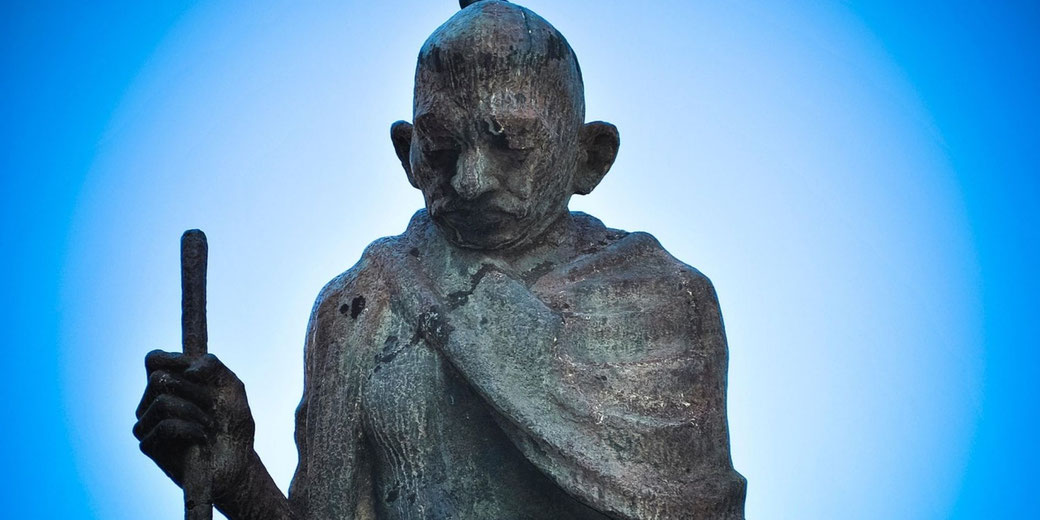
In August 1920, Mohandas Karamchand Gandhi convinced the Indian National Congress to launch a programme of mass non-cooperation with the British Raj.
This was a turning point for India's independence movement, because it brought millions of ordinary people into what had previously been a political struggle run by a small, educated elite.
Before this moment, Indian resistance to colonial rule had mostly involved petitions, polite requests, and formal delegations sent to the British government.
Instead, Gandhi believed that the moral power of a movement came from refusing to participate in an unjust system, and so he committed India's largest political organisation to a strategy of peaceful withdrawal from British institutions.
No anti-colonial movement had ever tried anything like this on such a scale.
Gandhi's political education in South Africa
Before he became the central figure in Indian politics, Gandhi spent over two decades living in South Africa, where he developed the ideas and tactics that would later define his leadership.
He arrived in Durban in 1893 as a young, London-trained lawyer working for a Muslim trading firm, and he ran into racial discrimination almost immediately.
On a train journey from Durban to Pretoria, a white passenger refused to share a first-class compartment with him, and railway officials physically threw Gandhi off the train at the Pietermaritzburg station.
That experience left a powerful impression on the 23-year-old, because it forced him to confront the daily humiliations that Indian migrants endured under South Africa's colonial laws.
Over the following years, Gandhi organised the Indian community in the Transvaal and Natal against discriminatory legislation, especially the 1906 Asiatic Registration Act, which required all Indians to carry fingerprint passes.
In response to that law, he developed the concept of satyagraha, a Sanskrit term meaning "truth-force" or "soul-force," which demanded that resisters accept suffering rather than cause harm to their opponents.
During the campaigns of 1907 to 1914, thousands of Indian workers and merchants refused to register, burned their passes at public demonstrations, and willingly went to prison.
Gandhi himself was jailed several times, and the movement attracted international attention.
By the time he returned to India in January 1915, he had a proven method of mass protest and a growing reputation as a leader willing to sacrifice personal comfort for a cause.
How British wartime policies provoked Indian discontent
When Gandhi arrived back in India, his political mentor Gopal Krishna Gokhale advised him to spend a year travelling the country to understand its conditions before entering public life.
Gandhi followed that advice, visiting rural communities across the subcontinent and seeing for himself the poverty and exploitation that defined life for India's peasant majority.
He set up a communal settlement at Kochrab near Ahmedabad on 25 May 1915, then moved it to the Sabarmati riverbank on 17 June 1917, which became his base of operations for the next decade.
During the First World War, India contributed approximately 1.3 million soldiers and labourers to the British war effort, and Indian leaders expected political concessions in return.
Secretary of State Edwin Montagu announced in August 1917 that British policy would aim toward "the progressive realisation of responsible government in India," a statement that raised expectations among Indian politicians.
The Montagu-Chelmsford Reforms of 1919, which introduced a limited form of shared Indian-British authority in provincial legislatures, fell well short of self-government.
For many Indians, the reforms felt like a broken promise, since the British kept control over all the important areas of administration, including finance, police, and revenue collection.
At the same time, the colonial government moved in the opposite direction on civil liberties.
In March 1919, the Imperial Legislative Council passed the Rowlatt Act, based on recommendations from a committee chaired by Justice Sidney Rowlatt.
This legislation gave authorities the power to detain political suspects without trial, suppress publications, and conduct closed trials without juries.
Gandhi described the Rowlatt Act as legislation designed to crush Indian political life, and he called for a nationwide hartal (a day of prayer and fasting combined with a shutdown of business) on 6 April 1919.
The consequences of the Jallianwala Bagh Massacre
As protests against the Rowlatt Act spread across India in April 1919, the British response in the Punjab proved catastrophic.
Brigadier-General Reginald Dyer took military control of Amritsar after riots broke out on 10 April, and he banned all public gatherings.
The Punjab authorities declared martial law across several districts during the night of 13 to 14 April.
On 13 April, thousands of unarmed civilians gathered in Jallianwala Bagh, a walled public garden near the Golden Temple, for a Baisakhi festival meeting.
Many of those present were pilgrims and villagers from surrounding areas who had no idea about Dyer's ban.
Without giving any warning, Dyer ordered his troops to open fire on the crowd.
For approximately ten minutes, soldiers discharged 1,650 rounds into the densely packed garden, which had only a few narrow exits.
According to official British figures, 379 people died and approximately 1,200 were wounded.
Indian estimates placed the death toll much higher, with the Indian National Congress claiming that over 1,000 people were killed.
After the shooting, Dyer imposed a crawling order on the street where a British missionary had been attacked, forcing any Indian who used that road to crawl on their hands and knees.
News of the massacre spread slowly because of press censorship under martial law, and the full horror of the event only became widely known in late 1919 and early 1920.
The Hunter Commission, set up by the colonial government to investigate the Punjab disturbances, questioned Dyer in late 1919, and his testimony was remarkable for its bluntness.
He stated that he had intended to produce "a sufficient moral effect" on the population of the Punjab, and he expressed no regret.
In Britain, some supporters described Dyer as the "saviour of India," and a public subscription organised by the Morning Post newspaper raised £26,000 for him.
For Gandhi, the British government's failure to condemn the massacre and punish those responsible showed that cooperation with the colonial system was no longer morally acceptable.
Why did Gandhi unite the Khilafat and Swaraj Causes?
One of Gandhi's most important political decisions in this period was his alliance with the Khilafat movement, a campaign led by Indian Muslims who opposed the dismemberment of the Ottoman Empire after the First World War.
The Ottoman Sultan held the title of Caliph, the symbolic leader of the global Muslim community, and many Indian Muslims feared that the Allied powers planned to abolish the Caliphate and strip Turkey of its territories.
Brothers Muhammad Ali and Shaukat Ali led the All-India Khilafat Committee, which had attracted significant support among Indian Muslims by 1919.
Gandhi saw a chance to build Hindu-Muslim unity, which he considered essential for any successful mass movement against British rule.
He offered his full support to the Khilafat cause and proposed that both movements adopt the same method of resistance: non-cooperation with the colonial government.
At a joint conference in Allahabad in June 1920, the Khilafat Committee accepted Gandhi's programme.
In doing so, they committed the largest Muslim political organisation in India to a strategy conceived and led by a Hindu activist, something that had never happened before in Indian political history.
Because the Khilafat alliance gave Gandhi access to a mass Muslim constituency, particularly among the ulama (Islamic scholars) and urban artisan communities, it changed the potential scale of anti-British resistance.
For the first time, the independence movement had the ability to bring people together across religious lines and across the gap between educated professionals and working-class Indians.
The Programme of Non-Cooperation from 1920 to 1922
At the special session of the Indian National Congress in Calcutta in September 1920, Gandhi presented a detailed resolution calling for non-cooperation with the British government until India achieved swaraj, or self-rule.
The resolution passed over the objections of prominent leaders like C.R. Das, who initially doubted the practicality of boycotting legislatures and courts.
At the regular Congress session in Nagpur in December 1920, the resolution was confirmed, and the Congress adopted a new constitution that made swaraj its explicit goal.
Gandhi's programme contained several specific elements, each designed to withdraw Indian participation from the structures of colonial authority.
He called on Indians to surrender titles and honours given by the British government, and a number of prominent figures did so.
He urged students to leave government-affiliated schools and colleges, which led to the creation of "national" educational institutions such as the Jamia Millia Islamia in Aligarh, founded in October 1920.
He called for a boycott of the legislative councils created under the Montagu-Chelmsford Reforms, and most Congress candidates pulled out of the 1920 elections.
He promoted the use of khadi, or hand-spun cloth, as an alternative to imported British textiles, and he asked Indians to adopt the spinning wheel as both a practical economic tool and a symbol of self-reliance.
Across India, the response was substantial. In many provinces, lawyers abandoned the colonial courts, and students walked out of colleges.
Thousands of volunteers joined the movement, and local Congress committees reported a dramatic increase in membership.
The sale of foreign cloth dropped significantly in several regions, and bonfires of imported textiles became a common sight at public rallies.
In the United Provinces (modern Uttar Pradesh) and Bihar, the movement connected with local peasant grievances against landlords and indigo planters, which added a powerful economic dimension to the political campaign.
The Chauri Chaura incident and the suspension of the Movement
On 5 February 1922, a confrontation between police and Non-Cooperation volunteers at the town of Chauri Chaura in the Gorakhpur district of the United Provinces turned violent.
After police fired on a group of protesters, an enraged crowd chased the officers into the police station and set the building on fire.
Twenty-two policemen died in the attack. News of the incident reached Gandhi within days, and his response shocked many of his followers.
On 12 February, Gandhi announced the immediate suspension of the entire Non-Cooperation Movement.
He declared that the country was not yet ready for mass civil disobedience because the violence at Chauri Chaura proved that the movement had lost its disciplined, non-violent character.
Many Congress leaders were dismayed by this decision. Motilal Nehru and C.R. Das argued that suspending the movement at its peak of momentum would demoralise the millions who had made sacrifices to participate.
Subhas Chandra Bose, then a young Bengal Congress leader, later described Gandhi's decision as one that dealt a severe blow to the movement's energy.
Gandhi was arrested on 10 March 1922 and charged with sedition based on articles he had published in his newspaper Young India.
He was tried before Judge C.N. Broomfield in Ahmedabad. In a remarkable courtroom exchange, Gandhi pleaded guilty and invited the judge to impose the heaviest possible sentence.
Broomfield sentenced him to six years' imprisonment and expressed personal respect for Gandhi, acknowledging the difficulty of trying someone regarded by millions as a patriot and a leader.
What the Non-Cooperation Movement meant for India's future
The Non-Cooperation Movement of 1920 to 1922 changed the character of Indian politics in ways that lasted for the next quarter-century.
Before 1920, the Indian National Congress had been a relatively small organisation run by English-speaking lawyers and professionals who worked within the framework of constitutional politics.
After 1920, the Congress became a mass party with local branches in villages and small towns across the subcontinent, capable of mobilising millions of people for political action.
Gandhi's insistence on non-violence as a strategic principle also created a framework that would guide later campaigns, including the Salt March of 1930 and the Quit India Movement of 1942.
The concept of satyagraha, which he had first tested in South Africa, became the defining method of the Indian independence struggle.
The Non-Cooperation Movement showed the British government that maintaining colonial rule required ongoing force, and that Indian consent could not be taken for granted.
Because millions of Indians had voluntarily withdrawn their cooperation from British institutions, the colonial administration faced a new kind of challenge that neither military power nor political concessions could easily address.
The Khilafat alliance, for all its initial promise, did eventually fall apart after Mustafa Kemal Atatürk abolished the Ottoman Caliphate in March 1924, which removed the issue that had brought Hindu and Muslim leaders together.
Communal tensions worsened in the mid-1920s, and the dream of permanent Hindu-Muslim political unity proved difficult to sustain.
The period from 1920 to 1922 had shown what was possible when Indians of different religious backgrounds united behind a common programme of resistance, and that experience informed political thinking in India for decades to come.