
The Gandhi-Irwin Pact and the Second Round Table Conference
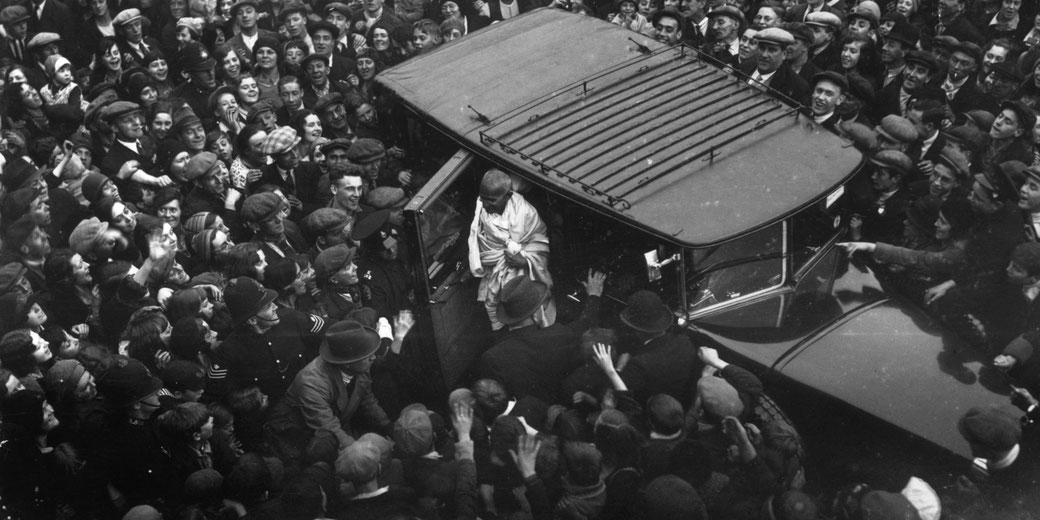
After the Salt March of 1930, British control over India began to weaken noticeably across parts of India, as tens of thousands of Indians defied the colonial government’s exclusive control of salt and accepted Gandhi’s call for nonviolent resistance.
At the same time, authorities increased mass arrests and seized property in several areas, and police resorted to violence, which weakened Viceroy Lord Irwin’s authority as he had become more wary of ruling by force.
As unrest spread across many provinces of India, Irwin agreed to meet Gandhi directly, which led to Gandhi’s participation in the Second Round Table Conference in London, which revealed significant splits in Indian politics and the British unwillingness to make real concessions.
Contents of the Gandhi Irwin Pact
After several rounds of personal discussions at the Viceroy’s residence in Delhi, Gandhi and Lord Irwin had reached a formal agreement, which was publicly announced on 5 March 1931.
It primarily aimed to reduce the tensions created by the Civil Disobedience Movement.
The Gandhi-Irwin Pact committed the British to release around 60,000 to 80,000 political prisoners, restore seized property when possible, remove restrictions on peaceful picketing, as well as allow the collection or manufacture of salt for personal use.
The salt law had originally made it illegal for Indians to produce or collect salt, which forced them to purchase it from government sources.
The pact included no promise of constitutional change, nor did it prevent the government from re-imposing restrictions at a later date.
Yet it formally recognised the Indian National Congress as a political force worth engaging and allowed Gandhi to attend the upcoming Second Round Table Conference.
In exchange, Gandhi agreed to suspend the Civil Disobedience Movement, but he did not formally give up the demand for independence at that time.
He had no illusions about the obstacles ahead. he accepted the role of sole Congress representative and prepared to argue for Indian self-rule within a hostile political environment.
Since most other Congress leaders had remained in prison or under government restriction, the British had largely limited the delegation to Gandhi alone in order to prevent a unified Congress presence.
At the same time, many Congress leaders, including Jawaharlal Nehru and Subhas Chandra Bose, expressed growing frustration that Gandhi had abandoned mass pressure without securing a clear British commitment.
The pact offered only symbolic recognition, which carried no real transfer of power in their view.
Who attended the Second Round Table Conference?
To many British conservatives, however, even that symbolic step went too far. A number of officials in London criticised Lord Irwin for granting legitimacy to a man they still associated with civil unrest, arguing that it undermined imperial authority.
Even so, the Viceroy believed that negotiation offered the only realistic alternative to severe rule, and he trusted Gandhi’s stated commitment to peaceful dialogue.
As the pact took effect, it briefly reduced tensions across some areas of India and raised hopes among some moderates that constitutional reform might be possible.
Most of those released from prison had been arrested during salt satyagrahas, protests, or boycotts tied to the campaign, which had swept across many urban and rural areas.
On 29 August 1931, Gandhi departed from Bombay aboard the SS Rajputana, bound for London with a small group.
When he arrived, he entered a crowded and sharply divided political forum. The Second Round Table Conference, which opened on 7 September and concluded on 1 December at St. James’s Palace, included more than a hundred delegates from across much of British India and the princely states.
Alongside British officials such as Prime Minister Ramsay MacDonald and Secretary of State for India Samuel Hoare sat prominent leaders of the Muslim League, Sikh representatives, Anglo-Indians, Indian Christians, the Maharajas of the princely states, and Dr B.R. Ambedkar, who had become the leading advocate for Dalit rights.
Gandhi stayed at Kingsley Hall in London’s East End, where he wore simple homespun clothes and drew widespread public attention for his unconventional manner and personal humility.
Reasons the negotiation collapsed
Immediately, Gandhi’s position came under pressure. Since he claimed that the Congress spoke for all Indians, he firmly opposed the creation of separate electorates for religious or social minorities, which he viewed as a direct threat to national unity.
He argued that such divisions could make political splits permanent and weaken the campaign for self-government.
However, Dr Ambedkar firmly disagreed, since he believed that Dalits needed legal safeguards to prevent their continued exclusion from political power.
Ambedkar supported the British proposal for separate electorates under the Communal Award, which Gandhi rejected.
Muhammad Ali Jinnah, who spoke for the Muslim League, also demanded specific protections for Muslim interests.
Meanwhile, the princely rulers sought to keep their independence and showed little interest in a centralised democratic system.
Throughout the ten weeks of negotiation, Gandhi tried to convince others to agree on a single plan for India’s future, as British officials grew increasingly frustrated with his unwillingness to accept communal representation.
Other Indian delegates viewed him as dismissive of their concerns. By the end, the talks had collapsed without agreement.
On 28 December 1931, Gandhi returned to India with no substantial concessions.
In his absence, colonial authorities had started a wider clampdown, which returned to severe policing and led to the re-arrest of Congress leaders and the banning of party activities.
Lord Willingdon had replaced Irwin as Viceroy and had declared the Indian National Congress an illegal organisation and ordered widespread arrests.
The brief truce created by the pact had ended without fanfare, and the movement largely lost the momentum it had built during the Salt Satyagraha.
Gandhi's arrest and decreasing influence
Within weeks of his return, Gandhi found himself imprisoned by the new Viceroy, who had adopted a much more severe approach to colonial control.
As the colonial administration had taken back control, Gandhi’s strategy of peaceful negotiation largely appeared to have failed.
Still, the experience of 1931 exposed serious splits between Indian communities and showed that the British had refused to treat the Congress as the main representative body.
The lack of agreement at the Second Round Table Conference significantly deepened mistrust and delayed constitutional progress for more than a decade.
The British would later proceed without Indian consensus to draft the Government of India Act of 1935, which fell far short of Congress expectations.
Eventually, the failures of 1931 would feed into later campaigns, including the Quit India Movement of 1942.
The Gandhi-Irwin Pact had initially raised hopes for a peaceful transition, but its collapse showed how fragile any compromise could be in a colonial system that refused to share power.
For Gandhi, the year was a temporary setback, but for the Congress, at least in the short term, it showed that the Congress needed renewed mass action rather than reliance on talks with the British.
Gandhi remained imprisoned for over a year and began a fast in 1932 to protest the proposed Dalit electorates, which eventually led to the Poona Pact between him and Ambedkar.