
What really happened at the very first Thanksgiving?
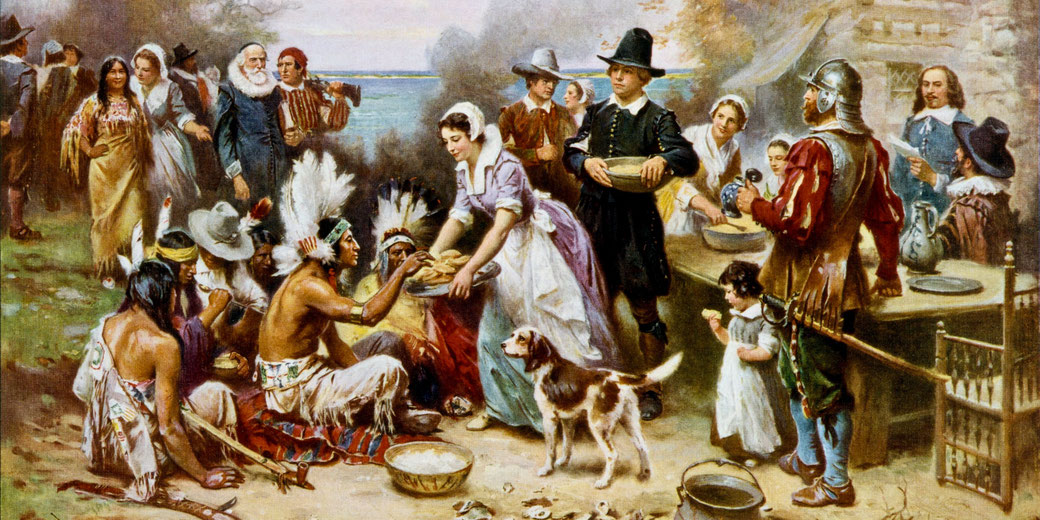
Each November, many American families remember an event that they believe began with a shared meal between Pilgrims and Native people in 1621.
According to popular tradition, it was a feast of gratitude and friendship that later helped give rise to the modern Thanksgiving holiday.
However, the historical event involved a carefully planned alliance between a fragile English colony and a group of Native tribes that were recovering from the destruction caused by disease, and it made the practical reasons that guided early colonial survival clear.
Why were the Pilgrims in America?
During the early 1600s, a group of Puritan separatists rejected the authority of the Church of England, claiming that its ceremonies and leadership contradicted biblical truth.
After they had sought refuge in the Dutch city of Leiden in 1608, they lived under laws that allowed limited religious freedom but soon faced new worries, because their wages as cloth workers remained low and they believed that their children were becoming too Dutch in speech and customs, as well as in the religious ideas they encountered.
Eventually, they decided to relocate to the Americas, because they hoped to build a community governed by their beliefs and protected from foreign influence.
After they had received a patent from the Virginia Company and had got money from English merchants, they boarded the Mayflower in September 1620 and aimed for the northern part of the Virginia colony.
Originally, they had intended to travel alongside a second ship, the Speedwell, which had to be abandoned because it leaked constantly.
After they had endured a long and stormy journey, they signed the Mayflower Compact on 11 November 1620 as a means of establishing a civil body politic.
Violent storms pushed them off course, so they had to anchor at Cape Cod. By December, they had selected a new settlement site further south at a place called Patuxet.
By that point, the settlers faced serious shortages, while severe winter weather, scurvy, and hunger killed 45 of the 102 passengers by March.
Their first governor was John Carver, and he died during this period. In response to the crisis, the survivors dug shallow graves to hide the number of their dead from nearby Native peoples, whom they feared might attack if they sensed weakness.
Their lack of knowledge about the climate, soil, and local resources left them heavily dependent on the possibility of Native assistance.
Who were the Wampanoag?
For thousands of years before the Mayflower appeared on the horizon, the Wampanoag people had supported themselves across present-day southeastern Massachusetts and Rhode Island, where they built seasonal villages and relied on a mix of farming, fishing, and hunting.
Their society included about sixty connected communities, each led by a local sachem, a term meaning leader, who paid tribute to the highest leader.
At the time of English settlement, the most important leader was Massasoit of the Pokanoket, who maintained his main village at Sowams, near present-day Warren, Rhode Island.
Importantly, the Wampanoag had suffered very heavy losses shortly before the Pilgrims arrived, because between 1616 and 1619, a disease brought by European traders, possibly leptospirosis or viral hepatitis, spread through coastal villages and killed thousands.
Many historians believe that English or Basque fishermen brought the illness in by accident.
The area that the Pilgrims later called Plymouth, as mentioned above, had once been Patuxet, a Wampanoag village abandoned after its entire population died.
Survivors across the region buried the dead in mass graves and watched their enemies grow stronger.
Some English sources were written by people such as Governor William Bradford, who interpreted the empty lands as a sign of favour from God.
Massasoit found himself in a weak position, since the Narragansett to the west had escaped the epidemic and now posed a more serious threat.
The sudden arrival of a new foreign group with firearms and steel tools and that had no allies of its own created an unusual opportunity.
If he formed an alliance with the English, he could gain access to weapons and supplies, strengthen his power, and at least hold rival tribes in check.
Why the two groups decided to work together
By early 1621, both the settlers and the Wampanoag leadership increasingly saw the benefits that came from cooperation.
On 16 March, an Algonquian-speaking man named Samoset walked into the Plymouth settlement and greeted the colonists in English.
He had learned the language from fishermen and traders along the coast of Maine, but then travelled south to the Wampanoag territories and informed them of the settlers' presence.
Soon after, he returned with Tisquantum, more widely known as Squanto, who had a remarkable story.
Years earlier, he had lived in Patuxet before being captured in 1614 by English explorer Thomas Hunt, who sold him into slavery in Spain.
After he had escaped to England and had lived in the household of merchant John Slany, he travelled via Newfoundland and eventually made his way back to New England.
He returned in 1619 to find that his entire village had died. Because he spoke fluent English and knew both Native and European customs, he became a go-between who helped the settlers communicate with Massasoit.
On 22 March 1621, as Squanto translated, the two groups negotiated an official treaty.
The agreement included rules for mutual defence and the return of stolen goods, and it required both sides to look for peaceful ways to settle conflicts.
According to later recollections, the treaty endured through Massasoit’s lifetime, though tensions gradually increased before his death in 1661.
For the Pilgrims, the treaty offered protection and access to important knowledge about crops, hunting grounds, and edible plants.
For the Wampanoag, it provided an important partner that could deter attacks from nearby enemies.
The events of the first Thanksgiving
Later that year, after they had successfully harvested their first crop of corn, the settlers decided to hold a celebration.
Governor William Bradford described the harvest as modest but successful enough to sustain them through winter.
Edward Winslow was a senior member of the colony and wrote that they planned a three-day feast and sent out a party to hunt wild birds for the occasion.
Winslow recorded that about ninety Wampanoag men attended the feast.
Although it is unclear whether Massasoit brought them directly or they arrived independently, the gathering stayed peaceful.
The Wampanoag contributed five deer to the feast and watched as the settlers conducted musket drills and target practice.
These drills may have served as a careful show of military power meant to reinforce the alliance.
Winslow’s letter states that the gathering included shared meals and displays of preparations for fighting, along with periods of informal discussion.
The event lacked religious structure, as no prayers or sermons were recorded, and the focus remained on food and diplomacy.
For the Wampanoag, the event offered a chance to monitor their new allies and reinforce their existing agreement.
For the settlers, it marked a brief moment of optimism during a difficult year.
What was on the menu?
The menu of 1621 probably differed significantly from modern versions, since the settlers lacked flour, dairy, and sugar, and they had no ovens suitable for baking.
Instead, they relied on what they could harvest, hunt, or gather. Squanto had shown them how to plant corn with fish as fertiliser, and the harvest included corn, beans, and squash.
These, known together as the “Three Sisters,” formed the core of their meal.
The colonists also hunted for ducks, geese, and possibly turkeys. Although later traditions focused on turkey, Winslow’s letter only refers to generic wild fowl.
The Wampanoag contributed venison, which they had hunted in the surrounding forests.
In addition, the area offered shellfish, eels, and river fish, all of which may have been cooked over open fires or boiled in iron pots.
Pumpkin, along with other native gourds, may have appeared in stews or roasted dishes.
Wild foods that they collected, such as walnuts, chestnuts, and berries, could have completed the meals.
However, the lack of wheat flour and dairy meant that pies and pastries were impossible.
The available food reflected the environment and the reliance of the settlers on Wampanoag knowledge about local resources.
Did the pilgrims ever help the Wampanoag?
While the 1621 feast is often remembered as a gift from the Wampanoag to the Pilgrims, the alliance did involve some actions on both sides.
In March 1623, when Massasoit became seriously ill, Edward Winslow travelled to his village and treated him using English remedies.
According to Winslow, Massasoit recovered and later expressed gratitude for the help.
For a time, peace held, as the Wampanoag benefited from English trade goods such as knives, cloth, and cooking pots, while the settlers learned how to grow unfamiliar crops and navigate the terrain.
However, the situation soon changed, as new waves of English colonists arrived and land disputes steadily increased.
Many settlers fenced off fields, imposed English law, and ignored prior agreements.
Tensions steadily grew throughout the 1630s, as Wampanoag leaders attempted to maintain peace but settler demands for more land led to ongoing conflict.
The early period of cooperation gave way to a gradual loss of Native control over their own lands and rising pressure as settlers took more land.
These tensions helped to contribute to the outbreak of the Pequot War in 1636, which further made relations between Native peoples and colonists across the region less stable.
Separating myth from history
The actual events of 1621 had received little notice for more than two centuries, as it was not until 1863, when President Abraham Lincoln declared a national Thanksgiving holiday during the Civil War, that the idea of a shared Pilgrim–Native feast became important across the nation.
Sarah Josepha Hale was editor of Godey’s Lady’s Book and had spent years campaigning for such a holiday to promote national unity.
Later, many writers and educators retold the event as a story of harmony and God's guidance, omitting the hardships and power struggles that had influenced it.
Instead of showing the Wampanoag as skilled negotiators, popular accounts reduced them to grateful assistants.
Textbooks and artwork often overstated how equal the two sides were at that moment, avoiding the fact that colonisation soon followed.
Within a generation, the children of the 1621 participants fought each other in King Philip’s War, and Metacom, who was the son of Massasoit, led a rebellion against English expansion that ended in 1676 with his death and the almost complete loss of his people’s independence.
His wife and son were sold into slavery, and Wampanoag communities that survived lost access to their ancestral lands.
When people focus only on a three-day feast, the full history can become misleading, because the real Thanksgiving was a single event and it did not celebrate understanding and respect between the two cultures.
It was a short and carefully planned meeting between two groups with urgent needs, as one hoped to survive a second winter and the other attempted to maintain its influence during a time of threats from rival powers and the results of disease.