
How the Congress of Vienna changed Europe forever
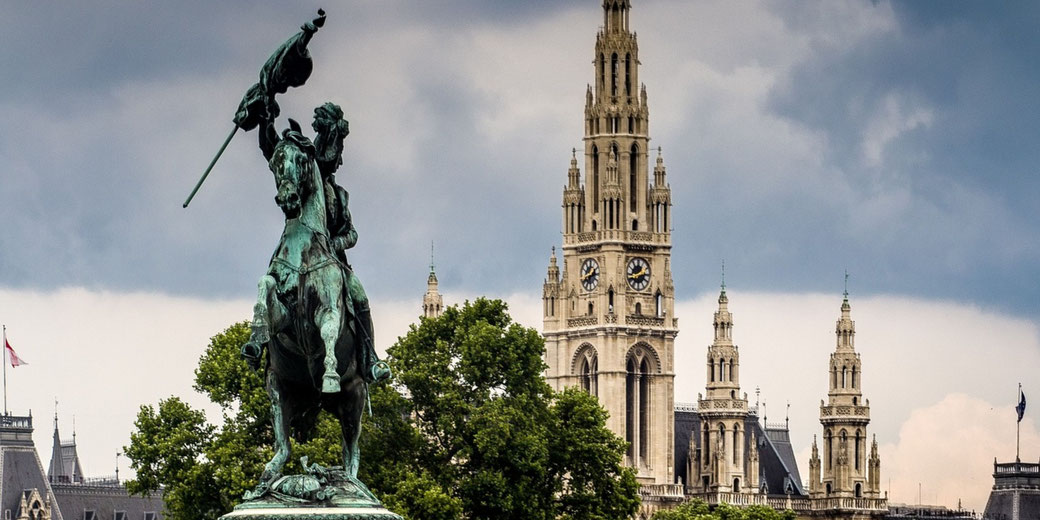
After twenty-three years of revolutionary turmoil and Napoleonic expansion, Europe faced widespread territorial disruption and toppled monarchies, along with political unrest that stretched from the Iberian Peninsula to the Russian steppe.
In September 1814, representatives from the continent’s leading powers, who wished to reverse the damage, gathered in Vienna to build a stable order after the war.
By June 1815, the Congress of Vienna had redrawn borders and restored dynasties, and this created a system of great-power diplomacy that helped maintain a relatively stable peace among major states for nearly a century.
The major powers and their goals
At the heart of the negotiations stood Austria, Britain, Prussia, and Russia, each with its own priorities but they were largely united in the desire to prevent another Europe-wide war.
For Austria, which was represented by Prince Klemens von Metternich, the central aim involved regaining control over its Italian and German territories, and the Austrian government promoted a conservative vision that rejected revolution and upheld dynastic legitimacy.
Metternich argued that only a strong alliance of monarchs could contain liberal movements and preserve stability.
He supported increasingly wide networks for secret monitoring, including the use of the Austrian secret police under advisors such as Friedrich von Gentz, and they used these forces to monitor and suppress political opposition.
Meanwhile, Lord Castlereagh of Britain focused on preventing the rise of another state that dominated Europe by promoting a balance of power across the continent.
He supported territorial adjustments that strengthened states bordering France, especially the Netherlands and Prussia.
Russia’s Tsar Alexander I, who pursued both religious and territorial objectives, promoted Christian unity among monarchs and insisted on control of Polish territory.
Although Alexander initially called for a shared moral code, his demands for influence in central Europe revealed strategic interests.
The Kingdom of Poland that he had established received a constitution in 1815, but Alexander later disregarded its terms and ruled it more and more as a direct part of the Russian Empire under his absolute power.
At the same time, Prussia aimed to expand westward into the Rhineland and northward into Saxony so that it could increase its military and economic strength.
Its leaders viewed territorial compensation as essential after the crushing defeat by Napoleon at Jena-Auerstedt in 1806.
The Rhineland in particular offered access to valuable coal and iron deposits that would later speed up Prussia’s industrial growth.
In spite of its recent defeat, France returned to the negotiating table under the skilled diplomacy of Charles-Maurice de Talleyrand.
Talleyrand argued that isolating France would threaten the very stability the congress hoped to establish.
As a result, France retained the borders outlined in the Treaty of Paris, which returned it to its territorial boundaries from 1792 rather than pre-revolutionary limits.
His efforts built upon favourable terms he had already negotiated in the First Treaty of Paris in May 1814.
Territorial changes across Europe
To enforce a lasting peace, the congress redrew the European map in a very careful way.
Austria recovered control over Lombardy and Venetia and again became the leading German power within the new German Confederation, a group of thirty-nine states designed to replace the Holy Roman Empire.
Prussia received strategic gains in the Rhineland and Westphalia, along with northern Saxony, which enabled it to act as a western defence line against future French expansion.
Russia received the largest share of the former Duchy of Warsaw and created an officially self-governing Kingdom of Poland under the Russian crown, strengthening its influence in eastern Europe.
At the same time, the congress recognised Sweden’s earlier handover of Finland to Russia in 1809 and confirmed its compensation by granting Norway, taken from Denmark.
The creation of the Kingdom of the Netherlands, which combined the Dutch Republic with the Austrian Netherlands (modern Belgium), strengthened France’s northern frontier with a united, stable state under the House of Orange.
Across the Italian Peninsula, the congress kept the separate states in place, which effectively strengthened Austrian control.
Sardinia gained Genoa, while the Papal States and the Kingdom of Naples returned to pre-Napoleonic rulers.
Ferdinand unified Naples and Sicily into the Kingdom of the Two Sicilies in 1816, and this move consolidated Bourbon authority in the south.
The House of Savoy resumed rule over Piedmont-Sardinia, a state that would later play an important role in Italian unification.
Elsewhere, the congress made Swiss neutrality official, which gave it international protection that helped define its long-term diplomatic role.
While neutrality was guaranteed, Switzerland kept a federal structure in which power was spread across the cantons rather than focused on national unity.
Although the territorial changes aimed to create a balance among powerful states, they also ignored ethnic and national identities, which later contributed to unrest.
Restoration of monarchies and conservatism
To reinforce the settlement, the congress restored ruling dynasties removed by Napoleon and revolution.
The Bourbons returned to France with Louis XVIII, who ruled under a constitutional charter.
In Spain, King Ferdinand VII dismantled the 1812 liberal constitution and reinstated absolute monarchy.
The Kingdom of the Two Sicilies came under the restored rule of Ferdinand I, while Portugal and other smaller states also returned to their former rulers.
However, the Portuguese monarchy had relocated to Brazil during the Napoleonic Wars and only returned to Lisbon in 1821.
Behind these decisions was Metternich’s commitment to dynastic legitimacy and conservative order.
He argued that Europe could avoid further revolution only by giving hereditary rulers more power and suppressing organised political action.
As a result, the Congress of Vienna established the Concert of Europe, a system in which the major powers would meet regularly and step in when revolutionary threats arose.
Austria and Russia together with Prussia formed the Holy Alliance to uphold this principle, while Britain agreed to cooperate selectively when European peace was at risk.
Soon after, conservative regimes across the continent increased surveillance and censored the press, and they also restricted universities.
They targeted students and intellectuals, along with reformers who were suspected of supporting liberal ideals.
Early examples of unrest included the Carbonari uprisings in Naples and Piedmont in 1820 and 1821, which prompted Austrian military intervention to restore monarchist authority.
The settlement built permanent systems of repression, which gave monarchs tools to maintain authority.
However, it also created resentment and a growing sense of grievance among groups denied political participation or national autonomy.
The concert of europe and diplomatic cooperation
After 1815, the Concert of Europe often allowed the major powers to resolve disputes without turning to war.
The process began with the Congress of Aix-la-Chapelle in 1818, and the powers met regularly to watch over treaty obligations and address conflicts as they planned joint responses to revolutionary activity.
At Troppau in 1820 and at Laibach in 1821, as well as later at Verona in 1822, the powers discussed uprisings in Spain and Italy, with Austria deploying troops to restore order under the terms of collective intervention.
Although effective at first, the concert system faced growing internal disagreements.
Britain objected to intervention in Latin America and rejected Austrian and Russian proposals to suppress constitutional movements abroad.
British ministers preferred supporting free trade and maintaining neutrality, which allowed them to pursue economic expansion in newly independent states across Latin America.
Increasingly, British diplomats favoured non-intervention and free trade, so they distanced themselves from the conservative unity of their former allies.
Over time, conflicting national interests weakened cooperation, but the basic diplomatic framework largely remained intact.
Importantly, the congress influenced diplomatic practices by encouraging negotiation between many states and recognising the principle of state sovereignty.
The expectation that peace should come from cooperation rather than conquest influenced international diplomacy into the twentieth century.
The Concert of Europe set clear rules for communication and discussion, and this helped prevent another general war among great powers until the Crimean conflict of the 1850s.
Some regional and colonial conflicts did erupt, but the avoidance of large-scale continental war showed a significant change from previous centuries.
Long-term effects and historical significance
Although the Congress of Vienna helped stabilise Europe for a generation, it also fixed many of the tensions in place that would later fuel revolution.
In Germany and Italy, nationalists resented the artificial borders imposed by the settlement and increasingly demanded unification.
In 1848, revolutionary uprisings across Europe clearly exposed the weakness of monarchies that depended on repression and lacked public support.
The divisions that the congress had created proved temporary, as both Germany and Italy unified later in the nineteenth century through force and diplomacy.
In France, the restored monarchy survived for only fifteen years before another revolution in 1830 forced Charles X to abdicate and brought in the July Monarchy under Louis-Philippe, which promised reform but continued to face growing discontent.
While the congress had reintegrated France into the European system, its internal instability persisted.
Elsewhere, minorities under Austrian and Ottoman rule demanded autonomy, and the refusal to address national hopes made future conflict more likely.
By placing conservative principles above popular sovereignty, the Congress of Vienna achieved a measure of peace at the cost of reform.
It delayed democratic change but strengthened the forces that would eventually sweep away the old order.
Even so, its success in the avoidance of large-scale war and in the encouragement of diplomacy, together with the way it set clear rules for how states dealt with one another, gave Europe a level of international stability that had largely been absent since the early eighteenth century.
The long-term impact of the Vienna settlement lay more in its creation of a model for cooperation among rival powers that influenced international relations for generations than in the permanence of its borders.